The days of buyers schlepping to DIY art spaces on the outskirts of big cities might be over but there are reasons for optimism amid the change.
In a short film released in May by Christie’s, Nicole Kidman strides purposefully into the foyer of the auction house’s Manhattan headquarters at Rockefeller Center. An elevator whisks her to another floor where she pushes her way through a heavy white curtain, as if entering a crime scene. Inside, on a plinth, is a gilt head by Romanian sculptor Brâncuși, an artwork from the collection of late media magnate Si Newhouse. Within moments, Kidman is dancing seductively around the artwork to David Bowie’s “Golden Years”. In May the Brâncuși sold for just shy of $108m (€94.19m).
I always feel that it’s something of a gloomy harbinger when celebrities get involved. It smacks of desperation, as if the thing or the message being sold isn’t good enough on its own merits. Though recent reports of an art market collapse might have been greatly exaggerated – and there are few other markets in which hyperbole is as integral or as prevalent – lately there have been incontrovertible signs of a correction.
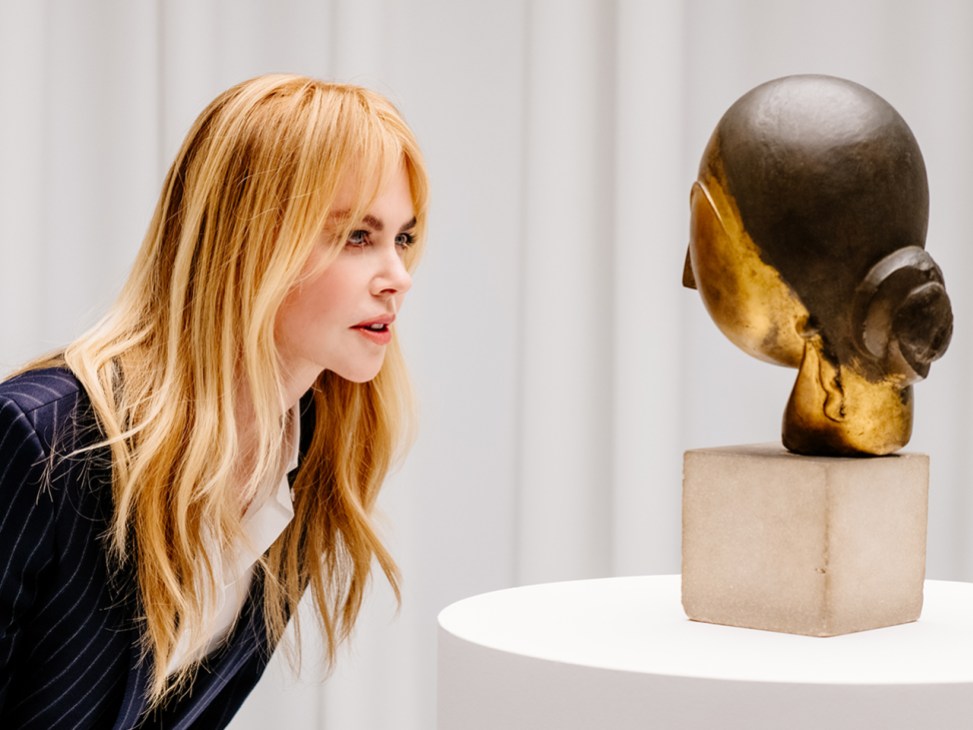
While big-ticket items such as the Brâncuși are still selling for big numbers at auction, galleries are struggling. Profits are down across the board: mega-gallery Pace has dropped 50 artists and cut 20 per cent of its staff worldwide. Over the past few years, market stalwarts, including Marlborough and Simon Lee, have shuttered, while younger, mid-tier galleries such as Clearing closed their doors, too.
For too long, the art world has expanded while the art market has narrowed. The dinners, parties and biennales carried on, while the clattering soundtrack of gallery closures played in the background like the Titanic’s string quartet. Gone are the halcyon days of buyers schlepping to the outskirts of London or New York to an exciting project space in a former morgue; galleries these days often have the feel of an opulent spa. The global profusion of art fairs has made collectors lazy and gallerists unadventurous. They are also prohibitively expensive – a couple of bad fairs in a row can be the kiss of death for smaller galleries.
Even though the outlook might seem bleak, there are reasons for optimism. A contraction at the top could result in a market that is less reliant on art fairs and digital interaction. Galleries big and small will then be able to focus on developing closer relationships with artists and collectors on home turf. In too many instances, art and the way it is sold have become indistinguishable from luxury goods. At times it can feel as though the market has forgotten what elevates art and why people want to own it. In my experience as a gallerist, buyers were seeking human connection as much as they were looking to build a collection.
In his 2015 book, The Utopia of Rules, David Graeber wrote, “The ultimate, hidden truth of the world is that it is something that we make and could just as easily make differently.” The art world of today was made by yesterday’s market. I, for one, am hopeful that it will foster a generation of better, more adventurous art and artists with more sustainable careers. In London, several smaller galleries are punching far above their weight: Ginny on Frederick in Clerkenwell; Soft Opening in Bethnal Green (the gallery started life in Piccadilly Circus station); and William Hines in Camberwell. The art world is like a cruise ship – it might take a long time to turn it around – but galleries such as these give me faith that it’s moving in the right direction.
Orlando Whitfield is the author of the book ‘All That Glitters: A Story of Friendship, Fraud and Fine Art’. For more opinion, analysis and insight, subscribe to Monocle today.