A hiking trip that begins beneath snow-capped Alpine peaks and ends on Madeira’s volcanic ridges sounds ambitious because it is. You are not simply combining several trails. You are moving between different countries, climates, transport systems, accommodation styles, and types of terrain, often with most of the trip packed into a single backpack.
The route can work brilliantly, but only when the transitions receive as much attention as the hikes themselves. A missed mountain bus, an inaccessible booking confirmation, or a wet pair of boots packed before a flight can disrupt the next stage more effectively than a difficult climb.
Here is how to plan the trip around the points most likely to cause trouble.

It is tempting to plan a European itinerary by listing countries: Switzerland, Italy, Austria, Portugal. That approach looks neat on a map but says little about how practical the journey will be.
Instead, choose hiking bases. A useful base has several trails within reach, access to food and supplies, and a realistic connection to your next destination. Places with rail or bus links can save you from renting a car for the entire Alpine section, particularly when many trails begin near cable-car stations or mountain villages.
A route might involve several days around Interlaken or Appenzell, a second base in the Dolomites, and then a flight to Madeira for a final week of levada walks and ridge hikes. The exact locations matter less than the rhythm:
- Three to five nights in each mountain base
- One lighter day before a major transfer
- Enough time to move without sacrificing every bad-weather day
- A final night near the departure airport when connections are tight
Changing accommodation every night creates more logistics without necessarily adding better hiking. It also means repeatedly packing damp clothing, checking transport schedules, and trying to find somewhere to leave luggage.
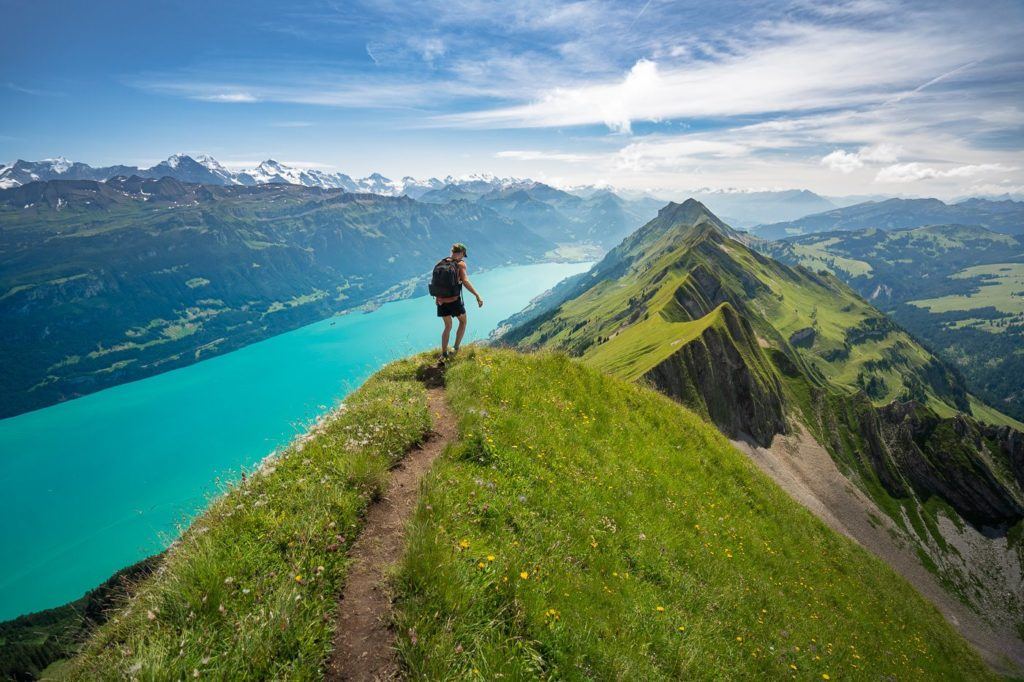
Both regions offer mountain scenery, but the practical demands are not identical.
In the Alps, altitude, exposed ridges, lingering snow, cable-car timetables, and rapidly shifting mountain weather can influence the day. A trail that looks manageable by distance may still involve a demanding ascent or a descent that is slow on tired legs. Some routes also depend on seasonal transport that stops running in the late afternoon.
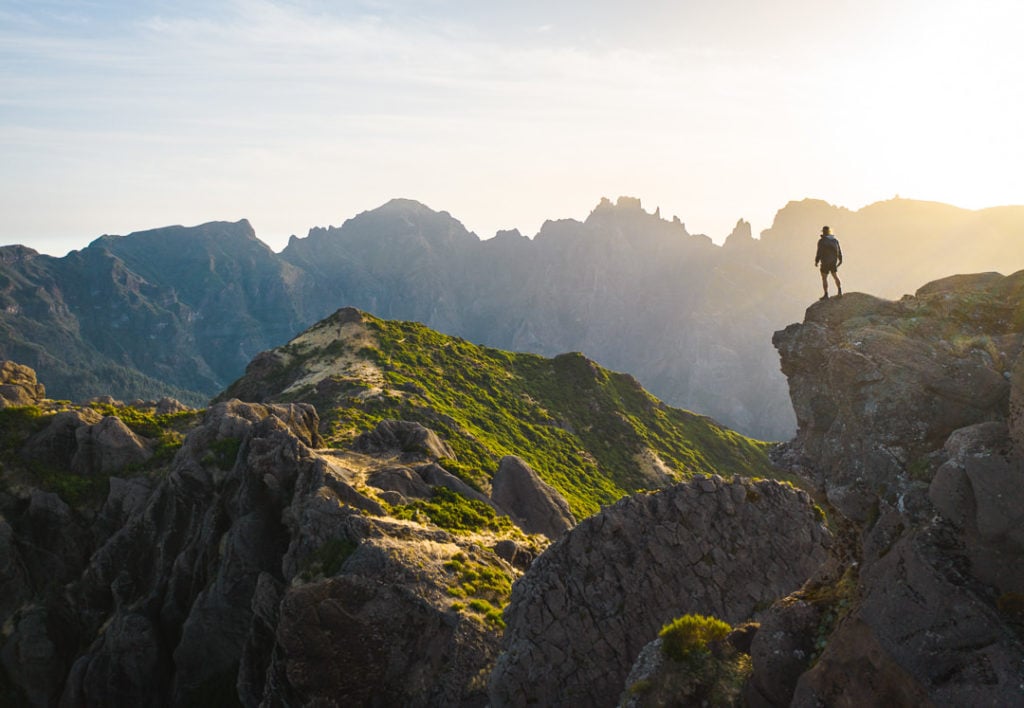
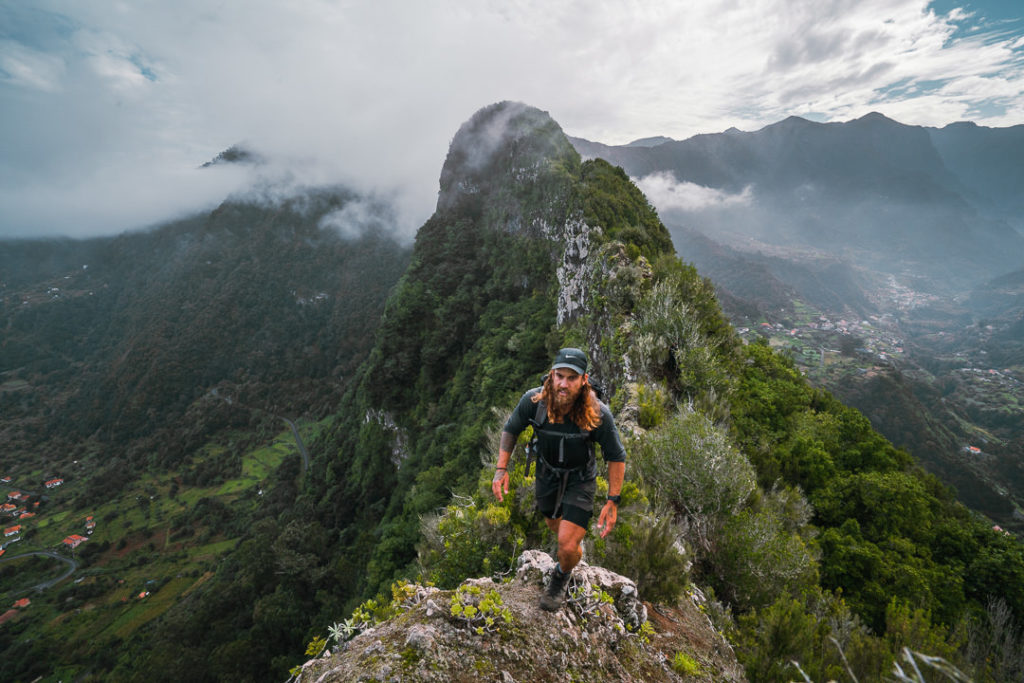
Madeira presents a different set of challenges. Trails can involve narrow levada paths, wet stone, dark tunnels, steep stairways, dense forest, and road access that is awkward without a car or arranged transfer. Coastal sunshine does not guarantee dry conditions in the island’s interior.
Pack for the overlap between the two environments rather than preparing for only one. A lightweight waterproof jacket, shoes with reliable grip, a compact headlamp, sun protection, and a warm layer will earn their space. Trekking poles may be useful on long Alpine descents and slippery Madeira paths, although they should be secured properly when flying.
The difficult part of a multi-country route is rarely finding trails. It is getting from one hiking region to another without turning the journey into a chain of rushed departures.
Before confirming accommodation, map the complete transfer between bases. Do not stop at “train to Milan” or “flight to Funchal.” Check how you will travel from the mountain village to the railway station, reach the airport, collect any stored luggage, and get to the next accommodation after landing.
Pay particular attention to the first and last local connections. A regional bus that runs every two hours can be more important than the international flight in the middle of the journey.
Avoid scheduling a long or exposed hike on the morning of a flight. Even when the trail is technically short, a delayed cable car, unexpected detour, or slower-than-planned descent can leave no margin. Use transfer days for a short valley walk, a lakeside route, or rest.
Mobile access is not merely about posting photographs from a summit. During a trip that crosses borders, the same phone may hold train tickets, trail maps, accommodation messages, weather forecasts, boarding passes, translation tools, and the contact details for a driver collecting you from a remote trailhead.
Sort out how data will work before departure rather than investigating it after landing. For an itinerary moving through several European countries and then Portugal, arranging an unlimited data eSIM Europe can reduce the need to reconsider connectivity each time the route crosses a border or shifts to another island.
Still, do not make mobile reception your only system. Mountain coverage can disappear behind ridges, inside tunnels, or deep in valleys. Download the relevant map area before each hike and save the route in an app that works offline. Screenshot transport schedules, accommodation addresses, and booking references. Keep essential phone numbers somewhere outside your email inbox.
A small power bank is also worth carrying. Cold weather, continuous navigation, photography, and poor reception can drain a battery much faster than an ordinary day in town.
Saving a broad map of Switzerland or Madeira is not the same as preparing for a specific hike.
The evening before each trail, download the actual route and examine its shape. Note junctions, possible exit points, transport stops, water sources, huts, and any sections where the route doubles back. Check whether the hike is a loop, an out-and-back, or a point-to-point route requiring transport at the far end.
Record the name of the trailhead in the local language. Two places can have similar names, while a pin dropped by another hiker may refer to a viewpoint rather than the correct starting point.
On Madeira, establish whether a taxi or transfer can collect you at the finish and whether there is reliable phone reception there. In the Alps, check the last cable car, train, or bus rather than assuming services continue into the evening. Build your turnaround time around the final transport connection, not sunset alone.
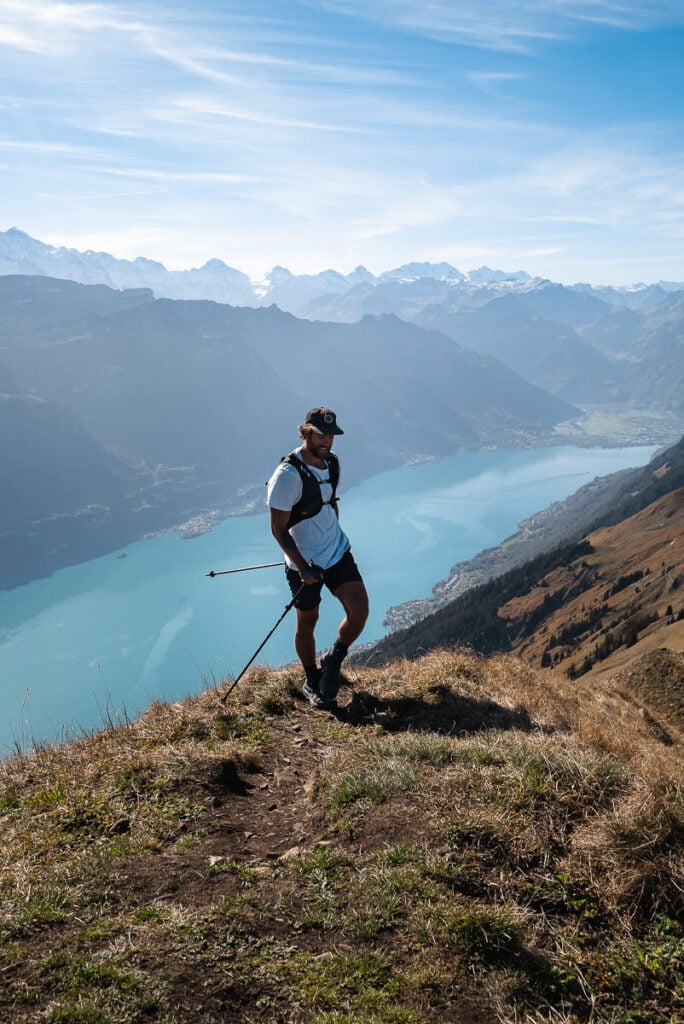
A fixed itinerary should not mean fixed hiking days.
Mountain weather can make a high route inappropriate while leaving a lower valley walk perfectly reasonable. The most useful plan is a small menu of hikes for each base: one major route, one moderate alternative, and one lower-level option.
This is especially important when moving between regions. You may only have four days in a particular valley, and insisting on one famous summit can result in wasting several hours waiting for conditions that never improve.
Review the forecast shortly before departure and again on the morning of the hike. Look beyond the temperature. Wind, visibility, precipitation, thunderstorms, and freezing levels may be more relevant to the route. Local notices and temporary trail closures should take priority over an old blog post or saved itinerary.
When conditions deteriorate, changing the route is not a failed hiking day. It is competent mountain travel.
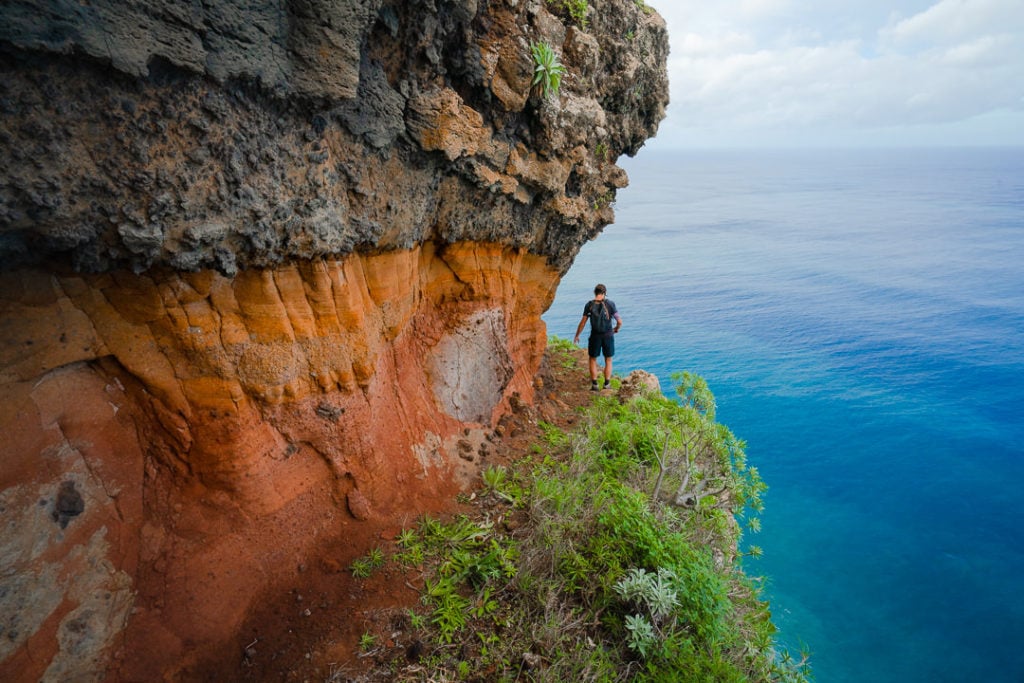
Minimalist packing works well until several days of rain leave every piece of clothing damp.
Separate your backpack into dry and potentially wet zones. Use internal dry bags or sturdy packing sacks for insulation layers, electronics, documents, and sleepwear. Carry a separate bag for muddy shoes or soaked clothing during transfers.
Quick-drying hiking clothes are more useful than packing many outfits. Accommodation with a drying room or laundry access becomes valuable during a longer trip, especially before flying from the Alps to Madeira. Schedule washing around rest days rather than discovering on departure morning that every hiking sock is wet.
Footwear deserves particular attention. One reliable pair of trail shoes may be enough for the entire trip, but only if it dries reasonably quickly and remains comfortable on both rocky ascents and long paved approaches. Brand-new footwear should not make its debut on the first Alpine trail.
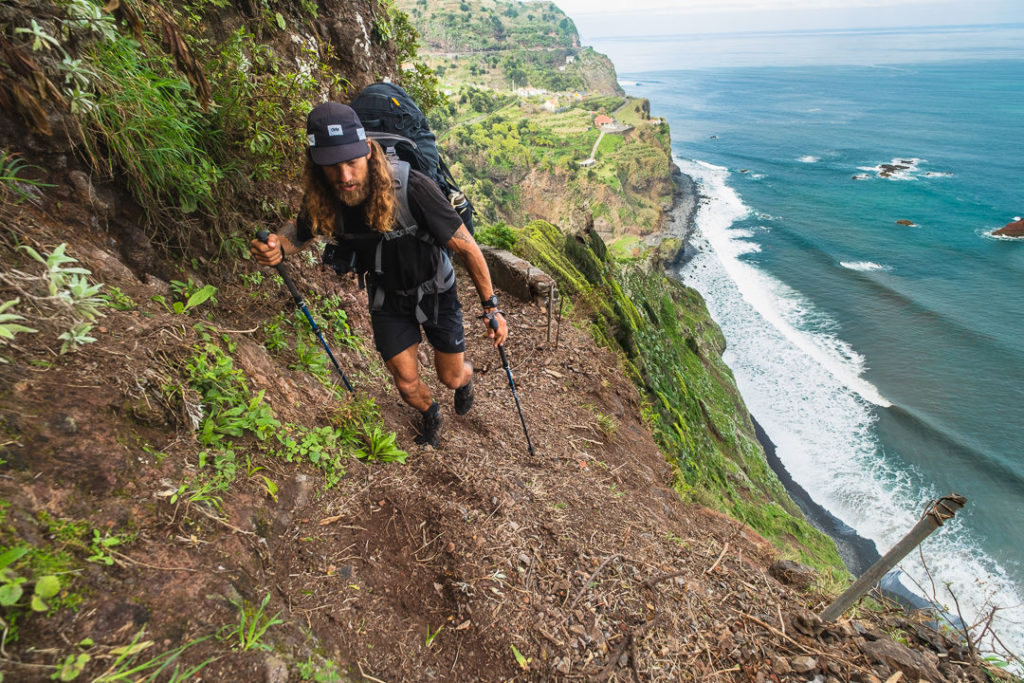
Phones get wet, batteries fail, and booking apps sometimes log users out at inconvenient moments.
Store copies of your passport, insurance details, transport bookings, and accommodation confirmations in more than one place. Keep one digital copy available offline and another in secure cloud storage. A small paper note containing emergency contacts, insurance information, and the address of your next accommodation weighs almost nothing.
Share the day’s hiking plan with someone when heading onto a remote route. Include the trail name, expected finish time, and any transport arrangements. When hiking alone, accommodation staff or a local guide may be able to advise whether the route is appropriate under current conditions.
This does not replace proper preparation, but it provides a basic layer of protection when plans change.
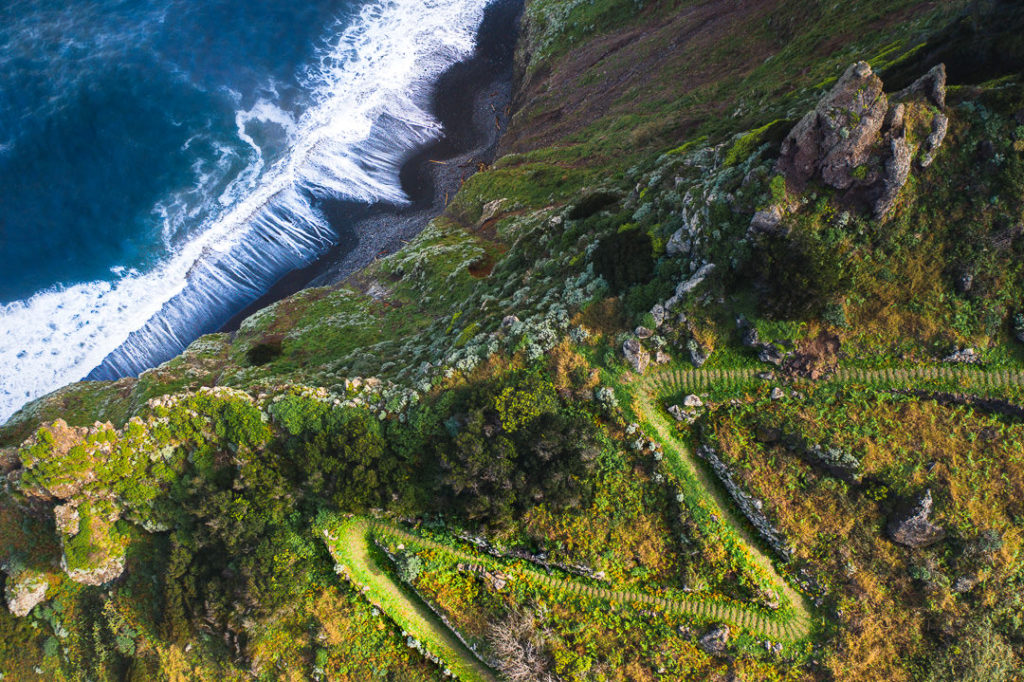
A multi-country hiking trip can become an endurance test if every day is planned around maximum distance or elevation.
Alternate demanding routes with shorter hikes, travel days, or recovery time. Alpine descents can leave the legs more fatigued than the ascent suggests, while Madeira’s repeated stone steps may expose soreness that was not obvious on smoother trails.
A free afternoon also gives you time to buy food, reorganize the backpack, charge devices, check the next route, and deal with delayed transport. These tasks are easy when planned and irritating when squeezed into the final hour before bed.
The strongest itinerary is not the one with the most trail names. It is the one that remains workable after rain, a missed bus, tired legs, or a change in conditions.

Moving from the Alps to Madeira creates an unusual progression: high passes and mountain huts give way to laurel forest, levada tunnels, coastal cliffs, and volcanic ridges. There is no need to rush through that contrast.
Choose fewer bases, prepare carefully for the transfers, and keep enough flexibility to follow the conditions rather than the original spreadsheet. The result will feel less like a race across Europe and more like a connected series of mountain journeys, each distinct enough to deserve your full attention.