Tired of feeling tired? Perhaps it’s time to adopt some Eastern wisdom – and a new sleep routine.
The sleep economy is restless. Tiringly, the topic has become something of an icebreaker in hospitals, hotels and across the wellness industry. I’ve lost count of the number of conversations with Whoop-wearing, sleep-tracking addicts, who insist on talking me through their statistics – it’s the 2026 equivalent of forcing people to look at your holiday pictures.
Rest is an important health concern. Despite all the chatter, most of us still have no idea whether we are doing it right. Data from the OECD found that the long-living Japanese “only” average six to seven hours a night, making it the lowest and therefore most sleep-deprived of developed economies. A widely reported study earlier this year suggested that eight hours is not the ideal number after all. Get this: too much sleep can actually be detrimental to our health. It’s all enough to lose sleep over, which might just be a good thing.
When it comes to daily habits, the world can be divided into several camps. Those with and without air conditioning, say, or toilet paper users versus water washers. But napping is another of those great dividers. Either you are an afternoon snoozer or one of us who push through, viewing naps as unproductive, bone idle and workshy. In northern Europe, it’s just what we’re taught.
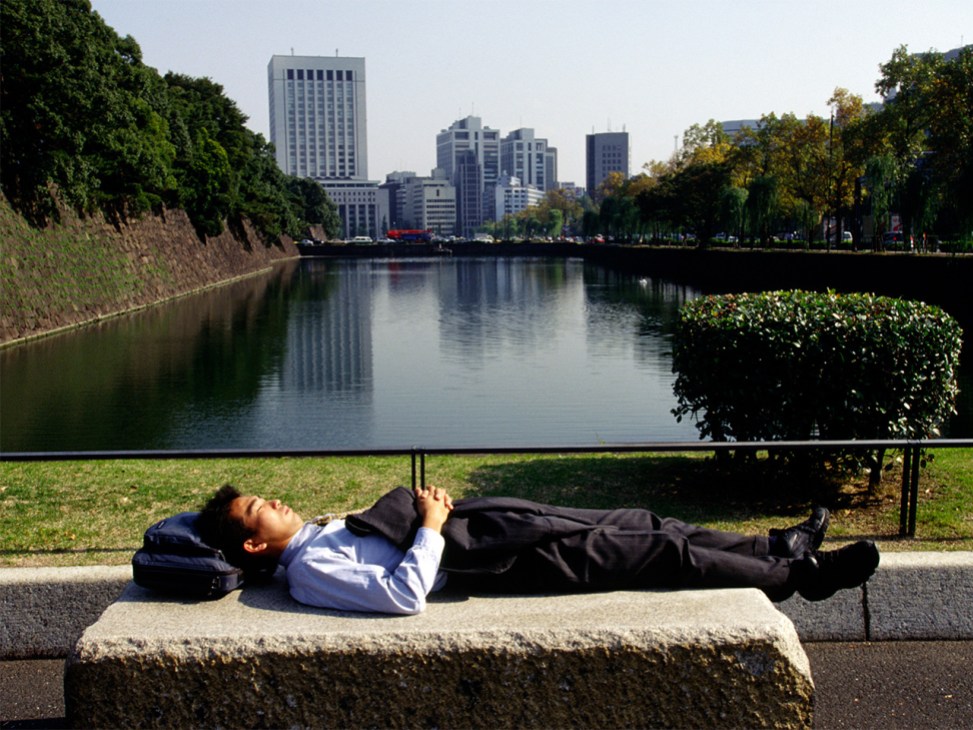
One of the eye-opening things about moving from London to Hong Kong was the sight of hard-working city suits going to a coffee shop for a mid-afternoon snooze rather than a shot of caffeine. The same is true of the many factory tours that I have been on in mainland China, where the lights go off after lunch and workers stretch out on the flooring.
A recent headline from the South China Morning Post caught my eye. The article claimed that, according to research conducted by the China Sleep Research Society, a staggering 72 per cent of Chinese take a daily nap for at least half an hour. The benefits of napping apparently go back thousands of years (as is the case with most things in China) to medical texts and enshrined in Chinese medicine. Song dynasty poets wrote verses about the joys of an afternoon nap, while former leader Deng Xiaoping, a diminutive man from Sichuan who is seen as the architect of modern China’s economic and technological rise, was also an avid napper – some endorsement.
For our latest issue, I visited a wellness clinic in Bangkok. After watching a nurse drain nine tubes of blood from my arm, I was later informed by the doctor that my “telomeres” – tiny tips on our chromosomes that shrink as we age – are shorter than they should be. The culprit? Not enough deep sleep. A surprise because I thought I slept rather well. The cause? Young kids waking up in the middle of the night. The cure? Time and a daily dose of patience.
The CEO of BDMS Wellness Group is of a similar age to me and has managed to lengthen his telomeres with a combination of good diet, clean living and daily exercise, while running a major company and being a family man. Crucially, he claims to be in bed most nights before 22.00. Early nights are more manageable in Bangkok and Hong Kong where it’s dark by 19.00 throughout the year, provided you can black out the many bright lights and other neon-lit distractions. By contrast, try sleeping before 22.00 in northern Europe right now when the days are incredibly long.
Could this be where the nap comes in? Brits, Germans, Swedes and Dutch are not accustomed to the siestas enjoyed by their southern cousins (who, incidentally, live two years longer on average) but summer is the one time when we get to give it a go. Holidays in Italy, Spain and France, mixed with time in the sun and hotel stays, allow for some horizontal time after lunch. The prospect of bringing this new habit home along with a few bottles of the local plonk fades quicker than a Mediterranean suntan. But if machines and AI are going to be doing more of the work and climate change is pushing up temperatures, is it time that we listen to a bit of Eastern wisdom? I think so. Why don’t we sleep on it?
James Chambers is Monocle’s Asia editor based in Bangkok. For more news and analysis, subscribe to Monocle today.