This article contains affiliate links. We may receive compensation if you make a purchase using one of these links at no additional cost to you. See our Disclaimers and Terms of Use for more information.
This comprehensive Sicily food guide highlights the Italian island’s best traditional dishes, street foods, sweets and drinks. You don’t want to miss a delicious bite or sip!

Sicily is an ideal destination for food travelers.
The Mediterranean island is the home of fried snacks like arancini and fried desserts like cannoli. It’s Italy’s street food capital with sprawling markets serving all manner of proteins from seafood to vegetables to offals. Sicilian food also has its own spin on classic Italian dishes like baked pasta in aneletti al forno, eggplant-laced pasta alla norma and, of course, a number of variations on pizza. Local ingredients like fennel and sardines are interlaced through many of the region’s most famous dishes.
Did we mention that Sicily, particularly Palermo, is one of the pastry capitals of the world? For those not familiar, Sicily’s location as a former Bourbon kingdom contributed to its long tradition of classic desserts. Cassata, one of the world’s great cheesecakes, is from Sicily but there are many more sweets with roots in the region.
Much Italian American food can trace much of its roots to Naples. But Sicily is key to this history too. In fact, it could be said that Sicily is the ying to Naples’ yang in the Italian food diaspora.
🔓 Key Takeaways
- Sicily is one of Italy’s top food destinations. The island’s diverse cuisine is shaped by centuries of Greek, Arab, Spanish, and Italian influences.
- Don’t leave Sicily without trying iconic specialties like arancini, pasta alla Norma, cannoli, granita, caponata and fresh seafood.
- The island’s best dishes showcase exceptional local ingredients including pistachios, citrus, almonds, tomatoes, eggplant, olives and freshly caught fish.
- Complete your culinary journey with Sicily’s signature drinks. Start by sipping locally produced wine and continue with fresh juice, refreshing limonata and craft beer.
- Sicily is a popular. Book your hotel or apartment ASAP. Book a food tour too!
The Best Things to Eat and Drink in Sicily

We traveled to Sicily with the primary goal of sampling the region’s best food and drinks. And, in ten delicious days, we completed this ambitious mission at markets, cafes and restaurants.
We discovered that Sicilian food is flavorful, diverse and rooted in centuries of Mediterranean history. The island’s food scene offers an incredible spectrum, from street food and seafood to pastries like cassata and granita. We ate all of these things and more during our visit. The mix of influences, from Arab to Norman, turned each and every meal is into a memorable event.
Now we’re sharing the Sicilian dishes and drinks not to miss when you visit Sicily. For ease of use, we’ve separated this Sicily food guide into the following six sections:
Taditional Sicilian Dishes

With centuries of influences from Arab, Norman and Spanish invaders, Sicily’s food set is both unique and tasty. Many traditional Sicilian dishes reflect the island’s rich history while others celebrate its Mediterranean locale. These are the ones not to miss:
1. Caponata

Caponata is Sicily’s most iconic vegetarian dish. Eggplant is its star ingredient while capers, celery, olives, onion and tomato play supporting roles. Sugar and vinegar give the flavorful starter a sweet tanginess that’s impossible to resist.
There’s no specific recipe for capanata – some versions we ate in Sicily had extra ingredients like pine nuts and raisins. We suspect that Sicilian nonnas deserve credit for those bonus bits. And, just like peperonata in Naples, caponata isn’t just a starter. It also works as both as an aperitvo and on top of bruscetta.
2. Involtini di Pesce Spada

Involtini di pesce spada literally translates to swordfish rolls. Living up to its name, this dish contains fresh swordfish that’s pounded flat and rolled around a tasty breadcrumb filling made with ingredients like capers, garlic, pine nuts and raisins.
Not all involtini di pesce spada are the same as the filling varies from cook to cook. Plus, some involtini are baked while others are pan fried. We ate the fish dish at two different restaurants and especially loved the one served with flavorful salmoriglio sauce and fresh lemon.
3. Caciocavallo all’Argentiera

Most Sicilan dishes have nebulous histories. Caciocavallo all’Argentiera isn’t one of those dishes. Instead, this hyper-local dish’s history is traced to a specific Palermo street – Via Argenteria. It’s also a dish with a fun back story that may or may not be true.
The story goes that a local silversmith created the dish with the goal of impressing his neighbors. Emulating a rabbit recipe that was popular back in the day, the ambitious artisan fried caciocavallo cheese with garlic and olive oil before finishing the dish with vinegar and oregano. The end result is pure Sicilian comfort food.
4. Zucca in Agrodolce

Zucca (otherwise known as pumpkin or squash in English) brings a starchy element to meals around the world. In Sicily, restaurants add a sweet and sour flavor dimension to the gourd to create zucca in agrodolce. Sprigs of fresh mint provide the tasty dish’s fresh, herbaceous, slightly sweet finish.
We started many of our Siciy meals with both zucca in agrodolce and caponata. The two vegetarian dishes complement each other with their range of flavors.
5. Crudo

Sicily’s place in the heart of the southern Mediterranean makes it a seafood mecca. Walk through the markets and you’ll pass by seafood stands displaying an enormous assortment of fin fish like snapper and mullet as well as crustaceans like red prawns and langostinos. As in Japan, Sicilians love raw seafood. In fact, considering Sicily’s seaside location, you’d be hard pressed to find fish that’s sweeter or fresher anywhere in the world.
We dove into Sicily’s fish-filled waters when we ate a crudo during our very first dinner. That dish, which featured amberjack, cod, oyster, langostino and snapper, was fresh, flirty and fun.
6. Sarde alla Beccafico

Sicilians clearly like to stuff fish with savory stuffing. They do this with both involtini di pesce spada (see above) and sarde alla beccafico. However, despite their similarities, the two dishes aren’t the same. While involtini di pesce spada is made with swordfish, sarde alla beccafico is made with butterflied sardines.
Although beccafico literally translates to fig tree, figs are not included in traditional sarde alla beccafico. Its recipe, which varies in Catania, Messina and Palermo, sometimes includes capers and caciocavallo cheese in addition to bread crumbs and sardines. The Palermo version we ate was baked with pine nuts and garlic.
7. Parmigiana di Melanzane

Before becoming a classic Italian American dish, parmigiana di melanzane (i.e. eggplant parmesan) was a classic Sicilian dish. Sometimes, as in the American version, eggplant cutlets are baked in a zesty tomato sauce. But there are also versions in Sicily where the sauce is omitted altogether.
Whether you call it eggplant, as Americans do, or aubergine or melanzane, the versatile nightshade appears on just about every Sicilian menu. In this dish, the eggplant is dried before it’s breaded and fried.
8. Polletto Cotto

Roast chicken may sound like something you would buy at your local Costco but it’s a serious dish in Europe. This is certainly the case at Palermo restaurants when it comes to the dish called poletto cotto.
We first encountered poletto cotto at La Brace, a Palermo restaurant where customers line up every night to eat chickens cooked over open flames. We later ate poletto cotto at Buatta Cucina Popolana. The Michelin Bib Gourmand rated restaurant offers a generously sized single serving version on its traditional menu of Palermo classics.
9. Pizza

Yes, we know that pizza wasn’t invented in Sicily. But, since we always eat pizza in Italy, we had to give it a try. Not surprisingly, we expected it to be rectacular and thick just like the Sicilian pizza that’s sold at NYC pizzerias.
Color us surprised to eat round, thin pizza that tasted great in Palermo. We also ate thick, rectangular pizza at a Palermo bakery and that was great too.
Sicilian Pastas

Pasta takes a central role in Sicilian food as it does in most Italian regions. Some Sicilian pasta dishes have uniquely shaped noodles while others are all about their toppings. Most feature island bounties like fresh seafood and produce. The only way to find your favorite is to try them all.
10. Anelleti al Forno

Anelletti al forno will strike a familiar tone if you ate spaghettiOs as a kid. But, unlike canned pasta, the fun yet sophisticated dish is ideal for kids of all ages. In many ways, it’s Sicily’s answer to Bologna’s lasagna verdi al forno and Naples’ pasta Genovese.
This baked pasta dish is pure comfort food thanks to its combination of ring shaped anelli pasta, meat sauce, cheese and peas. If you’re lucky, on the right evening and in the right trattoria, you’ll eat anelletti al forno during your trip. We did this twice while we were in Palermo and both versions were comforting, filling and wonderful.
Follow this anelletti al forno recipe and eat the fun pasta dish at home.
11. Pasta con la Sarde

Sicilians don’t just roll sardines, they also add the little fishes to pasta con le sarde (i.e. pasta with sardines). Whether you love or hate sardines, there’s no denying that this pasta dish is a winner thanks to its melody of ingredients that incudes fennel, pine nuts, raisins and saffron.
That unique combination of flavors results in a dish that simultaneously sweet and savory. Give it a try even if you’re not a sardine fan. You may be pleasantly surprised by Sicily’s iconic pasta dish.
12. Pasta alla Norma

Pasta alla norma is a Sicilian pasta dish that’s easy to love. Created in Catania and named in tribute to Vicenzo Bellini’s famous opera, the rustic dish gets its flavor from a vegetarian melange of eggplant, basil, tomato sauce and ricotta salata cheese.
Despite its roots, pasta alla norma is popular throughout the region. We found and ate versions at three different Palermo restaurants. It’s an ubiquitous dish of the island that finds its way on just about every menu.
14. Pasta al Nero di Seppe

Eating pasta al nero di seppe involves a bit of risk taking. It’s not that the cuttlefish ink pasta dish is dangerous to your health. Rather, eating it will leave a serious shirt stain if you’re not careful. We say it’s worth the risk to eat pasta that coated in rich cuttlefish ink sauce and loaded with cubes of cuttlefish. True confession – we wore bibs when we ate the black-as-night pasta dish at Antica Gastronomia Palumbo in Palermo.
Sicily claims pasta al nero di seppe as its own as does the Veneto. Whether you eat it in Venice or Palermo, this dish is bold, black and wonderful.
13. Pasta alla Botarga

Unlike Sardinia which produces some of the world’s finest bottarga di muggine (i.e. mullet roe bottarga), Sicliy is famous for bottarga di tonno that’s made with tuna roe sourced from the island’s coastal waters. Cooks use the pressed, salted and preserved fish roe sacks in a variety of ways including on crostini and in salad. Some Sicilians simply squirt fresh lemon juice and eat bottarga with a fork.
Our favorite preparation is pasta alla bottarga. To make this pasta dish, Sicilian cooks grate bottarga di tonno over spaghetti. The tuna bottarga combines with olive oil and garlic to create a umami rich sauce that unabashedly tastes like the sea.
Follow this spaghetti alla bottarga recipe and cook the surprisingly creamy pasta dish at home.
15. Pasta alla Lido

Pasta alla lido lives up to its name which literally translates to pasta at the beach… assuming that the beach in question is on the Italian Med. Typically made with tubular noodles (think paccheri, penne and rigatone though the version we ate was made with spaghetti), this pasta dish is notable for Sicilian ingredients that include swordfsh, eggplant, ripe tomato and fresh mint leaves.
Some menus call this dish pasta con pesce spada e menta (i.e. pasta with swordfish and mint) or simply pasta pesce spada (i.e. swordfish pasta). The version we ate, which happened to be called pasta alla lido, came with sautéed eggplant and big chunks of swordfish. Grated fresh mint completed the dish’s flavor and added a festive pop of green color.
16. Couscous alla Trapanese

Trapani’s position at the western tip of Sicily has made the town both a trading and seafood mecca. It’s also home to couscous alla Trapanese, a hearty pasta dish that pairs couscous with a melange of locally caught fin fish and shellfish. Produced with once exoitic ingredients like chii peppers and saffron in addition to the aforementioned couscous, the dish emanates from Sicily’s position along the world’s great trading routes.
It’s thought that couscous made its way to Trapani via African traders at the end of the first millennium. Couscous alla Trapanese is Sicily’s contribution to great European seafood dishes along with cataplana in Portugal, boulliabase in France and seafood paella in Spain. In this dish, the semolina grains provide a wonderful platform for Sicily’s seafood bounty that includes calamari, mussels, red snapper, sea bass and shrimp.
Sicilian Street Food and Market Specialties
 Pin
PinIf you only have on day in Sicily (which sounds crazy but could happen if you’re on a cruise), you could easily spend the entire day eating street food in a city like Catania or Messina. This is especially true in Palermo where open air markets like Mercato Ballaro and Mercato del Capo bustle with activity.
It’s fun to walk through those markets and gawk at the various hawkers and grill masters doing their foodie thing. However, the real fun involves eating the fruits of their labor. And, by fruits, we mean any and every animal part plus seafood plucked from the ocean and fried treats galore.
17. Arancini


Invented ten centuries ago and influenced by Sicily’s Arab conquerers, arancini were named after the Italian word for oranges (arance). Despite their appearance, arancini taste nothing like oranges.
Round in shape, filled with rice and fried to crispy goodness, palm-sized arancini are easy to eat without utensils and don’t make a mess. Plus, and most important, the Sicilian street food star tastes great thanks to extra bits like cured meat, ragù and cheese.
You can find tasty arancini at Sicilian markets as well as at bakeries and dedicated eateries. We found our favorites at I Segreti di Chiostro and Kapelle during different foodtripping expeditions.
Fun Fact
Arancini are called arancine in Western Sicily. They also have diffent shapes. Despite these difference, the crispy goodness is the same on both sides of the island.
18. Stigghiola


The Stigghiola is a Sicilian street food with a limited audience of adventurous carnivores who appreciate offals. In this case, the offals are intestines that are wrapped around spring onions or leeks, grilled and chopped up for easy eating.
Olive oil and lemon juice enhance the stigghiola’s flavor. But, let’s be honest, this Sicilian street food isn’t for everybody. We say try a bite and decide whether you’re on team stigghiola or not.
19. Sfincione

When Americans think of Sicilian pizza, they’re probalty have a picture of sfincione in their heads. But, to be clear, sfincione isn’t exactly pizza. Instead, it’s focaccia that’s topped with tomato sauce and oregano plus potential toppings like anchovies, tomatoes and caciocavallo cheese.
Originally served in Palermo during celebrations and on Christmas Eve, sfincione is now a popular street food all over Sciliy. It’s a great option when you’re in the mood for a snack but not hungry enough for a meal.
20. Panzerotto

Although it has roots in Puglia, the panzerotto is a great Sicily street food option. Similar to the calzone, it’s essentially fried dough that stuffed with fillings like tomato, meat and cheese.
We ate our favorite panzerotto for breakfast at a Palermo cafe. It was stuffed with both cheese and prosciutto. We paired that breakfast panzerotto with cappucinos as one does in Italy.
21. Panelle

The panelle is so simple. It’s a deep fried fritter that’s made with a quartet of ingredients – chickpea flour, parsley, salt and pepper. And, yet, the panelle is of one of the most popular street foods on the island.
Locals eat panelle on their own as a snack and on pane e panelle sandwiches (see below) for a meal. Since Arabs introduced the concept of chickpea fritters to Sicily more than a milenium ago, it’s now fair to call it Sicilian.
22. Crocchè

The crocchè is yet another deep-fried Sicilian street food. But, unlike the others, this one was introuced by French invaders during the 18th century. Made with mashed potatoes, eggs and breadcrumbs, it’s Sicily’s take on France’s croquette.
You can eat crocchès at markets, in restaurants and on pane e panelle sandwiches. Our favorites were stuffed with beef, pesto and fried cheese at CiCala in Palermo.
23. Calamari Fritti

You can eat seafood so many ways in Sicily. You can eat it raw and you can eat it in pasta. But there’s something about eating cones filled with fried seafood that makes us happy. This is especially true when we graze through Sicilian markets.
While seafood cones often come with a variety of fried seafood, our favorites are the cones filled with calamari fritti, i.e. fried calamari. Adding a squirt of lemon juice is smart. Pairing the cones with sprtizes is even smarter.
24. Gambero Rosso

Gambero Rosso (i.e. red prawns) are so prized throughout Italy that there’s a leading food publication named after the colorful crustaceans. The deep waters off Sicily provide a perfect breeding ground for the red beauties.
When we say deep sea we mean really deep – up to 1000 meters. That depth, as well as their sweet flavor, makes ruby prawns a commodity. It’s customary to suck the heads, which contain a dose of sweet roe, when you eat gambero rosso at Sicily’s vast open air markets.
25. Ricci di Mare

There’s no debate that ricci di mare is prized in Sicily where locals eat sea urchin roe both raw and in pasta dishes. The only way to find out if you love the spiny sea dweller is to give that roe a try.
You can eat raw sea urchin if your visit coincides with the ricci harvest season (November to April). That’s when markets sell the briny seafood to locals who simply add a squirt of lemon juice for extra flavor. Otherwise, you can eat spaghetti con ricci di mare at a restaurant.
26. Porchetta

Porchetta is made by butchering and rolling an entire pig with herbs and spices before roasting it in an oven. Not a passing fad, there’s evidence of porchetta in Central Italy going back 500 years. Porchetta rarely disappoints with its moist, herbaceous porky meat and crispy skin. Typical herbs include fennel, garlic and rosemary. Salt and pepper add the finishing touch.
A specialty food around the world, porchetta is a readily available in Sicily at food markets and sandwich shops. It’s a quick, savory lunch on the go.
27. Olives

Olives grow in abundance in Sicily. The region’s most famous olives, nocellara del Belice, hail from Castelvetrano. Those green olives are notable for their sweet, buttery flavor. They’re great to eat on their own as well as when they’re pressed into oiive oil. But they’re not the only olives worth eating on the Mediterranean island.
While most people are satisfied to buy all sorts of olives at local markets, the truly obsessed can do a special tasting at a Sicily olive estate. Another option is to simply enjoy olives in dishes like caponata or as an aperitivo snack.
28. Bronte Pistachios

Coveted by culinarians around the world, Bronte pistachios grow on the volcanic slopes of Mount Etna. These Sicilian pistachios, though relatively low in number, are considererd the be the green nut’s gold standard.
We encountered fresh and dried pistachios at food markets as well as pistachios repurposed into creams, pastes, oils and liqueurs for sale at local shops. We also ate pistachios in gelato, granata, pastries and sandwiches. The nut is so common in Sicilian desserts that it’s as ubiquitous as chocolate.
Sicilian Sandwiches

Italy’s most famous sandwiches have roots in Florence and Rome but don’t rule out eating sandwiches in Sicily. We recommend starting with the following classics:
29. Pani ca’ Meusa

The pani ca’ meusa is Palermo’s signature sandwich despite or perhaps due to its primary ingredient – spleen. Sicilians have been eating the unusual sandwich, which contains calf spleen plus, occasionally, lungs, since the Middle Ages when Jewish cooks embraced the concept of cucina povera. Today, all sorts of Palermo locals squirt fresh lemon juice onto the sandwich and occasionally add shredded caciocavallo cheese.
You can sample pani ca’ meusa at one of Palermo’s bustling markets or at a sandwich shop. Be warned that it’s not a sandwich that everybody loves. Your best bet is to have a local beer at the ready in case the pani ca’ meusa’s offal flavor isn’t in your wheelhouse.
30. Pane e Panelle

Don’t feel bad if Palermo’s pani ca’ meusa isn’t for you. Maybe you’re not a meat eater or perhaps you simply find the taste of offals to be awful. Instead, eat a pane e panelle.
Popular since the meat-free sandwich was introduced by Arab invaders a millenium ago, pane e panelle replaces spleen meat with chickpea fritters. Locals typically add a squirt of fresh lemon juice to this sandwich too.
31. Pane Panelle e Crocchè

Since more is more when it comes to food in Sicily, it makes perfect sense to take the pane e panelle one step further. Or, in the case of pane panelle e crocchè, a crispy leap further.
Adding a potato croquette to a chickpea fritter sandwich is decidely extreme. But, hey, this is Sicily. Taking a few long walks will neutralize the impact of the extra carbs.
32. Pane Cunzatu

The pane cunzatu wasn’t much to write about centuries ago when the simple sandwich was only eaten by peasants. Back then, the seasoned bread sandwich was constructed with stale bread, olive oil and herbs. Times have since changed and the pane cunzatu has gone mainstream.
Modern Sicilian sandwich shops often use premium ingredients and artisan bread in their pane cunzatu preparations. Our favorite was filled with anchoy, tomato, olive oil and caciacavallo cheese fondue
Sicilian Sweet Treats

Walking into a Sicilian pastry shop is like walking into a fantasy land. Not only will you find classic pastries, but you’ll also encounter a range of modern confections like layered torts, marzipans, laminated pastries and the iris, one of the region’s lesser known fried treats.
We suspect that you’ll want to eat them all. However, these are the five Sicilian sweet treats not to miss if you’re short on time:
33. Cannoli

To make cannoli, Sicilian bakers stuff cylinder shaped fried dough with ricotta cream and occasionally sprinke chocolate, pistachios and candied fruit on the edges. The resulting pastry is crunchy, sweet and utterly addictive.
Generations of bakers have prepared cannoli in Sicily going back to the days of Arab rule more than a millennium ago. Some brought the recipe across the ocean when they emigrated to America. Thanks to them, cannoli are readily available at Italian bakeries in cities like Boston, Philadelphia, New York and New Orleans. However, there’s nothing like eating a freshly filled canolo in its homeland.
34. Cassata

Similar to canoli, cassata ingredients include ricotta cheese and candied fruit. But the ricotta cake goes further with the addition of liqueur-soaked sponge cake, marzipan and icing. It’s also a tasty gelato flavor that often appears on Italian gelateria menus.
We couldn’t eat enough cassata in Sicily. For us, its combination of sweet flavors and comforting textures is impossible to resist.
35. Brioche con Gelato

Not only is gelato one of the most popular Italian desserts, but it’s also proof that desserts don’t need flour or eggs to taste divine. Italy’s version of ice cream accomplishes this feat with milk, cream, sugar and a range of fresh fruits and nuts.
Sicilian gelaterias take the concept to the next level by serving gelato inside soft brioche buns. The resulting dessert, brioche con gelato, is a decadent breakfast option that tastes great in the afternoon too.
36. Granita

Unlike gelato which is eaten all over Italy, granita is specific to Sicily. Sure, you can find the frozen treat in other Italian cities, but Sicily is granita’s ground zero. Sicilian cafes typically serve almond, lemon and pistachio granita though some serve additional flavors like chocolate, coffee, mandarin orange, mint, mulberry, promegranate, strawberry and watermelon.
Granita reminds us of water ice in Philadelphia but it’s not quite the same. The Sicilian sweet treat is fresher and chunkier. Plus, it often comes with a buttery brioche roll on the side. That addition transforms granita from a dessert into a morning meal. It’s also great for dipping.
Note the following translations when you order granita in Sicily:
37. Iris

Sicily’s iris looks like a donut but it’s actually a deep fried brioche roll that’s filled with sweet ricotta cream. Deep frying the pastry produces a crunchy exterior but, somehow, the center remains super soft and delightfully sweet.
The iris wasn’t on our radar before we arrived in Palermo and, yet, it’s the Sicilian pastry that we crave the most. We ate multiple irises at traditional pasticcerias plus a pistachio iris at Mama Sicilia. They were all divine.
Fun Fact
Similar to Sicily’s pasta alla norma, the iris is named after an opera. In this case, the opera is Pietro Mascagni’s Iris which premiered in 1898.
Sicilian Drinks

There’s no denying that Sicily is hot, both literally and figuratively. Discover the best things to drink whether you’re attempting to beat the heat or you’re simply joining the party.
38. Wine


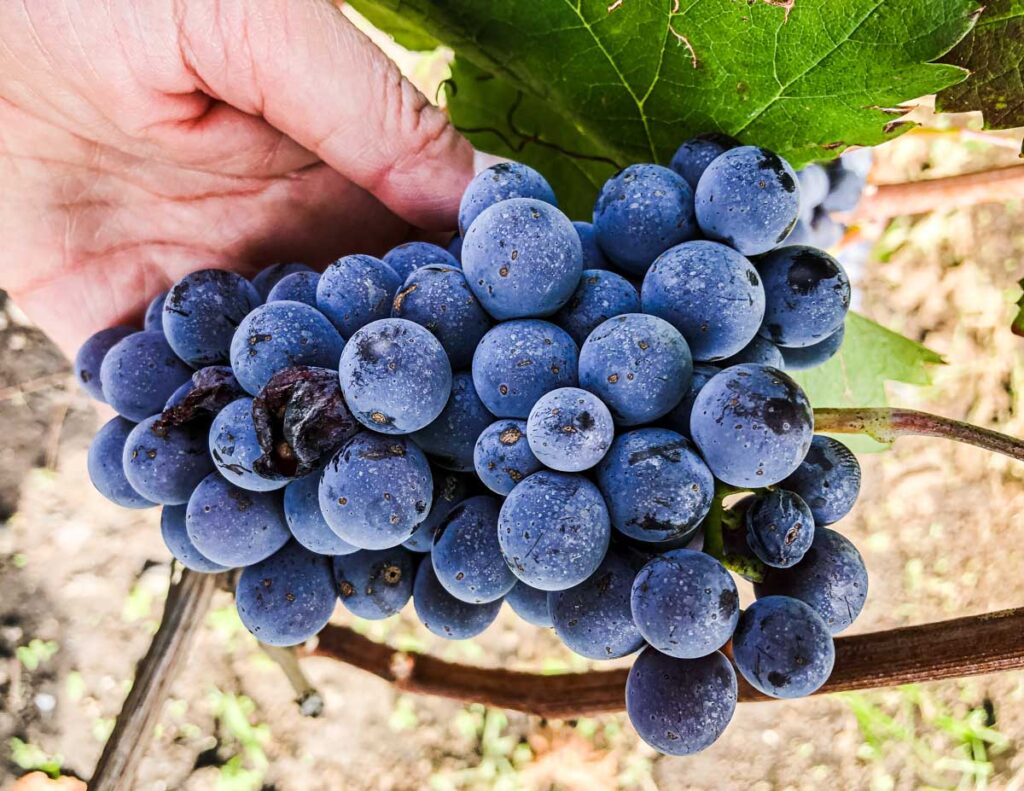
Sicily produces a lot of wine – more than most Italian regions with the exception of the Veneto, Puglia and Emilia-Romagna. Much of Sicily’s red wine is produced with Frappato, Nerello Mascalese and Nero d’Avola grapes while Carricante, Catarratto, Grillo and Inzolia are the island’s primary white wine grapes.
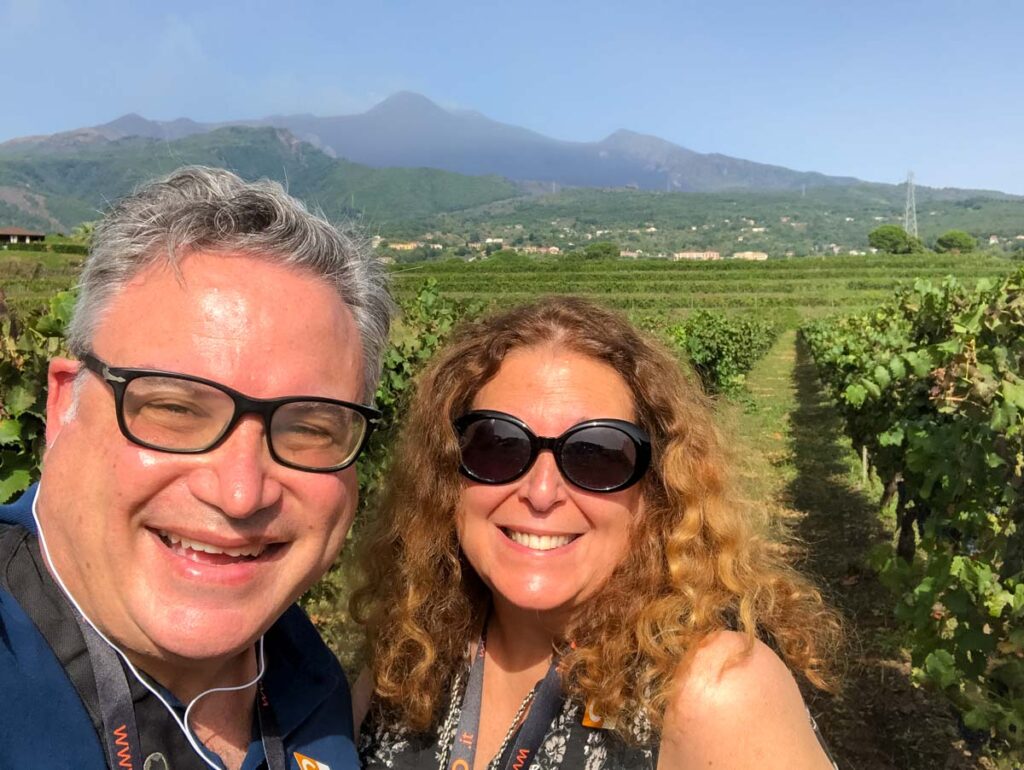
We tasted a variety of wines at Tenuta San Michele Winery, a winery located at the foot of Mount Etna. It was a stunning spot to learn about Sicilian wine. We later continued our ‘education’ at various wine bars and restaurants.
39. Marsala Wine

Not all of Marsala’s wines are fortified. Nevertheless, the southwestern Sicilian city, located just 80 miles from Palermo, has achieved global fame for fortifying wine with ten different grapes. Catarratto, Grillo and Inzolia are the most typical Marsala wine grapes.
Similar to wines fortified in Madeira and Andalusia, Marsala wines vary in their levels of aging, color and sweetness. Be careful when you sip this dessert wine since its ABV typically ranges from 15 to 20%.
40. Juice

Thanks to its Mediterranean locale and volcanic soil, Sicily produces wonderful fruit including vividly colored blood oranges and intensely flavored lemons. While you can eat some of those fruits on their own or in recipes, another option is to drink spremuta, i.e. freshly squeezed juice.
Our favorite spremuta is the stuff sold at open air markets. Popular flavors incudes orange, lemon and pomegranate. If you’re feeling adventurous, you can combine those three juices to create an alcohol-free tipple.
41. Beer

Sicilians guzzle their fair share of beer when the island heats up during the summer months. This is nothing new. Beer has been imbibed in Sicily since Phoenician traders introduced the malty beverage to the island more than a millenium ago.
Those Phoenicians wouldn’t recognize modern-day Sicilian beer. While Birrificio Messina has been producing commodity beer for a century, both before and after the brewery was acquired by Heineken in 1988, Sicily’s craft beer movement has surged in recent years. Ballarak, Birra Etna and Bruno Ribadi are three Sicilian brewers to look out for if your’re a craft beer drinker.
42. Limonata

Limonata is a great drink option when you can’t decide between juice and soda. When made with Siracusa lemons and sugar, the carbonated beverage is simultaneously sweet, tart and zesty.
In Sicily, you can sip fresh limonata (and its mandarine orange counterpart mandarinata) at kiosks and in restaurants. When you’re home, you can buy limonata cans at Italian specialty shops and the occasional pizzeria.
43. Spritzes

Spritzes aren’t unique to Sicily but the Italian cocktail varietal is incredibly popular on the isand. In fact, it’s practically impossible to miss the hoardes of locals sipping Aperol Spritzes and Campari Spritzes at markets and outdoor cafes every afternoon.
Don’t fight it. Instead, join the crowd and order a sprtiz or two. Nibbling on some snacks will turn your drink break into an aperitivo session.
44. Sicilian Mule

Cocktail enthusiasts won’t be disappointed when they order drinks like the Sicilian Mule we imbibed on top of the Rinascente department store. That spicy Italian cocktail tickled our taste buds with its blend of Amaro Averna, vodka and ginger beer. The rooftop view of Palermo was pretty impressive too.
While vodka and ginger beer aren’t Sicilian products, Amaro Averna has been produced in Caltanissetta since 1868. Currently part of the Gruppo Campari portfolio, Averna is a dark, herbaceous liqueur that you can sip or add to cocktails. We bought a bottle as an drinkable souvenir and now drink Sicilian cocktails at home.
45. Coffee

Despite its island location and storied culinary history, Sicily’s coffee culture is firmly rooted in Italy. As in the rest of the country, Sicilians start and end their days with shots of espresso at cafes, restaurants and at home.
We prefer specialty (i.e. third wave) coffee drinks over espresso shots crafted with robusto beans. While Sicily doesn’t have a lot of specialty coffee options yet, establishments like Catania’s Etna Roasters and Palerma’s Vago Rizzuto are slowly moving Sicily’s coffee culture forward.


💡 Frequently Asked Questions
Sicily’s most famous food is the arancino. Caponata and pasta alla norma are also famous. Famous Sicilian desserts include cannoli, cassata and granita.
Food in Sicily is comparably priced to food in other Italian regions.
No. Tipping is optional in Sicily. Plus, most Sicilian restaurant bill include a comperto charge.
Anthony Bourdain ate at Antica Focacceria San Francesco (Palermo), Mercado del Capo (Palermo) and the permanently closed Pasticceria Chemi (Taormina) while filming the first season of No Reservations. He returned to Sicily and ate at the Catania Fish Market (Catania), Macelleria Equina (Palermo), Monaci delle Terre Nere (Zafferana Etnea), the permanently closed Osteria Nero D’Avola (Taormina) and Trattoria Piccolo Napoli (Palermo) during the second season of Parts Unknown.
Stanley Tucci ate at Azienda Agricola Arrianna Occhipinti (Vittoria), I Pupi (Bagheria) and Me Cumpari Turiddu (Catania) while filming the first season of Stanley Tucci – Searching for Italy.
People typically eat dinner between 7pm and 10pm in Sicily.
Reservations are necessary at Sicily’s better restaurants. Reservations are not required for pastries and street food.

Check out our guide to eating in Italy as well as our picks for the best Italian foods and the best Italian desserts before your trip so that you don’t miss a delicious bite.
🎥 Video Recap
✸ More Food in Italy
📍Pin This Article
 Pin
Pin Pin
Pin Pin
Pin