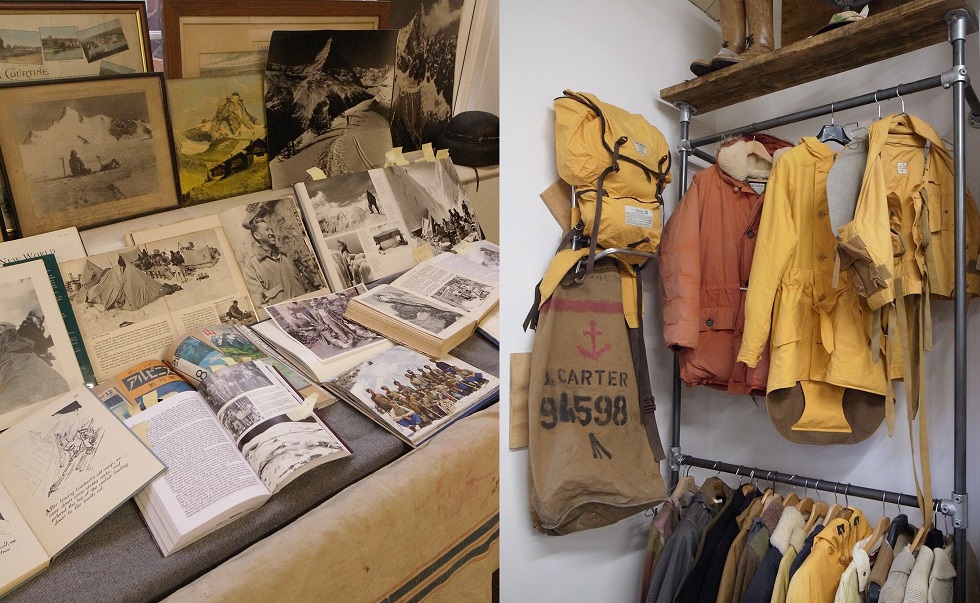
In a studio in Jesmond, Newcastle, there are 4,000 reasons why menswear looks the way it does today.
They hang on rails, fold into drawers, and stack in boxes: flight jackets from the Second World War, the wool serge of Antarctic expeditions, the canvas smocks of Edwardian mountaineers, the dungarees of North Sea dockers. Alongside them, 3,000 books — field manuals, military histories, expedition diaries, the paper archaeology of men doing hard things in extreme places. Taken together, it is one of the most extraordinary private archives in the history of fashion. And for nearly six decades, it was the mind, the method, and the soul of one man.
Nigel Cabourn died at home in Jesmond on 11 June 2026, peacefully, after a recurrence of cancer. He was 76 years old.
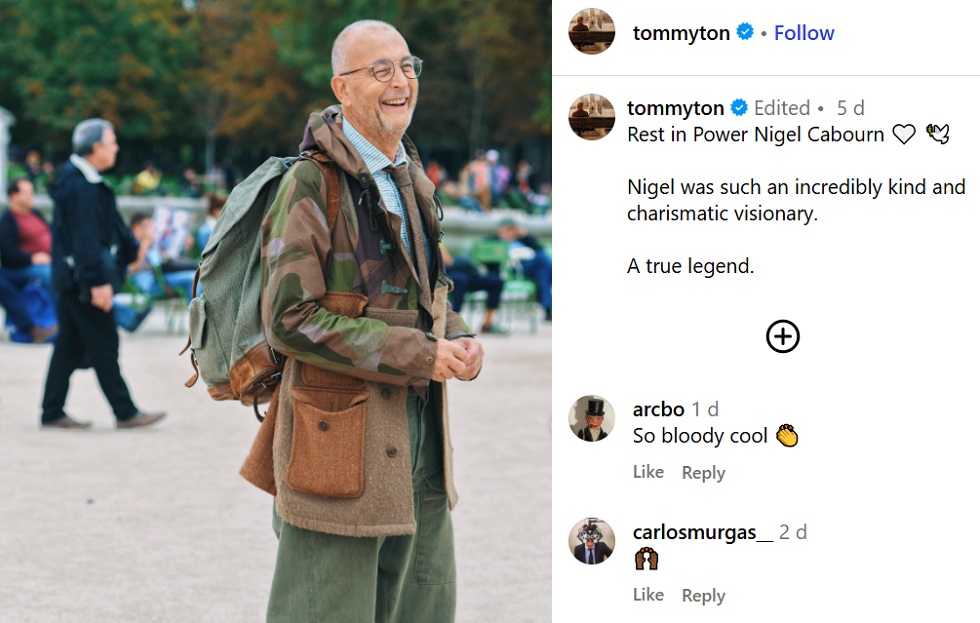
He was not a household name. He never particularly wanted to be. But as the public messages keep being posted, his influence and legacy will be felt for the ages.
A Postmaster’s Son from Peterlee
He was born on 7 October 1949, near Scunthorpe, and grew up in Peterlee — a new town built in County Durham in the postwar years, functional and purposeful, the kind of place that teaches you to value things that work. His father was the local postmaster.
The story of how Nigel Cabourn ended up in fashion is one of the industry’s better origin myths. He enrolled at Newcastle College of Art and Industrial Design — now Northumbria University — in 1967, reportedly on the advice of a friend who suggested it was a good place to meet girls. He stayed for four years. What he found there wasn’t glamour or trend-chasing. It was craft. Structure. The logic of how a garment is built and why. He graduated in 1971 and never really left the North East. That stubbornness — that refusal to relocate to London and play the game on the industry’s terms — would define everything that followed.
Cricket, and the Education of a Designer
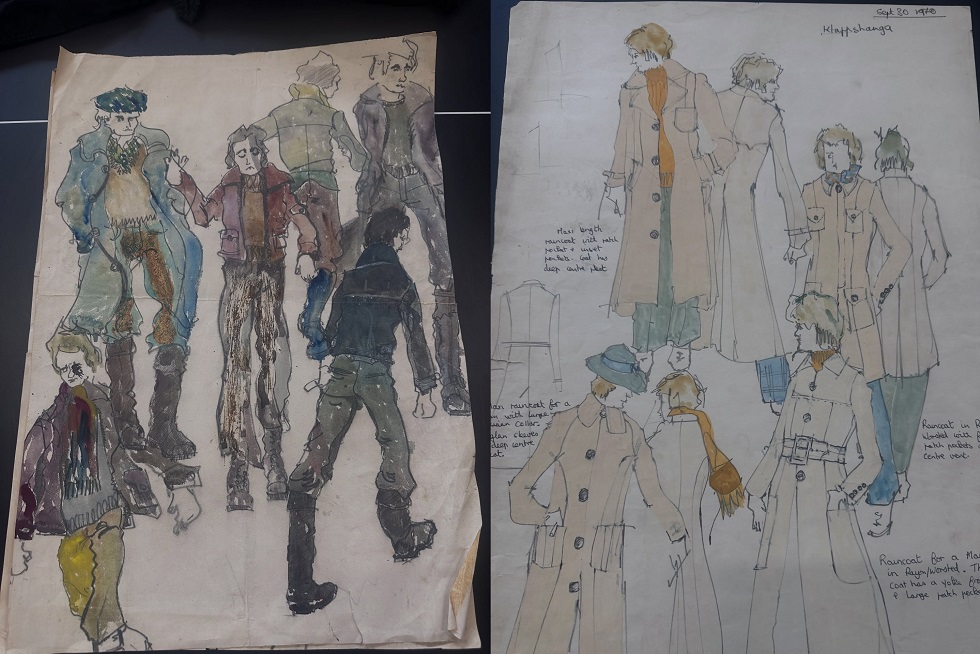
In 1969, while still a student, Cabourn launched his first menswear label. He called it Cricket.
It was, by the standards of the era, a serious proposition. Tailored, considered, rooted in the kind of British menswear that drew on sporting and military heritage rather than the psychedelic swirl of the moment. Cricket found its audience. Through the 1970s and into the early 1980s, the label grew — not explosively, but steadily.
The pivotal moment came in 1979, at the Paris menswear fair Sehm. On the Cricket stand, Cabourn met Sam Sugure, a Japanese wholesaler who had already introduced Margaret Howell to Japan. Sugure laid down an order worth £250,000. It was, by any measure, a life-changing number. The two became partners, and Cabourn’s long, deep, reciprocal love affair with Japan began.
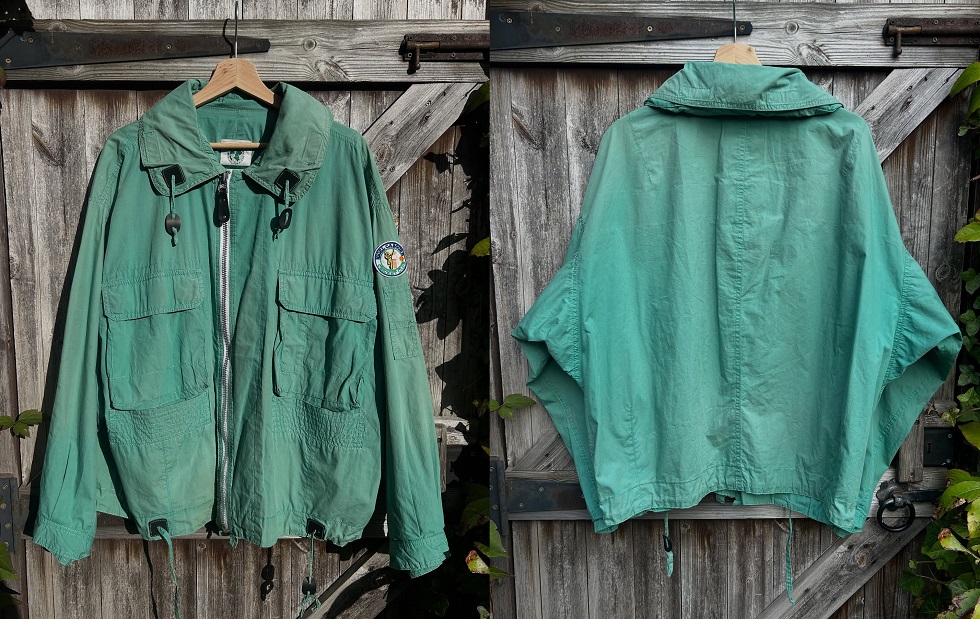
It was also around this time that Paul Smith — then selling some of Cabourn’s early tailored suits to wholesale customers — handed him something that would redirect the next four decades of his creative life. A military jacket. Just a gift, passed between friends. But for Cabourn, it was a spark landing in dry grass.
Cricket ran until 1984, when cashflow problems — the perennial enemy of the passionate designer — forced its liquidation, despite backing from Manchester-based menswear company Impeccable. It was a blow. But Cabourn, characteristically, didn’t collapse. He adapted. He took his name back, made it the brand, and kept going.
In the years immediately after Cricket, he followed a more commercial path out of necessity — producing designs for Next for Men, French Connection, and Philip Start’s Woodhouse chain. In 1985, Woman magazine named him Designer of the Year for his work with Woodhouse. It was the first time the accolade had gone to a menswear designer.
The Archive and the Obsession
By the late 1980s and through the 1990s, Cabourn had begun building what would become the most important tool in his design process: the archive.
He haunted flea markets. He cultivated relationships with vintage specialists. He traveled, hunted, and accumulated. He slowly but surely became one of the world’s great archivists. Every piece he acquired was a primary source. A 1940s RAF Irvin jacket wasn’t just a beautiful object; it was a document. It told you how the collar was engineered to protect a pilot’s neck in an open cockpit, why the leather was cut that way, what the lining was doing, how the hardware was designed to be operated with gloved hands at altitude.
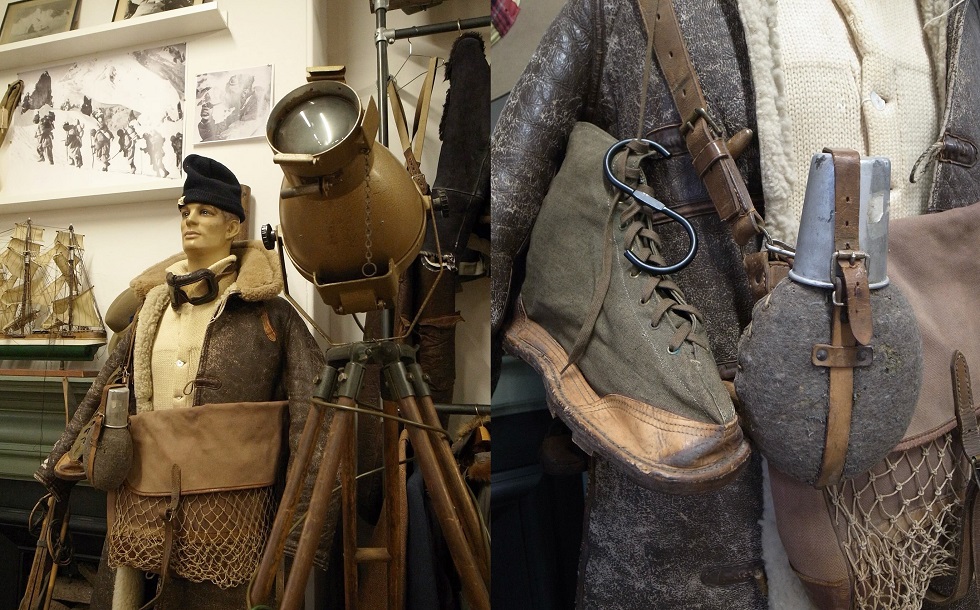
The archive grew to over 4,000 pieces — primarily military uniforms, expedition outerwear, workwear, and vintage sportswear. Alongside it, 3,000 books. The Jesmond studio became a kind of living museum, and from it, Cabourn produced collections that weren’t reproductions or costumes, but translations: the DNA of a 1943 flight suit reinterpreted in Harris Tweed, the cut of a Shackleton-era anorak rebuilt in Ventile, the logic of a dock worker’s smock applied to a contemporary silhouette.
This was the methodology that made him singular. Not nostalgia. Not pastiche. Something more rigorous and more honest — a designer who understood that the past had already solved many of the problems the present was still fumbling with, and who had the knowledge and the humility to learn from it.
Japan, and the Cult That Built an Empire
While Cabourn remained stubbornly rooted in Newcastle, his reputation grew most powerfully on the other side of the world.
Japan had been watching since that Paris fair in 1979. By the mid-1980s, a handful of Nigel Cabourn stores had opened in Japan. By the 2000s, the brand had achieved something rare: genuine cult status in a market that takes heritage more seriously than almost anywhere else on earth. Japanese consumers, with their deep appreciation for provenance, craft, and the stories embedded in objects, understood instinctively what Cabourn was doing.
In 2009, the Army Gym opened in Tokyo — a Japanese flagship that became a pilgrimage destination for the menswear faithful. The store’s aesthetic mirrored the archive — dense with reference, rich with history, the kind of place where you could spend an hour just reading the walls.
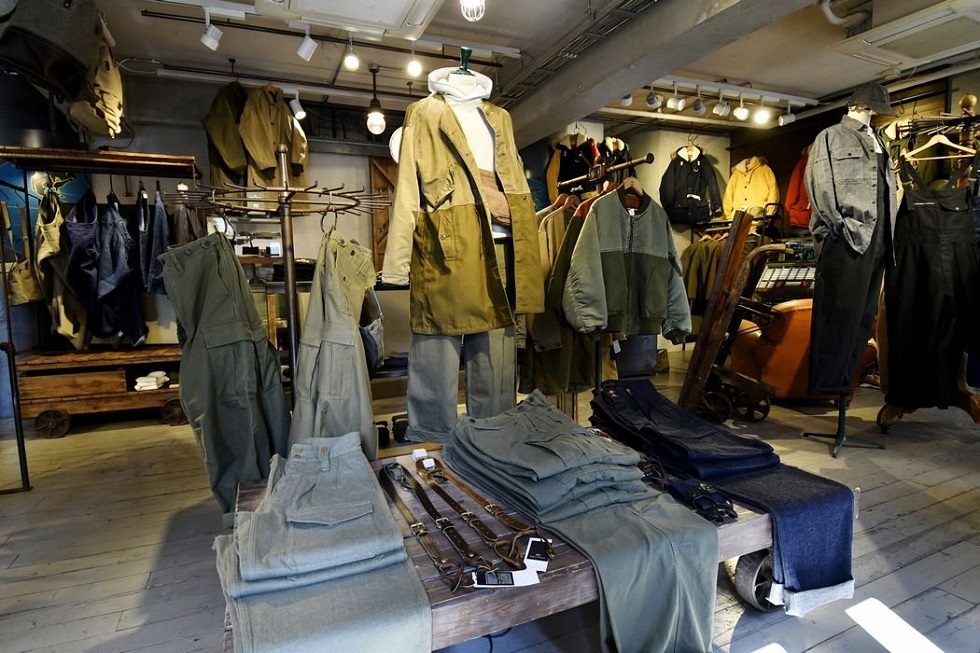
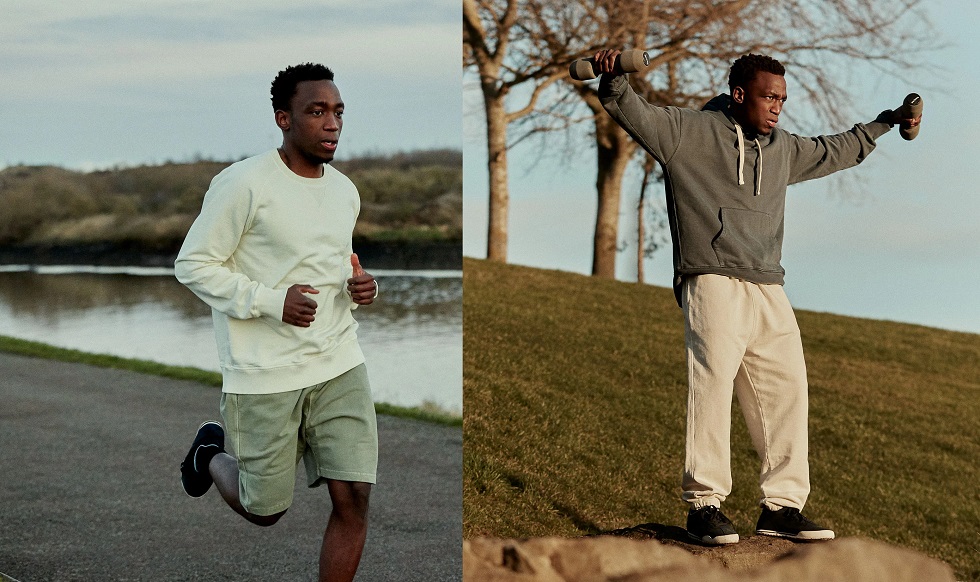
At its peak, the Nigel Cabourn brand operated 26 stores globally, with 16 in Japan alone. Since January 2025, the Japanese licence had been held by Marubeni, one of Japan’s major trading houses — a measure of how seriously the market took what he had built. Global turnover for the brand sat at around £10 million. For a fiercely independent, design-led operation run from a suburb of Newcastle, it was a remarkable number.
Mallory, Hillary, and the Mountains
From the early 2000s onward, two figures dominated Cabourn’s imagination above all others.
George Mallory — the English mountaineer who disappeared near the summit of Everest in 1924, his fate still unknown — and Edmund Hillary, who stood on the top of the world in 1953 in gear that owed more to ingenuity and layering knowledge than to any modern technical textile. Cabourn was obsessed with both men, and with the broader world of polar and high-altitude exploration: Robert Falcon Scott’s doomed Antarctic expedition, Ernest Shackleton’s extraordinary survival story, the whole tradition of British men going to impossible places in wool and canvas and coming back — or not — changed forever.
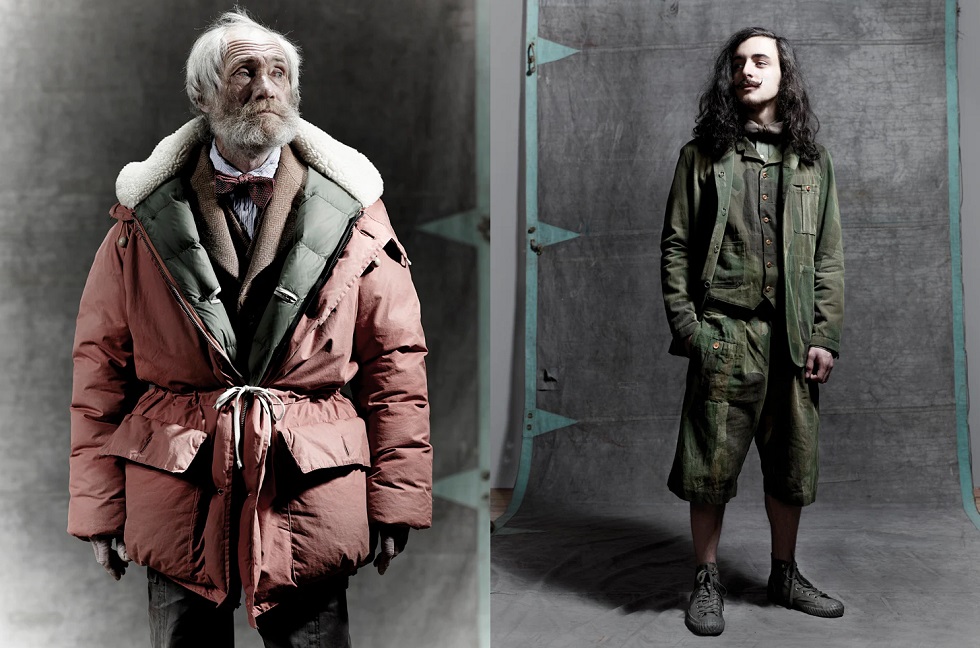
These figures gave his collections their emotional architecture. The Everest Parka — his most iconic piece, retailing at £3,100 — was not a jacket you bought because it was on trend. It was a jacket you bought because it was the distillation of everything Cabourn had learned from a century of expedition outerwear, rebuilt with the finest British-made fabrics and the kind of construction that expected to outlast its owner. Ventile cotton — the same densely woven fabric developed in wartime Britain to keep downed RAF pilots alive in the North Sea — appeared throughout his Authentic line. Harris Tweed, woven in the Outer Hebrides under strict protected designation rules, was a recurring signature.
The Ecosystem He Created
One of the less-told stories of Cabourn’s career is the ecosystem that grew around him.
His influence didn’t just ripple outward through the brands that collaborated with him — though the list is long and telling: Alpha Industries, Banana Republic, Converse, Eddie Bauer, Filson, Fred Perry, Gloverall, Henri-Lloyd, Karrimor, London Fog, Peak Performance, Red Wing Boots, Rocky Mountain, Sunspel, Umbro, Unimatic. Each collaboration was a transmission — his archive-rooted philosophy cross-pollinating with brands that had their own heritage to draw on, producing work that neither party could have made alone.
But the deeper influence was generational. Cabourn was among the very first designers to treat vintage militaria and workwear not as subcultural curiosity but as legitimate, primary design source material. He was doing this in the 1980s, when the idea of a luxury Ventile parka inspired by Antarctic exploration would have seemed eccentric to most of the industry. By the 2010s, it was a category. Brands from William Ellery to Engineered Garments to Visvim, from Tender Co. to Monitaly, from Orslow to Kapital — the entire universe of what the menswear world came to call “heritage” or “workwear” or “military-inspired” design — owed a debt to the groundwork Cabourn had laid.
His sub-brands told the same story from different angles. Lybro — his workwear label — went deep into the tradition of British industrial clothing: the painters’ trousers, the riggers’ smocks, the boilermakers’ jackets. The Army Gym line drew on vintage sportswear and military physical training gear. Each was its own archive project, its own act of translation.
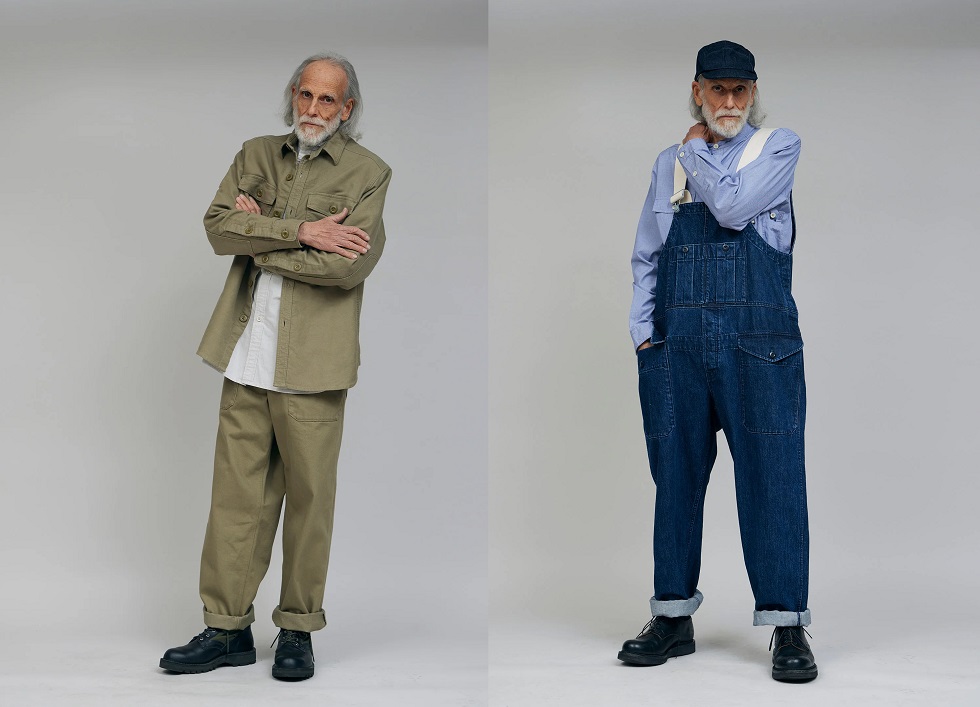
The Man in the Dungarees
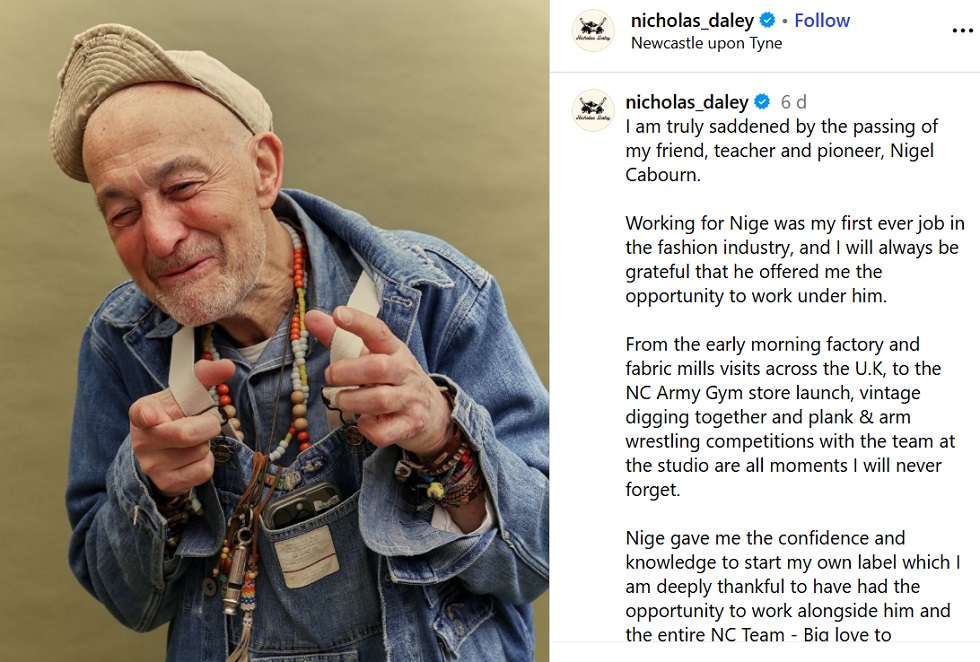
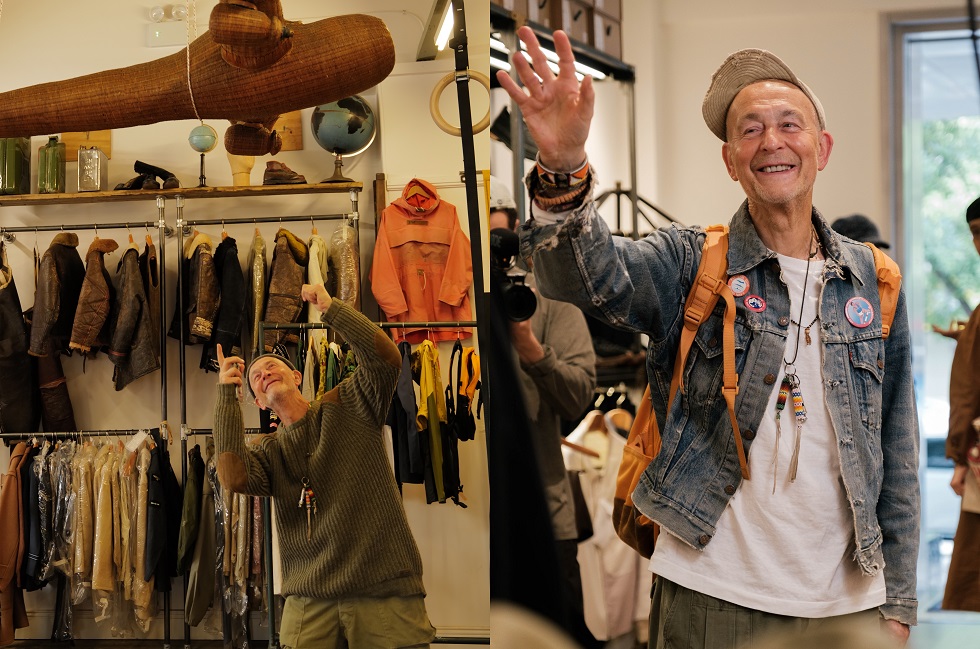
To those who knew him or followed him, Nige was as distinctive a figure as any of his garments.
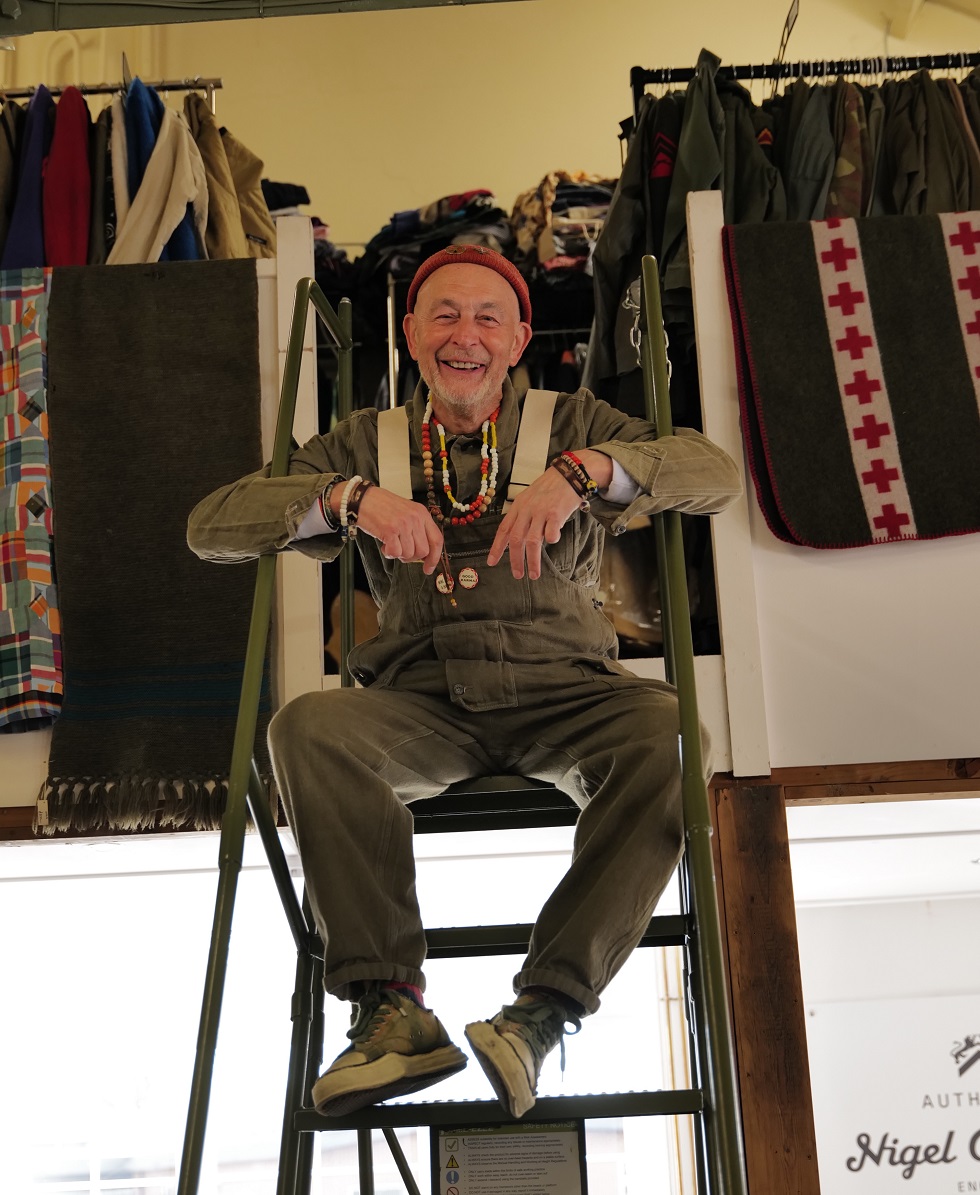
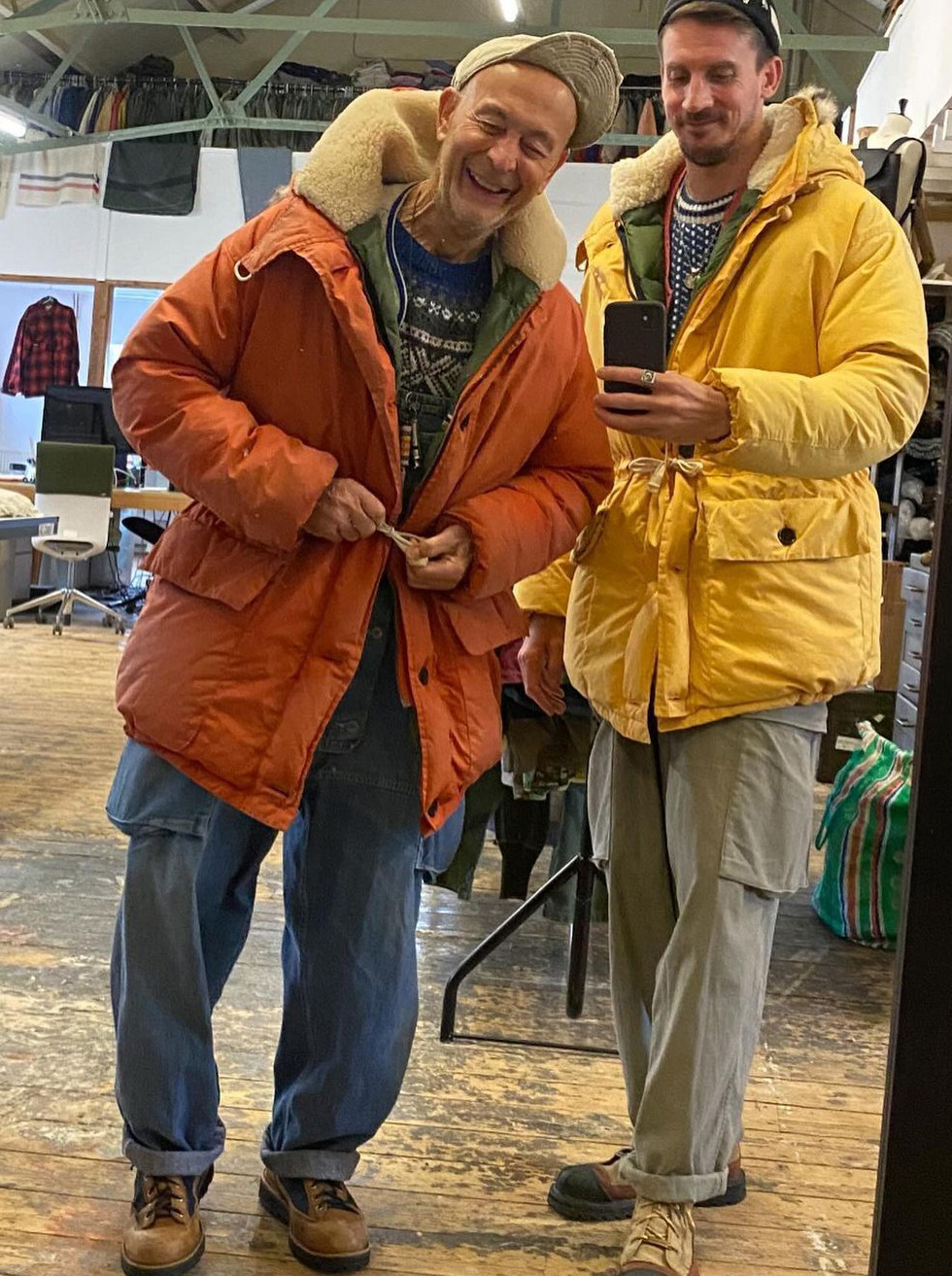
He wore dungarees. Almost always. Not as a statement, but as a preference — the most functional garment he knew, the one that made the most sense for a man who spent his days moving between archive rails and cutting tables and flea markets. He was, by all accounts, perpetually cheerful. Warm. Generous with his time and his knowledge. He held no particular interest in the mystique that some designers cultivate around themselves. He just liked history, liked people, liked talking about both.
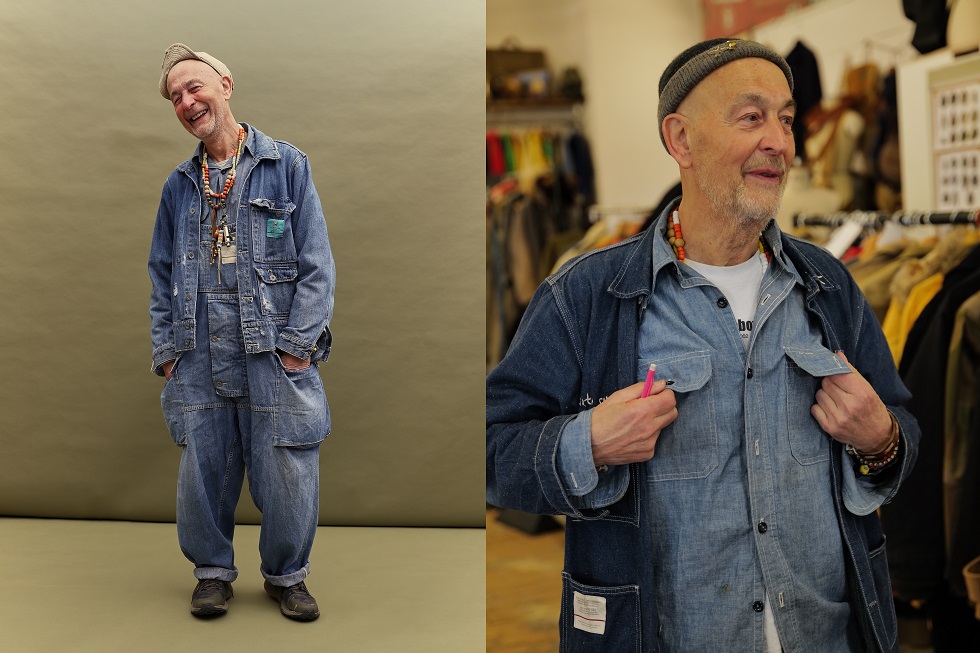
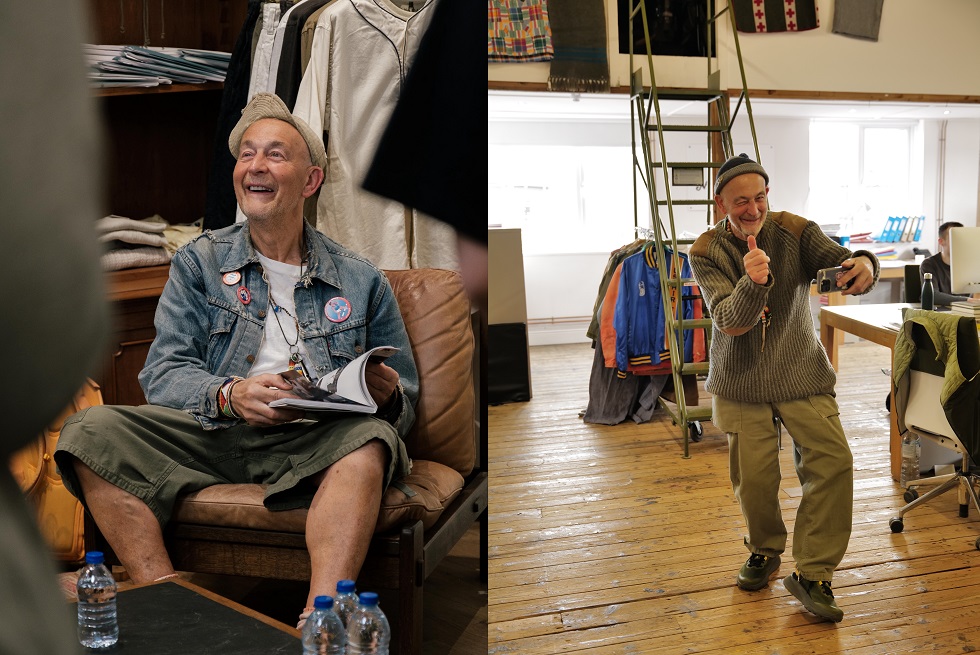
His 310,000 Instagram followers — a number that would have surprised him, probably — got a version of this every week: Nige at a market, Nige in the archive, Nige holding up a 1930s naval jacket and explaining why the pocket placement was so clever. It was the same energy he’d had since that Paris fair in 1979, the same curiosity, the same inability to look at a garment without wanting to understand it completely.
In an interview conducted just months before his death, he was asked how he saw himself. Not as a fashion designer, he said. As a clothing designer. “I’m a very functional designer. I’ve been lucky to do what I wanted to do, what I believed in.”
That was the whole thing, really. Fifty-seven years of doing what he believed in, from a suburb of Newcastle, for an audience that found him rather than the other way around.
What He Left Behind
The archive is still there. The studio in Jesmond is still there. The 11 Japanese stores, the 20-odd global wholesale stockists, the Authentic line made in Britain, the Lybro workwear, the Army Gym range — the infrastructure of a life’s work, still standing.
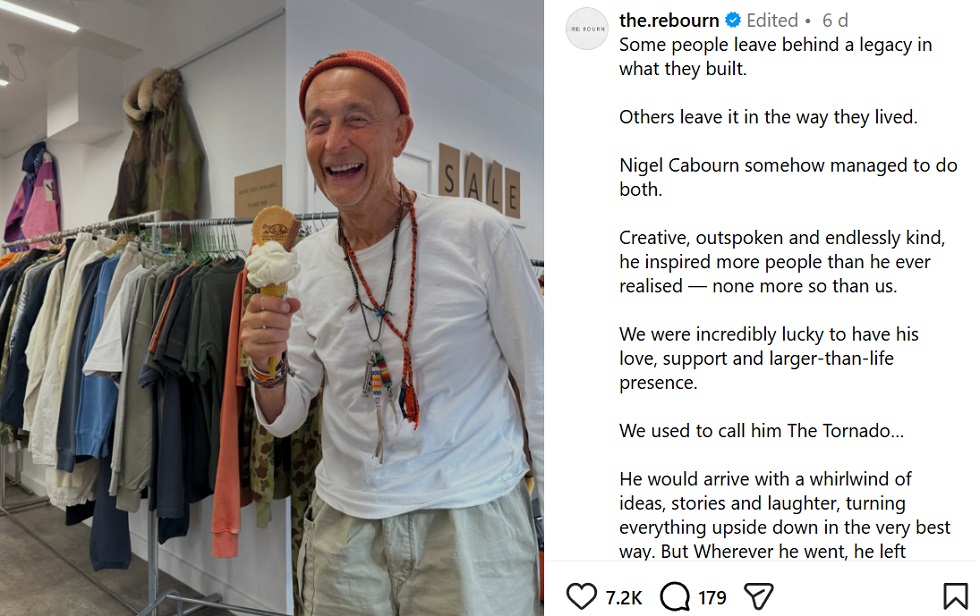
What’s harder to quantify is the permission he gave. Permission to build a brand on conviction rather than trend, on archive rather than algorithm, on the belief that the past had already made some of the best clothes in the history of clothing and that the honest designer’s job was to understand why.
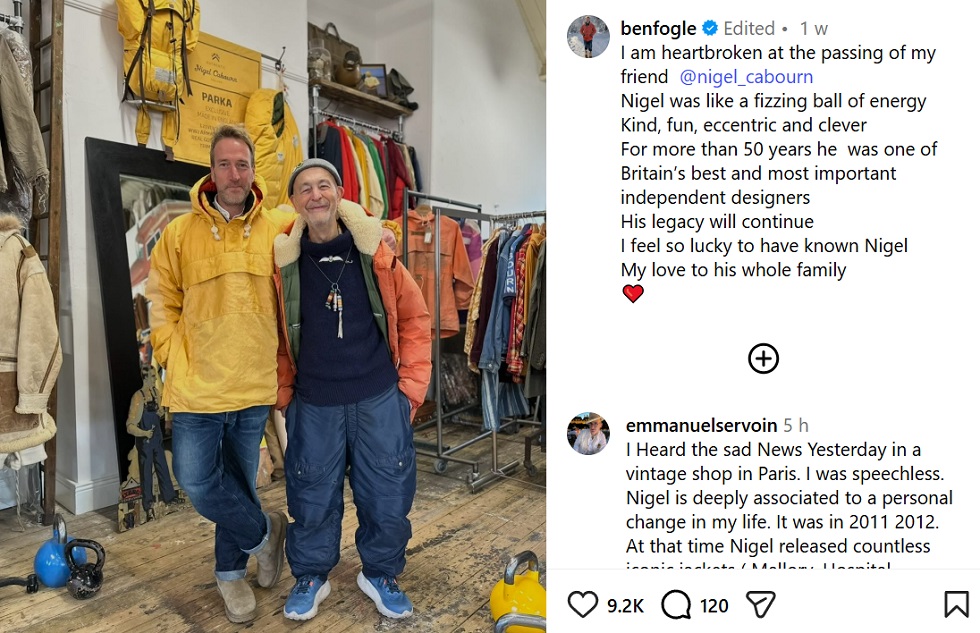
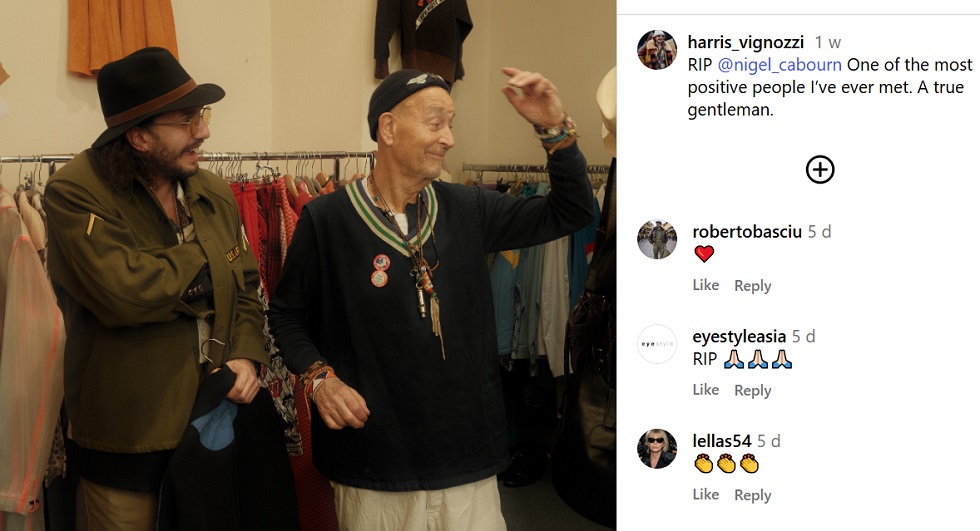
That permission reached further than most people realize. It reached independent makers and small studios — people who had absorbed Cabourn’s approach not through formal collaboration but through the simple act of watching how he worked, and deciding that was the kind of energy they wanted to work with too.
A Note from Alec Farmer
Nigel held a particular place in the heart of our own product lead, Alec Farmer — founder of Trakke, the Scottish bag-making studio built on many of the same convictions Cabourn spent his career embodying: craft over trend, utility as the starting point, the archive as teacher.
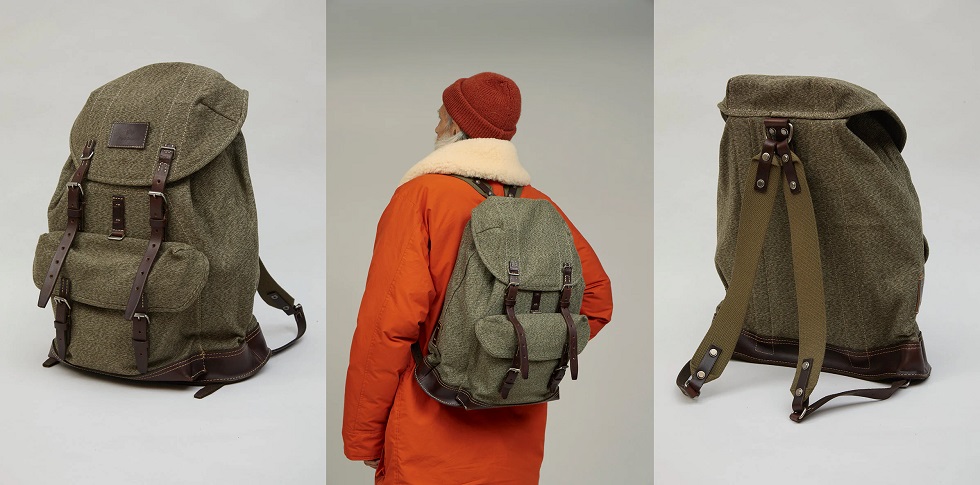
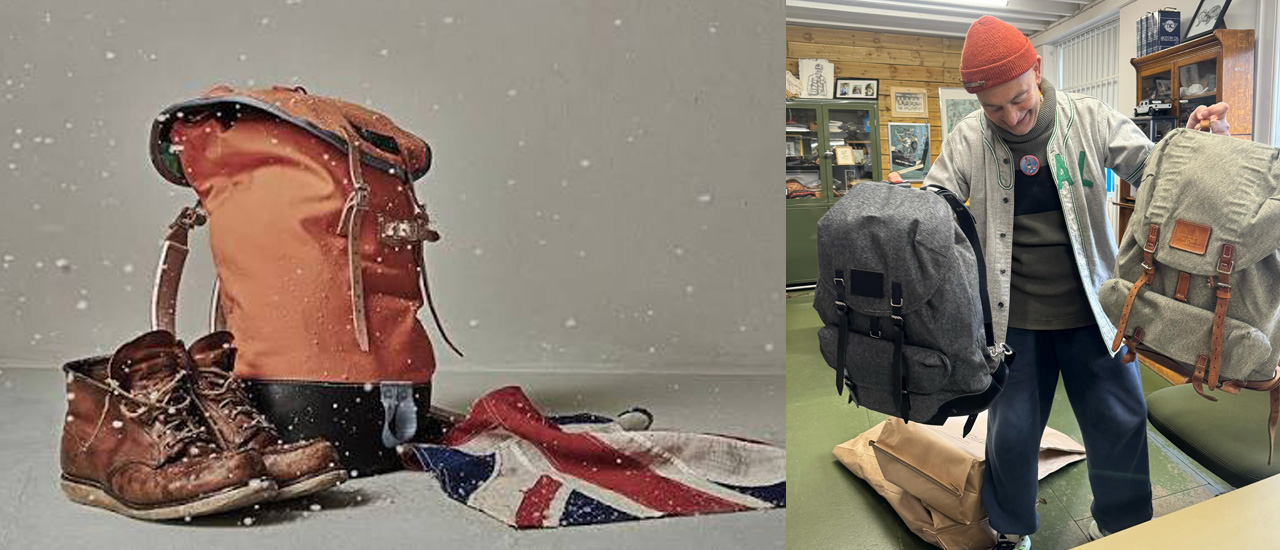
Alec worked with Nigel directly on two projects. The first was a recreation of a Karrimor pack — one of the great British carry names, pulled back from history and rebuilt with the rigour both men brought to everything they touched. The second never made it to market: a quiet homage to the Swiss Army rucksack, a project that existed in the space between research and realisation that Cabourn understood better than almost anyone.
That a pack never released can still matter this much says everything about the kind of maker Nigel was. The work wasn’t always about the product. Sometimes it was about the conversation — the shared obsession, the hours in the archive, the question of what something old was really trying to say.
We’ll let Alec say the rest in his own words.
— Alec Farmer, Product Lead, Carryology
Nigel Cabourn has long been one of my favorite designers. He worked in fashion, but always through the lens of function – and we shared a love of vintage military and outdoor gear. He always found the best reference points, and his creative direction was inspirational. So when I was asked to work with him, early in my career, I really was meeting one of my heroes.
Nigel was extremely charismatic. He had a boundless enthusiasm, a discerning eye for detail and an infectious love for his work. Like many iconic creatives, the excellence of his work was underpinned by an uncompromising focus on quality.
The two packs we worked on together are still perhaps two of my favorite projects of all time. While we worked on reproducing the Karrimor Whillans Alpiniste, we managed to find the exact same hardware used on the original, still made in exactly the same factory some 50 years later. The next project came about after bumping into Nigel – wearing a very worn-out Swiss Army pack – at a fabric fair in London. We got chatting, and of course we offered to make him a replacement. Plans to do a larger production run were hindered by the soaring prices of Salt & Pepper canvas at the time, but frankly, having Nigel wear one of my packs was one of the highlights of my career so far.
He’ll be dearly missed.
The post Nigel Cabourn | The Archivist appeared first on Carryology.