Credit: Goran Damnjanovic / How-To Geek
Most people are told never to use a Wi-Fi extender, and in most situations, that’s sound advice. Many Wi-Fi extenders cut your bandwidth in half, increase latency, can interfere with your main router’s Wi-Fi signal, can be unreliable, often have limited range, and are usually the worst way to extend Wi-Fi to dead spots in your home.
But when I needed to provide Wi-Fi coverage for my mom’s house about a year ago, I opted for a Wi-Fi extender, and it ultimately proved to be the right choice. Here’s why.
I had a unique problem on my hands
My mom needed Wi-Fi
 Credit: Lucas Gouveia/How-To Geek | Pixel-Shot/Shutterstock
My mom and my uncle (her brother) live in a small village in two different houses that share the same yard. While my uncle’s house has a landline, my mom’s doesn’t, and neither house has access to cable TV or internet.
For years, they used a 20Mbps DSL connection, which was enough for them because they’re anything but demanding. The router was located in my uncle’s living room, the room closest to my mom’s house, so she had a solid Wi-Fi signal that topped out at about 10Mbps and covered the rooms where she needed internet access—the kitchen, dining room, and bedroom—quite well.
But about a year and change ago, my cousin, who lives in the same village, managed to negotiate a deal for them with a local ISP that offered fixed wireless internet. They would get a 50Mbps plan that was cheaper than their 20Mbps DSL service, which sounded great. So the technicians came, installed the antenna on the roof of my uncle’s house (it’s a two-story house, while my mom lives in a one-story house), drilled through the floors to route the cable down to the ground floor, and installed the router there.
The catch was that, for some reason, they placed the router right smack in the middle of the dining room, which is the room farthest from my mom’s house. That was too far for the router’s Wi-Fi signal to reach her house reliably. She had to step outside to get a usable signal, which was less than ideal, to say the least.
Since the router couldn’t be moved without us drilling a few more holes through concrete walls, I had a couple of options on the table for extending Wi-Fi to my mom’s house that didn’t involve such drastic measures.
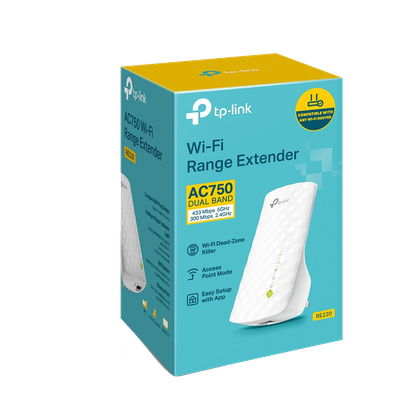
TP-Link AC750 Wi-Fi Extender (RE220)
It’s hard to fault a Wi-Fi extender when it’s so cheap, but the Re220 manages to put give you just the right amount of features and performance to make it a contender.
I decided to try a Wi-Fi extender and see how it goes
It couldn’t hurt, right?
For starters, I couldn’t run an Ethernet cable to my mom’s house or close enough to it to install an access point that could provide Wi-Fi coverage, because that would have required drilling multiple holes through thick concrete walls. As I’ve already said, moving the router was also out of the question, and we agreed to use that option only as a last resort if nothing else worked.
Buying a mesh system was one possibility, but before going that route, I decided to try a universally hated Wi-Fi extender. It couldn’t hurt to give it a shot, and I could get one for about $25. So I went out and bought a budget single-band (2.4GHz) Tenda Wi-Fi extender. I came back and set it up, which was a breeze thanks to the mobile app. But when I went to my mom’s house to plug it in, I ran into a problem: the router’s Wi-Fi signal was too weak inside her house for the extender to pick up, so I had to improvise.
Her house is attached to a garage-slash-summer kitchen that they use for their only car, cooking during the warmer months, and storing a large freezer. The garage receives a serviceable signal from the router and has multiple power outlets, so I grabbed an extension cord, hung it around a structural beam, and plugged in the extender. And what do you know, it worked. The signal was strong enough to deliver about 15Mbps to her house, even though the signal light glowed yellow rather than green, indicating that the router’s signal wasn’t particularly strong.
Testing the signal around her house showed that the extender was handling everything without a hitch. Even in my old room, which is the farthest from the garage, the signal was stable and delivered the same 15Mbps throughput.
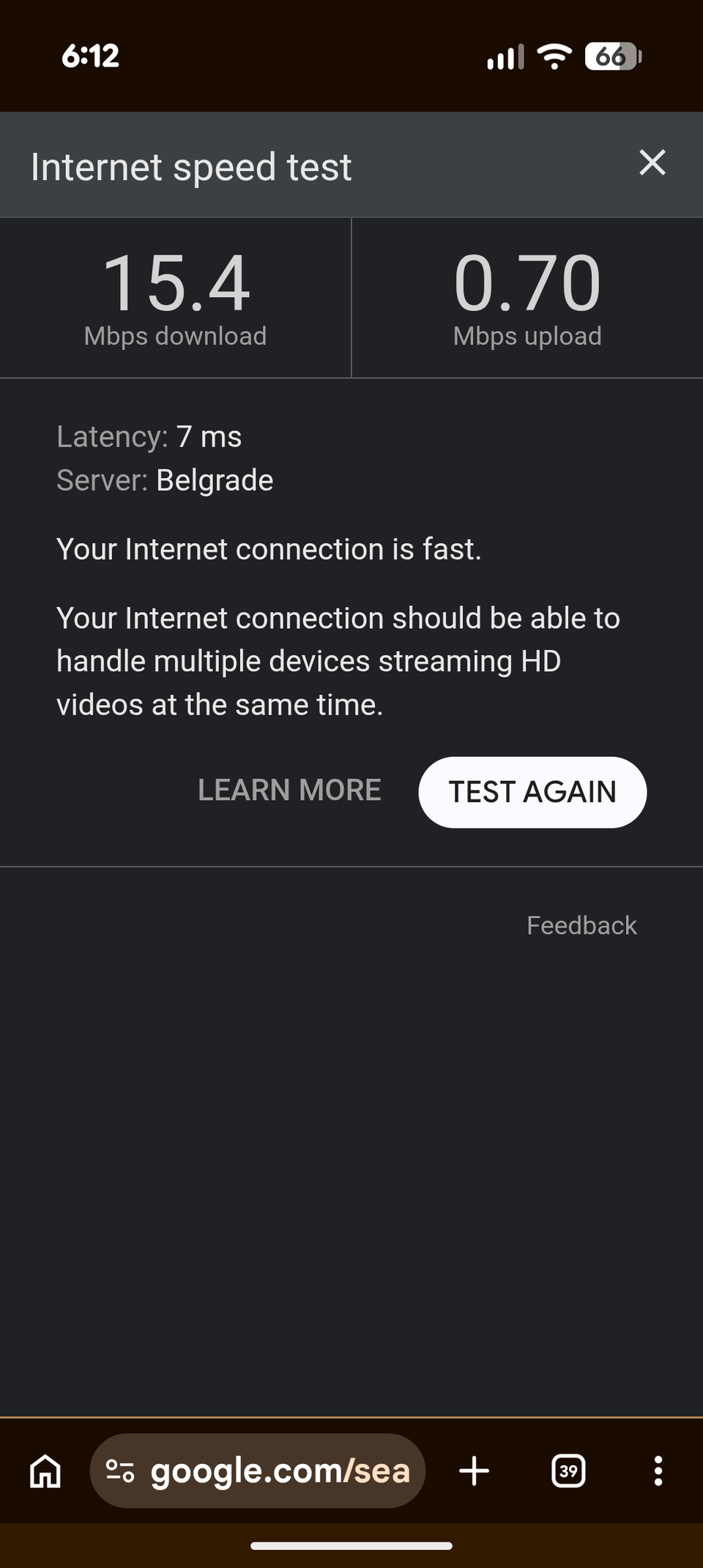
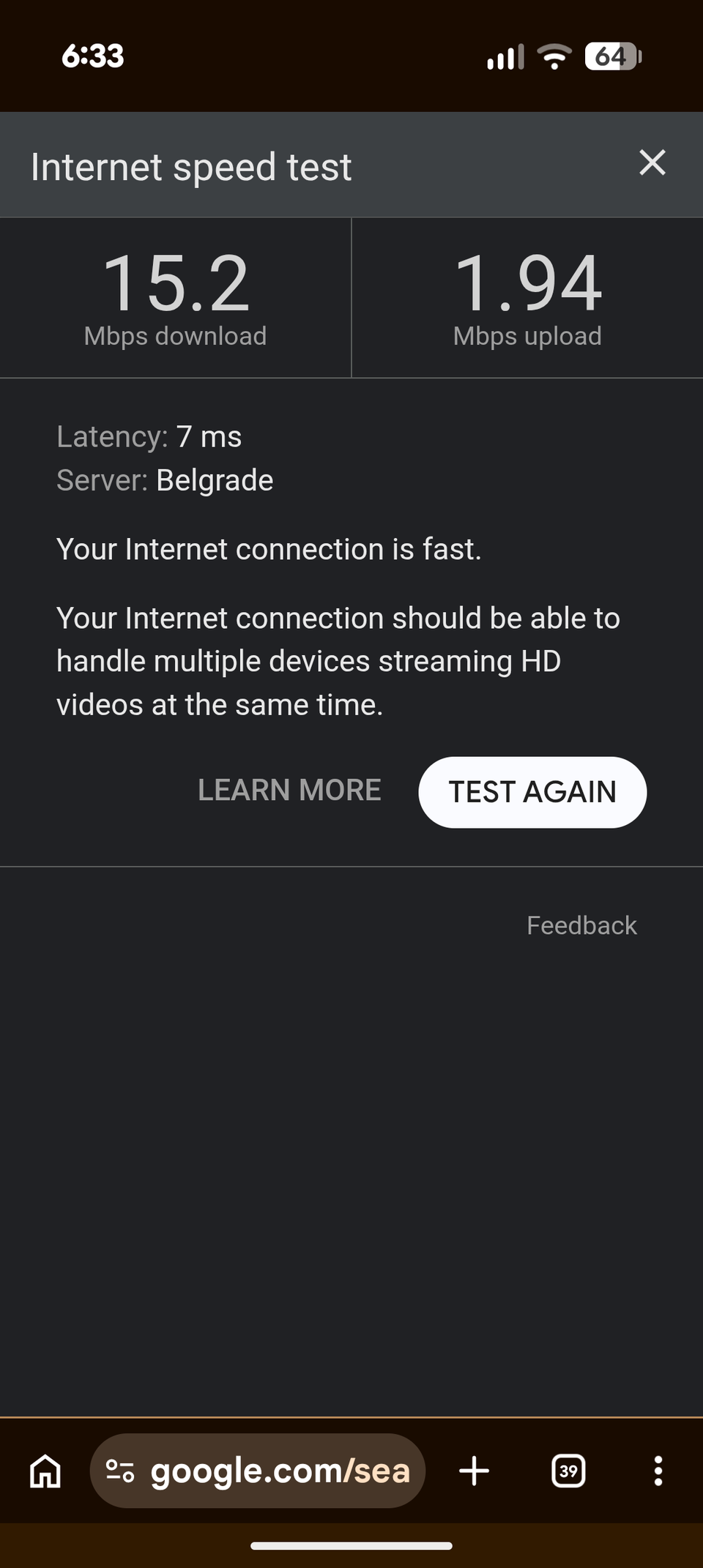
So I went back home and left her with the extender to test it for a few weeks. If things went south, I’d get a mesh Wi-Fi system and call it a day. But she was happy with the speed and didn’t experience any dropouts or bandwidth issues. Turns out Wi-Fi extenders can be the right choice—but only in specific situations.
A Wi-Fi extender was the right choice for that specific use case
A solid option when you don’t need a fast, low latency connection
 Credit: devolo
A Wi-Fi extender turned out to be the right choice for this use case due to a perfect storm of circumstances. For starters, they live in a small village that isn’t drowning in Wi-Fi signals. There’s an empty lot next to my mom’s house, and they only have one neighbor with Wi-Fi next to my uncle’s house. However, that neighbor’s Wi-Fi doesn’t reach my mom’s house or the garage where the extender is located, so interference isn’t an issue.
Next, the router’s Wi-Fi signal only reaches the garage, so my mom’s tablet doesn’t pick up the router’s network—only the signal coming from the extender. Her tablet is the only client device the extender has to handle, which helps explain why the connection is so stable and doesn’t slow down. She also only uses WhatsApp and YouTube, so about 15Mbps is plenty for her needs, especially since there aren’t any other devices competing for bandwidth.
She also doesn’t need a low-latency connection, so the fact that the extender delivers less than half of the available bandwidth and adds some latency doesn’t mean squat in her case. Lastly, the extender covers her entire house, so I didn’t need to daisy-chain multiple extenders, which would likely have severely reduced both the speed and quality of the Wi-Fi connection.
So yeah, I realized that Wi-Fi extenders aren’t complete trash—but only in specific circumstances. When the area you want to cover isn’t drowning in Wi-Fi signals, when you don’t need fast internet, when client devices can’t see the primary router’s network, and when the extender only has to handle a single device or a handful of them, it can be a solid option for covering Wi-Fi dead spots.
You shouldn’t completely ignore Wi-Fi extenders
Just be aware of their limitations
 Credit: Lucas Gouveia / How-To Geek | Best Buy | CoinUp / Shutterstock
In the end, picking a Wi-Fi extender was the right choice after all, probably because of the right combination of factors:
- Minimal interference from the main router or nearby Wi-Fi networks
- Client devices connected to the extender not having access to a usable signal from the main router
- The extender only having to handle one or a few client devices
- No need for a fast or low-latency connection
If you’ve got a similar combination of factors, you might be able to make it work even with a Wi-Fi repeater. For instance, if you live in a rural area or suburb with little Wi-Fi interference, only plan to connect one or a handful of devices to the extender at a time, and don’t care about fast, low-latency internet, it’s worth giving an extender a try. But if you need high-speed, stable Wi-Fi and your house or apartment is drowning in Wi-Fi and other wireless signals, consider a different solution.
An old router repurposed as a wireless access point can be a great option, as can a proper access point with wired backhaul. A mesh Wi-Fi system is also a better solution, even when using wireless backhaul. If you’ve got coaxial cabling, you should look into MoCA adapters. Even powerline adapters can be a better solution than a Wi-Fi extender in many situations.
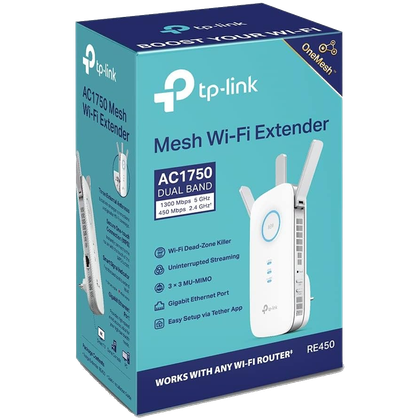
TP-Link AC1750 Wi-Fi Extender (RE450)
With great speeds across two bands and easy-to-use features, the RE450 does a great job ticking boxes while maintaining a great price.
A year later, it’s still going strong
Since I installed it, I’ve received zero complaints from my mom. I’ve also visited a few times and slept over in my old room, the one farthest from the extender (we’re talking about roughly 16 feet and multiple concrete walls between the extender and my room), and the connection has been stable, if not particularly strong. I managed to browse Reddit and listen to Spotify simultaneously, watch YouTube in 720p and 1080p, and even download a few small indie games on my PC handhelds without the signal dropping or the speed slowing to a halt.
In most situations, Wi-Fi extenders are the last option you should reach for to bring Wi-Fi to dead spots in your household. But when the stars align, like they did in my case, a Wi-Fi repeater can be a cheap and cheerful solution to your Wi-Fi woes.