
 Credit: Joe Kucinski | How-to Geek
As America celebrates its 250th birthday, it’s the perfect time to reflect on one of the country’s greatest automotive creations, the muscle car. Few vehicles are more uniquely American.
While European manufacturers became known for building lightweight sports cars capable of carving along alpine roads and Japanese automakers earned a reputation for reliability and efficiency, Detroit chose a different path. It took affordable coupes, stuffed enormous V8 engines under their hoods, and created cars that prioritized straight-line speed, tire smoke, and unforgettable exhaust notes over lap times and refinement.
The rise and fall of the original muscle car era
How the Pontiac GTO started a revolution
Most enthusiasts point to the 1964 Pontiac GTO as the car that ignited the muscle car movement. Pontiac engineers installed a 389-cubic-inch V8 into the midsize Tempest body and expected to sell around 5,000 examples. Instead, demand exploded, and the message to Detroit was soon clear. Americans wanted horsepower, and they wanted lots of it.
The years that followed produced some of the most iconic performance cars ever built. The Chevrolet Chevelle SS 454, Dodge Charger R/T, Plymouth Hemi ‘Cuda, and Mustang Boss 429 weren’t sophisticated sports cars by European standards. They didn’t corner particularly well, braking performance often left something to be desired, and fuel economy wasn’t even part of the conversation. None of that mattered. They were fast, affordable, intimidating, loud, and unmistakably American.
Like many great automotive eras, however, the first golden age of muscle cars didn’t last forever. The oil crisis of the 1970s, rising insurance costs, and increasingly strict emissions regulations quickly brought the horsepower wars to a halt. Performance figures dropped dramatically, and by the end of the decade, many legendary muscle cars had become little more than appearance packages wearing famous badges.
For many enthusiasts, it seemed the muscle car had become another casualty of changing times. Fortunately, that turned out to be only the end of the first chapter.
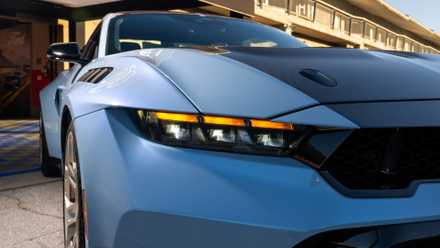
Hold On Tight—the Fastest Mustang in History Has Entered Production
Ford CEO Jim Farley confirmed that 10 cars have already been produced at the Multimatic factory.
The second golden age of American muscle
When the horsepower wars returned
Roughly 20 years ago, Detroit launched an unexpected muscle car renaissance. Ford still had the Mustang with retro-inspired styling, Chevrolet brought back the Camaro, and Dodge resurrected the Challenger. What started as a nostalgic return to America’s performance roots quickly evolved into another horsepower war. The numbers climbed almost every year. Four hundred horsepower became normal. Five hundred horsepower became expected.
Then came 700-horsepower Hellcats, followed by the 1,025-horsepower Dodge Challenger SRT Demon 170, a car so outrageous it seemed to exist simply because someone at Dodge wanted to prove it could be done. For a while, it looked as though the muscle car had entered its greatest era yet. Then history threatened to repeat itself.
Consumer preferences continued to trend toward SUVs and pickups. Automakers redirected billions of dollars toward electrification. Tightening emissions regulations and increasingly expensive safety requirements made low-volume performance coupes more difficult to justify. Chevrolet discontinued the Camaro, while Dodge introduced a new battery-electric-powered Charger.
Many enthusiasts concluded that the American muscle car had finally reached the end of the road. However, the American muscle car, much like the old man in Monty Python and the Holy Grail, wasn’t dead yet.
The comeback has already begun
V8 power is back on the menu
One company never abandoned the traditional formula. The Ford Mustang continues to offer exactly what enthusiasts have always associated with a real muscle car. It has a naturally aspirated V8, rear-wheel drive, and a six-speed manual transmission. In an automotive world increasingly dominated by crossovers and electrification, the Mustang remains a reminder that there is still a market for old-school performance.
More importantly, recent sales trends suggest enthusiasts haven’t lost interest in muscle cars. Mustang sales are up 22 percent for the first half of 2026 compared to 2025. Dodge’s electric Charger has struggled to gain traction, while the newly introduced gasoline-powered Charger equipped with the twin-turbo Hurricane inline-six has generated significantly stronger demand. Even though the Hurricane engine delivers impressive performance, many buyers still see it as a stepping stone rather than the destination.
That’s why Dodge’s plans to bring a supercharged Hemi V8 back to the top of the Charger line are so significant. It isn’t simply an exercise in nostalgia; it’s an emergency course correction to a market that is fundamentally rejecting an all-electric muscle future.
It’s also an acknowledgment that, for many enthusiasts, horsepower numbers alone don’t define a muscle car. The sound, vibration, mechanical character, and emotional connection provided by a V8 remain irreplaceable. An electric car may accelerate faster, but speed has never been the only ingredient that mattered.
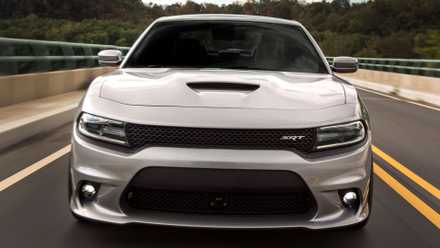
A 500-hp family muscle car you can buy for Camry money
You could grab a sensible commuter… or spend the same cash on a 500-hp family bruiser that’s way more fun.
The future won’t look exactly like the past
Today’s muscle cars are the best they’ve ever been
 Credit: Ford
That doesn’t mean the future will look exactly like the past. Modern muscle cars will almost certainly be more expensive than their predecessors. They must meet crash standards, emissions regulations, and customer expectations that didn’t exist in the 1960s.
Buyers now expect adaptive cruise control, sophisticated infotainment systems, premium interiors, and advanced driver-assistance technology alongside tire-smoking performance. Those features inevitably add cost, complexity, and weight.
Yet today’s muscle cars are objectively better in almost every measurable way. A modern Mustang GT would outperform nearly every production muscle car from the original era while offering greater reliability, improved handling, shorter stopping distances, and fuel economy that would have seemed impossible years ago.
American muscle still has plenty of tread left on the tires
 Credit: Joe Kucinski | How-to Geek
Thankfully, the muscle car never truly disappeared. It simply spent a few years caught between changing regulations, shifting consumer preferences, and an industry racing toward electrification. Now, as automakers adjust to what buyers want today, the outlook suddenly appears much brighter than it did only a year or two ago.
Enthusiasts may have wondered whether they had witnessed the end of an era. Increasingly, it looks like they were simply waiting for the beginning of the next one.











5