Modern warfare relies on the latest technologies but in Austria a training base teaches soldiers how to handle pack animals, proving that there’s plenty of life in the old war horse yet.
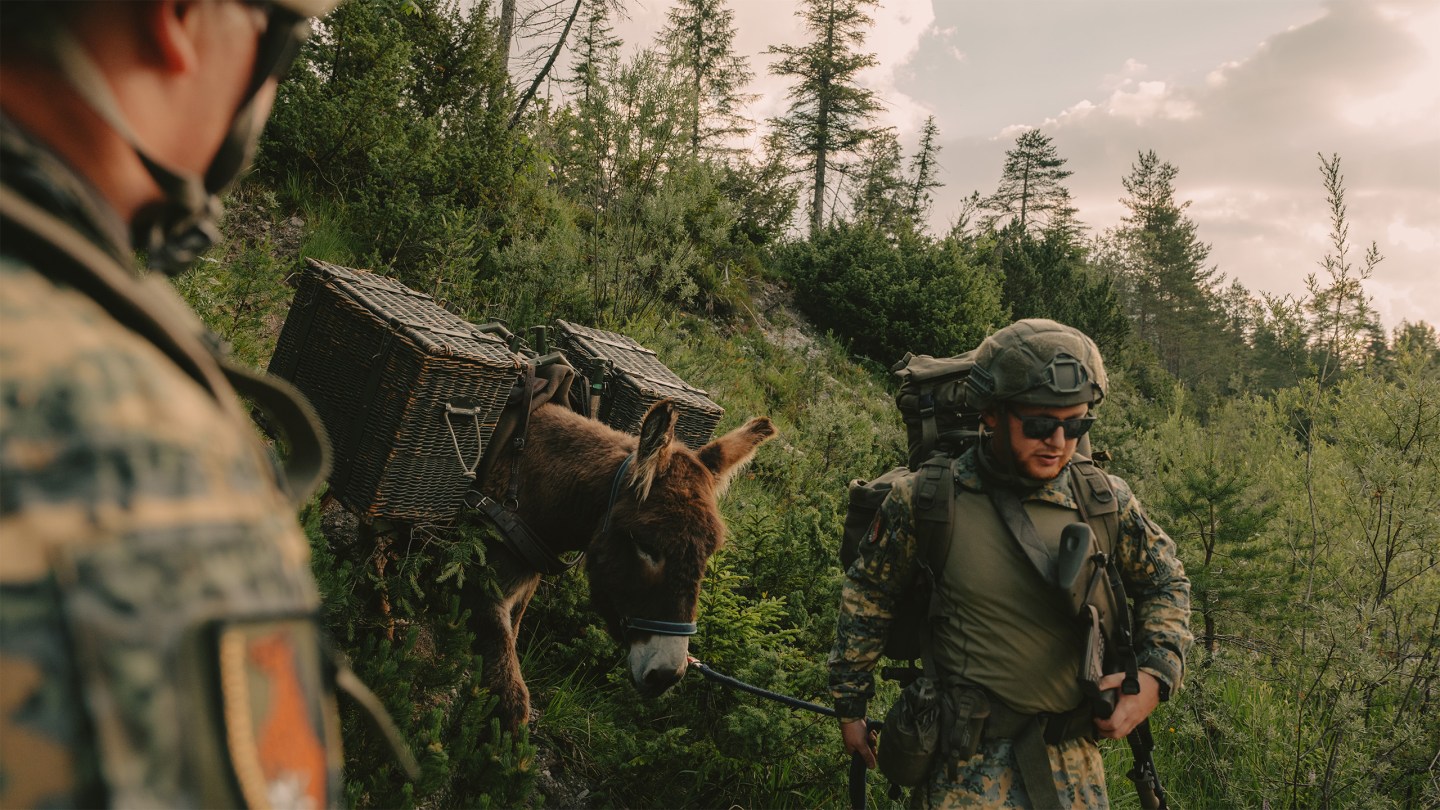
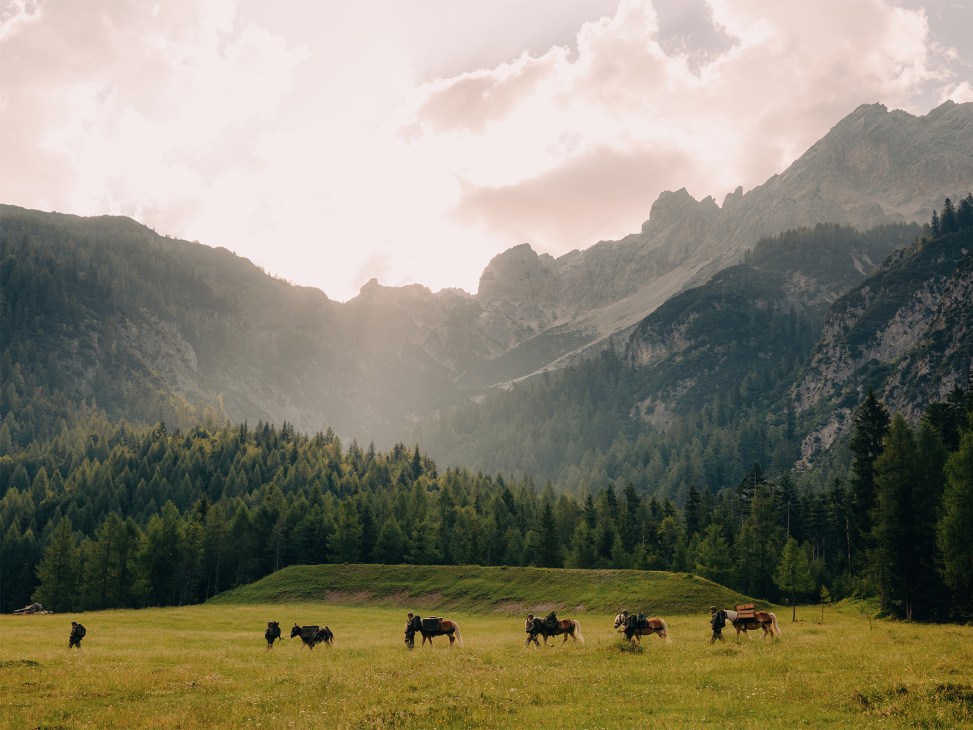
It’s 05.00 when soldiers at the Austrian Armed Forces’ Alpine base in Hochfilzen rise for a morning routine that might look rather old-fashioned. They muck out the stables, lay down fresh bedding and feed their 50 Haflinger horses and eight serving donkeys. Four of the horses and a donkey are fitted with pack saddles that are capable of carrying up to about 120kg of ammunition, weapons or supplies. The morning trek to the Römersattel, a mountain pass linking the Austrian states of Tyrol and Salzburg, is a traditional military exercise with a modern significance. The drill has drawn attention from international special forces seeking to firm up supply lines and add resilience in the context of the war in Ukraine.
“On the trek, we train our conscripts to lead animals through rugged terrain, cross a riverbed and defend positions under enemy fire,” Staff Sergeant Florian Manzl, who oversees pack-animal training in Hochfilzen, tells Monocle. Four pack-animal units were merged in 2007 and now form a component of the larger base.
Horses are trained to cross rugged terrain and riverbeds
1 / 3


Given Austria’s constitutional neutrality and its reliance on a conscript army, Manzl’s main job is to train a fresh batch of about 40 soldiers every four months. “Most arrive with little experience with animals or endurance training,” he says. “But, by the end of their time, they can walk 80km a week with horses and donkeys, have good physical fitness and are well versed in leading pack animals.”
This focus on training novices is one of the key aspects of the pack-animal centre. Another is its use of donkeys, which were introduced in 2016. “Our special forces requested the donkeys because they are easily available in many countries, so knowing how to work with them can be useful on missions abroad,” says Colonel Wilfried Tassenbacher, the centre’s commander. As word of conscripts training with donkeys in the Austrian Alps spread among European armies, many began sending select members of their own special forces here, usually for three-week training sessions.
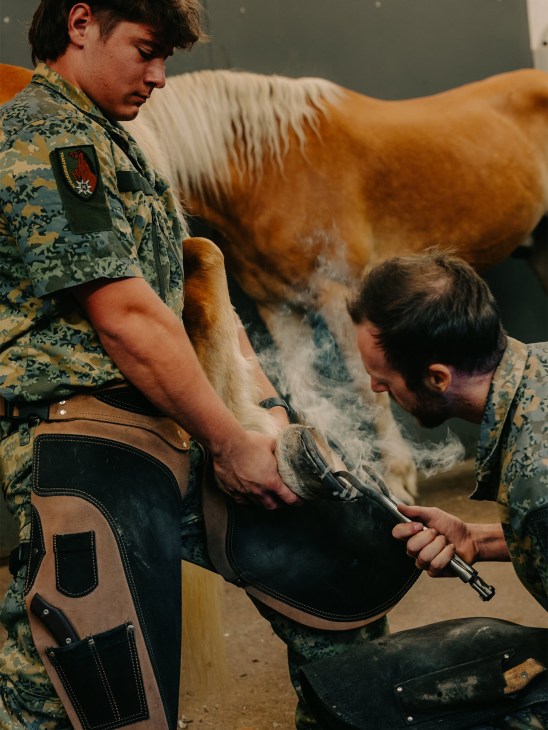
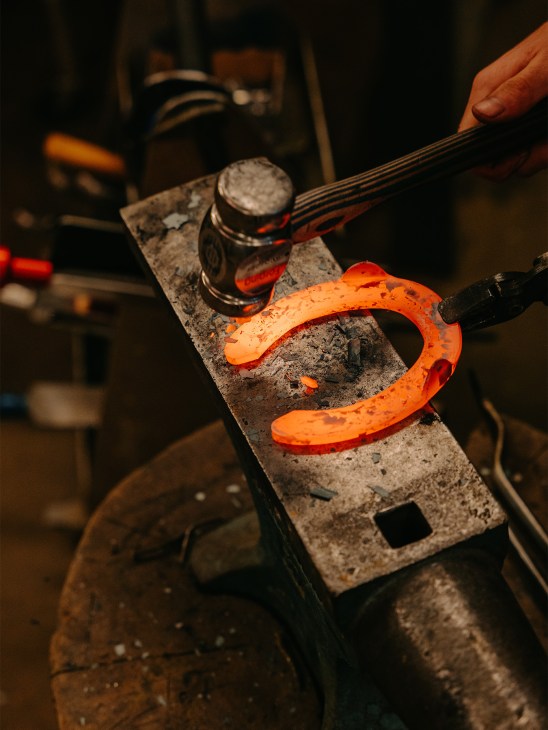
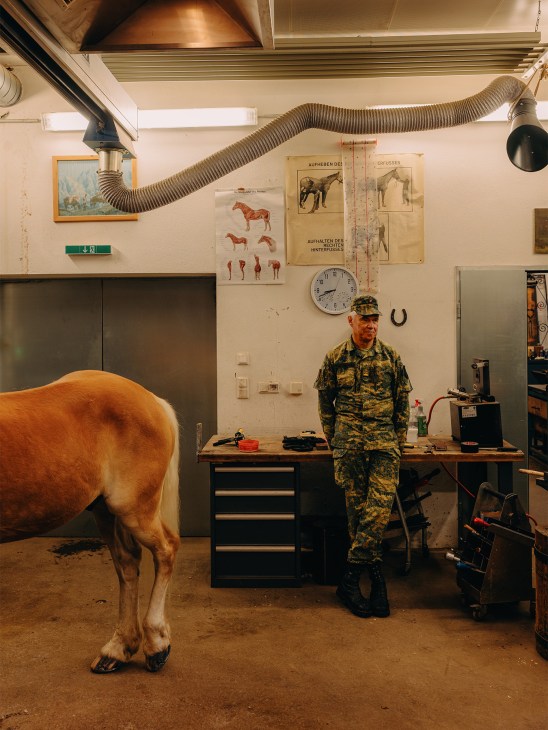
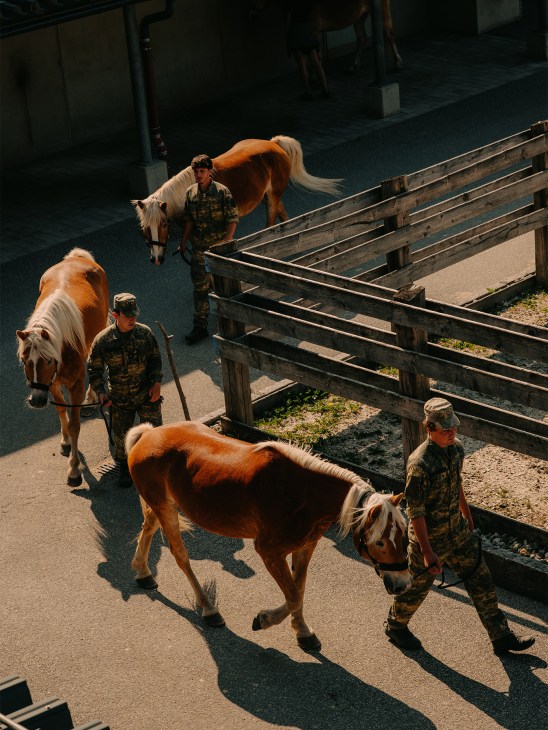
“When we introduce new soldiers to the animals, we begin with horses,” says Manzl, as he starts the 8km trek. As herd animals, horses instinctively follow a leader, whereas donkeys think more independently. “A donkey only works with a leader that it trusts, which requires more experience,” says Manzl. “Furthermore, donkeys evolved in difficult terrain where they learnt to kick in multiple directions, which can be painful for inexperienced conscripts.”
The main virtues of both horses and donkeys are resilience and stealth. “Unlike lorries or helicopters, they operate in any weather, be it the current heat, deep Alpine snow or heavy rain and fog,” says Manzl. They also require no fuel or specialised spare parts, are immune to electronic warfare and are considerably harder to detect than motorised vehicles that emit heat and sound, as well as radio and electromagnetic signatures. “That stealth allows pack animals to evade detection by drones and other surveillance more easily, which is a vital tactical advantage,” adds Manzl. Polish soldiers use horses to supply and patrol muddy, forested parts of the Belarusian border. “They seem upbeat about it,” says Manzl. “They just invited us to an upcoming international gathering to share our experiences, since they plan to build three army centres for horses.”
As the conscripts return to base, they finish their day by grooming, washing and even stretching some of the horses for a cool down. The animals’ rest is much deserved in the summer heat. But it might be short-lived. The weight of expectation on these animals’ capabilities is continuing to grow.
Breeds apart
Alpine nations such as Austria, Germany and Switzerland maintain pack-animal centres because horses and donkeys are particularly useful on mountainous terrain. But the three armies differ in their approach. While Germany’s consists of professionals, Austria’s and Switzerland’s primarily train conscripts and reservists. Each country also selects its animals strategically. The Swiss use Freiberger horses, the last native breed. Germany relies on mules that combine the agility of a donkey with the strength of a horse. Mules, however, are tricky to procure because they are infertile and rarely bred. Tasked with training novice conscripts, the Austrians rely on the widely available Haflinger. They also train with donkeys – useful for special forces because they’re easier to source in foreign lands.

This article is from Monocle’s Med, Mountains & More newspaper, on sale from 31 July. Subscribers will receive a printed edition including a magazine supplement as part of their subscription. Not a subscriber yet? Purchase a copy of the newspaper here.