The Democratic and Republican parties struggle to find a place for new voices from beyond their normal comfort zones.
Bar a handful of independents, two major parties are heading into the US midterm elections today, with the 198-year-old Democratic Party battling to wrest back control of both houses of Congress from the 172-year-old Republican Party. Since the mid-1800s, when the Federalist movement died out, US politics has been dominated by these two parties. Upstart outfits such as the Libertarian Party and the Green Party have failed to make much of a dent in an electoral system where the winner-takes-all model disincentivises voting for smaller outfits.
But this cycle is different. The results of these midterms could thrust new movements into the limelight and transform the political landscape ahead of the 2028 presidential race. The most striking ideological development is the rise of the Democratic Socialists of America (DSA), which followed up on Zohran Mamdani’s surprise New York mayoral win last year with an impressive list of Democratic primary successes. The organisation dates back to 1982 but didn’t make much of an impression in US politics until independent Vermont senator Bernie Sanders ran for the presidential nomination in 2016 on a democratic socialist platform. He came a close second to Hillary Clinton and, while not an official DSA member, he brought the movement’s key policies of workers’ rights, taxation of the megarich and the expansion of social services into the consciousness of mainstream America.
Two years later, democratic socialists Alexandria Ocasio-Cortez and Rashida Tlaib won seats in the House of Representatives. Come the results of this year’s midterms, the number of DSA members should at least double. DSA-backed candidates won the nominations to contest five safe Democratic house seats in New York, Philadelphia, Denver and Detroit, as well as a handful of other seats. DSA membership has also more than doubled since 2024 to 120,000 members as of July this year. But many mainstream Democrats accuse the DSA of hijacking the party from within, promoting an ideology incompatible with the beliefs of many centrist voters.
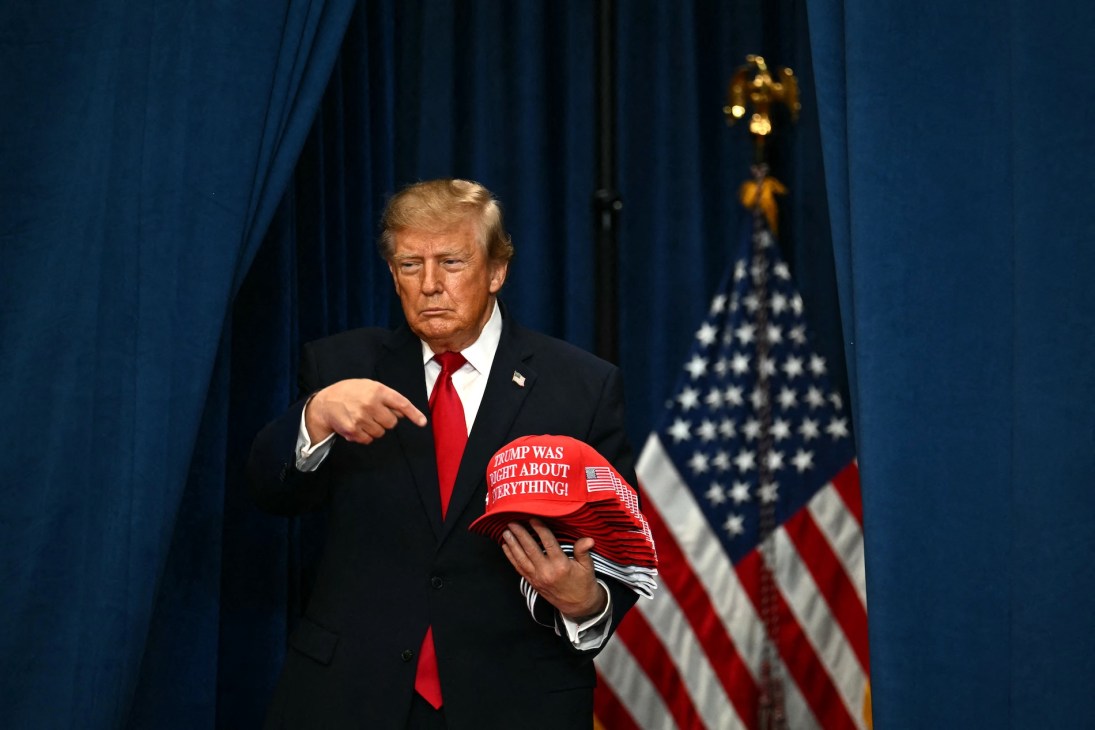
If this sounds familiar, it’s because the Republican Party went through a similar period of soul searching ahead of the midterms in 2010, when they were struggling to regroup following Barack Obama’s sweeping 2008 election win. The Tea Party movement emerged, pushing more conservative values and challenging traditional Republican orthodoxy on economic policy. It helped to galvanise voters and offered a taste of what was to come: the wholesale takeover of the Republican Party by Trump’s Maga movement.
Maga’s rise proves that a faction can transform a party from within. But there are crucial differences. The DSA is not officially part of the Democratic Party, even though its candidates usually run on Democratic tickets and make use of its electoral infrastructure. It has also not yet replicated Maga’s mass appeal across broad swathes of the country: the primary races that its candidates are winning are in solidly Democratic areas.
Nevertheless, if these candidates perform well during today’s vote (especially those outside the safe Democratic seats), it will give the DSA a strong hand as the Democrats debate their ideological direction going into 2028, with Ocasio-Cortez emerging as a potential presidential candidate.
As for the Republicans, they are facing their own internal divisions, with a vocal former Maga contingent splitting from the movement in protest at the Iran war. This faction includes former Georgia congresswoman Marjorie Taylor Greene, outgoing Kentucky Republican congressman Thomas Massie and former Fox News host-turned-conservative-pundit Tucker Carlson. They have discussed setting up a new political party.
Despite the hint of breakaway movements, the entrenched two-party electoral system is unlikely to go away anytime soon (which is bad news for anyone banking on an enticing Tucker Carlson versus Alexandria Ocasio-Cortez match-up for the 2028 presidential race). In fact, the Democratic and Republican parties are already broad ideological tents. What’s certainly true is that both groups will undergo intense soul searching on their future identity once these midterms – the most expensive in US history – are over.
Charlotte McDonald-Gibson is a Washington-based journalist and regular Monocle contributor. Follow our midterms coverage all week on Monocle Radio. For more opinion, analysis and insight, subscribe to Monocle today.
More from the US:
– Toast of the town: The secrets to a successful diplomatic dinner
– Jony Ive joins OpenAI. The designer on his new venture in San Francisco