Campaign group Flussbad Berlin is going against the tide with its campaign to open the Spree to public bathing. Will it sink or swim?
Almost four decades after reunification, Berlin’s primary struggle remains reconciling its legacy as a divided city with the realities of being a modern metropolis. The German press has long labelled the city a “failed state” and it might be right – but Berliners haven’t lost hope. In fact, one group believes that reclaiming the city’s river for swimming could help to quell the tide of local tension.
Jan and Tim Edler, brothers and founders of art and architecture studio Realities:United, first campaigned to lift the city’s ban on bathing in the Spree in 1998. Swimming in the inner-city section of the waterway was banned in 1925 because of industrial pollution. Following the Cold War and subsequent division of the city, much of the river ran through East Berlin, where the GDR treated swimming West Berliners as illegal border-crossers.
“The river has become detached from the city and we need to rebuild that bond,” says Jan. They eventually established Flussbad Berlin, an NGO advocating to transform a 835-metre stretch of the Spree into a natural-water swimming area. It now boasts more than 500 members, who cite the city’s lack of cooling spaces as a reason for joining.
But this lack of swimming access reflects broader frustrations regarding access to civic infrastructure across the German capital. In recent years, Berlin has struggled with regulations and bureaucracy, a housing crisis and failing public transport. Urban development is also slow: the city’s new S15 railway line opened this month after significant delays and restorations to the Pergamon Museum have now entered their 14th year.
Protests have been driven by a desire to enrich the city’s quality of life and protect its public spaces. In 2014, Berliners forced a referendum that blocked any construction on the 300-hectare Tempelhofer Field, one of the largest inner-city open spaces in the world. In 2018, after two years of fierce local protests, Google dropped its plans to build a campus in the bohemian Kreuzberg district. And, in 2024, Tesla put its Gigafactory expansion in the Grünheide forest on hold. This year, Berliners are even opposing bids to host the Olympics in 2036, 2040 or 2044.
“It’s embarrassing,” says Jan. “Berlin has lost its ambition and it’s up to Berliners to act.” Volunteers at Flussbad Berlin developed a water-monitoring app and found that sanitation improvements have improved river safety, meaning that the Spree is now clean enough for swimming about 80 per cent of the time between May and October. The barrier to access, according to Jan, is political will: officials might allow bathing in the Spree during a potential Olympics but not at other times.
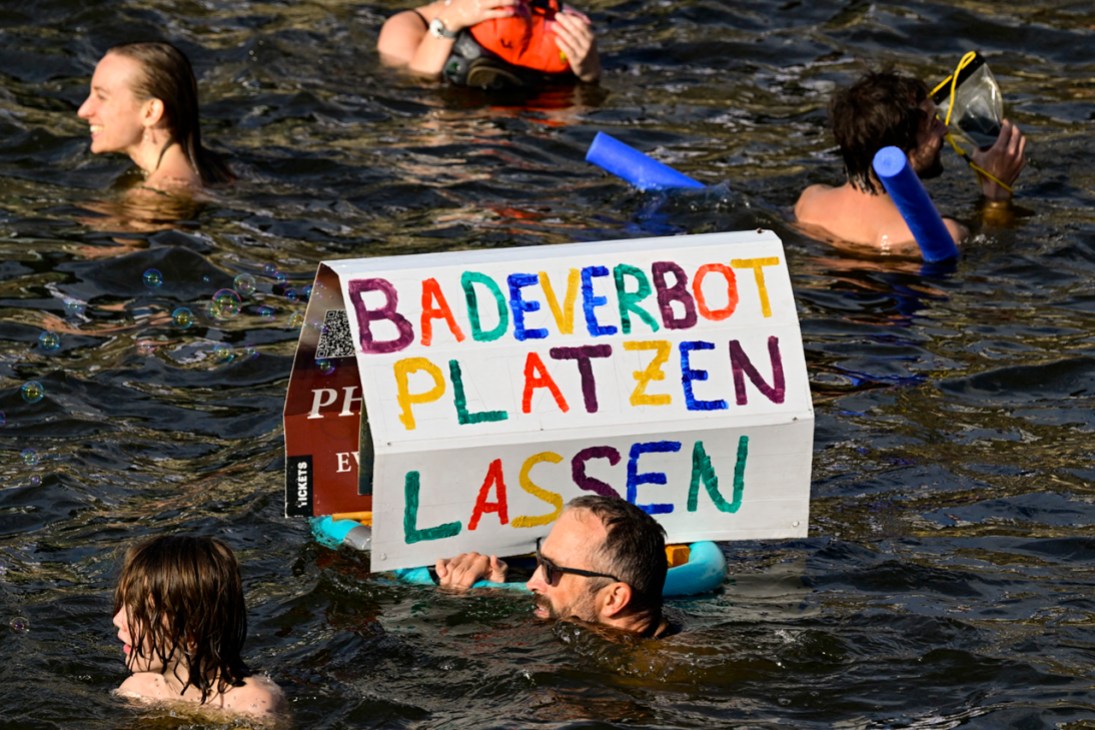
In protest of the swimming ban, the club’s members will dive into the Spree on the 20th of each month this year until the Berlin House of Representatives election in September. “Being in a river is a special feeling,” he says, “one that opens you up to ideas about caring for your city. Berliners are famous for being grumpy but in the water, it’s all smiles.”
Yegor Mostovshikov is a Berlin-based writer. For more opinion, analysis and insight, subscribe to Monocle today.