ASUS used its Computex 2026 keynote to show a full ecosystem rather than a single flagship. Every category received an AI upgrade, from creator laptops down to a new tablet and a desktop tower that could pass for furniture. It was a broad presentation.
Headlining the lineup are the ProArt P16 and P14, which become ASUS’s first laptops to ship with NVIDIA’s new RTX Spark superchip inside. ASUS says the chips deliver up to one petaflop of AI performance and 128GB of unified memory. Those numbers target on-device AI agents rather than cloud-dependent workflows.
The ProArt pair won’t ship until fall 2026, so we haven’t tested them yet. Below that tier, ASUS refreshed the Zenbook 14 and Vivobook S series, announced a pair of V-series all-in-ones and a mini tower, and signaled a return to tablets with the ASUS Pad. We covered what to expect from ASUS at Computex earlier this month, and the actual lineup matches most of those leaks. The announcements follow a busy CES 2026 where ASUS already showed several refreshes, so the company is maintaining momentum.
ProArt P16 and P14 with RTX Spark
The ProArt P16 (H7607) and P14 (H7407) are built for creators who want local AI processing. NVIDIA’s RTX Spark superchip pairs a Blackwell RTX GPU with 6,144 CUDA cores and fifth-generation Tensor Cores supporting FP4 precision. The silicon is serious.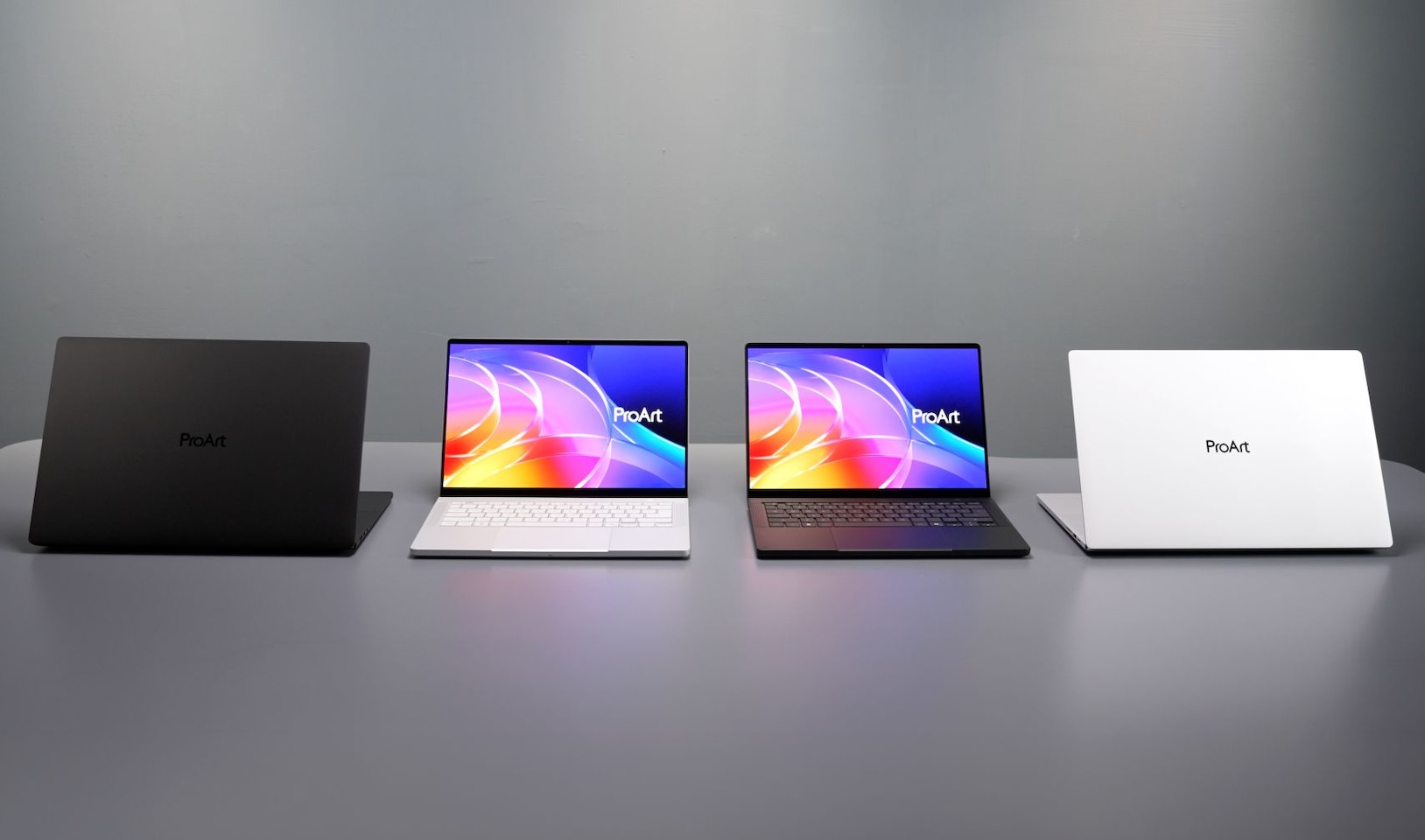
Both laptops use ASUS’s Lumina Pro OLED panels, which peak at 1,600 nits in HDR, refresh at 120Hz, and add an anti-reflective coating on top of variable refresh rate support. The P16 ships with a 16-inch 4K (3840 x 2400) panel, while the P14 uses a 14-inch 3K (2880 x 1800) panel, both at 16:10 and 100% DCI-P3. ASUS is also breaking from the all-black-or-silver ProArt convention for the first time, offering the chassis in either Nano Black or Neo White. Availability starts in fall 2026 in select regions, and pricing hasn’t been announced.
Zenbook, Vivobook, and the everyday lineup
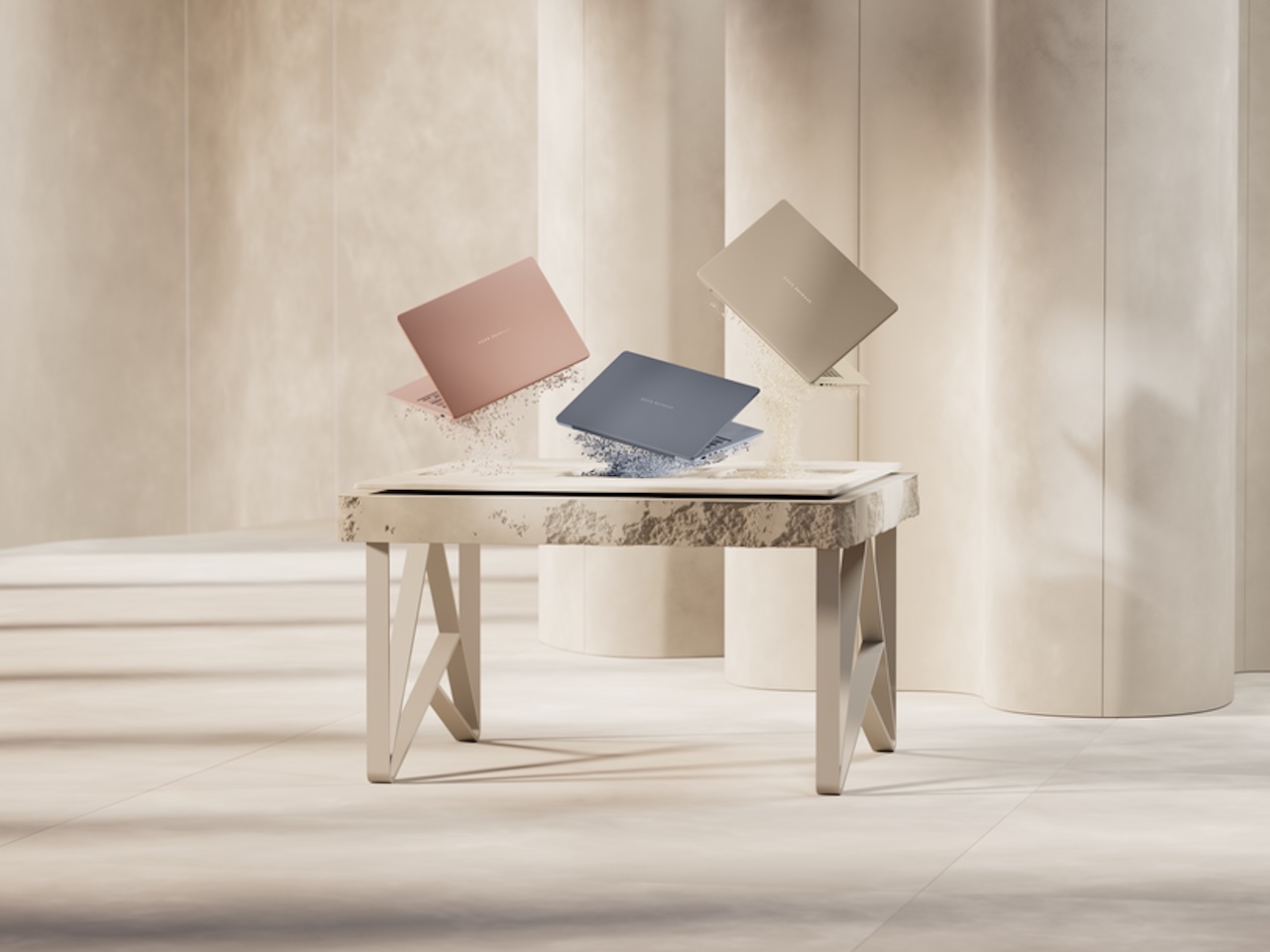 You don’t need a petaflop. For everyday productivity, the Zenbook 14 weighs 1.1kg and ships with a Ceraluminum cover in Arctic Blue or Komodo Coral. ASUS rates the battery at over 21 hours of 1080p video playback, and the machine will be available with several processor tiers offering up to 50 TOPS of NPU performance.
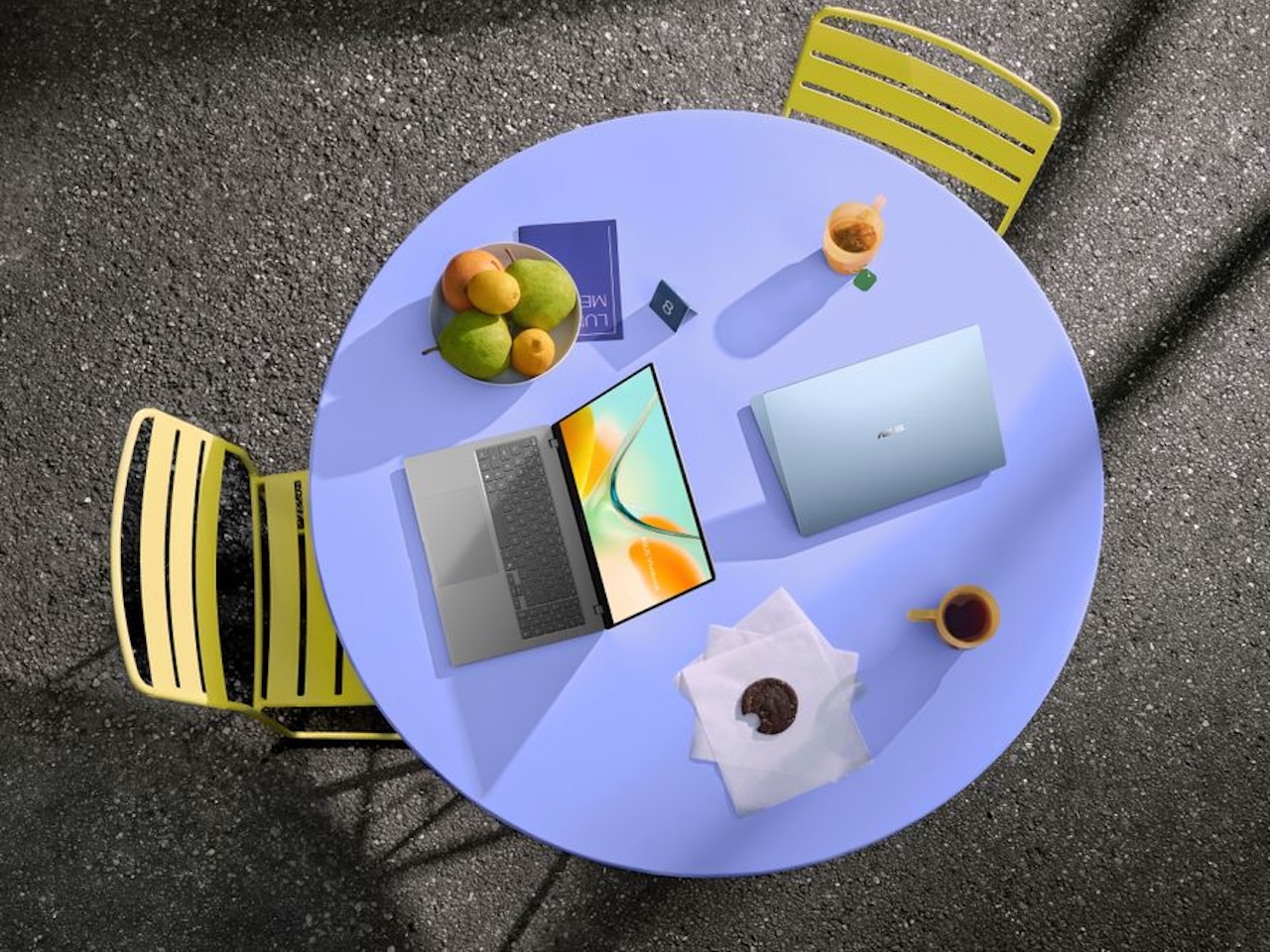 The Vivobook S14 and S16 stick exclusively to Snapdragon X processors with up to 45 TOPS NPU output. The 16-inch model carries an 89% screen-to-body ratio on its OLED panel, while the 14-inch version hits 87%. Both panels cover 100% DCI-P3. The two models carry MIL-STD 810H certification, and ASUS claims over 25 hours of battery life for the series, with fast charging that reaches 60% in 49 minutes.
 ASUS also showed Vivobook S14 Flip and S16 Flip variants with 360-degree hinges and 2K OLED touchscreens with ASUS Pen 3.0 support. They run the same Snapdragon X silicon as the clamshells but can push to a 35W power envelope when the workload demands it. The 14-inch Flip starts at 1.41kg, and ASUS rates battery life exceeding 20 hours.
The Flip models fill a gap ASUS has left open since its last convertible refresh. For context, we looked at the Zenbook A16 in April as the fastest Snapdragon laptop the company had shipped at the time. These new Vivobook Flip models appear to borrow some of that thermal headroom in a lighter chassis.
Desktops, all-in-ones, and the Pad
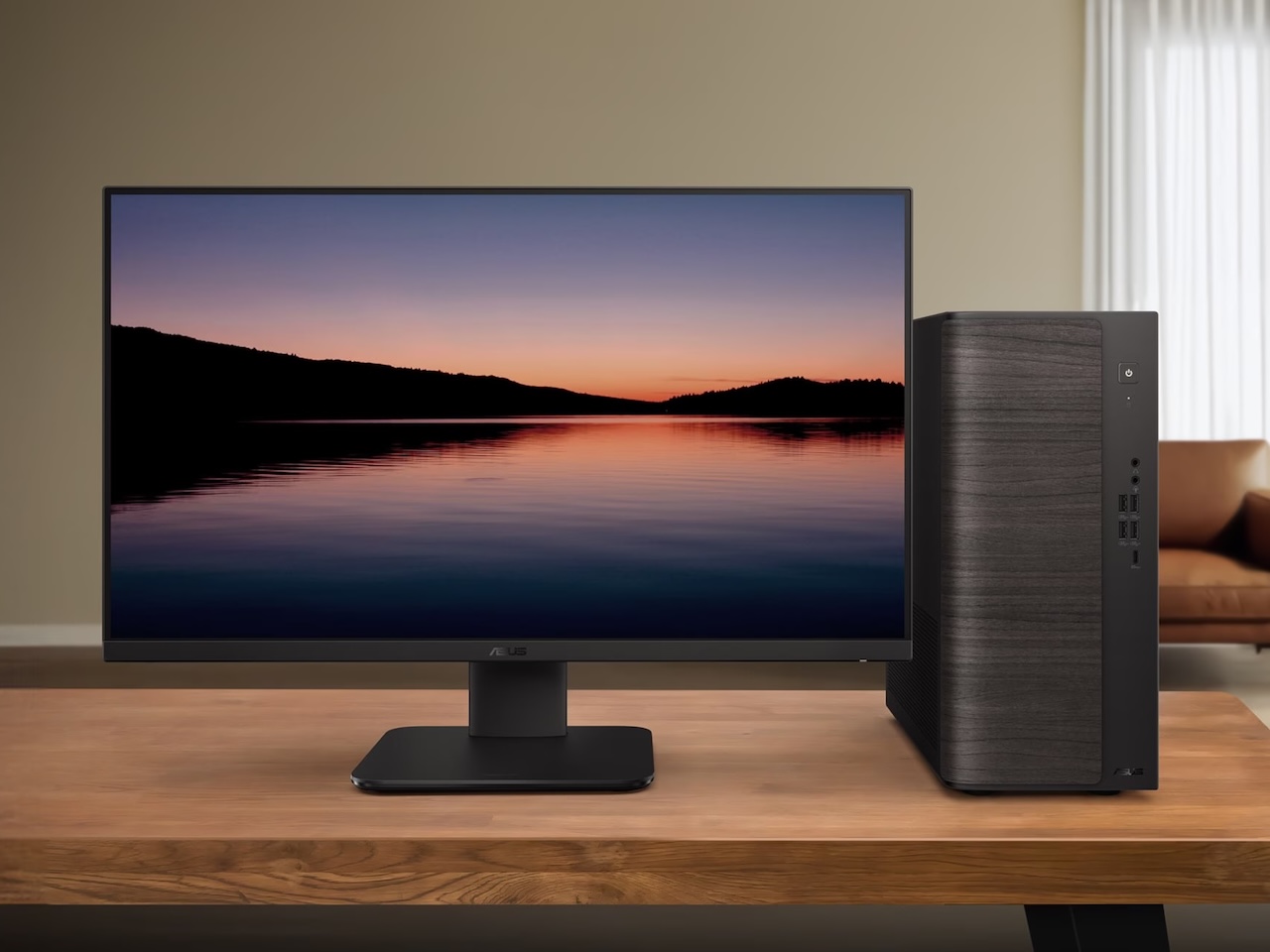 Desktop buyers get three new options. The V700 Mini Tower (V701ML) uses up to an Intel Core Ultra 9 processor with DDR5 memory and up to 2TB PCIe 4.0 SSD storage in a case with wood-grain finishes meant to blend into home interiors. The aesthetic is unusual for a Windows machine.
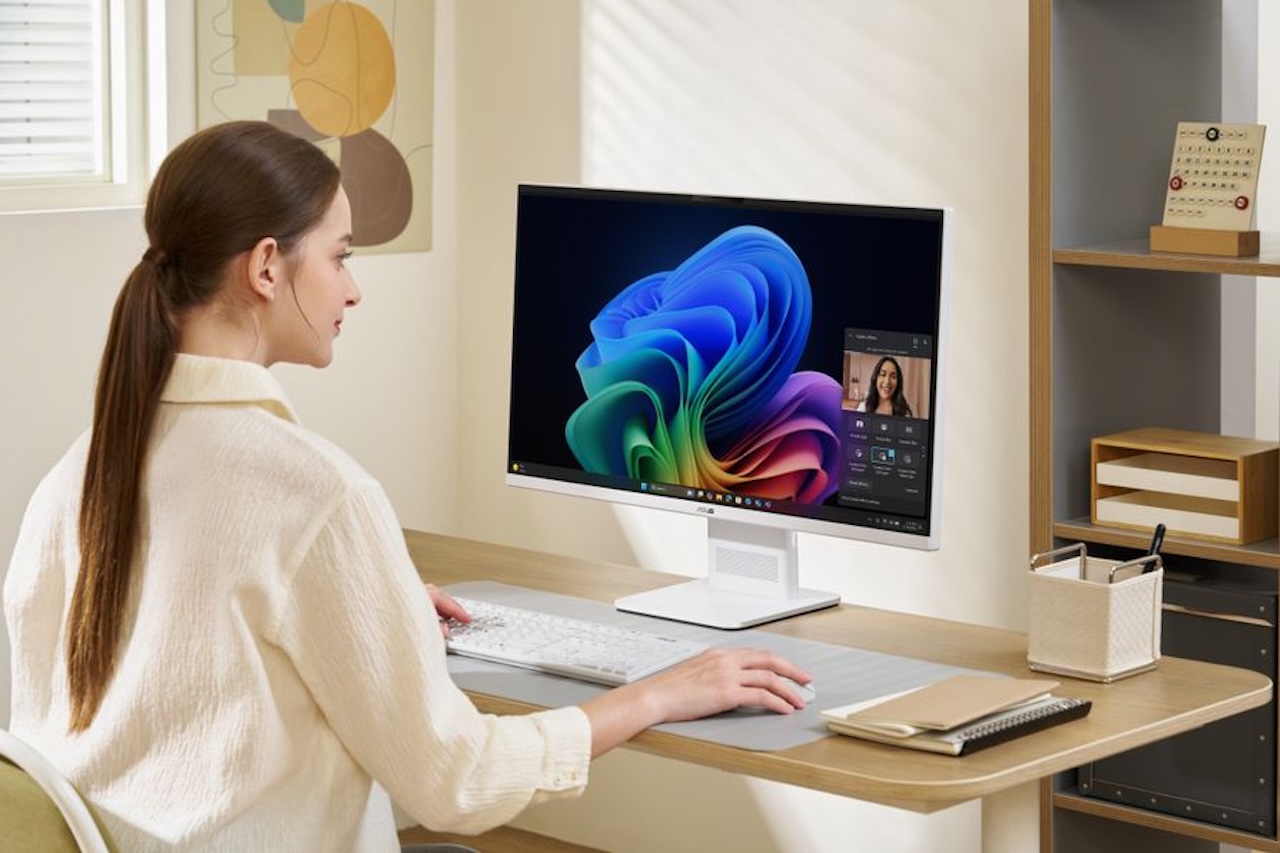 The V400 AiO (VM441QA) is ASUS’s first Snapdragon X all-in-one, built around a 24-inch Full HD display with AI noise cancellation for video calls and Dolby Atmos audio. ASUS is pitching it as a shared household PC for work, streaming, and calls, though it didn’t share specific availability dates for the V-series. That leaves the desktop line without a firm launch window for now.
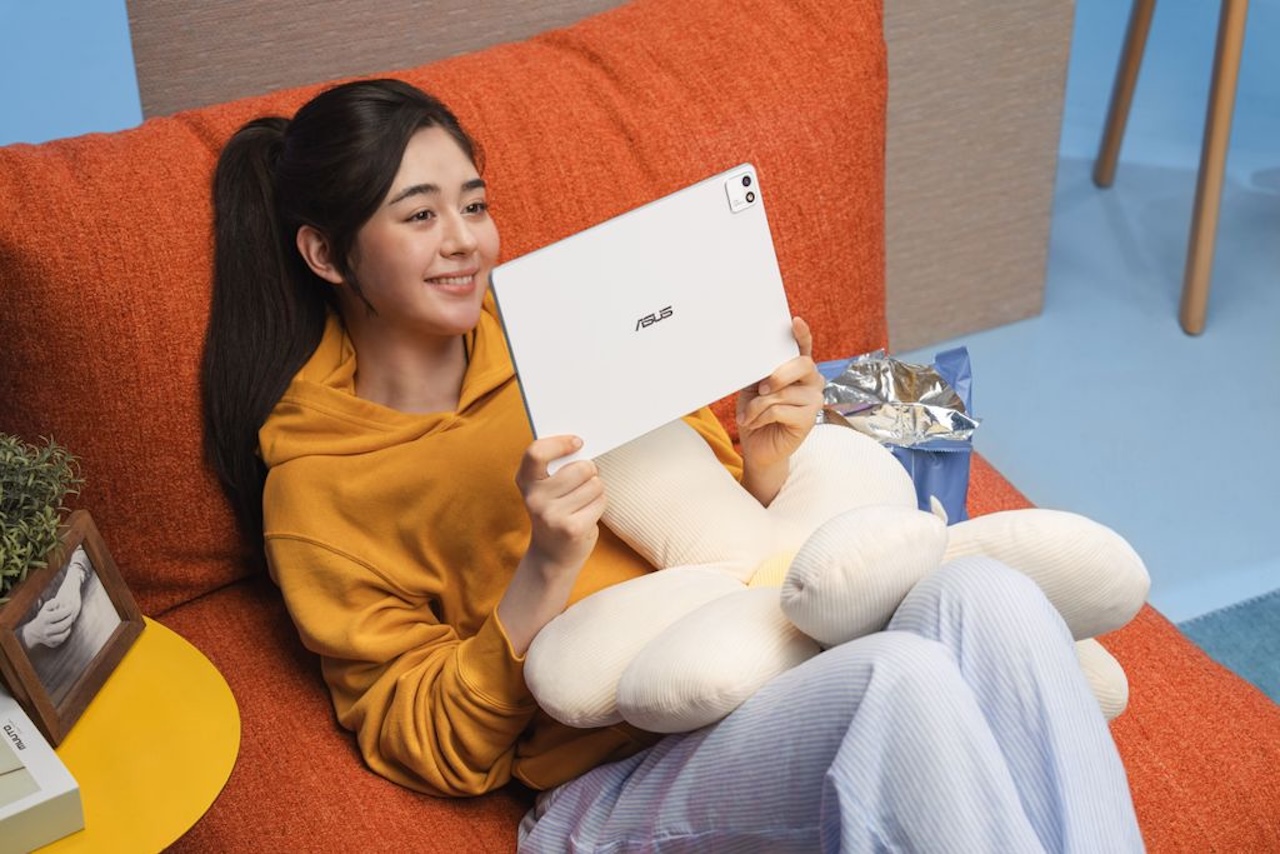
The ASUS Pad (T3201) is ASUS’s first new tablet in years. It’s a 12.2-inch device with a 2.8K dual-layer OLED display running at 144Hz, weighing 523g and measuring 6.5mm thick. A MediaTek Dimensity 8300 chipset and a 9,000mAh battery power the Pad, with ASUS claiming a 50% charge in 30 minutes over 45W USB-C. That’s a different approach than the Snapdragon dominance in its laptop lineup.
Zenni Claw and Agentic AI
ASUS also introduced Zenni Claw, a new AI assistant built around agentic workflows. The company claims it uses hybrid local-and-cloud routing to cut unnecessary cloud processing, and it installs in three steps. Built-in skills are designed for work and travel planning alongside daily organization without forcing users to build custom prompts.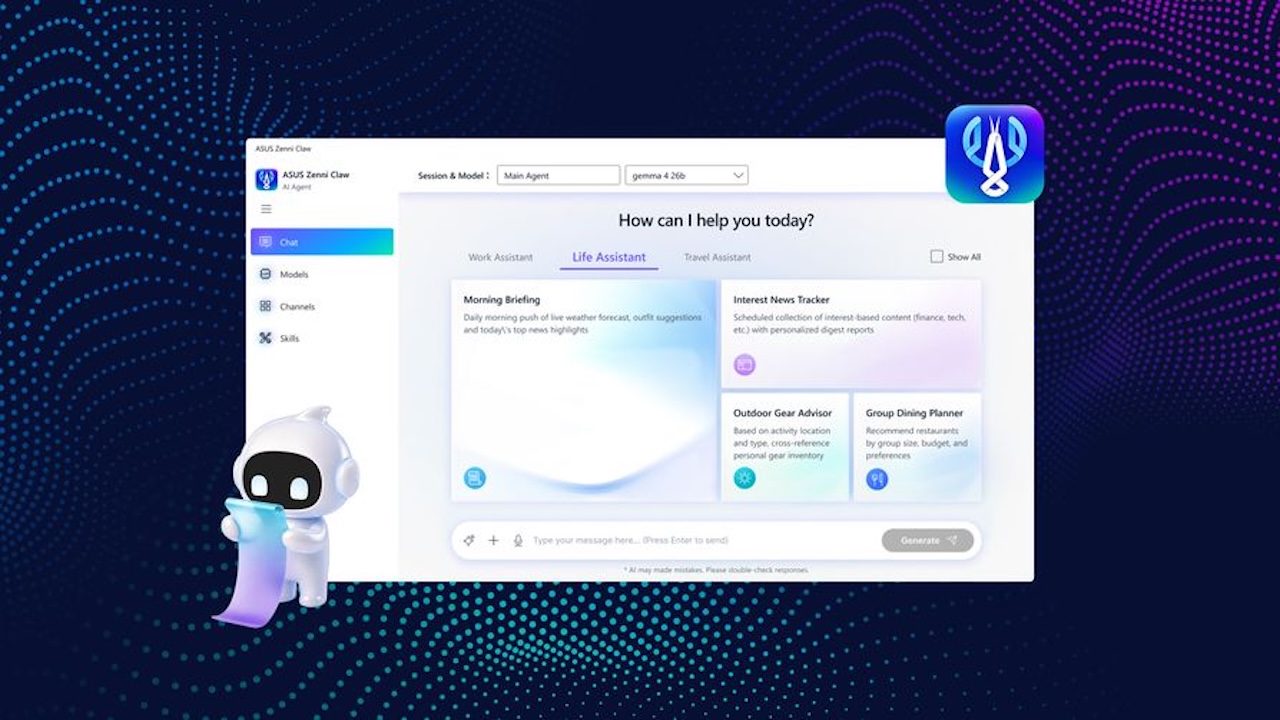
The pitch sounds similar to what Microsoft and Google are pushing with Copilot and Gemini, but ASUS is framing Zenni Claw as a privacy-focused alternative. We haven’t tested the assistant yet, and ASUS didn’t specify which devices will ship with it preloaded or whether it’ll cost extra. For now, it’s a promise.
What to watch next
Pricing remains the biggest gap in ASUS’s announcement. The company confirmed ProArt P16 and P14 availability for fall 2026 in select regions, but it didn’t attach dollar amounts to any product. The Zenbook 14 and Vivobook S series have historically landed between $900 and $1,500 depending on processor choice, so you should expect similar tiers this year.
We’ll need hands-on time to judge whether RTX Spark delivers meaningful advantages over standard Copilot+ PCs in real-world creative apps. On paper, the 128GB unified memory and one petaflop rating look aggressive, but local AI performance depends heavily on software support and thermal stability. ASUS’s own ProArt Creator Hub and MuseTree apps will be part of that equation, along with StoryCube.
The Computex 2026 lineup makes one thing clear. ASUS is no longer treating AI as an add-on reserved for top-tier SKUs. It’s building AI into every price tier and form factor, from a 523g tablet to a creator laptop with enough memory to run large language models locally.
Whether buyers care about agentic AI in 2026 is another question, though the industry has spent the last 18 months convincing them they should. ASUS is clearly betting they will. The fall launch window will tell us if that bet pays off.
Sign up for our newsletter today.
No ads, no spam, just links to our latest articles!

ESR for MagSafe Wallet, 5 Card Holder with RFID Blocking, MagSafe Sticker Included, Slim Magnetic Wallet for iPhone 17e/17/16/15/14/13/12 Series and Selected Samsung Devices, Not for 13/12 Mini, Black
(as of June 5, 2026 18:40 GMT -05:00 – More infoProduct prices and availability are accurate as of the date/time indicated and are subject to change. Any price and availability information displayed on [relevant Amazon Site(s), as applicable] at the time of purchase will apply to the purchase of this product.)

KRTALS Magnetic Wallet Cell Phone Card Holder for Phone Case, Stronger Magnetic RFID Leather Phone Wallet Stick on Series of iPhone 12/13/14/15/16/17 and Pro/Promax, Light Pink
(as of June 5, 2026 18:39 GMT -05:00 – More infoProduct prices and availability are accurate as of the date/time indicated and are subject to change. Any price and availability information displayed on [relevant Amazon Site(s), as applicable] at the time of purchase will apply to the purchase of this product.)