Credit: Joe Kucinski | How-to Geek
For years, professional detailing seemed like an exclusive club reserved for owners of six-figure sports cars, pristine garages, and bottomless budgets. Want a swirl-free finish, mirror-like gloss, and paint that outshines the factory finish? You had to pay the pros and brace yourself for the bill.
According to a 2023 J.D. Power report, a full-service detail could run up to $500, while paint correction could be upwards of $1,000. I know the owners of several detail shops here in the Philadelphia suburbs, and many of them own several exotic cars. They didn’t pay for those exotic cars by giving away their services for free.
Today, getting pro-level detailing results at home has never been easier or more affordable. The same tools and techniques once reserved for the pros are now within reach of any enthusiast. Microfiber towels have evolved. Random orbital polishers are safer and more foolproof than ever. The two-bucket wash method is quick and easy. Even top-tier drying tools now cost less than they used to.
The biggest benefit isn’t necessarily achieving concours-level results. It’s saving money on car washes over the life of your vehicle.
The hidden cost of convenience
Automatic car washes may not always be the answer
 Credit: Joe Kucinski | How-to Geek
A typical automatic car wash can cost anywhere from $15 to $30 per visit. Premium wash memberships often run $30 to $50 per month. If you’re an enthusiast who likes keeping your car clean, it’s easy to spend several hundred dollars per year on washes alone. Over five years of ownership, that can easily add up to $2,000 or more.
And the worst part is that for all that money, your car isn’t getting fully clean, and the paint is getting damaged. Automatic washes are designed for speed and volume, not careful paint preservation. The brushes can trap dirt and grit from hundreds of vehicles, while touchless washes often rely on harsh chemicals that strip away waxes and sealants.
What ends up happening is that people pay good money to slowly damage the finish they are trying to protect. Eventually, those scratches and swirls require professional paint correction, turning a convenient $20 wash into a much larger expense down the road.
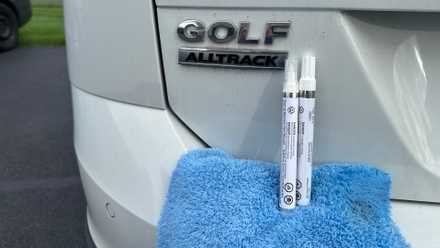
Your car’s paint chips don’t need a body shop—here’s what actually works
Using a touch-up pen is a cheap and easy way to improve your car’s appearance.
The two-bucket method costs almost nothing
A few supplies can help you avoid thousands in paint correction costs
One of the easiest ways to save money while protecting your paint is to wash your car yourself using the two-bucket method. The concept is simple. One bucket contains your wash and shampoo. The second contains clean rinse water.
After washing a section of the vehicle, you rinse your wash mitt in the clean bucket before returning it to the soap bucket. Grit guards in both buckets help trap dirt at the bottom rather than allowing it to be rubbed back into your paint.
Many enthusiasts underestimate the importance of microfiber towels. A quality microfiber drying towel may cost $15 to $30. That sounds expensive until you compare it to paint correction services that can easily cost $500 to $2,000, depending on the vehicle.
Professional detailers recommend microfiber because the wrong towel can cause scratches during drying. The goal is to safely remove water without dragging dirt across the surface. Pairing a quality microfiber towel with a drying aid such as Griot’s Garage Speed Shine provides additional lubrication, further reducing the risk of damage.
Always move your towel and wash mitt in a straight line in the direction of airflow. This helps reduce the risk of visible micro-scratches and swirl marks.

6 things to consider before an expensive car repair
You don’t have to be a master mechanic to advocate for your vehicle and your finances.
My orbital polisher changed everything
One-time investment replaced years of expensive detailing appointments
If your paint does get some light scratches, don’t worry, you can take care of those, too.
For many enthusiasts, paint correction feels intimidating. I know it did for me. For years, I assumed orbital polishers were tools reserved for professional body shops and experienced detailers. The thought of putting a machine against my paint was terrifying. Then I finally purchased a random orbital polisher and discovered that modern machines are remarkably user-friendly.
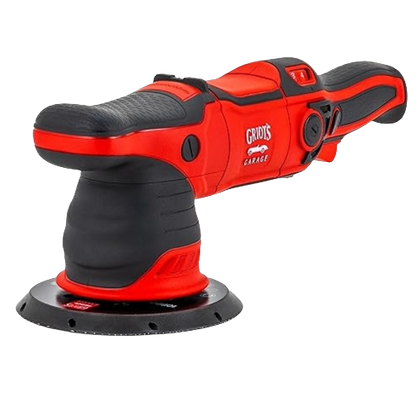
Griot’s Garage G9 Random Orbital Polisher
Power Source
Corded Electric
Speed
6,400 rpm
The G9 Random car orbital polisher features a robust 1000-watt motor, 9mm orbit throw, and a 6” vented backing plate. This orbital polisher buffer provides effective paint correction; removes scratches, swirls, oxidation, and more.
A quality orbital polisher typically costs less than $200. Compare that to professional paint correction services that can cost 10 times as much.
Modern orbital polishers can remove light scratches, eliminate water spots, restore gloss, remove oxidation, and even clean up neglected headlights and wheels. With the proper pad, compound, and a little patience, many common cosmetic issues become DIY projects rather than expensive appointments.
The first time you watch a scratch disappear from your paint, the machine practically pays for itself.
Better results are just a bonus
 Credit: Joe Kucinski | How-to Geek
The funny thing is that most people start learning these techniques to save money, but they soon discover something unexpected. The results are actually better. A careful hand wash performed with proper tools almost always produces a cleaner, glossier, and safer finish than an automatic wash. Water spots become less common. Swirl marks are minimized. Your vehicle simply looks better.
One of the biggest lessons I’ve learned over the years is that detailing is largely preventative maintenance. The two-bucket wash method prevents scratches. Proper drying techniques prevent water spots. Quality microfiber towels prevent marring. Regular washing prevents contaminants from embedding themselves in the paint.
Every one of those steps helps you avoid expensive correction work down the road. It’s much cheaper to spend an extra 30 minutes washing your vehicle properly than to spend hundreds of dollars later fixing the damage, not to mention the inconvenience of being without your car while it sits at the detail shop.