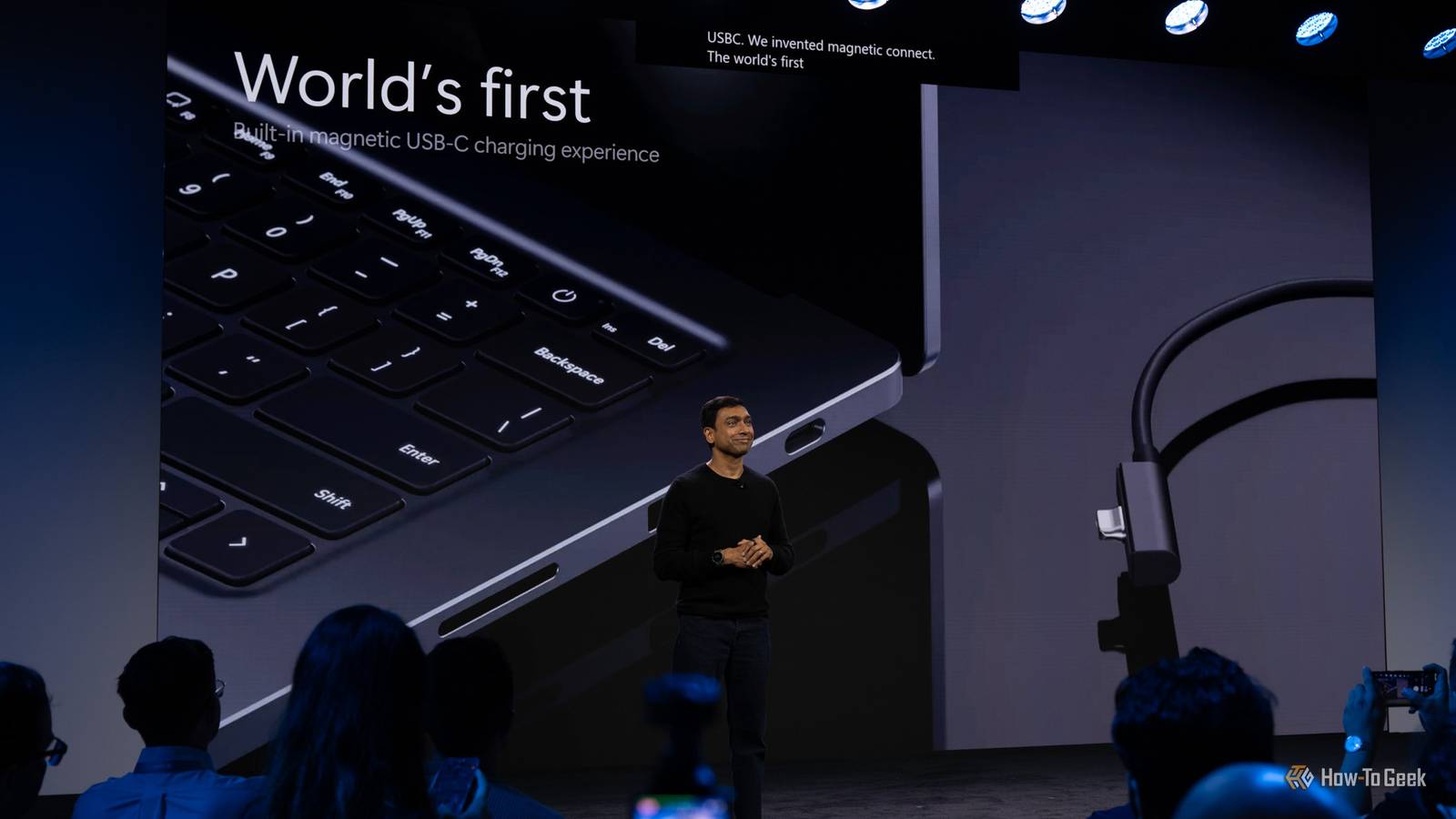
Microsoft’s long-expected Surface Laptop Ultra release came with a surprise: a new approach to charging. The tech giant has unveiled a Magnetic Connect feature that serves as the equivalent to Apple’s MagSafe for Windows PCs, with its own set of advantages and tradeoffs.
The Ultra’s right-side USB-C port has built-in magnets to grab Microsoft’s matching power cable. If you trip over the cord or need to unplug in a hurry, you won’t pull the entire laptop at the same time.
The difference between this, MagSafe, and Microsoft’s previous Surface Connect is simply the use of a standard port. External drives, monitors, and other USB-C devices work as they normally would. This also frees up valuable space that would normally be reserved for a proprietary connection.
There are some compromises. As you’d guess, this occupies one of your USB-C ports. You’ll have just two free spots until you unplug. This won’t necessarily be an issue when there’s also HDMI for video out, but it’s worth remembering if you need multiple wired peripherals.
There’s also just one Magnetic Connect port. so you can’t just plug into whichever USB-C jack you like. If you want a mouse, you’ll likely have to bring its cable around the back to use it.
Will other PCs get Magnetic Connect?
Surface is likely, but others are doubtful
Microsoft hasn’t said if other Surface models will offer Magnetic Connect. The company’s recently updated Surface Laptop and Surface Pro still use the old charging format. It’s unlikely the feature will be reserved for the Surface Laptop Ultra, though, so it’s very possible that future Microsoft PCs will adopt the technology.
Third-party portables are less likely. Microsoft can easily use Magnetic Connect to help Surfaces stand out from other Windows PCs. It won’t be surprising if other vendors have to go without.
The reliance on USB-C theoretically makes it easy for other laptop designers to include Magnetic Connect or a rough equivalent, however. If so, don’t be surprised if magnetic charging becomes commonplace in Windows laptops that are efficient enough to recharge over USB-C. High-powered gaming and workstation laptops might still need custom power to top up.