Whether fashion is art is a timeworn debate but one that offers fertile ground for exploration. In recent months, London’s Victoria and Albert Museum and New York’s Metropolitan Museum of Art have both put on exhibitions entertaining the debate. Even the recently released The Devil Wears Prada 2 engages with the subject, as editor Miranda Priestly (played by Meryl Streep) battles to preserve fashion’s cultural integrity.
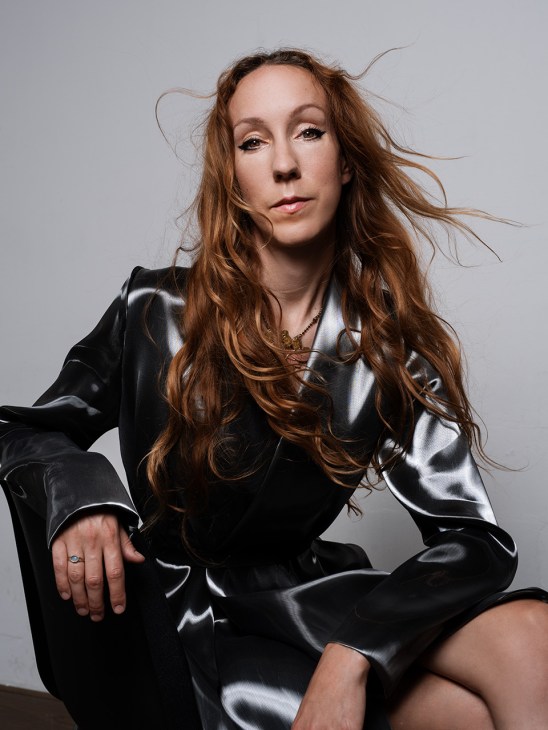
But major institutions and films aside, perhaps no designer’s body of work offers a more resounding yes to the question “Is fashion art?” than couturier Iris van Herpen.
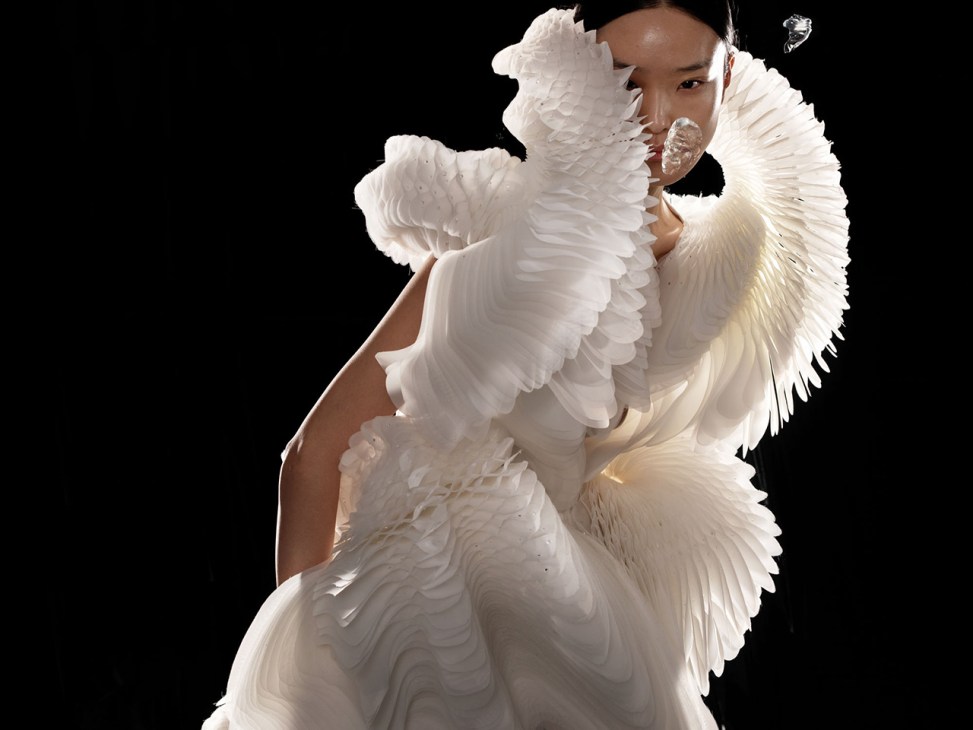
The Dutch fashion designer’s sculptural gowns often take on an ethereal quality. Constructed from flowing silk and carefully placed ribbing, Van Herpen draws inspiration from nature to emulate the movement of water or a bird’s wings. She’s also a pioneer of new technologies, including the use of 3D printing to create wearable garments and collaborating with biophysicists to make a dress from bioluminescent algae, which emits light in response to the wearer’s movement. In 2011, at just 27 years old, Van Herpen joined the Fédération de la Haute Couture.
Some of these works have now made their way out of the privacy of her atelier and into museums. Iris van Herpen: Sculpting the Senses first opened at Musée des Arts Décoratifs in 2023 and has been travelling the world ever since, with additional elements added for each leg. The show has now made it to the Brooklyn Museum in New York, where it will be on view until 6 December 2026. Van Herpen spoke to Natalie Theodosi, Monocle’s fashion director, ahead of the showcase.
This conversation has been edited for clarity and length.
It’s nice to see how your show continues to travel and evolve since its Paris opening. Can you tell us about the new works that will be on display in New York?
There are some new designs from the latest collection, [along with] new paintings and sculptures. I have also worked on an installation piece with a video artist that is going to be the height of the exhibition. The atelier has always been an important part of the show and in New York we want people to get an even closer insight into my way of working. I will also be making a dress at the atelier when the exhibition is on.
So with consistent video updates from the atelier, people can follow the making of the dress in real time and see the process of what goes into making a piece.
Exactly. I’m inviting people to work with me on that look. It’s about that meditative space that you find yourself in when you’re doing handwork with multiple people. I want to bring the energy of the Amsterdam atelier into the museum space so that visitors can watch me create that look. I’m curious about the conversations that will happen: I’ll be embroidering some of the most inspiring parts of the conversations into the garment at the end [of the exhibit], so it becomes a time capsule of the New York exhibition.
It’s interesting that you are spotlighting the process. Tell me about your relationship with the atelier and why it’s so important to put them at the heart of everything that you do.
The craftsmanship, the innovation and the dialogue is the reason that I’m in fashion. It’s beautiful to see how materials can evolve, how they can transform and how you can shape an identity with those materials. The body is always my canvas and starting point but the real magic in couture is the process of creation. It’s beautiful how different people with different skills collaborate. It’s like a choreography of craft, a dance with the materials. Sometimes you’re controlling the material, sometimes it’s the other way around. The longer I do this, the more understanding I get from the materials and I want to share that knowledge with a wider audience. That’s one of the reasons that the atelier is part of the exhibition.
Craft is almost a marketing term these days, featuring in campaigns from some of the bigger fashion companies. What do you think of how the industry approaches craft?
If you look at fashion as an industry, craftsmanship is not a big player anymore. Most of it is mass production and fast fashion. That’s another reason why I do what I do, because couture is such a beautiful history of where art and fashion collide. There, you have the time and space to actually experiment and make mistakes, but also to innovate and to create new materials.
It’s so important for the industry to keep explaining the origins of fashion. It has come from local communities creating for themselves by hand. Identity has always been part of the way we create fashion. It gets even more exciting when infusing contemporary technologies into those traditions of craftsmanship, because then you get whole new versions of these techniques.
Designing is a beautiful dance between tradition, science and technology, and you have embraced that from the very beginning. But now we’re at a moment where technology has reached new heights, especially with the use of generative AI. Has it changed the way you work, or do you see a lot of potential in the future?
I have very mixed feelings about it. I’m excited about [the possibilities] for science and the medical world but at the same time I have big concerns on authenticity and creativity. I’m worried for models, photographers and [fashion-industry] artists, such as makeup artists and stylists, because videos and photos can be so easily generated [with AI]. Thus, the question is: will magazines and brands start replacing the creative industry with AI because it’s more efficient? I have no idea if that will really happen. My hopes are that people will keep valuing the human vision in [the creative industry] and the collaborative spirit.
Let’s talk about couture, ready-to-wear and the different paces of the industry. You show a real commitment to couture and to slow production, though I’m sure there have been a lot of opportunities over the years to commercialise what you do, to go faster and be bigger. Tell me about that.
I’m stubborn. My love is with haute couture and all of the decisions I have made throughout the years have been tailored towards [staying true to my work]. I indeed could easily go in different directions, and that is what some people expect me to do, but that’s just not my way of working. I have full creative freedom because I’m independent and doing haute couture. It’s important for me to only create work that I [can] fully stand behind. Of course there is also a sustainability aspect to it. I’m very conscious of the world that I live in today. There is enough ready-to-wear out there. I don’t feel that I’m an added value to this world if I create more mass production because the world is flooded by it. I’m trying to show a different side of fashion that is equally important.