The first half of 2026 has been bumpy for the global travel market. While demand for flights remains high, the conflict between the US, Israel and Iran has disrupted aviation, from complications of planning flight paths around expanding conflict zones to the not-so-small matter of rising fuel prices.
Despite all this, the situation in the Gulf does not appear to have dimmed the appetite for private air travel. As commercial airlines wrestle with airspace restrictions, supply-chain pressures and rising operating costs, the private-aviation market seems to be cruising at a different altitude. International events such as the Monaco Grand Prix and Fifa World Cup have helped to keep demand for long-range business jets firmly on course.
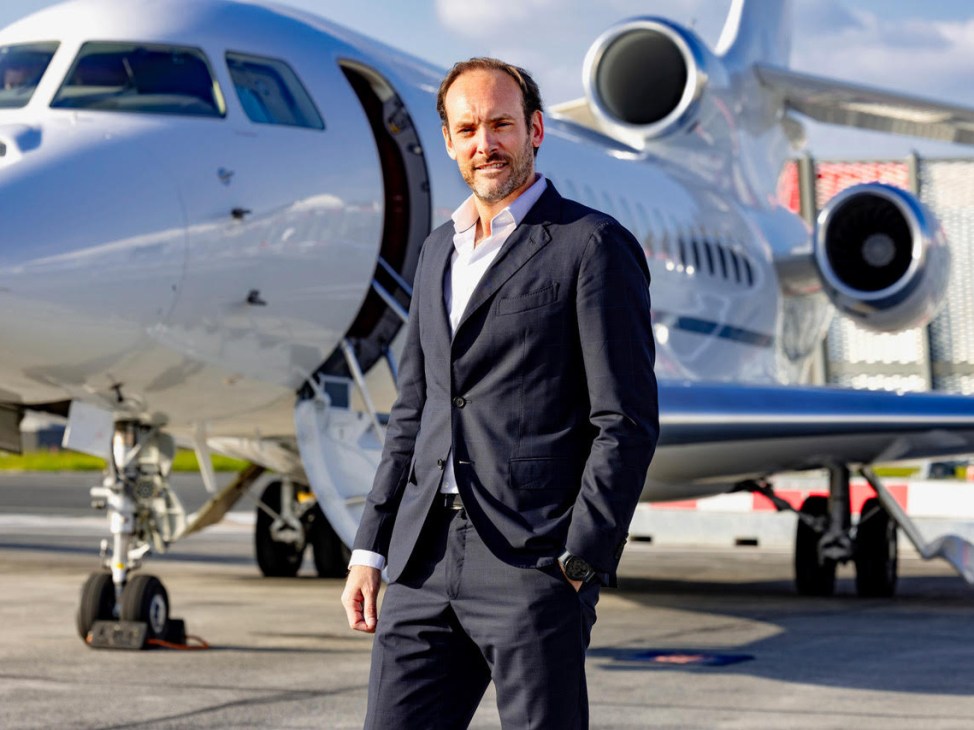
Olivier Perdriel can vouch for the resilience of the sector. He founded aircraft management company Skyfirst with a single jet, a Bombardier Learjet 45, in the aftermath of the 2008 financial crisis. Eighteen years later, the Paris-based operator manages a fleet of ultra-long-range aircrafts for business leaders around the world.
On a recent visit to Monocle’s Paris bureau, Perdriel spoke to Tom Edwards about managing uncertainty amid geopolitical disruption, preserving the exceptional service that private aviation clients expect and the direction of travel for the industry.
This conversation has been edited for clarity and length. Listen to the full interview on The Entrepreneurs on Monocle Radio.
How healthy is the private-aviation market right now?
The market is quite good. If you look at the OEMs [original equipment manufacturers], manufacturers have order books stretching over the next two years, so a significant number of new aircraft is still coming into the market. Flight activity is steady and increasing in some areas. In the US, for example, the market is actually booming, which is striking given the current geopolitical backdrop. At first glance, things look very strong but it’s the uncertainty that causes difficulties. In our business, that uncertainty creates real operational difficulties, when you’re flying around the world and dealing with countries that you can no longer fly over or operate into. So the business is good but the current environment makes it much harder to know exactly where we’re heading.
How do you build a private aviation business that can withstand geopolitical shocks?
When there is instability, the most important thing is to stay steady on our side and keep doing the work properly with even more care than usual. Insurance requirements and landing permits can change within hours, so our job is to stay focused, anticipate problems and be ready to react quickly. Most of our flights are for business travellers and they still need to operate around the world. As countries become more complex to fly into or over, our job becomes more complex as well. The key is to provide a consistent service and remain responsive when something changes.
Tell me about the fleet.
Today we mainly operate Dassault Falcon 7Xs and 8Xs, as well as some Bombardier Global Express aircraft. Each type has its own strengths, whether that’s range, cabin comfort, performance or operational flexibility. Our job is to make the best possible use of the aircraft that we are operating and deliver the service that the client expects. One advantage we have is that we operate aircraft from all three brands, Gulfstream, Dassault Aviation and Bombardier. They all have different cultures too – one is American, one is French – and that also shapes the relationships you have. It makes the business dynamic.
Who is the typical Skyfirst client?
It would be a CEO or a senior business leader who operates internationally. They are all different and want different things, so the key is adaptability. Our job is to understand their needs and make sure that they arrive at their destination in the best possible condition for whatever they have to do next. And of course, we enjoy flying all our clients because, at the end of the day, we’re helping them to save time in the best possible conditions.
What does aircraft management involve beyond operating the jet?
There are essentially two types of owners. Some buy an aircraft purely for their own use, usually through a company, and create an in-house flight department with their own pilots and technical staff. Then there is charter management, which is where we operate. In that model, the owner entrusts the management of the aircraft to an operator like us. That includes the crew, training, recruitment, maintenance, flight planning, compliance and all the worldwide regulations. It is also about relationships. More and more, simply picking up the phone and speaking directly to a person is what makes the difference.
Tell us a bit more about the company’s hands-on approach and how Skyfirst supports its clients.
It starts with the team; I’m very proud of the people I work with because they do an excellent job. We put people first. We try to stay in contact with everyone, anticipate problems and handle things in the most human way possible. We’re not perfect but that mindset is very important to us. Reputation matters enormously. The goal is that when the passenger arrives, everything feels smooth and effortless from [point] A to B. Most of our flights are for business travellers. They often fly overnight and [head] straight into important meetings. If we can provide a calm, efficient and seamless service on board, we like to think that we are helping them arrive in the best possible condition. In that sense, what drives us is the belief that we are part of our clients’ success.