The UAE’s Etihad Rail gets moving for passengers – but will they be on board?
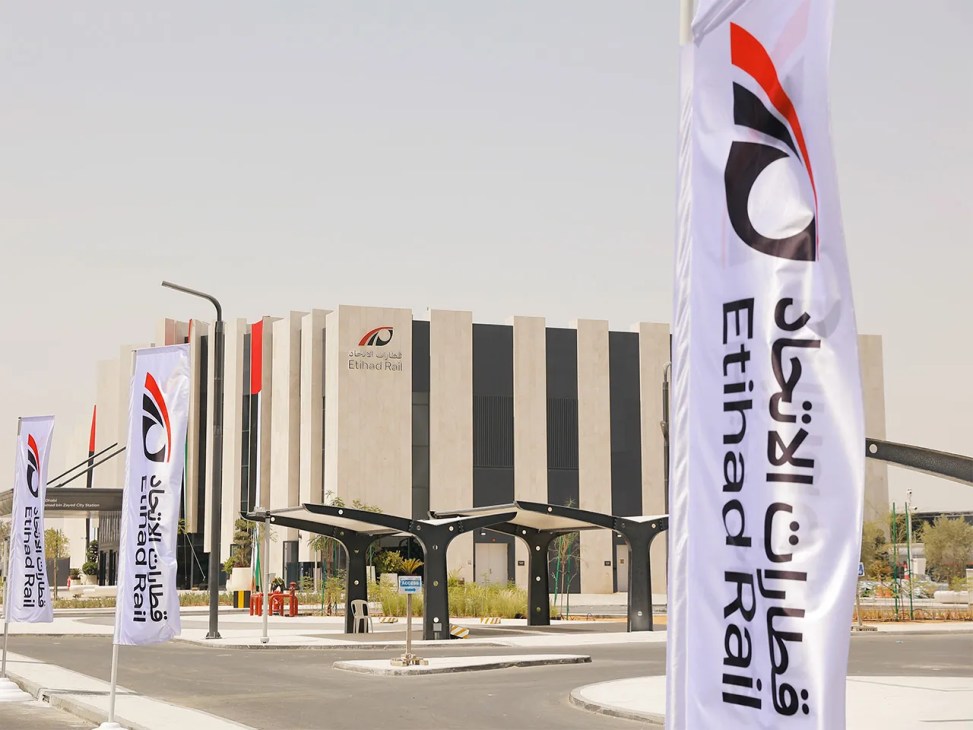
For most of its history the UAE has been designed around the car but after years of anticipation, Etihad Rail finally opened its passenger service today. The country’s great infrastructure projects have tended to be measured in the number of motorway lanes or terminals. So, walking into Abu Dhabi’s Mohammad bin Zayed City Station at its unveiling last week felt quite significant. Starting with a route to Fujairah before expanding to stops including Dubai and Al Dhaid later this year, the move is an attempt to persuade a nation accustomed to life behind the wheel that there might be another way to travel.
The Abu Dhabi station is noticeably less theatrical than other unveilings of Gulf infrastructure. On board, that pragmatic philosophy continues: trains are bright without being flashy, fitted with generous seating, power sockets, wi-fi and luggage space, while Premium class adds wider seats and complimentary refreshments. Every passenger has a reserved seat, so it’s also not the free-for-all that you might expect to find on many European trains. Introductory fares begin at AED55 (€13) in comfort class and AED120 (€29) in premium – and the app allows you to book saver, value and flex tickets accordingly. The pricing, for now, suggests that Etihad Rail is trying to position itself as an accessible alternative to four wheels.
“The biggest value that we can give is to give you back your time,” says Adhraa Almansoori, executive director of commercial at Etihad Rail Mobility. Instead of concentrating on the road ahead, passengers can now answer emails, read a book or simply watch the Hajar Mountains emerge on the horizon.
Anyone who regularly drives between Abu Dhabi and Dubai, sits in incessant traffic between Dubai and Sharjah, or spends hours crossing the country with families for weekend getaways, knows that congestion has become an unavoidable reality. A reliable railway can offer something that the roads increasingly cannot: predictability. But questions remain.
Many people will not be walking to the train stations in the scorching heat. Residents of Saadiyat Island, The Palm Jumeirah or Arabian Ranches, for example, will still have to begin their journey in a car or a taxi; arriving passengers must complete the final leg once they reach their destination. And public transportation in the UAE isn’t widely used. Yes, there’s a Metro in Dubai but the network isn’t exhaustive. So, passengers and commuters will need to calculate whether taking the train with added travel time on either side is actually more efficient. Etihad Rail is well aware of this challenge. Almansoori says that considerable planning has gone into integrating stations with buses, taxis, rental cars and local transport authorities, recognising that the passenger experience starts long before anyone boards a train. Eventually those partnerships will matter every bit as much as the trains themselves.
Perhaps it’s why the first route links Abu Dhabi with Fujairah rather than Dubai. Fujairah lends itself to leisure travel, long weekends and domestic tourism. The real test will come in September when Dubai joins the network. This is the route that will determine whether rail becomes woven into everyday life and commutes or remains something reserved for occasional journeys.
There are encouraging signs because more than 5,000 tickets were reserved within two days of bookings opening and Etihad Rail briefly became the most downloaded free app in the UAE. Whether this curiosity evolves into habit is another matter. But after months of uncertainty with a regional conflict that has seen the UAE’s tourism and hospitality sectors suffer immensely, the timing is perfect. Something new and exciting to reignite the spirits; a mode of transport that doesn’t involve feeling nauseous in the back of a taxi or navigating six lanes of traffic on Sheikh Zayed Road.
The private vehicle represents convenience, flexibility and for many, identity, and Etihad Rail is unlikely to replace that overnight. Success might instead come over time as passengers begin to realise that a calmer way of travelling is just as much of a luxury as a speedy arrival.