Chinese wine merchant and distributor, Purple Rain, tells Joyce Yip the challenges and creativity behind Chinese winemaking.
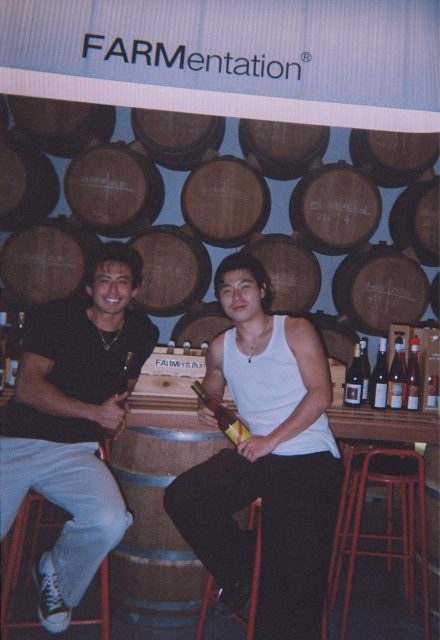
Hong Kong wine importer Purple Rain – born just last October – is the latest kid on the block attempting to tackle the Chinese wine dilemma.
Co-founders Anson Sik and Edson Bichon personally document every brand on their catalogue, sometimes even on a film camera. Rather than dissecting the terroir and grape variety, like conventional wine marketing, Purple Rain’s social media posts tell of the winding roads to the Shangri-La wine region in China, or the amusing story of Zhaba – the winemaker of a skin-contact Chardonnay – and his reluctance to smile for his photo meant for the bottle label.
Currently, Purple Rain – a name that depicts wine being poured and, of course, American singer-songwriter and musician Prince’s hit song – carries low-intervention reds, whites, oranges, sparkling, pet-nats, ciders and fortified wines from three mainland Chinese brands and one from Burgenland, Austria. The duo also makes its own bottles. A handful of retailers, bars and fusion restaurants in Hong Kong carry their stock, including one-Michelin starred French contemporary restaurant Feuille.
Changing the narrative
While low intervention wines in Hong Kong have been around for more than a decade, the focus has been on Western producers. This is no surprise, given China’s natural wines – which, too, focus on storytelling and imaginative tasting notes like “fresh tiles after rain” or “fur on the back of bats’ wings” – only thrived in the past decade.
Beyond adding to “a European-centric wine catalogue that has remained the same in the city over the years”, Purple Rain aims to bring this laid-back, approachable wine language to Hong Kong drinkers – likely 20- to 40-year-olds – and, more importantly, reverse China’s copycat image.
“Wine is usually found in fine dining or snobby scenarios,” Bichon says. “Many Chinese wines have surpassed French wines, but no one thinks to order one when they go to a bar. One reason is that many of these brands don’t know how to market themselves.
“Many people still think Chinese winemakers are just copying and pasting grapes from another region and making money off them when, the truth is, winemaking in China is so difficult that they’d have to be truly passionate to stay in the game,” he adds, alluding to the litany of challenges ranging from limited grape varietals within the country and harsh weather conditions to convoluted government policies on land ownership and winemaking.
Partner Content

Deciding what to drink
Shofang – a low-intervention wine in coastal Qinhuangdao, located around 300km east of Beijing – is a brand Purple Rain imports to Hong Kong. Co-founder Levi Lee partially attributes the misconception of “copying and pasting” to the lack of recognised systems like Geographic Indication in China’s nascent winemaking industry.
“Shofang is located by the ocean, so you can expect the wines to be more gentle and lighter than, say, something made in the mountainous regions of Ningxia. But beyond that, ‘terroir’ in Chinese winemaking has not been proven,” says Lee, adding that young wine drinkers’ rejection of traditional lingo limits awareness and communication to a superficial level.
“Mature markets don’t require a lot of information about a wine – they have their own benchmarks. China’s wine drinkers are less experienced, so they turn to the packaging, marketing, winemakers’ backgrounds and so-called ‘wine KOLs (key opinion leaders)’ when deciding what to drink,” he says.
A new chapter for Chinese wine
Having learned his winemaking ropes in Adelaide, Lee admits he’s still mastering the marketing lingo, though adding the lack of rigid regulations also allow him the freedom to “make wines that we like, rather than following market demand”.
Annually, Shofang produces 20,000 bottles that are sold within the country, Singapore, the United States, Mexico and Australia.
Purple Rain’s Sik agrees with Lee’s criticisms, explaining its multi-prong approach to marketing that spans from laidback occasions like disco nights to more in-depth affairs like winemaker visits and pairing dinners that showcase its wines by elevation.
“At the end of the day, we’re all working to change narratives,” says Sik.
Related news
China axes tariffs for African imports, but what does this mean for South African wine?
ASC reappointed as Viña Los Vascos distributor in China
Kweichow Moutai profits fall as China alcohol demand softens