The Norwegian company’s founder, Jørgen Amundsen, speaks with Monocle about famous ancestors, the beauty of using natural fibres in his products and why his label’s knickerbocker trousers make him proud.
When you’re the descendant of pioneering polar explorer Roald Amundsen, outdoor adventure is less of a calling and more of a birthright. Jørgen Amundsen leaned into his familial connection (his great-grandfather was Roald’s cousin) to found Amundsen Sports in 2009. The Norwegian brand draws inspiration from textiles and techniques used during the senior Amundsen’s era to make clothing and gear for modern-day outdoor sports.
The outdoor-clothing industry relies heavily on synthetic fibres but Amundsen Sports has carved out a space for natural fabrics. The company sources most of its material from small manufacturers in the UK and Europe: waxed cotton from Scotland; wool from Austria; corduroy from France. Today most rainwear is made from laminated plastic but Amundsen Sports uses Ventile in its collections, a water-resistant cotton constructed from densely woven fibres. The material doesn’t disintegrate in the same way as synthetics, meaning that it can withstand years of use.
Monocle spoke with Jørgen Amundsen about the origin of his brand, how it has positioned itself in the industry and the value of wearing silent clothing. This conversation has been edited for clarity and length.
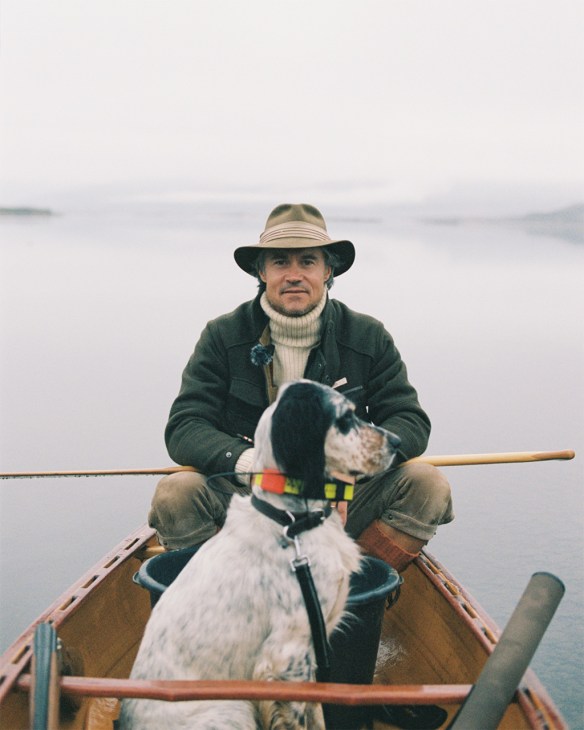
How did your connection to Roald Amundsen impact your approach to the brand?
I’ve always been inspired by Roald Amundsen’s story – not only his feats but also his philosophies. He lived with the Inuits in the Arctic for three years, learning cold-weather survival, and combined that knowledge with the cutting-edge technology of his time. We apply a similar philosophy at Amundsen Sports by looking at how things were done in the past and asking: ‘What can we learn from that?’ We combine that approach with modern technology to create our products.
What inspired you to launch Amundsen Sports?
When I was living in Switzerland, I struggled to find things that I needed for my outdoor lifestyle. It was impossible to get my hands on any wool. There were no good cotton anoraks. I couldn’t find wool ski sweaters. Everything was fleece; it was all plastic. It seemed like the whole industry had forgotten how things used to be and what has always worked. I wanted to do something about that.
How do you design clothing that draws on historical influence while meeting the needs of customers?
We always challenge ourselves to make clothes that we believe in, that are differentiated and that the market will hopefully understand. For 15 years, the knickerbocker trousers have been our flagship product. This is an item that everyone used to wear – hikers, hunters, skiers – but at some point it disappeared. We researched and tested why knickerbockers were superior to pants [and we found that] they offer more adaptability and mobility. If you wear them with gaiters, you are fully protected.
It wasn’t easy to launch with knickerbockers because people didn’t understand them. It took some education before they started taking off. Now, I would say there aren’t many Norwegian outdoor enthusiasts who don’t own a pair of Amundsen knickerbockers. We just have to do the same outside Norway.
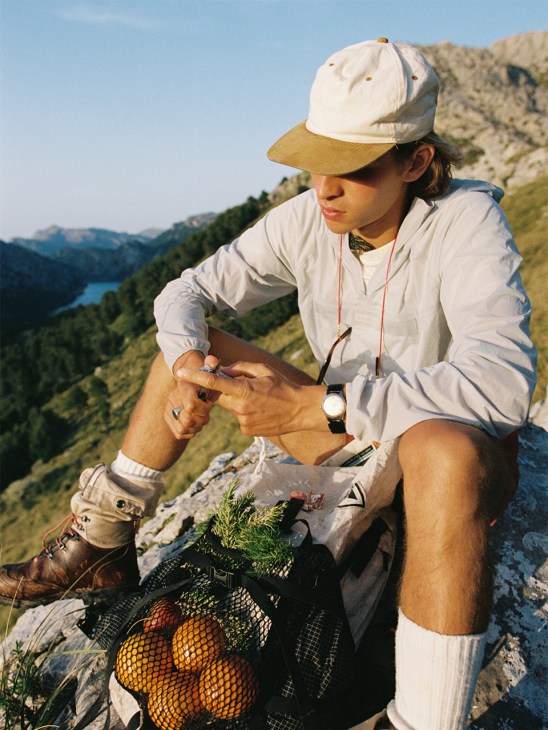
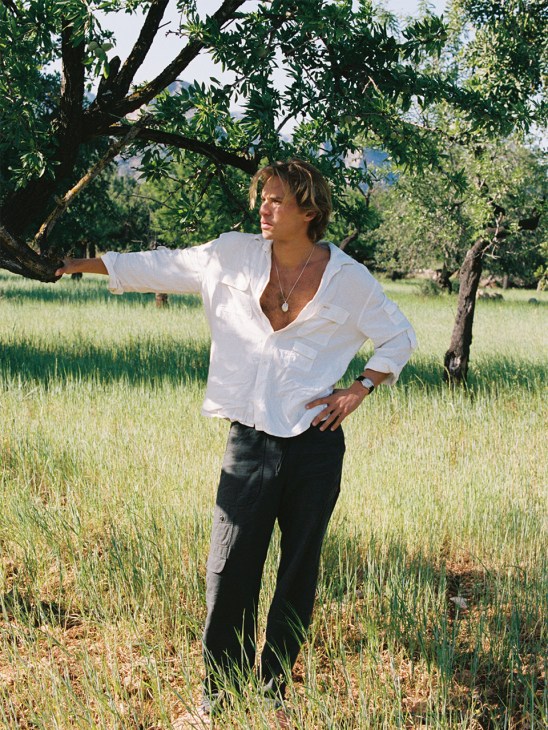
Within your inventory, what’s the perfect example of a natural textile that you believe outperforms synthetics?
We have a collection of cotton mountainwear sewn in Ventile, which was invented in England during the Second World War. It only uses the top three per cent longest cotton fibers in the world. It’s very densely woven, so when it comes in contact with water or moisture, the weave swells and [the fabric structure] becomes more compact. It’s not waterproof but it’s highly water-resistant. The fabric is just so much more comfortable. It’s silent and it feels great on the skin. We use it to make jackets, anoraks, pants and knickerbockers.
You mentioned silence. How important is it that clothes don’t make noise?
Hearing the swishing of your garments as you move reduces the pleasure of being outdoors. We view silence as part of our products’ performance.
Are textiles and fabrics the most important part of Amundsen Sports?
The materials provide our products with versatility. It’s easy to wear technical clothing when you’re on the mountain but [when it’s made from] natural materials, you can wear them to a restaurant or the office too. [Natural materials] age so beautifully compared to synthetic [alternatives].
We also do some synthetics, including a three-layer ski suit. If you’re going to be outside for days on end and it’s raining, there are benefits to [synthetics]. But it won’t have the same lifespan. The lamination will wear off and then you have something that isn’t breathable, that isn’t silent, that isn’t waterproof. So, yes: you can say materials are the most important thing to us.
Given that the brand has a higher price point and is more niche, how do you strategise for growth?
We would not be successful if our business model focused on producing something cheap or by following trends. The only reason why we have had this strong growth is because we do our own thing. Being a small company, we don’t need everyone to like our products. But we are growing. Last year, we had a $50m [€43.05m] turnover, which sounds small but that’s coming from zero 15 years ago.
You have shops in Norway, the US and Verbier. How does retail factor into your plans for growth?
We want to continue opening shops in Europe and the US. [These locations] are very important for us; it’s where the customer can really understand the whole brand. We want to follow our customers where they are. They don’t live under a stone in the mountains – they have normal lives in cities. Our e-commerce orders come from New York and London. We opened [a shop] in New York’s Nolita neighborhood four years ago. The natural next step is London. After a few recent visits, we’re still looking for the right location. But we’re hoping to open there this year.