I had a spiritual experience in Puerto Viejo. Not any Ayahuasca-enthusiast adventure, but one evening as the sky turned orange over Playa Cocles, I convinced myself that if I blinked – it might all just disappear.
There are moments when you’re travelling that feel like you’ve stepped inside the postcard you were planning; everything you anticipated at home is real and in front of you, and you’re scared some sort of screensaver might buffer.
I was taken by those glimmers throughout Central America, but on the pristine beaches of Puerto Viejo, the clichés of Costa Rica and its coconut coastlines were pleasantly overwhelming. Horses bounding over sand, surfers soaring over waves, and a sloth crossing the street felt like the universe was slightly overdoing it.

For most budget backpackers on the Gringo trail, Costa Rica is forbidden fruit. Beautiful, wild, and full of amazing experiences that feel slightly gatekept by rows of resorts and rising prices. The glitch in the glimmer being $40 park fees and restaurant bills that leave you dreaming of fleeing the country before a new hostel friend sends you a transfer request.
After travelling through Costa Rica, Puerto Viejo felt like one of the few places where you could breathe out without becoming bankrupt. It is a relatively small town on the edges of Cahuita National Park in the country’s southeast, and is perfectly primed for travel to and from Panama.
Many backpackers prioritise Costa Rica’s Pacific coast, but I’d recommend Puerto Viejo to anyone who prefers beach days and jungle hikes over big town itineraries. And, if you’re keen to save money while travelling, the area is a major hub for volunteering experiences, especially in the realm of wildlife and conservation.

(Credit: Damocean / iStock)

If you still aren’t sold – despite being a laid-back corner of the Caribbean by day, Puerto Viejo’s nightlife and hostel culture could convince even the most straight-laced traveller to extend their stay.
I spent just under a week in this easy-going surf town, but if I’m honest, I could have wasted my days in Puerto Viejo for a whole lot longer. It’s the type of the location that could serve a speedy traveller for 3-4 nights, or become a slow backpacker’s basecamp for weeks on end.
So, you want a slice of Costa Rica on a backpacker’s budget? Here’s a guide to maximising your money, time and experience on the beautiful beaches of Puerto Viejo de Talamanca.


Explore Cahuita National Park’s nature and wildlife with an expert guide

Know before you go
There are two tourist hotspots in Costa Rica both named ‘Puerto Viejo’. Locals often don’t add their respective names to accommodation sites or tour bookings, but Puerto Viejo de Sarapiqui is in the northeast and too far from Talamanca not to double-check an address on Maps!
The drier, least rainy seasons in Puerto Viejo are February to April and September to October. Despite this, Costa Rica experiences tourism all year round, and after staying on the Caribbean Coast in December under blue skies, I’d say the time of year doesn’t matter too much!
What we loved
- Beach days and jungle hikes without a big-town itinerary
- Surf for every level: Playa Cocles for general surfing, Playa Negra for beginners
- Easy travel to or from Panama, with the border about an hour away
- You can volunteer in wildlife and conservation
What to consider
- It’s about 4.5 hours from San José and 5-6 hours from La Fortuna.
- The food scene is nothing special and often pricey, so hostel kitchens and sodas save money.
Getting there & getting around
Getting around in Costa Rica can be a budget hurdle, and even though banana tree highways and volcanic views are entertaining on a long drive, the small nation covers some pretty hefty distances.
There are three main ways to get to Puerto Viejo from anywhere else in Costa Rica: a private transfer, public buses, and car hire.
The town sits around 4.5 hours from the capital San Jose, and around 5-6 hours from La Fortuna and the Arenal area. If you’re coming up from Panama, Puerto Viejo is only an hour or so from the border near Bocas del Toro – a really easy travel day.
book your transport on bookaway

Private transfers & shared Mini Vans
While private transfers in Costa Rica are definitely more expensive than local transport services, if you prefer simple journeys and lots of leg room they are a no-brainer.
We took this type of transfer from La Fortuna to San Jose on our way down to Puerto Viejo, and were the only two people on a very spacious and air-conditioned bus. Local services can include stopovers and a lot of independent planning – so shared transport can alleviate any logistical worries!
I’d recommend sites like Bookaway for the best deals!
Public buses
Costa Rica’s bus and coach network is practical and reliable in most well-trodden parts of the country, and plenty of travellers save money by sticking an arm out for a local bus and piecing their way to their next destination.
A public bus from San Jose to Puerto Viejo is only around $13 and can easily be booked online or at the bus station, which is pretty relaxed about same-day travel.
We took a public bus from San Jose to Puerto Viejo, and the four hour journey flew by with plenty of toilet breaks and a pleasant enough atmosphere.
There is also the potential to ride even cheaper, local ‘chicken’ buses through smaller towns and less common routes. Many travellers do this for just a few dollars and get to take in a lot of Costa Rican countryside, but without proper planning, you might be extending a travel day into a much longer detour!
Car hire and car-pooling
More than any other Central American nation, car hire is a hugely popular transport option in Costa Rica and I was surprised at how many hostels had car parks and electric charging points.
Remote, hard-to-reach nature spots and a pretty simple highway system make it an enticing option for travellers and carpooling with other backpackers is a fun way to get around, meet people and split the costs.
The only downside of car hire is that you obviously need to return the car which could obstruct care-free onward travel plans. Most major car hire companies do let you drop off your car in a different location, but this always comes with added fees (expect at least around $100 for a one-way fee).
If that doesn’t put you off, you can search on Discovercars for a rental starting in for example San Jose and ending in Puerto Viejo (untick the box “Return car in same location”). Otherwise, car hire will lend itself better to circular routes starting and ending in the same place.
Transport in Puerto Viejo
Once in Puerto Viejo, you’ll find that most of the town is pretty walkable. The straight, flat road from Cahuita, through Puerto Viejo and all the way to Punta Uva is used to foot traffic and bicycles and taxi rides 20-25 minutes from town were only around $3-5 dollars. Uber is available in Puerto Viejo and is also very affordable.
There is a local bus to beaches like Playa Cocles and Punta Uva, but the schedule is slightly random and we were told different times by different locals. It’s definitely possible but you might have to go with the flow!

Things to do in Puerto Viejo
Like any good Caribbean surf town, a jam-packed itinerary isn’t needed for Puerto Viejo. Lazing around on local beaches, morning walks in national parks, and wandering in and out of ice cream shops and boho clothing stores count as essential sightseeing.
Nature is the (mostly) free main attraction in Puerto Viejo, and you can string together a classic Costa Rican holiday here without setting foot in an all-inclusive or burning holes in your budget.
Here you’ll find my beach and hiking recommendations, as well as the only activity I think is truly worth the splurge in the Puerto Viejo area.
1. Beaches
A beach day is an obvious requirement in Puerto Viejo, but where you spend it matters more than you might think. The town’s main beach, known locally as ‘Playa Chino’, is great for a quick dip and even has an interesting shipwreck to explore but isn’t the most stunning site in the area and is way too calm and rocky for surfers.
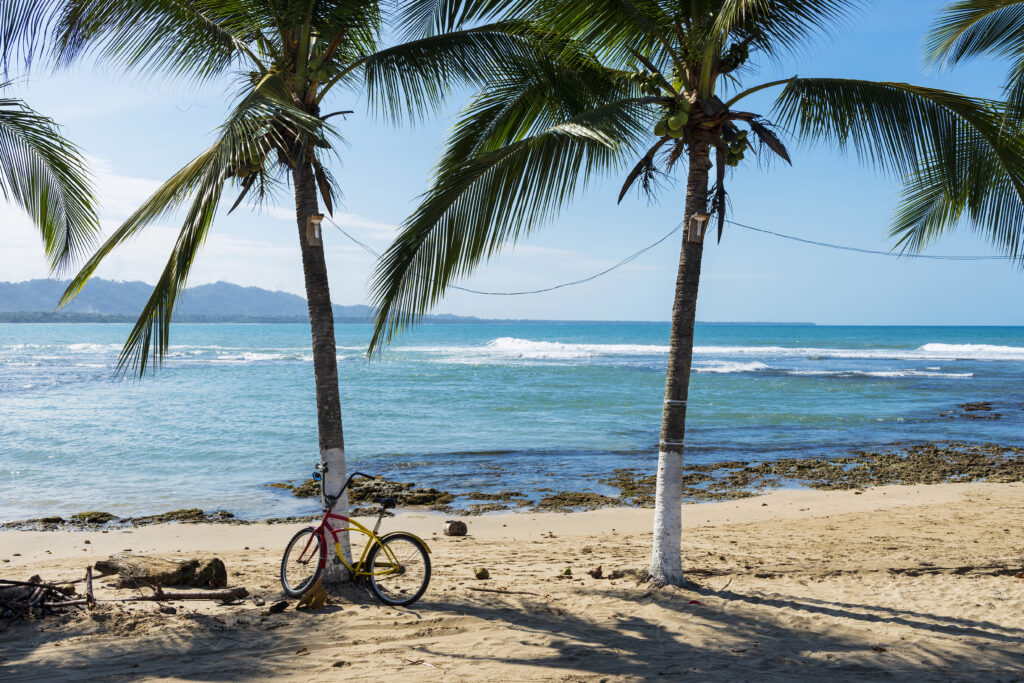
Playa Cocles – I am not lying when I say Cocles is my favourite beach in Central America. It is everything that springs to mind when you daydream about a tropical paradise.
Perfect for surfers, with plenty of boards to rent (I paid $8 for an afternoon), lifeguards for less confident swimmers and a huge strip of sand to chill on. There are nearby cafes and the vibes on the beach are always high – stay late for one of the best sunsets you’ll see in Costa Rica!

Playa Arrecife / Punta Uva – The stretch of coastline from Playa Arrecife to Punta Uva is easy to access, but is a much wilder, untamed collection of beaches with low-hanging trees, less amenities aside from vendors and less predictable tides (I awkwardly lost the bottom half of my bikini to the waves here!).
Locals pull trucks right onto the sand for barbeques and family parties, and you’ll notice experienced surfers and skimboarders in the water. It is a majestic, rugged and breath-taking expanse of coast.

Playa Negra – On the other side of Puerto Viejo, Playa Negra is known as a quieter version of Playa Cocles, and is named after its iconic volcanic black sand.
It is a better beach for beginner surfers, and an easy swimming area, too. Walkable in just 10-15 minutes from town, and home to surf schools with plenty of boards to rent and supermarkets and cafes on the way.
2. Cahuita National Park & hiking
After a week of desperately scanning trees for a sloth and even debating an expensive sloth-watching tour, I lucked out spotting a mother and baby curled up together in Cahuita.
The national park is less overwhelming than other reserves in Costa Rica, and is home to a five-mile coastal and treeline trail that can be hiked without a guide and takes around 2-3 hours (or longer if you stop for a swim).
You’ll need to take a 25-30 minute journey from Puerto Viejo to the town of Cahuita, where you can start the trail from either end.
The Puerto Vargas gate is technically closer to P.V, but is controlled with a $6 dollar park fee. Entering from Cahuita town (near to Soda Kawe on Maps) is a budget backpacker hack as this gate is unmanned and donation-based.


The park is open 7am-4pm so it’s probably best as a morning activity, but you won’t get into too much trouble if you’re slightly late to leave.
The route hugs the beach and is a straightforward trail around a headland with a mirador viewpoint halfway through. I’m not a huge hike lover, but this walk was mostly flat and spotting wildlife along the way and chilling on Cahuita’s natural and unspoiled beaches definitely made it more interesting.

While it’s great that the park is not overly commercialised, you won’t find lifeguards or rangers on the trail so swimming or engaging with animals (who are absolutely everywhere and quite eager to say hello!) is totally up to you.
Even though this hike can be enjoyed independently, it might be worth checking local tour prices as transport to Cahuita and park entry can add up. We hitched a ride with other travellers we met who had a car rental, and there were plenty of safe places to leave it before the trail began.

Cahuita National Park is a tropical wildlife haven. During this hike, an eagle-eyed guide will help you spot sloths, monkeys, iguanas, exotic birds, and other more well-hidden creatures. The tour ends at Punta Cahuita, the park’s famous white-sand beach.
3. The Jaguar Rescue Centre
You might have to hear me out on this, but visiting The Jaguar Rescue Centre was one of my favourite experiences during the whole of my six months in Latin America.
I’m not totally cold-hearted, but animals have never really been my thing and I mainly wanted to visit the sanctuary to see sloths and big cats up close. I left crying happy tears, with the overwhelming urge to go vegan and sponsor seven monkeys.
The Jaguar Rescue Centre is about 20 minutes by car from Puerto Viejo, and is an ethical rehabilitative centre for all types of Costa Rican wildlife including sloths, monkeys, crocodiles, seabirds and parrots and of course – jaguars.
You tour the site with a guide (there are daily tours at 9:30 or 11:30 am or private experiences in the afternoon) and learn each animal’s story, the history of the centre and what Costa Rica is doing to fight for animal welfare and battle climate change.
Tickets are $27 USD for the 1.5-hour tour, and while that might seem a bit on the pricier side, the money goes directly to the centre. I am not usually someone who leaves a Google review or advice on TripAdvisor, but I was compelled to write an essay after the tour. 100% splurge approved!
Nightlife, restaurants and cafe culture
For a small town, Puerto Viejo has a surprisingly lively night-life scene. From Irish bars, hidden jungle night clubs, beach front DJ sets and cheesy karaoke nights.
While I wouldn’t say there’s an amazing food scene in town (as with much of Costa Rica in comparison to its neighbours) – there are a lot of easy-going beachside restaurants and cafes.
Quick recommendations
La Selva – My favourite club in Puerto Viejo purely due to the secret jungle setting. They often partner up with hostels for discounts and have ‘ladies’ nights’ with free drinks for female travellers.
Hot Rocks – an unmissable (mainly due to loud crowds!) bar and restaurant in the centre of town. Its busy itinerary is brilliant for meeting a mix of travellers, expats and locals, practicing your Spanish skills at an open mic comedy night, or letting loose on karaoke.
Dining out in Puerto Viejo can be expensive, and I spent a lot of my evenings cooking in the hostel kitchen to save on Colones.
If you need a quick, affordable meal, ‘sodas’ (traditional locally owned restaurants) are usually your best option and a positive place to splash the cash. Type ‘Soda’ into maps and you should see a whole range of choices.

Where to stay
Puerto Viejo is a mixed bag of accommodation – from super social hostel hubs to silent wellness-focused retreats. Choosing whether to stay in town and travel out to beaches and beauty spots, or surround yourself with nature and visit the town centre sparingly, is a tough decision.
We based ourselves in town for the convenience of supermarkets and entertainment options. The beaches and the national park were right along the highway. Staying further out is perhaps better suited to those who enjoy resort-like or wellness sites and have the budget for more travel between town and attractions (especially if you have a car).
The following picks are a mix of trustworthy in-town options and reliable stays further afield.
1. Casa Wobala
The Casa Wobala is a fun and friendly hostel in town often considered the centre of the backpacker social scene. The site is based across a spacious courtyard and comes with a kitted out kitchen as well as access to a nearby hotel pool.
By day, you can rent surfboards and bicycles and take guided tours into the national park and by evening, the patio bar is packed with young locals and social travellers up for cooking classes, karaoke nights, and drinking games. The hostel reminded me slightly of a well-organised school trip, but I think that’s partly because the staff are so friendly and happy to help.


Wobala offers pod-like dorm beds with a lot of privacy, although rooms are quite small for 8-10 people and I did find myself lingering outside to give others space. Five nights in a dorm is around $120 ($24 a night) – one of the cheapest places in town where you aren’t compromising on experience.
You can also book affordable onward travel to Panama through the hostel.
2. Pagalu Hostel
For a smaller, less party focused hostel, I’d opt for the Pagalu. Still in the centre of town, Pagalu is perfect for couples and friends or travellers who’d rather pick and choose when to charge up their social battery. The site is beachy and nature-inspired, with an on-site kitchen and gardens to get lost in.

Rooms are basic four-man dorms with bunk beds as well as a few private rooms, too. Not the most modern hostel, but affordable at around $84 for 5 nights, or $16 a night – a bargain for Costa Rica!
3. Playa 506 Eco-lodge Hostel
Right on the sand at Playa Cocles is the Playa 506, a social hostel that somehow also has an edge of serene seriousness.
The 506 is surf-inspired and attracts a free-spirited and easy-going crowd, with a yoga and wellness feel that manages to balance with a rowdier evening atmosphere. Away from town, the site has an on-site restaurant instead of a kitchen and offers surf lessons and board rentals.


I’d describe the rooms at Playa 506 as slightly quirky, with three story bunks and interesting, abstract artwork. Five nights in a dorm is around $141 dollars ($28 a night) and private rooms are available too.
4. Tasty Dayz Hostel
Tasty Dayz sits just outside of town close to Playa Cocles, and brings a hotel vibe to its hostel name. The accommodation, again, has a wellness angle with beachfront yoga sessions, and a huge stretch of jungle garden to explore. There’s an on-site Mexican restaurant and bar, as well as a shared kitchen.

The rooms at Tasty Dayz are a mix of private cabanas, a large ‘family’ room which would suit bigger groups travelling together, and simple four-person dorms. I get the vibe that this hostel attracts a real mix of travellers and even family groups, so not a traditional hedonistic or social hostel, but an affordable, interesting place to stay.
Five nights here is just $84 dollars ($16 a night) – again, a good Puerto Viejo bargain!
P.S. If you do have the budget for a slice of boutique or resort life in Puerto Viejo, I’d recommend Umani Hotel or La Tribu Boutique Hostel for Women which I longingly stared at but couldn’t afford. Both seem to be designed around relaxation and nature and La Tribu promises spa nights and artistic workshops – so if that’s your thing, I’d check them out!
Where are backpackers heading next?
- For most backpackers, it’s Bocas del Toro in Panama. The border is about an hour away. This is the natural flow for anyone on the Gringo trail, in either direction.
- If you’re travelling around Costa Rica, the usual next stops are La Fortuna and Arenal (5-6 hours) orMonteverde. Phoebe (the author) took this route in reverse, going from La Fortuna to San José to Puerto Viejo.
- If you want to surf, head to the Pacific coastinstead. You can get there via San José, with Santa Teresa being an example of a beach town with great surf and a bohemian vibe