Credit: Hispano Suiza
Most Allied fighter planes early in World War I used rotary engines, a design in which the whole engine spun with the propeller rather than being bolted to the airframe. The spinning mass created a powerful gyroscopic effect. The Sopwith Camel, one of the era’s most feared fighters, turned so much faster to the right than to the left that novice pilots crashed when attempting sharp right turns. Veteran pilots learned to fly the Sopwith Camel despite the quirk.
Swiss engineer Marc Birkigt addressed that problem when he built the Hispano-Suiza 8. Its cylinders stayed fixed in place, so only the crankshaft and propeller spun, giving pilots an engine that flew the same in every direction (French officials still required Birkigt to prove it, with a 50-hour test at full throttle that no French-built engine had passed before). By the end of the war, the engine powered the SPAD VII and SPAD XIII, two of the most effective Allied fighters.
More than a century later, Hispano Suiza is addressing a similar problem in the modern hypercar. A car pushing upwards of a 1,000 horsepower can be just as demanding as a rotary-engine fighter plane, quick to snap sideways under power or lose the rear end in a hard corner if the driver doesn’t compensate for it.
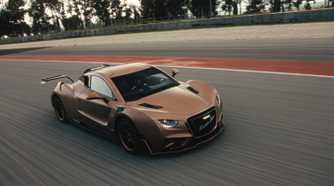
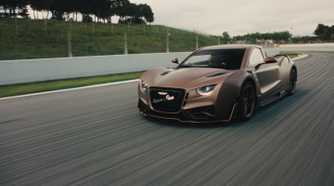
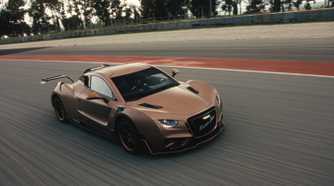
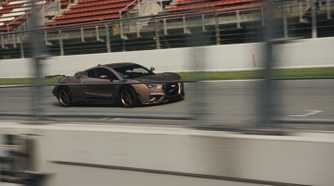
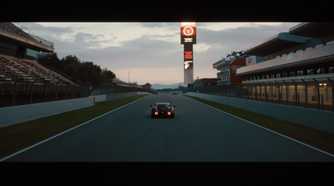
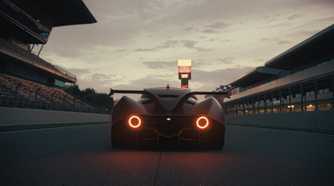
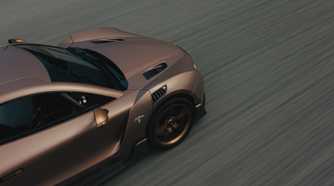
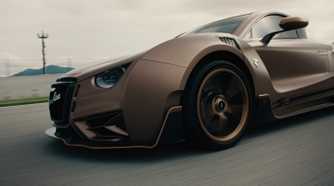
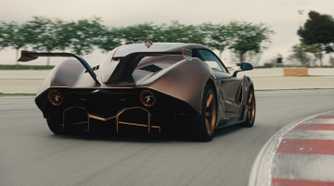
The all-electric Carmen Sagrera, the third hypercar in the brand’s Carmen lineup, produces 1,115 horsepower and 856 lb-ft. of torque. It accelerates from 0 to 62 mph in 2.6 seconds. Running underneath is the Hispano Suiza Driver Dynamics system (HSDD), software built to do for the driver similar to what Birkigt’s fixed cylinders did for pilots.
Hispano Suiza Driver Dynamics at a glance
Electronic stabilizer manages rear-wheel torque
-
 Credit: Hispano Suiza
 -
 Credit: Hispano Suiza
 -
 Credit: Hispano Suiza
 -
 Credit: Hispano Suiza
 -
 Credit: Hispano Suiza
-
 Credit: Hispano Suiza
 -
 Credit: Hispano Suiza
 -
 Credit: Hispano Suiza
 -
 Credit: Hispano Suiza
 -
 Credit: Hispano Suiza
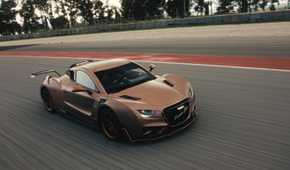
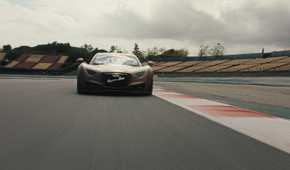
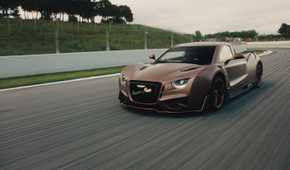
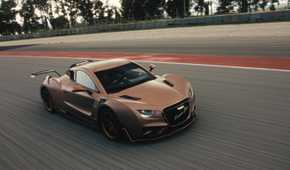
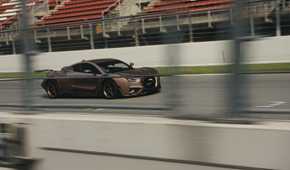
HSDD is Hispano Suiza’s proprietary software for managing the Carmen Sagrera’s dynamic behavior, covering power delivery, traction, braking, and active safety in real time. By continuously monitoring the car’s condition, HSDD can anticipate a problem and adjust its response before the driver would ever notice.
HSDD combines four systems working together: the Grip Enhancement System for traction control, Active Yaw Modulation for stability, plus torque management and power distribution. Each one adjusts its behavior based on the car’s driving mode.
Meanwhile, the Electronic Torque Stabilizer manages regenerative braking and can apply negative torque to the rear wheels on its own, keeping the Carmen Sagrera stable while extending its range. A separate thermal management layer monitors the motors and battery, keeping temperatures balanced so performance stays steady whether the driver is on a racetrack or a public street.
More than 200 million calculations a second
Calibrated by a former Formula 1 driver
-
 Credit: Hispano Suiza
 -
 Credit: Hispano Suiza
 -
 Credit: Hispano Suiza
 -
 Credit: Hispano Suiza
 -
 Credit: Hispano Suiza
 -
 Credit: Hispano Suiza
-
 Credit: Hispano Suiza
 -
 Credit: Hispano Suiza
 -
 Credit: Hispano Suiza
 -
 Credit: Hispano Suiza
 -
 Credit: Hispano Suiza
 -
 Credit: Hispano Suiza
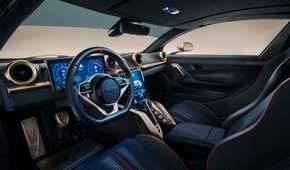
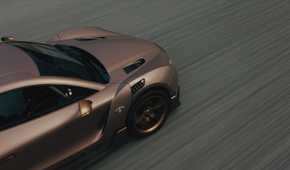
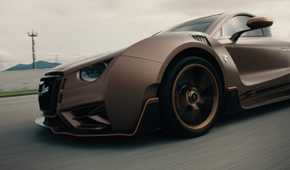
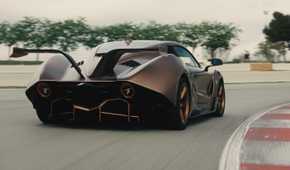
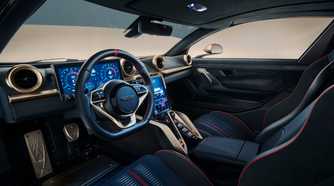
The Carmen Sagrera’s electronic architecture collects and processes information from more than 100 sensors distributed throughout the car. With a processing capacity of more than 200 million instructions per second, the software analyzes essential parameters in real time, including:
- Wheel speed.
- Driving mode.
- Damper travel.
- Brake pressure.
- Chassis yaw angle.
- Accelerator pedal input.
- Altitude above sea level.
- Acceleration across all three axes.
- Ambient temperature and pressure.
- Battery charge, current, and voltage.
- Steering wheel position and rotation speed.
HSDD uses all that data to modulate power delivery, adjust how much the traction control intervenes, and adapt the car’s behavior to whatever is happening at the moment.
Hispano Suiza calibrated HSDD through simulation work combined with real-world testing, both on circuits and on public roads. Leading that process was Luis Pérez-Sala, a former Formula 1 driver who now serves as the company’s test driver.
“The Hispano Suiza Driver Dynamics system coordinates every intervention so that it acts only when necessary, in a precise, natural way that is entirely consistent with the character of the vehicle,” said Juan Fernández, Hispano Suiza’s Chief Technical Officer.
An electric hypercar built around the Gentleman Driver
Hispano Suiza frames the Carmen Sagrera as a modern take on the Gentleman Driver, a motorsport term dating back more than a century for a self-funded amateur, some of whom are high-profile business executives, historically judged as much on elegance and sportsmanship as outright speed.
The Sagrera debuted in 2024 to mark the brand’s 120th anniversary, joining the original Carmen from 2019 and the Carmen Boulogne from 2020 to complete the current hypercar lineup.
Hispano Suiza itself dates back to 1904, when Damián Mateu founded the company in Barcelona with Birkigt as technical director. Between then and 1946, the brand built more than 12,000 luxury vehicles alongside its aircraft engine work. The company stopped building cars in 1946 and stayed dormant for 73 years until Miguel Suqué Mateu, the founder’s great-grandson, revived it in 2019. Sergio Martínez Campos now serves as CEO alongside him.