There is a photograph that explains Nike ACG better than any lookbook ever has.
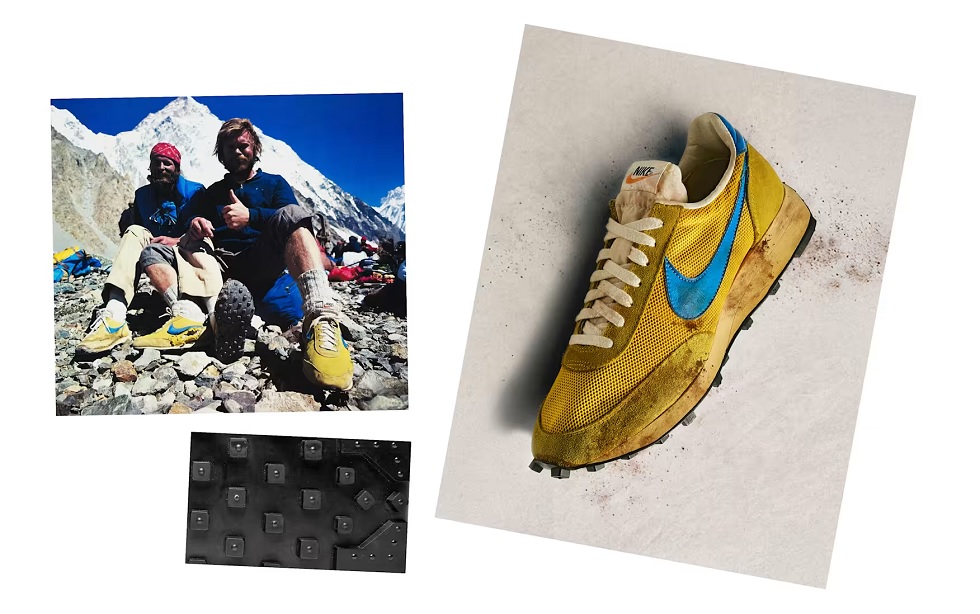
Two men sit at the foot of K2, faces lean after 68 days on the mountain, snow-streaked ridgelines rising behind them. On their feet are yellow Nike running shoes that are torn in bits. One of the men has a thumb raised to the camera.
The shoes were a last-minute gift for the long walk in, from a young company that wasn’t in the outdoor business yet.
That was 1978 and those shoes were accidentally the beginnings of a cult brand. A brand that evolved, inspired, and, for a long stretch, became something of a ghost. In 2026, it is trying to earn its way back into the outdoors.
Which is harder than it sounds.
A Gift for the Walk In
By 1978, K2 had been climbed exactly twice. An Italian expedition reached the top in 1954, and a vast Japanese one followed in 1977. Americans had tried four times since 1938 and failed each time, to the point that some had started calling it the American mountain. It was not a compliment.
The 1978 attempt was led by Jim Whittaker, the first American to summit Everest, who was running REI at the time. He had turned back at 22,000 feet on K2 in 1975, and it stayed with him. “It kind of festered,” he said later. This time he took a team of fourteen, mostly Seattle climbers, including his wife, the photographer Dianne Roberts. They paid for it by cold-calling brands. One of the ones that said yes was a young Oregon company that was growing fast but was far from flush: Nike.
The mountain did what K2 does. Nine storms in quick succession. Camps built and built again. Personality clashes. Then, in early September, a window.
On 6 September, Louis Reichardt and Jim Wickwire reached the summit. Reichardt’s oxygen hose had a puncture, so he made the final push without it and became the first person to summit K2 without supplemental oxygen. Wickwire spent nearly twenty minutes changing the film in his camera in the cold. By the time he started down, twilight was closing in and he had no headlamp. He spent the night out, in one of the highest bivouacs ever recorded.
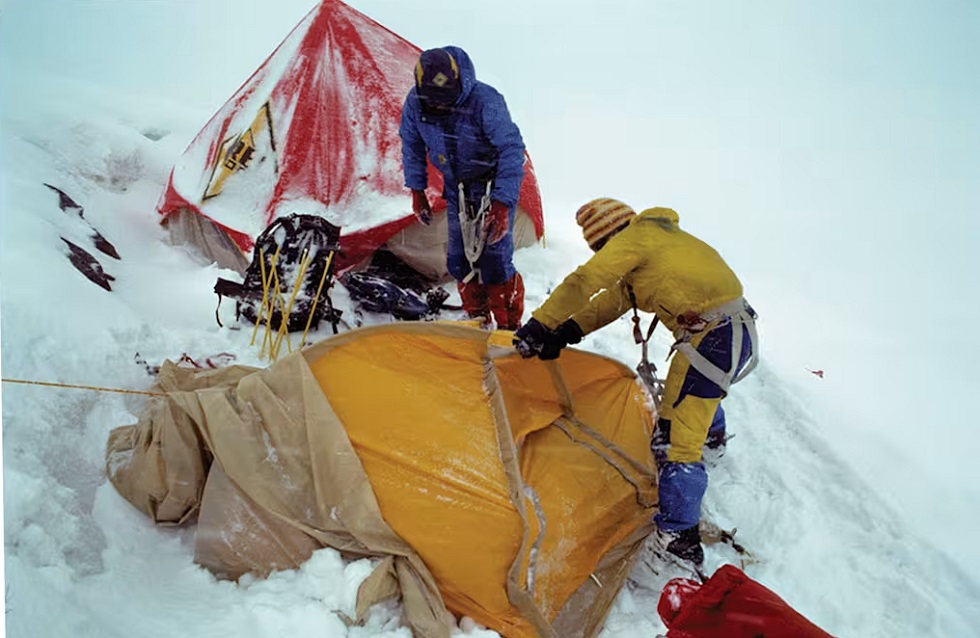
The next morning Rick Ridgeway and John Roskelley set off, believing they were on a rescue mission as much as a summit bid. They found Wickwire on his way down, abandoned the direct finish because of avalanche danger, traversed across to the standard route and made the top. Four Americans on the summit in two days. Everyone came home, though Wickwire left the mountain by Pakistani military helicopter with pneumonia, pleurisy and blood clots in his lungs.
Which brings us back to the shoes.
Before any of that happened, there was a 110-mile walk to base camp, much of it off-trail. Nike had quietly supplied lightweight running shoes for it: yellow Long Distance Vectors, a road shoe that evolved from the LD-1000, designed by Bill Bowerman with a Eugene orthopedist named Dennis Vixie, who made its last. Inside Nike they were known as the Long Distance Vixie. Ridgeway and Roskelley wore them in place of the stiff European leather boots most climbers of the era relied on.
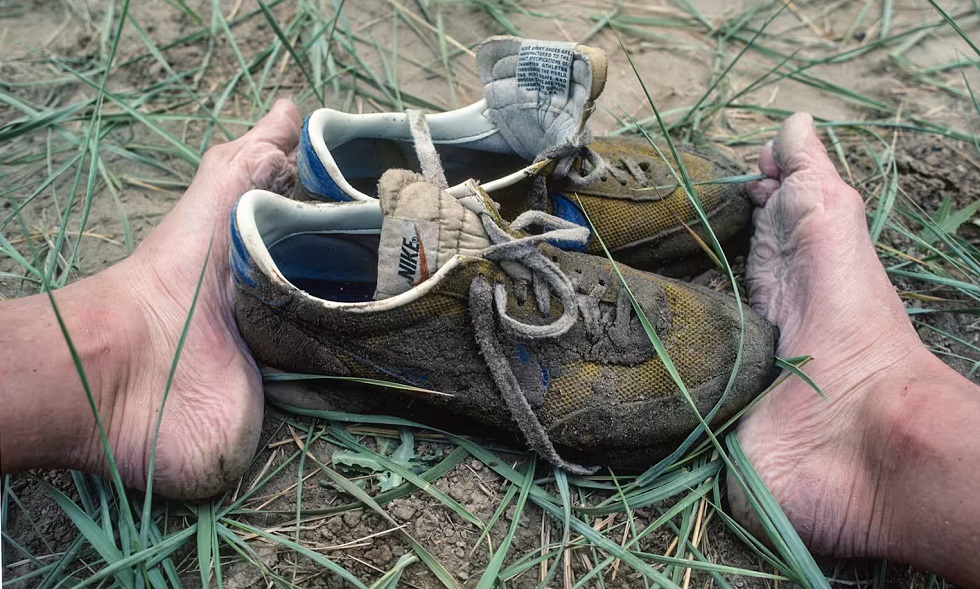
The shoes worked. They were softer, more flexible and better at breathing than a traditional trekking boot, and Ridgeway has said they were ideal for the boulder-hopping the approach demanded. They were also never meant for any of this. By base camp they were wrecked. By the walk out, Ridgeway and Roskelley were holding them together with tape and glue.
The expedition had made another footwear bet, too. It bought a hundred pairs of Vibram-soled shoes for its porters, who had walked in barefoot in 1975. The 1978 porters reached base camp in thirteen and a half days, nearly half the time of the earlier trip, perhaps in part because of those shoes.
On the walk out, Ridgeway and Roskelley talked about how the LDV could be turned into a proper trekking shoe. When they got home, they put the ruined pairs in the post to Nike with a short list: a tougher sole, a more rugged upper, and keep it light.
Nobody in Beaverton knew it, but that was the first product brief.
Light Is Right
Nike took the list seriously, which is the part most brands would have skipped.
The wrecked LDVs had made a simple argument: lightweight footwear could survive in places where only heavy boots were supposed to. Inside Nike the idea hardened into a mantra, and by the early 1980s it had produced three shoes: the Lava Dome, the Approach and the Magma.
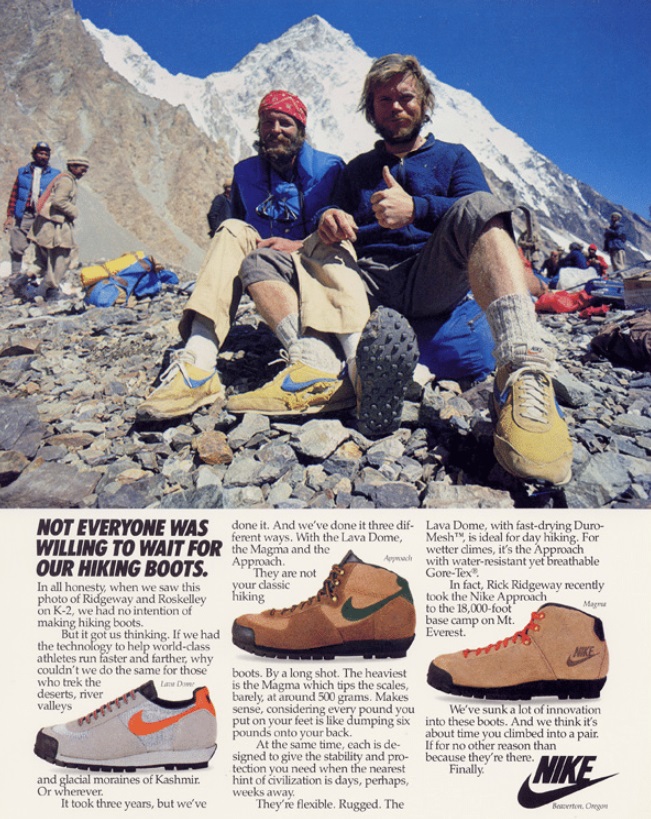
The Approach was Nike’s first shoe with a GORE-TEX lining, built in Saco, Maine, with a waffle outsole and a leather-and-Cordura upper. The Lava Dome, designed by Trip Allen and Monte Mayko, was one of the first lightweight hiking shoes the company ever made. Mayko, who helped run the project out of Nike’s factory in Exeter, New Hampshire, remembers it as an easy call. World-class athletes were already going lightweight, and the shoes simply followed them.
Ridgeway stayed in the loop, testing prototypes the designers sent him. When Nike ran its first outdoor print ad, it used Dianne Roberts’ photograph of him and Roskelley at base camp in their destroyed LDVs, with a caption that read that the pair hadn’t been willing to wait for Nike’s hiking boots to exist. Ridgeway still sounds slightly amazed by it. “Turning a training shoe into a trekking shoe,” he said. “Nobody had done that.”
Elsewhere in the building, another shift was under way. In 1984, a young designer named Mark Parker drew the Escape, Nike’s formal step into trail running. Remember the name. Three decades later, as CEO, Parker would be the man who handed ACG to a Berlin techwear designer.
All Conditions
By the mid-1980s Nike had a drawer full of outdoor experiments and no name for any of them. Hiking shoes, trail runners and a few apparel pieces sat in separate corners of the company, with no single purpose holding them together.
In 1987, a small team was tasked with fixing that. Tom Clarke, then vice president of product marketing, had been talking about an outdoor business for years and had a stable of avid outdoor people scattered around product management. One of them was Kirk Richardson, a lifelong mountaineer who would end up running the thing. Working between Beaverton and Exeter, they saw a gap. The outdoor market was ruled by European legacy brands that still built heavy, rigid gear for specialists. Nike saw room for athletic gear built for movement in any weather.
They settled on four principles: high performance, durability, versatility and functional excellence. Footwear and apparel would live under one roof. Richardson’s own way of putting it was that climbers understand, at their core, that less is more. Nike’s running heritage had been saying the same thing for years.
The name came by accident. Nike Running already used the phrase All Conditions Gear for a small line of year-round apparel. When Clarke’s group stumbled across it, they borrowed it.
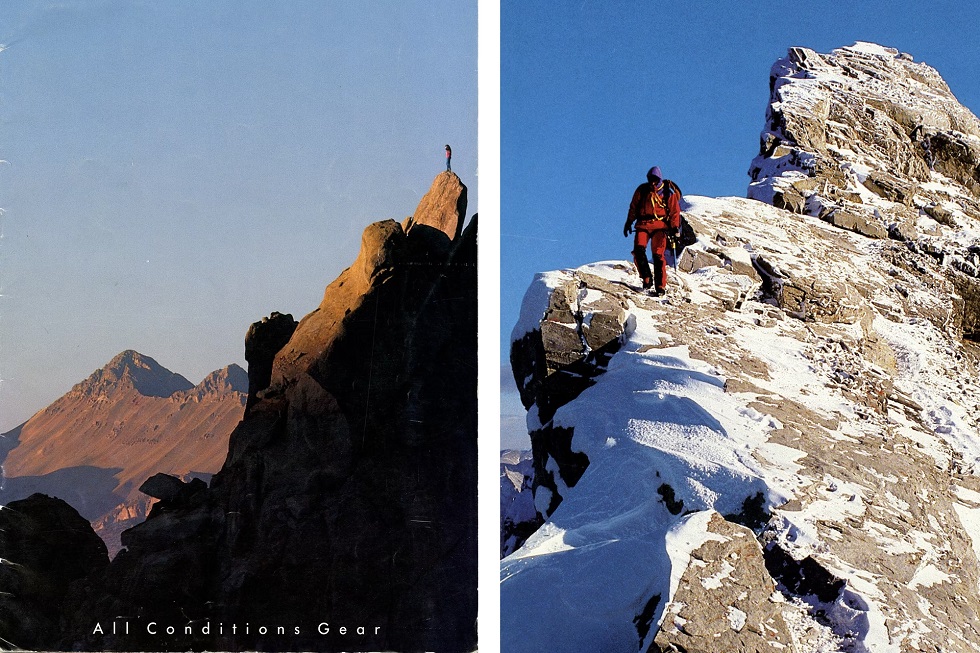
In 1989, ACG became official, a fully integrated line of footwear and apparel under Richardson. For the first catalogue, the team went to Moab and shot climbers on Castleton Tower, a famous rock spire. Art director Ron Dumas sat on the helicopter rail at sunset, holding on to a photographer who was leaning out of the door, as the climbers on top shrank to tiny dots. The tone was cheerfully self-aware. One of the early slogans was “all conditions gear, and all conditions means all conditions.”
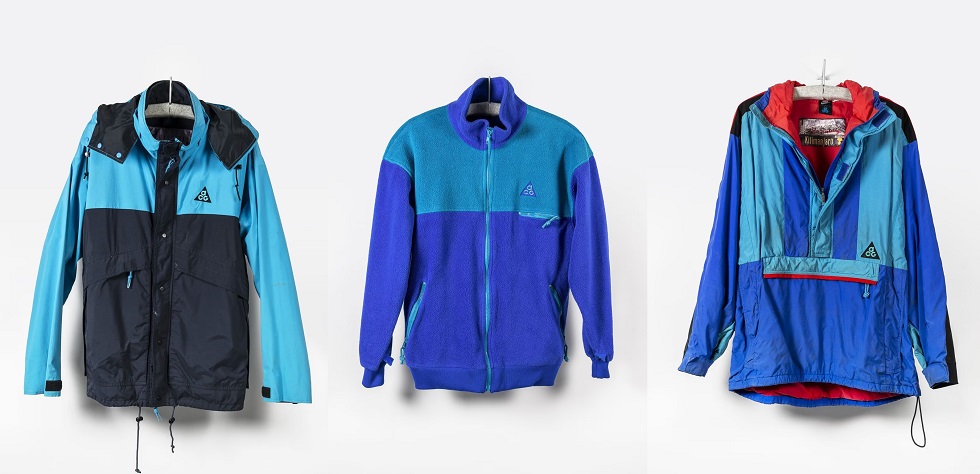
The first collection landed that autumn, anchored by the Air Wildwood and the Lava High, plus a run of GORE-TEX and fleece outerwear. Many early pieces were named for real mountains and expeditions. The Huascarán jacket honored Peru’s peak. A Mount St. Helens jacket carried a before-and-after patch marking the 1980 eruption. Nike’s archive even holds a Kilimanjaro anorak worn and signed by John Roskelley.
The photograph from K2 was still earning its keep. Roskelley’s trek turned up again in a 1989 ACG ad.
Mowabb and the Golden Years
The 1990s were ACG’s creative peak, and the thing that defined it was a shoe named after a desert town.
In 1991, Tinker Hatfield, the designer behind the Air Max 1 and much of the Jordan line, drew the Air Mowabb. It was named for Moab, Utah, where Hatfield had spent a lot of time on the trails, and it was strange in the best way. He fused the Air Huarache with the earlier Wildwood, added nods to Native American moccasins, wrapped the foot in a neoprene bootie and finished it with a speckled midsole, one of the first Nike shoes to use one and a detail that has since turned up on plenty of others. The colorway alone ended up on Air Force 1s and Air Max 93s for years afterwards.
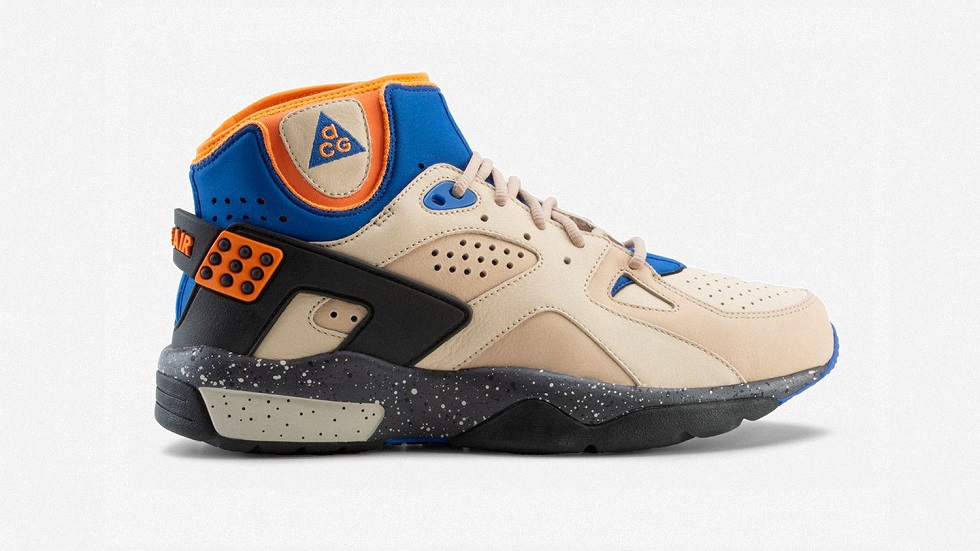
The hits kept coming. The 1993 Air Deschutz put Nike Air in the heel of an outdoor sandal. In 1994 came the Air Moc, a plush slipper-boot hybrid, alongside the rugged Air Mada. Peter Fogg, a former aircraft-interior designer, brought an engineer’s discipline to shoes like the Air Humara. ACG had become the place where Nike let its most inventive designers off the leash. The gear was built for mountains and was strangely good-looking on a city street.
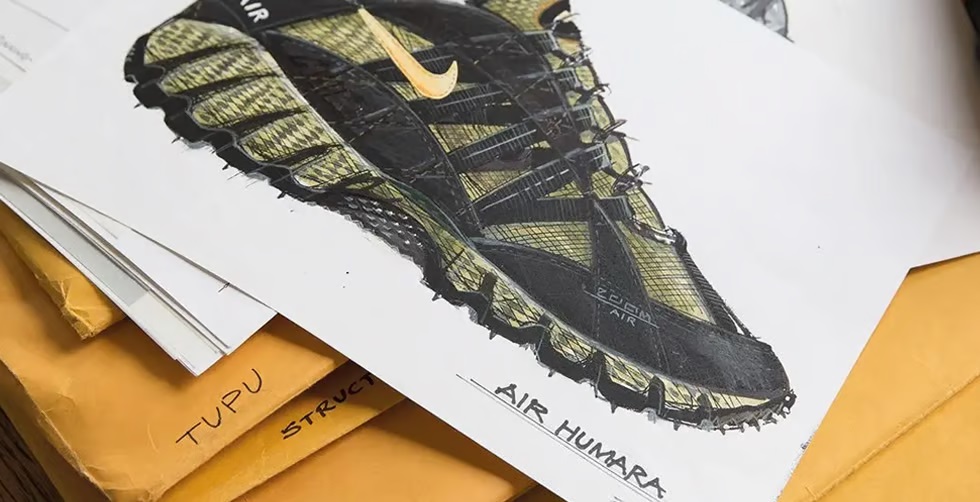
And that is where it started to leak. ACG had never cared much for the borders between running, hiking, climbing and everyday life, and its customers cared even less. Quickly, the line became as much a streetwear staple as a trail one.
It was a question the whole industry would eventually have to answer: what happens to an outdoor brand when the city claims it?
The word for it didn’t arrive until 2017, when Jason Chen coined “gorpcore” for New York Magazine’s The Cut, half as a joke about outdoor clothes that looked defiantly ugly. ACG had been doing it for the best part of three decades by then.
The Quiet Years and Errolson Hugh
Then it went quiet. By around 2008 ACG had all but vanished, with a handful of products still carrying the name and very little of the spirit.
It came back in December 2014, and not at all how anyone expected.
Mark Parker, by then Nike’s CEO, tapped Errolson Hugh, co-founder of the Berlin techwear label Acronym, to rebuild the line as NikeLab ACG. The pitch was “sport utility for the city.” The loud colors of the nineties were gone. In their place: black, three-layer GORE-TEX, taped seams, 2-in-1 jackets with deployable hoods, and reflective ACG logos that kept the wearer visible when it mattered. The launch included the Responder backpack, an urban evolution of Nike’s military-inspired SFS Responder, and it sold through NikeLab stores in New York, London, Paris, Milan and Tokyo.
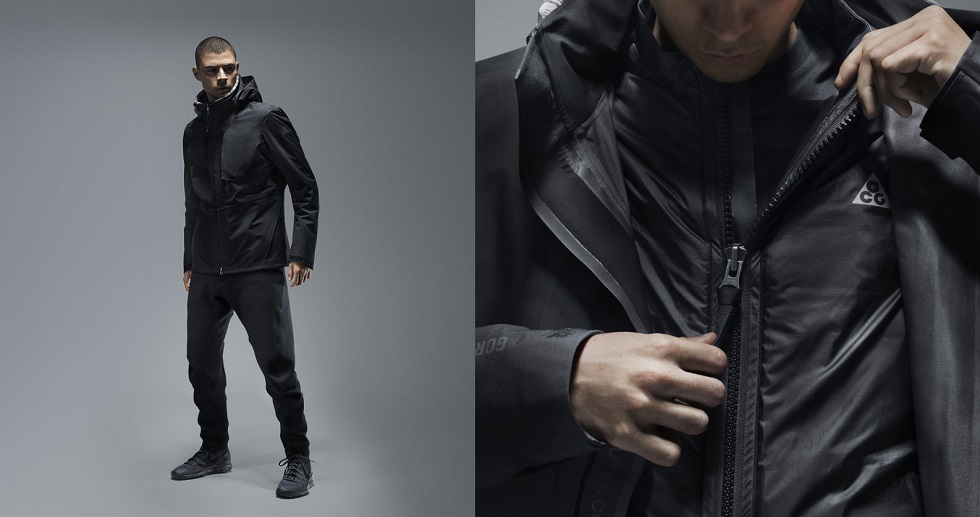
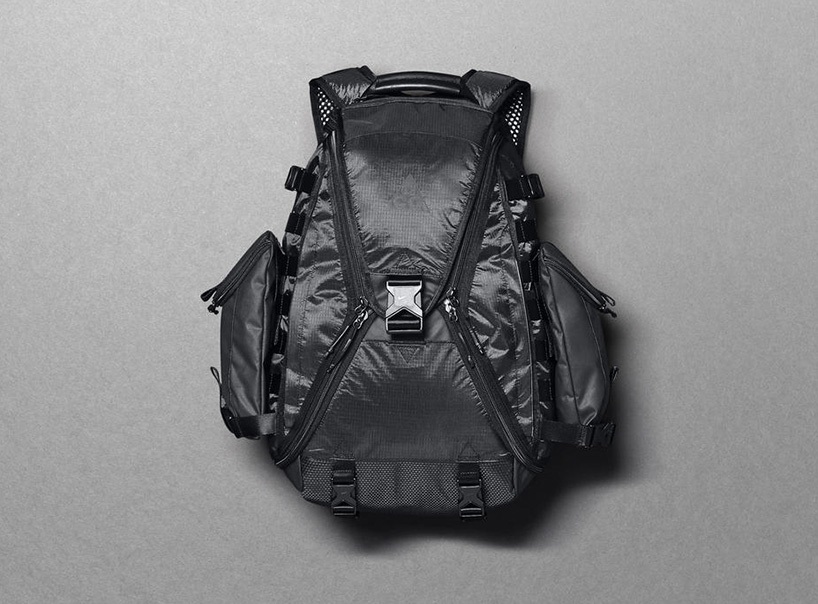
Hugh framed it as an athlete’s problem. “What can we build with ACG that no one else can build?” he asked at the time, and the answer was a version of Nike’s heritage set down in the middle of a city instead of a mountain.
It worked. Hugh’s pieces sold out, shaped a generation of techwear designers and became some of the best-regarded things NikeLab ever made. Which is the irony nobody planned. For its first twenty-five years, ACG was built for the wilderness. Its most influential chapter began the moment it walked out of it.
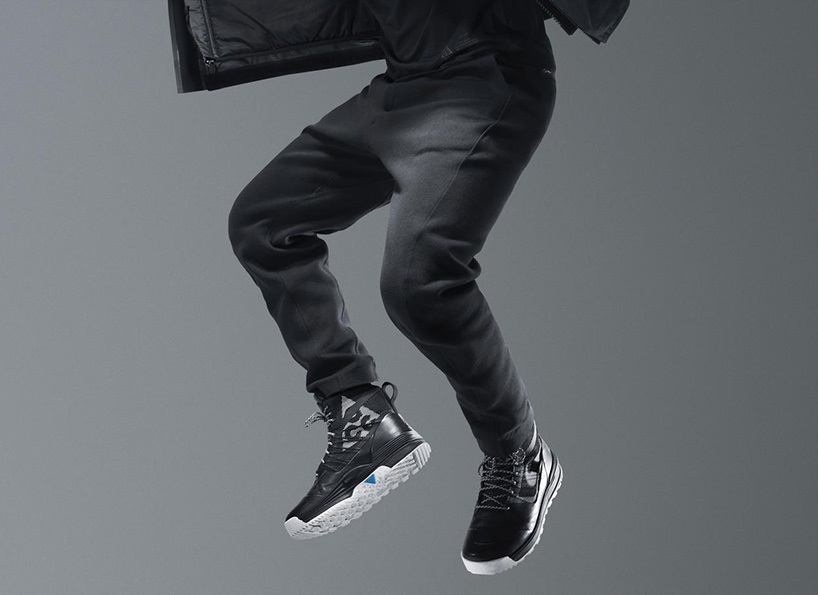
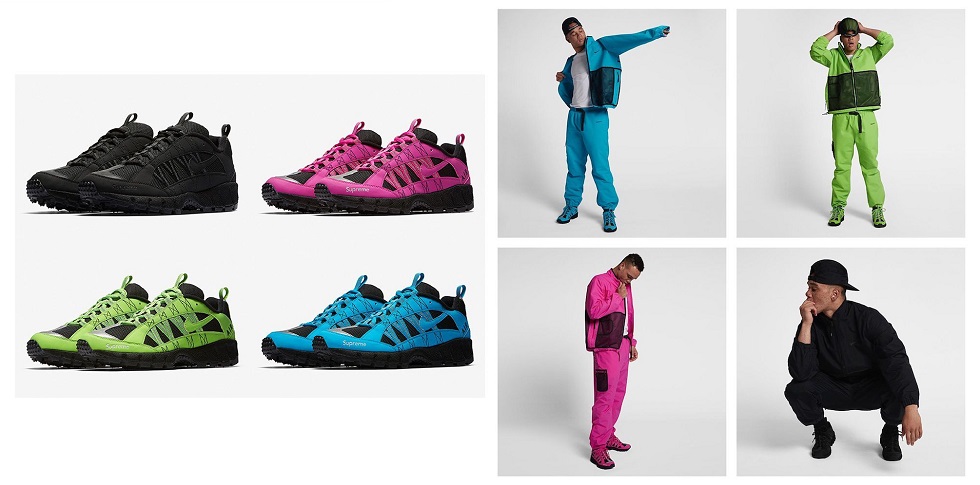
The partnership lasted four years. In July 2018, Hugh confirmed it was ending, with one season left, Holiday 2018, and Nike steering ACG toward a retro sportswear direction. Senior creative director James Arizumi, who came out of Nike SB, dragged the line back out of the city and into color. Old favorites returned: the Air Mada, the Torre Mid, the Goadome, the Baltoro. Collaborations followed, with Comme des Garçons and with Supreme, which reworked the Air Humara in 2017 and later the Goadome boot.
By then the world had caught up. Gorpcore was no longer a joke, and ACG’s back catalogue suddenly looked less like nostalgia and more like prophecy.
Undefended Ground
While ACG was having its cultural moment, the company that owned it was quietly making a mistake.
In 2020, under then-CEO John Donahoe, Nike started pulling back from wholesale partners such as Foot Locker and Dick’s Sporting Goods and steering shoppers to its own website, app and stores. On paper it was elegant. Why pay to build demand you can’t measure when you can reach someone who already wants a pair of Nikes and see exactly what they do next? Direct sales rose at first. Then the lockdowns lifted in 2021 and they stalled.
The cost, analysts argued, was fresh demand. They pointed to thin innovation and the retreat from wholesale as the two things that let newer rivals walk in. As retail analyst Stacey Widlitz put it, when you pull your best product off the shelf, “someone else comes in and fills those shelves.” Those someones were On and Hoka. The timing was cruel: a record number of people had taken up running during the pandemic, just as Nike was easing back on running development.
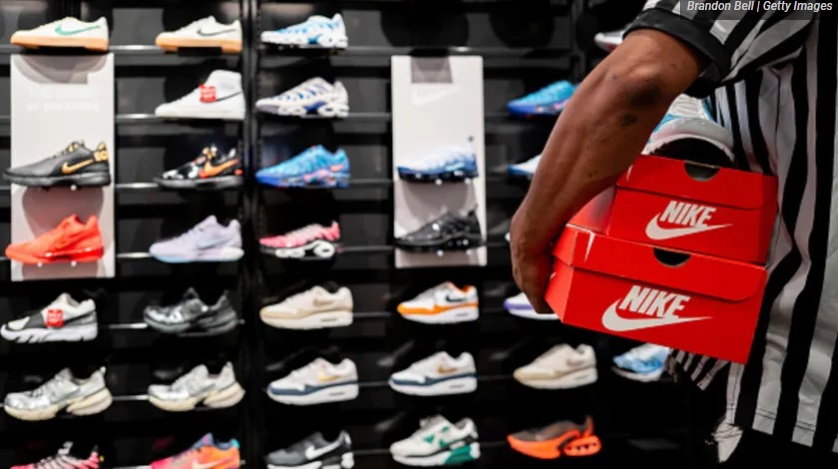
In the summer of 2024, Nike had its worst trading day ever. Shares fell 20 per cent and about US$28 billion came off its market value. Donahoe admitted that the company had over-rotated to digital. By October, he was gone, and Elliott Hill, a 32-year Nike veteran who had started as an intern in 1988 and retired in 2020, was back as CEO with a plan to put sport back at the center and wholesale back in the building.
Meanwhile, the territory Nike had left undefended was changing shape. Trail running boomed. Brands like On, Hoka and Salomon built real credibility in it. The lines between running, hiking, streetwear and outdoor culture were being erased for everyone.
That was ACG’s special trick, and now it was the whole market’s.
Suddenly the brand that had started in a box of ruined shoes made a lot of sense again. Nike could build a trail vest in a season. What it couldn’t manufacture was the right to matter on the trail.
Back Outside
On 2 February 2026, Nike reintroduced ACG as a dedicated outdoor-performance brand, with a sharp focus on trail running, hiking and exploration. Scott LeClair, the brand’s VP and general manager, called it “a recommitment to all conditions.” Nike Trail, the company’s separate trail-running effort, was folded into ACG.
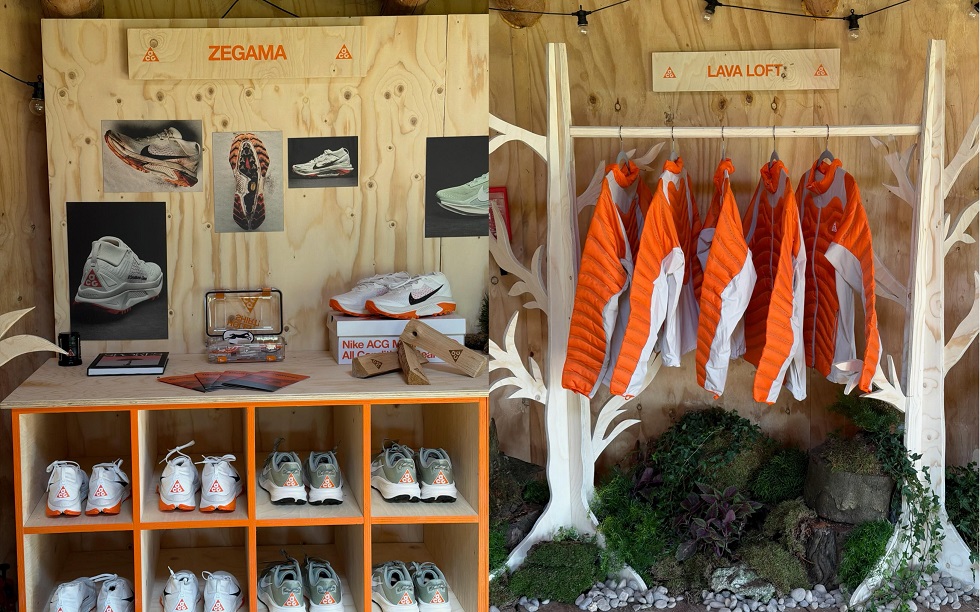
The product followed the pitch. Trail shoes in the flagship Ultrafly and the rugged Zegama. A Radical AirFlow racing top and a Lava Loft down jacket. A 5-liter GOAT pack vest, built to cut bounce and carry two 500ml flasks up front and a 2-liter bladder on the back, and the 25-liter Daymax pack at the other end of the scale. Later in the year, at UTMB in Chamonix, came the Picklejus, a big-mountain trail shoe built around a new outsole compound called GOATEK, which Complex reports is meant to reduce Nike’s reliance on Vibram for grip.
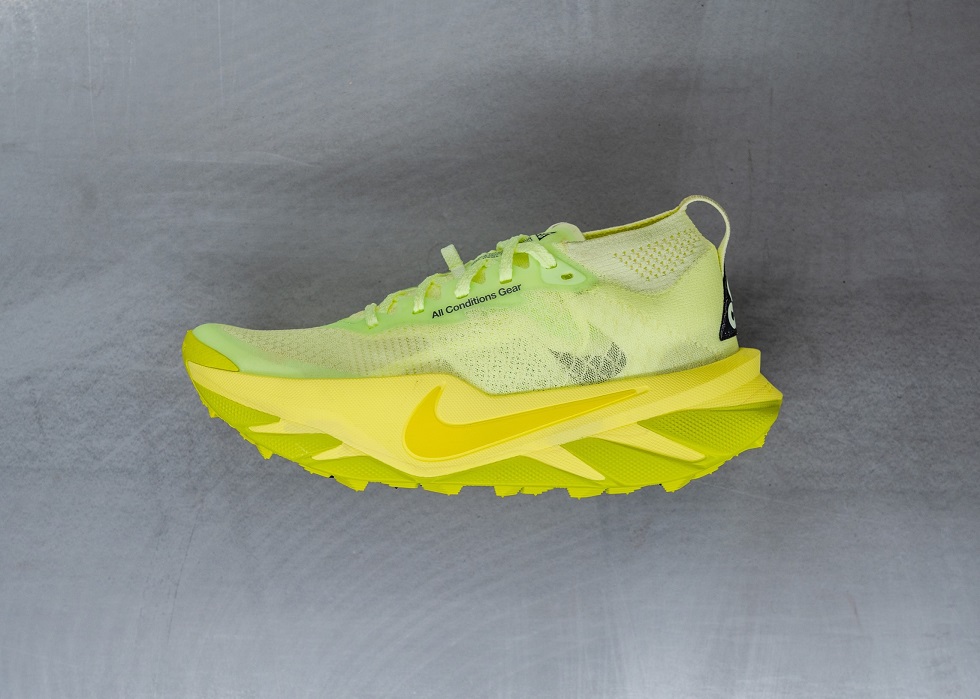
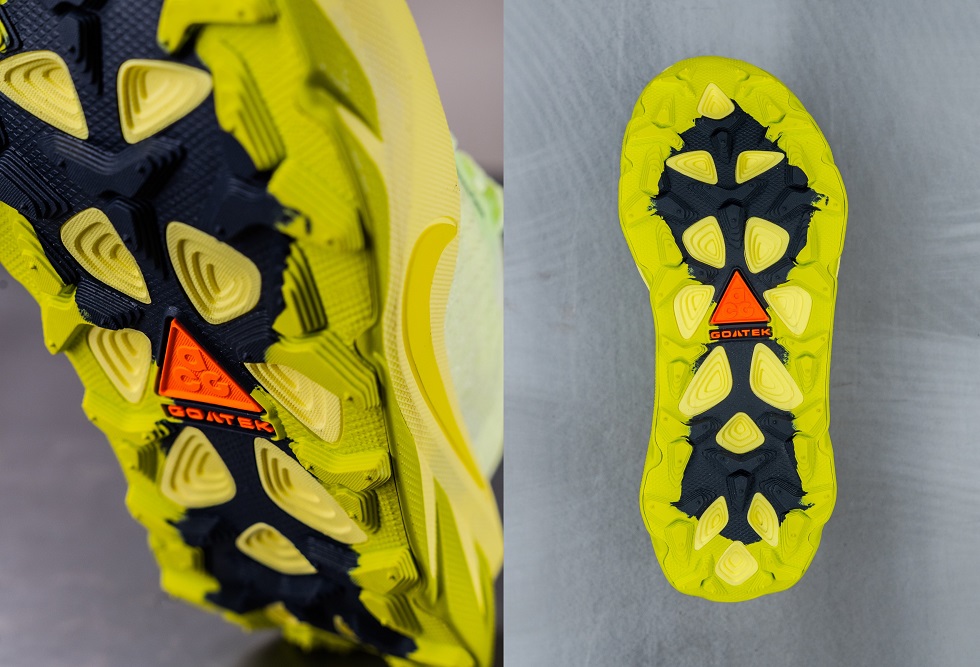
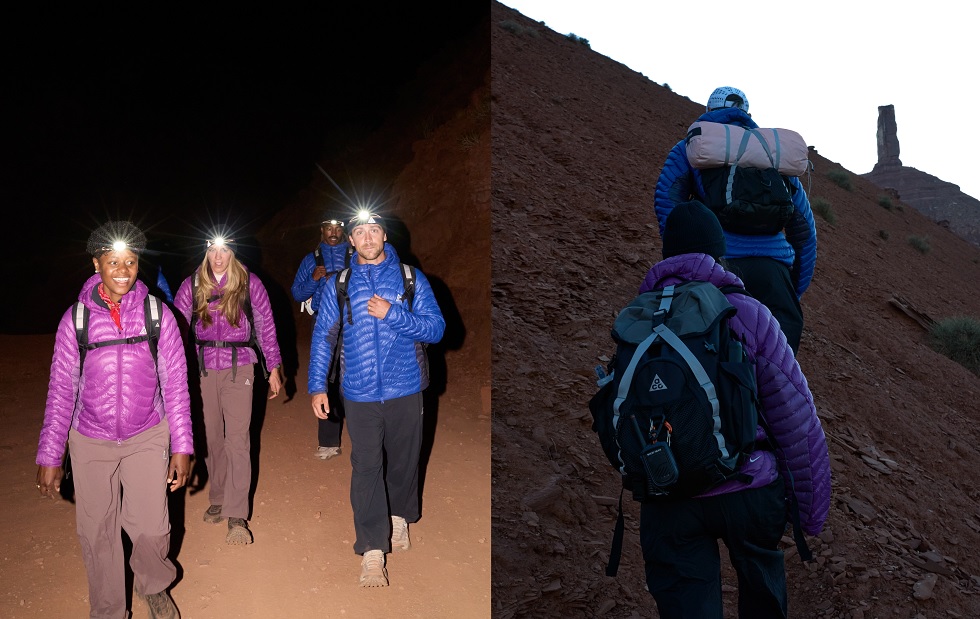
Then there are the people who test it. The All Conditions Racing Department already had 22 athletes, and seven more joined this year, from Japan, Korea and the United States. Their job is to test prototypes, give feedback and break things. Drew Holmen, who has worked with the team since 2020, says the early versions of ACG’s trail racing shoes were built by hand in Beaverton by cutting up different shoes and putting the pieces together. “The very first version was cobbled together,” he told Dazed. Testers are handed five or six unmarked pairs and asked only how they feel and how stable they are. Holmen says he put thousands of miles into the shoe before release.
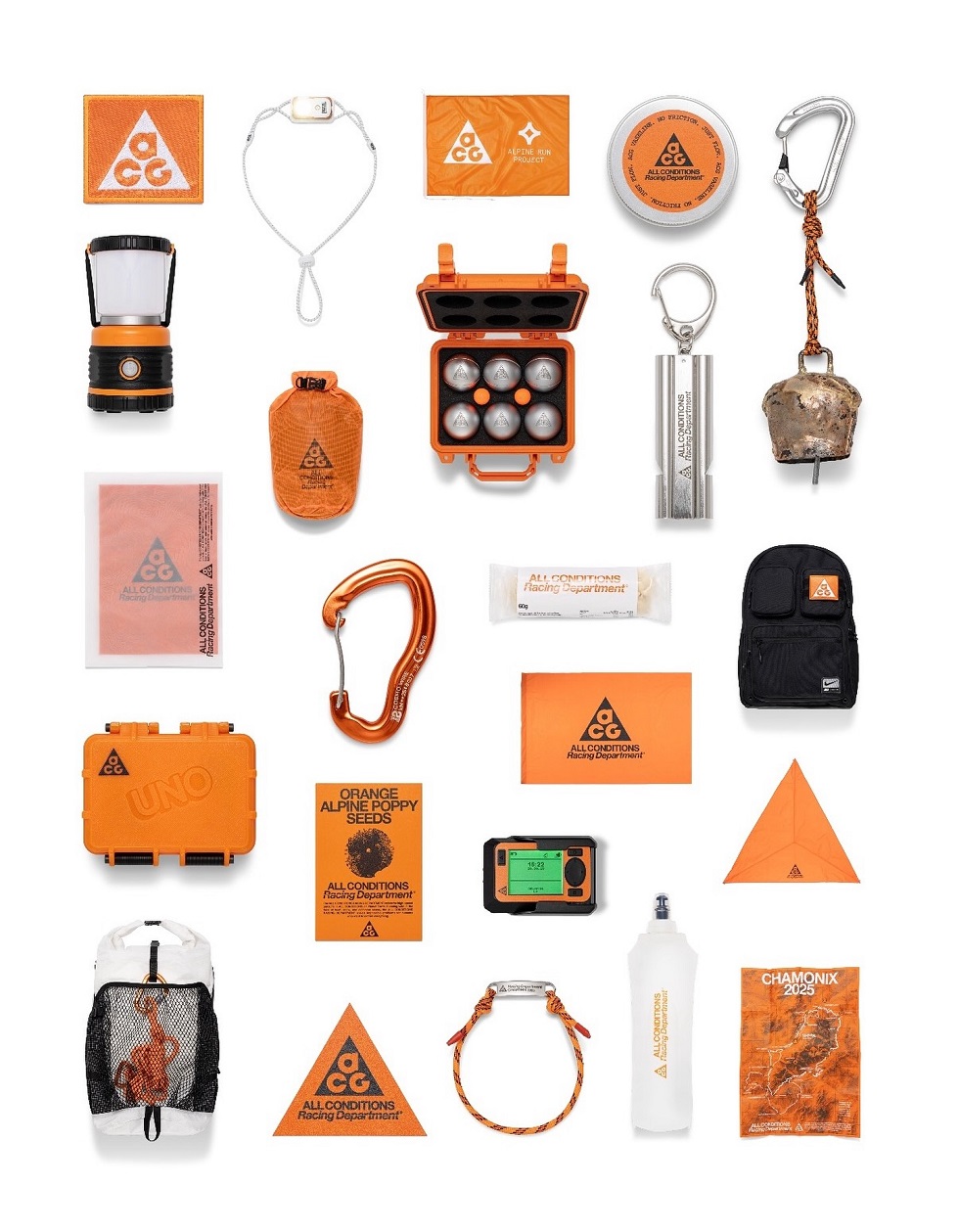
But what ACG is making says less than what ACG is doing.
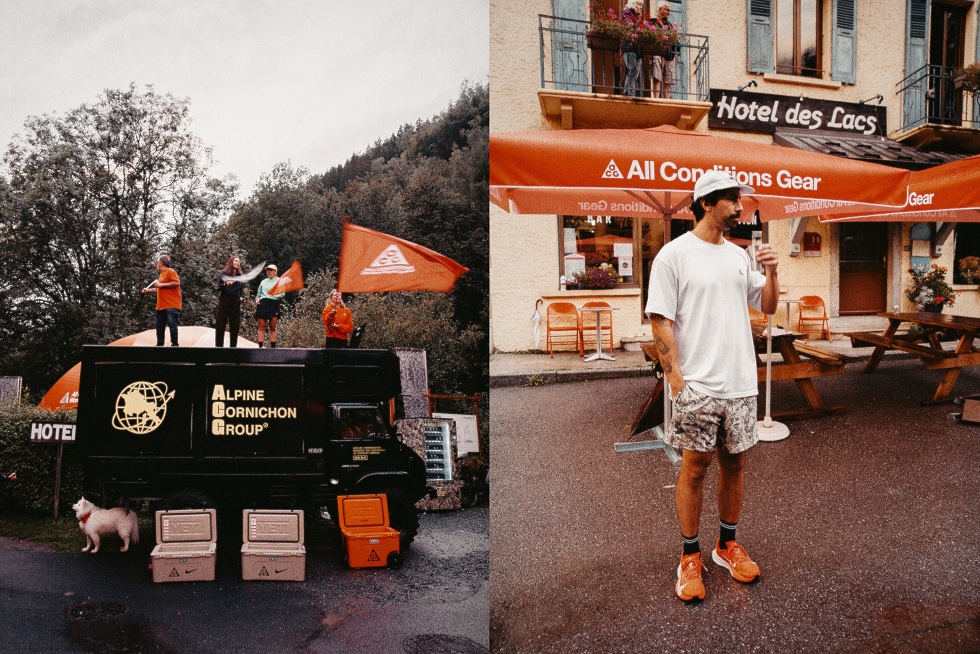
In early February, as the Winter Olympics arrived in Milan, it painted a heritage Italian train bright orange and ran it from Milano Centrale into the Orobic Alps. This was the All Conditions Express: four day-long trips, a café car modelled on a mountain refuge, seating compartments that doubled as gear lockers, a mobile gear lab and a recovery room with compression boots. Tennis player Jannik Sinner and Paralympic champion Bebe Vio took tickets and showed guests to their cabins. Up in the snow, hikers pulled on crampons and climbed to a peak above Lake Como, where the runners, in tangerine Ultraflys, met them at the top.
In the same city, ACG and Mental Athletic built a 150-meter indoor circuit covered in dirt, rocks and stairs, and had 26 runners lap it hundreds of times with no music, no cheering and GPS watches that couldn’t read pace or distance. In Los Angeles, with the outdoor community Usal, it ran First Light: a 7.5-mile sunrise run into Griffith Park, an all-day showroom and a sunset party with Joe Kay of Soulection.
And it spent money where trail runners actually look. ACG is title sponsor of the Broken Arrow Skyrace at Palisades Tahoe, where the 2026 prize purse of US$150,000 was the largest ever offered by an independent trail race, with US$30,000 for each 23K winner, the biggest winner’s payout in the sport. It added a youth championship, Trail Futures NTN, as a homage to Nike Cross Nationals. It sponsors China’s Chongli 168 Ultra Trail and opened its first standalone store, an ACG Base Camp in Beijing.
It even built a truck. With Rivian, ACG turned a custom R1T into what it calls the Ultimate Aid Station, which debuted at the Siskiyou Out Back trail race in Ashland, Oregon. The bed carried a slushie machine dispensing ACG-orange electrolyte slushies. The gear tunnel became a slide-out fuel station, the front trunk became cold storage for ice and an overhead canopy for shade used the same technical materials as the brand’s outdoor apparel. The point, according to Overland Expo, is that nearly 30 per cent of runners fail to finish 100-mile races, often because help is hardest to reach in the most remote sections.
This is not sponsorship in the old sense of a logo on someone else’s banner. ACG is trying to be useful.
The Trust Problem
But none of this is proof, and the trail community knows it.
Trail running has a long memory and a sharp eye for brands that show up when it suits them. In mid-2025, before the relaunch, Cole Townsend of the Running Supply newsletter noted that Nike Trail’s first Ultrafly had not caught on with ultra runners the way shoes from Norda or Salomon had. A runner-writer who rode the orange train came away more convinced than expected, calling ACG a sensible home for Nike’s weirder outdoor ideas, but said it still had to prove itself with an accessible trail shoe. The writer also noticed how rarely the word Nike appeared in the campaign. It is ACG now, not even Nike ACG, which is either a smart way to borrow credibility or an admission of how much credibility there is to borrow.
Meanwhile the other ACG hasn’t gone anywhere. This year it paired with Cactus Plant Flea Market on a capsule of anoraks, sherpa balaclava hoodies and polos, and Travis Scott modelled unreleased pieces in front of Milan’s Duomo. The street life and the trail life are running in parallel, and the pull between them is the oldest tension in the brand’s story.
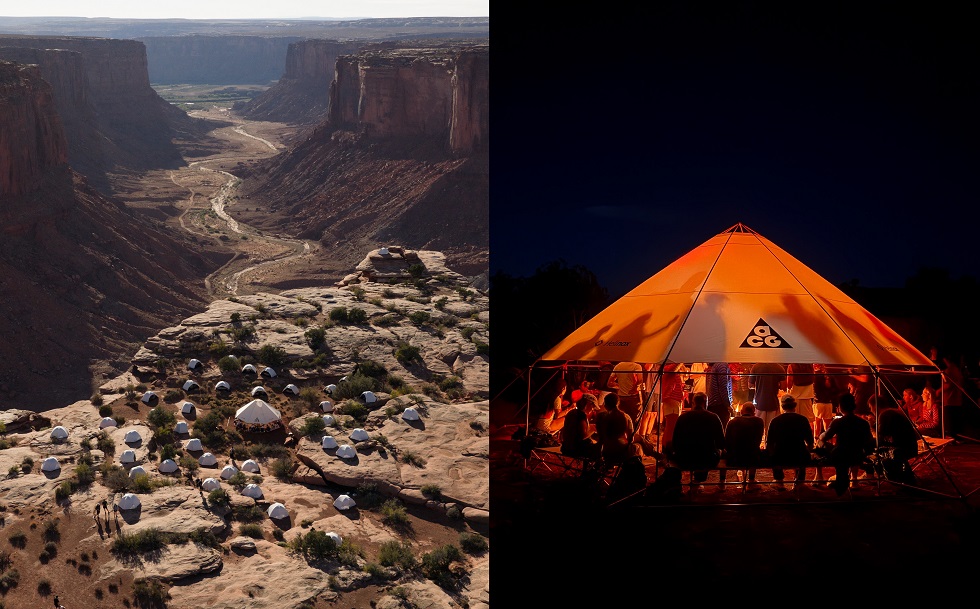
That is the real question under the orange paint. ACG’s superpower was always ignoring the borders between sport, outdoor and culture. Now everyone ignores them. Blur is no longer an edge. What ACG still has is something none of its rivals can copy: an origin. A pair of yellow running shoes, a list of notes, and a company that took them seriously.
In 1978, the feedback arrived in a parcel of ruined shoes. In 2026, it arrives from athletes handed unmarked prototypes and asked how they feel, descendants of early versions that were cut up and put together by hand in Beaverton.
But trust on the trail doesn’t arrive by train.
It gets carried in the way those first shoes were: on foot, a long way, and a lot of it off-trail.
The post The Rise & Resurrection of Nike ACG appeared first on Carryology.