Credit: Jordan Gloor / How-To Geek
You’ve done the work—you picked a solid router, set a real admin password, maybe even splurged on a mesh system and a VPN subscription. Your home network feels locked down, and honestly, it probably is. Then, one day, you want to check your security cameras from the office, and you flip on one innocent little setting to make it happen.
That setting is port forwarding, and it can be troublesome. Not because port forwarding is evil, but because it does exactly one thing very well: it pokes a permanent hole straight through the wall that was keeping the internet out of your house.
Your router is a bouncer, and port forwarding hands out a backstage pass
Everything good about your network security starts with the door being closed
By default, your router uses something called NAT, and it acts like a firewall that refuses every unsolicited knock from the outside world. If someone on the internet tries to reach a device inside your home, the router shrugs and drops the request because it has no idea where to send it. That “I don’t know you, go away” behavior is the single biggest reason random strangers can’t just wander into your network. It’s a fantastic security feature, and it’s free.
Port forwarding is you walking up to the bouncer and saying, “Actually, let this specific traffic through, every time, forever.” You’re telling the router that anything hitting a certain port should be sent straight to a device inside your home. The problem is that the internet is not a polite place, and once that door is open, it’s open to everyone, not just you.
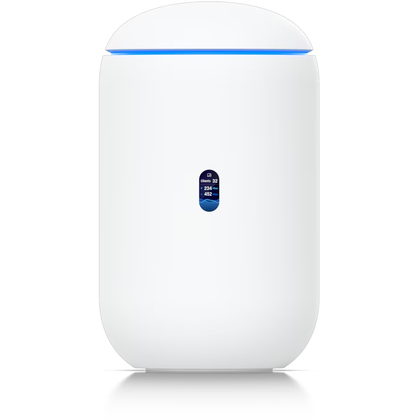
UniFi Dream Router 7

Brand
Unifi
Range
1,750 square feet
Having a good router is very much a part of having a secure network. The UniFi Dream Router 7 is one of our favorites here at How-To Geek.
The internet finds your open port faster than you’d believe
Nobody is manually hunting for you, and that’s exactly the problem
 Credit: Patrick Campanale / How-To Geek
I think a lot of people assume they’re safe because they’re nobody. Who’s going to bother targeting my random home network, right? But that’s not how any of this works.
Attackers don’t sit around guessing your IP address and trying ports one by one. They use automated scanners that sweep the entire internet constantly, cataloging every device that answers. There are whole search engines, like Shodan, dedicated to indexing internet-connected devices and the open ports they’re sitting behind. Point one at the web, and you can find exposed cameras, routers, and servers by the thousands.
If you want a genuinely scary example of how fast this happens, the security folks at Sophos ran an experiment where they stood up a server, exposed Remote Desktop to the internet, and walked away.
Login attempts started in less than one minute. Over 15 days, they logged more than two million failed login attempts from nearly a thousand different IP addresses.
And before you think “I’ll just use a weird port number so nobody finds it,” they tested that too. Scanners identify an open service no matter what port it’s hiding on. Some of these insecure default router settings are worth reviewing before you ever forward a single port.
One exposed device becomes a doorway to the whole house
The camera isn’t the prize, your network is
 Credit: Jacob Hudson / How-to Geek
Let’s say you forward a port to a cheap IP camera so you can watch your porch while you’re away. Worst case, someone sees your porch, right? I wish.
The real danger is that the exposed device becomes a foothold. Once an attacker compromises that one camera, they’re inside your network, and now they can move sideways to everything else. In security circles, this is called lateral movement, and it’s the entire reason a single weak, exposed device is such a big deal.
This is also how home devices get drafted into botnets. The infamous Mirai attacks in 2016 pulled this off at a massive scale, hijacking IoT gadgets like cameras and using them to launch one of the biggest denial-of-service attacks the internet had ever seen.
Your compromised device doesn’t just put you at risk; it can end up as an unwitting soldier in somebody else’s army. And ransomware crews love exposed storage.
There are ransomware families that specifically scan the internet, hunting for NAS boxes reachable from outside, which is exactly why the advice to stop exposing your NAS to the internet exists in the first place. One open port, and your most important files become a target.
You almost certainly don’t need to forward ports at all
There are safer ways to reach your stuff from anywhere
 Credit:
Hannah Stryker / How-To Geek
Most of the reasons people forward ports have much safer alternatives now. The whole point of forwarding a port is usually “I want to reach a device at home while I’m away.” You can do that without exposing anything to the public internet. The cleanest option for most people is a VPN or an overlay network. Instead of opening a door to a specific device, you create a private encrypted tunnel that only you can enter, and once you’re in, everything behaves just as it would if you were at home.
Tools like Tailscale and WireGuard have made this shockingly easy. Tailscale, in particular, builds a private mesh between your devices using the WireGuard protocol, and crucially, it doesn’t require you to open any ports at all. You install an app, sign in, and your devices can talk to each other securely from anywhere in the world. If you self-host things, this is a safer alternative to port forwarding worth setting up. A reverse proxy is another route if you’re comfortable with a bit more setup. The point is, the old “just forward a port” advice is genuinely outdated for the vast majority of home use cases.
So before you forward, ask yourself if you actually have to
The next time an app or a guide tells you to forward a port, pause for a second and ask whether there’s a way to do it without opening your network to the entire planet. Most of the time, there is. Reach for a VPN or an overlay network first, keep UPnP switched off so nothing forwards ports behind your back, and if you do forward something, forward as little as possible and guard it well. Your security stack only works if the front door stays shut, so don’t be the one who props it open just for a little convenience.
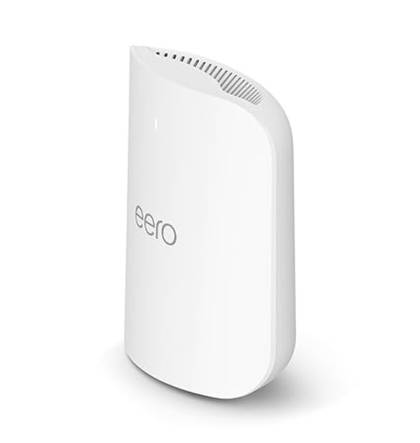
Eero Pro 7 Wi-Fi Router
Amazon’s Eero brand is solid, as is the Eero Pro 7 router. It’s a Wi-Fi 7 router with up to 1.8Gb wireless throughput and 2,000-square-foot coverage.