The world’s biggest space dedicated to illustration has opened in London. Can it help to protect the art amid rising threats from AI?
The Quentin Blake Centre for Illustration in London’s Clerkenwell opened this week. The museum is both a monument to a national treasure and a celebration of a medium in dire need of protection.
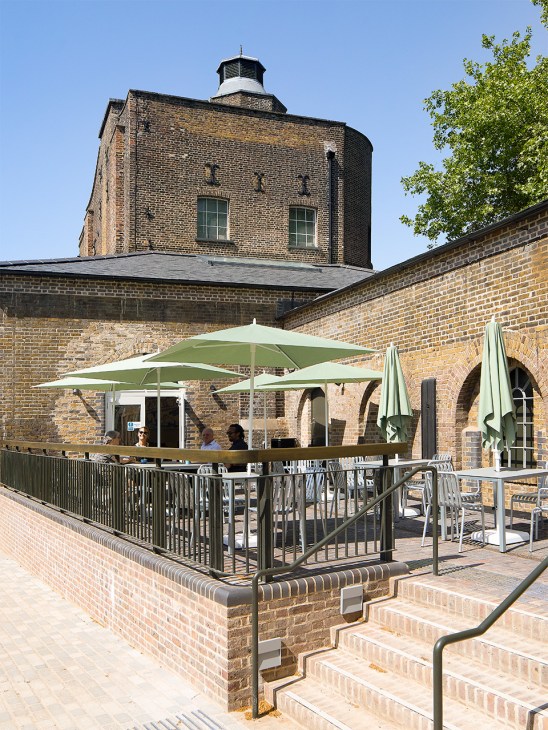
The project has been decades in the making – a dream of illustrator Quentin Blake’s since he was children’s laureate in 1999. Now that it’s finally here, it arrives as the world’s largest space dedicated to illustration. The site is unusual – an 18th-century waterworks, which has been derelict since the 1950s – and comprises three exhibition spaces, a café, shop, gardens and a library. The breadth of the artform is apparent through children’s story books, comics, graphic novels and more on display. “We think of illustration as art with a job to do,” says the centre’s artistic director, Olivia Ahmad. “It’s art that’s trying to tell you something specific: that might be a story or an instruction, or it might be trying to persuade you of something for good or bad.”
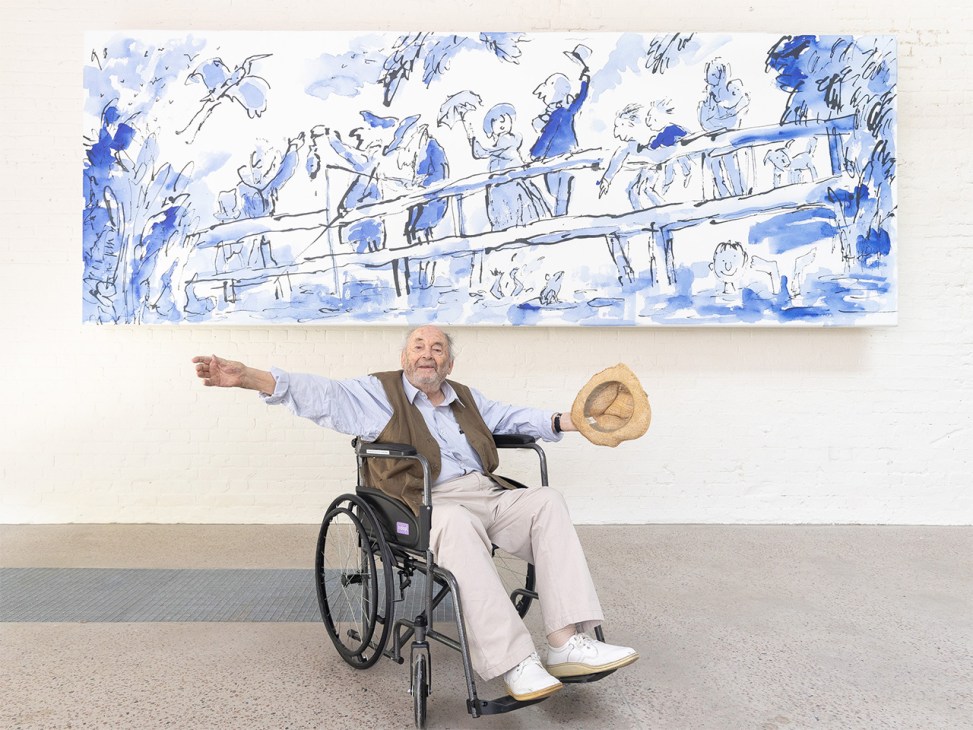
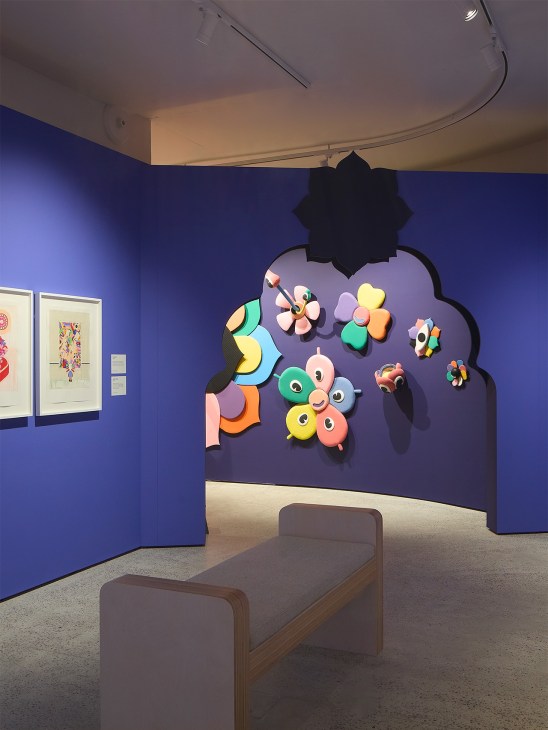
The first temporary exhibition, Queer as Comics, charts 80 years of queer comic-making. Pieces by Tove Jansson, Alison Bechdel and Tom of Finland are included in a line-up of 60 artists. Elsewhere, a solo exhibition spotlights the colourful, kaleidoscopic work of contemporary British Sri Lankan illustrator and designer Murugiah. The third and final space is dedicated to the centre’s namesake and will feature rotating thematic shows of Blake’s work. The first of these focuses on performance, highlighting the artist’s close relationship with the theatrical. On the walls are characters breathing fire – rendered in a wispy cloud of yellow-and-orange watercolour paint – as well as cartwheeling circus performers and the illustrations that Blake created during opening nights of plays to accompany theatre reviews in Punch magazine in the 1950s.
The centre’s opening comes at a time when AI threatens to replace the role of illustrators and does so by stealing their work and breaching copyright. “AI-generated imagery looks at what’s already there and re-presents it,” says Ahmad. “What is special about when people make work is how leaps are made, as well as the direct communication between one person and another through an image.” The scribbles and wiggles of Quentin Blake’s drawings have accompanied many of us since childhood. This new space will help to inspire and defend the illustrators of the future, whose works will enrich the lives of many to come.
qbcentre.org.uk