Heineken has launched a regenerative malting barley programme in an effort to encourage British farmers to adopt regenerative agricultural practices at scale. db looks into the plans.
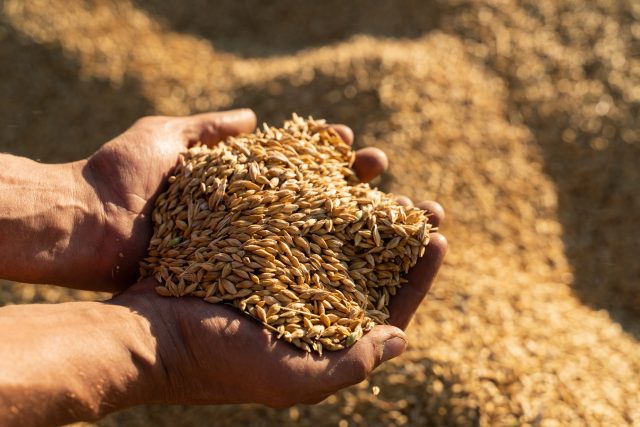
The initiative has been introduced in partnership with maltsters Muntons and Boortmalt, barley merchants Cefetra, and independent agronomists Soil Capital and will see farmers directly paid a premium on regenerative barley yields.
The move is anticipated to assist in reducing the risk of changing farming practices and making the transition commercially viable. According to Heineken, this approach, combined with the scale of the programme, sets it apart from other regenerative agriculture malting barley initiatives in the UK to date.
The act of taking on regenerative agriculture focuses on farming methods designed to improve soil health, retain carbon in the soil, support biodiversity, enhance water management and build resilience against climate change. Another element is the fact that, as weaker demand prompts brewers into buying less barley for malting, farmers are planting less of the grain in favour of higher-yielding crops like oilseed – a move that is having a knock on effect on the beer sector.
‘A major step’
The goal has been set so that, in 2027, almost half of the malted barley sourced by Heineken’s UK arm will be grown through regenerative agriculture practices in what it hopes will be a major step in the company’s move to make regenerative farming part of mainstream beer production.
Heineken UK brews more than 1.3 billion pints of beer every year and supplies 80% of UK pubs and, according to the beer company, the shift to using regenerative malting barley will extend across the Heineken UK portfolio, including its eponymous beer brand Heineken, Cruzcampo, Birra Moretti, John Smith’s, Foster’s and Amstel. In fact, the first yield is due to be harvested in 2026, brewed and served to consumers in 2027. As such, the move will affect a broad spectrum of beer brands, making them more sustainable.
Adopting methods that will suit the land
Additionally, among the UK’s leading regenerative agriculture malting barley initiatives, Heineken’s programme aims to support UK farmers to accelerate the adoption of regenerative farming practices such as reduced soil disturbance, cover crops and diverse crop rotations, contributing to healthier soils and strengthening the long-term resilience of British barley.
The brewery has outlined that practices will be bespoke to each farmer based on the regenerative methods they already have in place and what best suits their land. Added to this, the initiative will primarily focus on barley-growing regions across much of England and Scotland, including East Anglia, East Midlands, Southeast and the Southwest, Fife and the Scottish Borders, reflecting the importance of local supply chains to Heineken UK’s brewing operations. Plus, the brewing company has identified that the initiative brings together strategic suppliers Muntons and Boortmalt and aims to deliver practical benefits for farmers including financial incentives, agronomic support and multi-year certainty. This, it identified, also helps to reduce the cost and risk of transitioning to more regenerative practices while fortifying the long-term viability of their businesses.
Partner Content
‘Commercially viable for growers, not just environmentally beneficial’
By combining multi-year commitments with practical on-farm support, the programme is designed to make the transition commercially viable for growers, not just environmentally beneficial.
Describing how important this decision is for the future of beer, Heineken UK corporate affairs director Sonia Thimmiah said: “British malting barley is at the heart of some of the UK’s best-loved beers, so making it more resilient for the future matters. This programme is about working with partners to make regenerative agriculture practical, scalable and commercially viable by strengthening soils and helping farms stay fit for the future. It is also an important contribution to Heineken’s global Brew a Better World strategy and aims to protect water and nature as well as reduce carbon emissions.”
Boortmalt country manager UK and Ireland Charles Tozer explained: “This programme shows what can be achieved when brewers, maltsters, merchants, agronomists and farmers work together behind a shared goal. By building long-term collaboration across the malting barley supply chain, we can help create the certainty and practical support farmers need to adopt regenerative practices with confidence.”
Muntons chief executive officer Mark Tyldesley added: “What makes this programme unique is its scale and the collaboration between suppliers. We know from our work with growers that every farm is different, and the transition to regenerative agriculture needs to be practical, commercially realistic and tailored to individual land. Through this partnership, we can help farmers identify the right steps for their business while supporting the long-term resilience of UK malting barley.”
Assessed as it grows
Heineken has outlined that the entire programme is underpinned by Soil Capital’s independent measurement, reporting and verification which will provide robust, farm-level data on key outcomes to ensure transparency and credibility. To assess this, progress will be tracked over time and Soil Capital will also work closely with onboarded farmers to provide expert advice as they transition to regenerative practices, measuring the impact of the new methods on more than 30 indicators, including soil health, increased biodiversity and water management.
Soil Capital chief revenue officer Nathalie Bouche pointed out that “for regenerative agriculture to scale, it needs to be measured credibly and transparently”.
Bouche added: “Our role is to support farmers to adopt practices that work for their land, while providing evidence and validation so Heineken UK and its partners can track real progress over time. Independent measurement gives farmers, businesses and the wider value chain the confidence to invest for the long term.”
Related news
Draught beer is about to get more expensive in South Korea – here’s why
Two Tribes rebrands, invests for growth and doubles down on the indie beer scene
‘Changing preferences don’t threaten beer, they expand the ways people enjoy it’