The postcard, addressed to a department of British Steel in Llanwern, South Wales, is franked Torremolinos, Málaga, 25 November 1975. The picture side features four brightly coloured images of the Costa del Sol: a row of whitewashed houses; a sweeping bay under an azure sky; a crowded beach; and on the sand, beside a faded bullfighting poster, a donkey in a straw hat. The reverse reveals more of the story: “Having a lovely time. The weather is much better than expected. We’re having a lot of fun. There’s plenty of food, drink & entertainment. Unfortunately, Franco has died today & there’s no more entertainment until Sunday evening (no music even). Still, we’re not going to let that spoil it.”
Sue’s trip to the Costa del Sol intersected with the end of Spain’s autocratic rule that had lasted for almost four decades and the postcard in my hand is a tiny witness to that moment. In the years from 1959, Francisco Franco, Spain’s leader, opened up the economy and increased foreign trade, overseeing what has been referred to as the “Spanish miracle”. One aspect of rapid economic growth was the breakneck development of tourist resorts. Beginning with Benidorm, fishing villages were transformed into tourism factories, as high-rise developments mushroomed along the Mediterranean coast, bringing employment, wealth and squadrons of British holidaymakers in search of the sun. In 1975, the year Franco’s death silenced the music on Sue’s holiday, more than 30 million foreign visitors arrived in Spain.
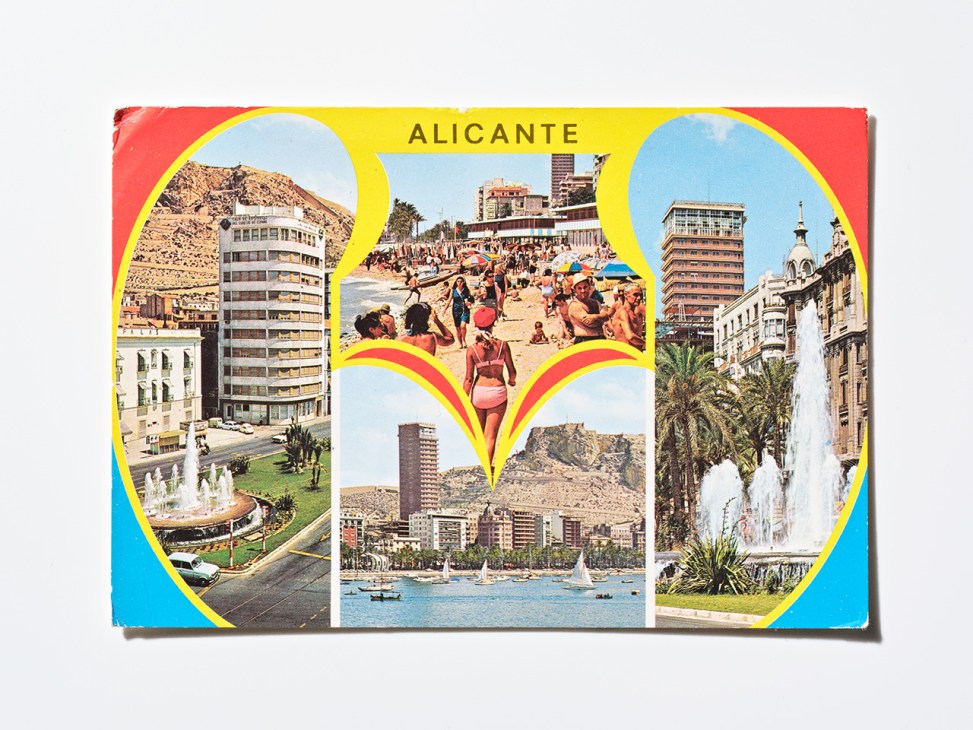
From Alicante, Spain, to Carshalton, Surrey (September 1973)
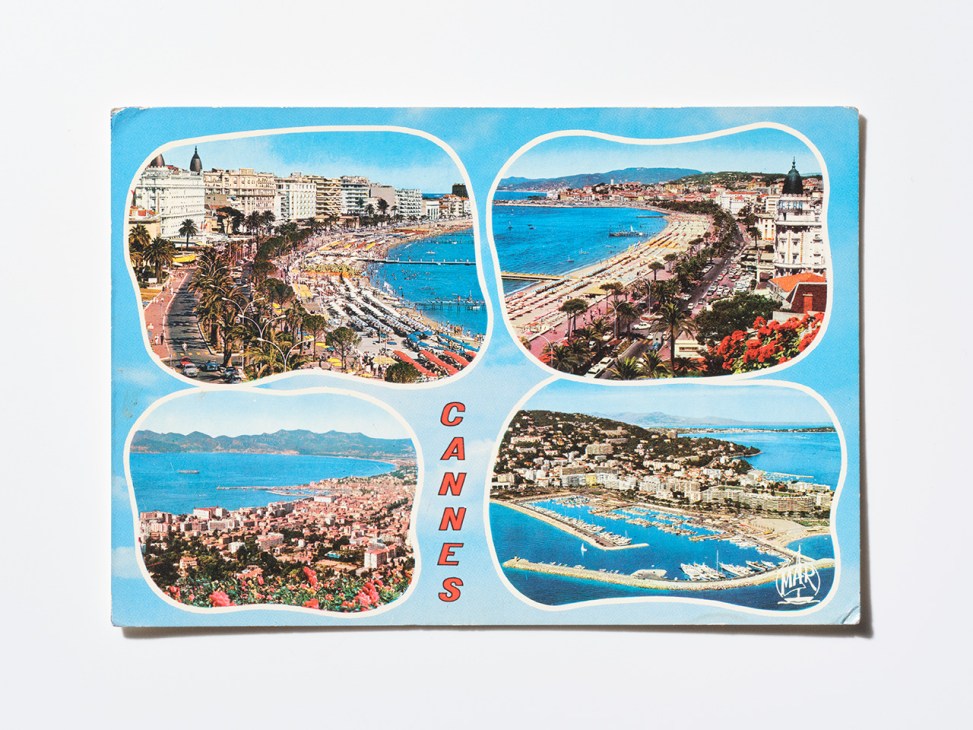
From Cannes, France, to Lytham, Lancashire (March 1976)
To document these holidays, the production of full-colour Spanish tourist postcards underwent a similar surge, selling in vast numbers. At the time, to take your own photographs was an analogue hobby that required planning and commitment: as a collector, I have seen countless messages on postcards referring to the onerous business of sending rolls of film to be developed, or counting an exact number of photos taken. In a world yet to be flooded with digital images, the picture postcard was an ideal method of sending home a tangible token of a week in the sun. And if the picture on the card was idealised and generic (or showed the wrong hotel), the message on the other side could still be unique and personal. For most European holidaymakers, foreign travel in the 1950s and 1960s was new and exciting. There’s an argument that modern tourism was invented on the Costa Blanca: the Spanish taught themselves how to host masses of foreign visitors, who in turn learnt how to be on holiday.
As the global tourism industry has grown, so too has our visual inventory: every beach, every beauty spot, every meal is now documented. But those evanescent images rest on devices in pockets and servers on different continents; after a change in terms and conditions or new ownership of the platform, who knows how long they might last. When I’m sifting through a box of old postcards from the 1960s and 1970s, flipping between image and message, looking for anything to catch the eye, I’m aware that these small cardboard oblongs have weight both physically and metaphorically. They were built to survive and they still work: the pictures are clear, the messages fresh and immediate. They weren’t addressed to me but speak to me nonetheless. They comprise a vast, touching, fragmented archive of first-hand testimony of what it felt like to travel to the Costas and further afield in that first flush of affordable travel for the masses.
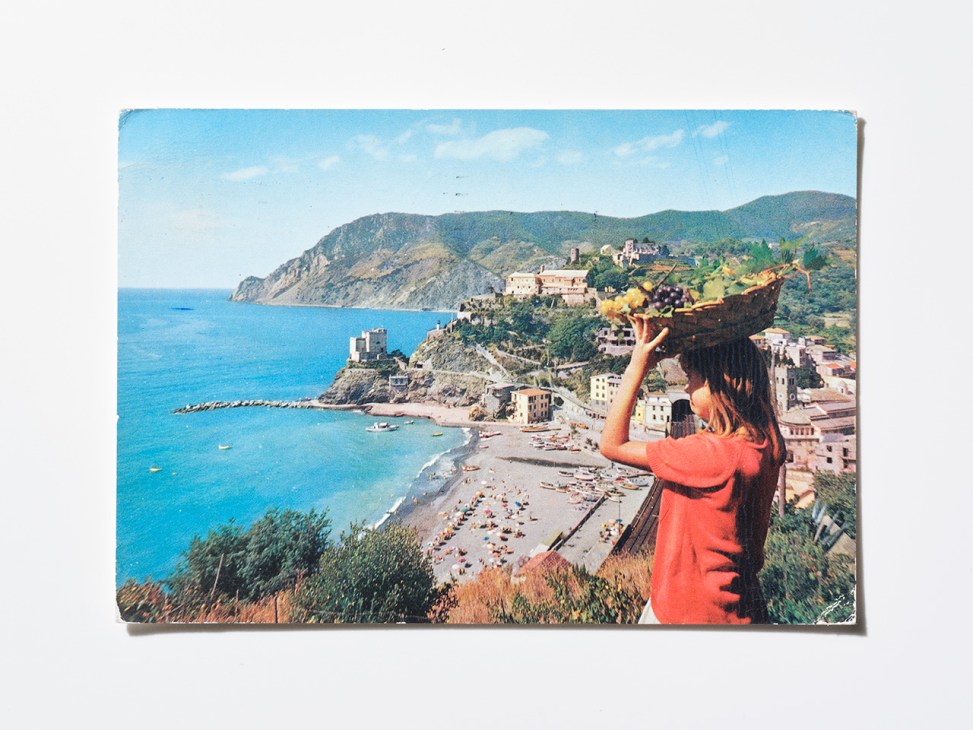
From Monterosso, Italy, to Preston, Lancashire (August 1966)
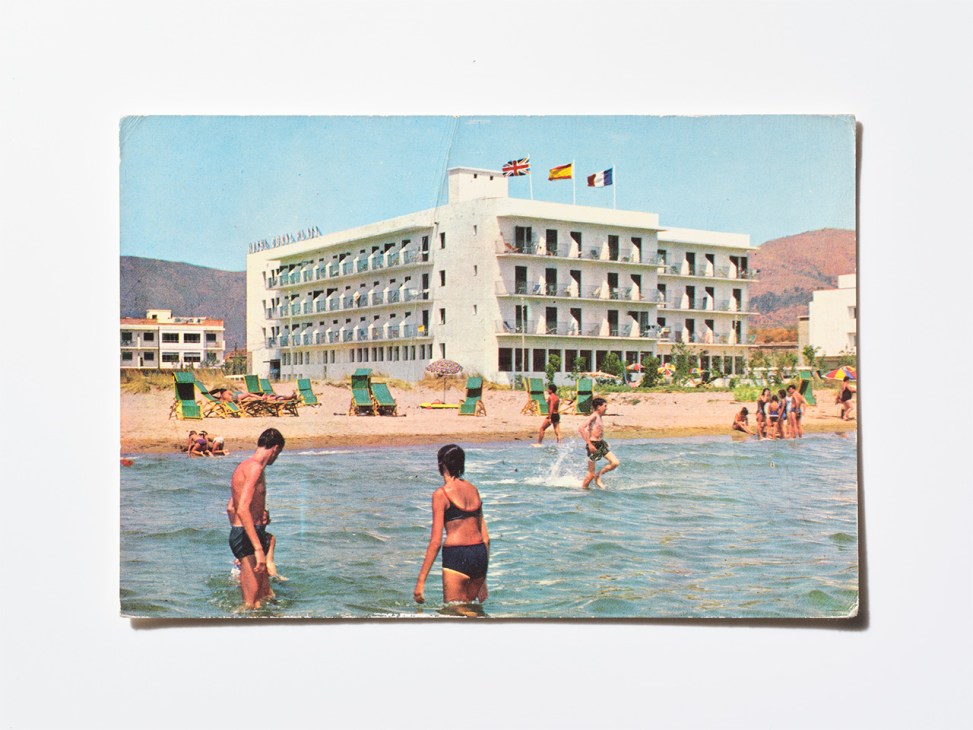
From Rosas, Spain, to East Dulwich, London (date unknown)
Hotels and tour operators were well aware that these cards represented important viral marketing. Postcards from southern Europe acted, certainly in the earlier part of the era, as personalised testimonials to the advantages of a holiday in the sun. With the brand-new hotel and pool and loungers and happy, tanned customers on the front of the card, the back was left for Tripadvisor-style endorsements. One reads: “Oranges are fresh and sweet. Flowers are grown in profusion here. Hotel has lovely sweet peas in bloom.” Some hotels would offer to send the cards for you, helpfully adding a rubber-stamped image of the hotel so that, even if the photograph was of a beach or donkey or flamenco dancer, the recipient would nevertheless be under no illusion as to which hotel the praise should be attached to.
In those early days, air travel itself was often a new experience, and the humblest package holidaymaker could feel like they were now part of the jet set. A postcard from Formentor, Mallorca, shows a row of women in bikinis sitting on a low wall by the harbour. Addressed to Liverpool, it announces: “You must visit this place, not very expensive, Grace Kelly staying in the next room to us, so we may stay longer.” And, for some, the glamour of the exotic is more explicitly eroticised: who knows what this faraway place in Spain, France, Italy or Greece might offer? Cheeky comments are commonplace, imagined objects of (fleeting) desire include waiters, local boys, local girls, other holidaymakers male or female, anyone in a bikini and, later, anyone out of a bikini.
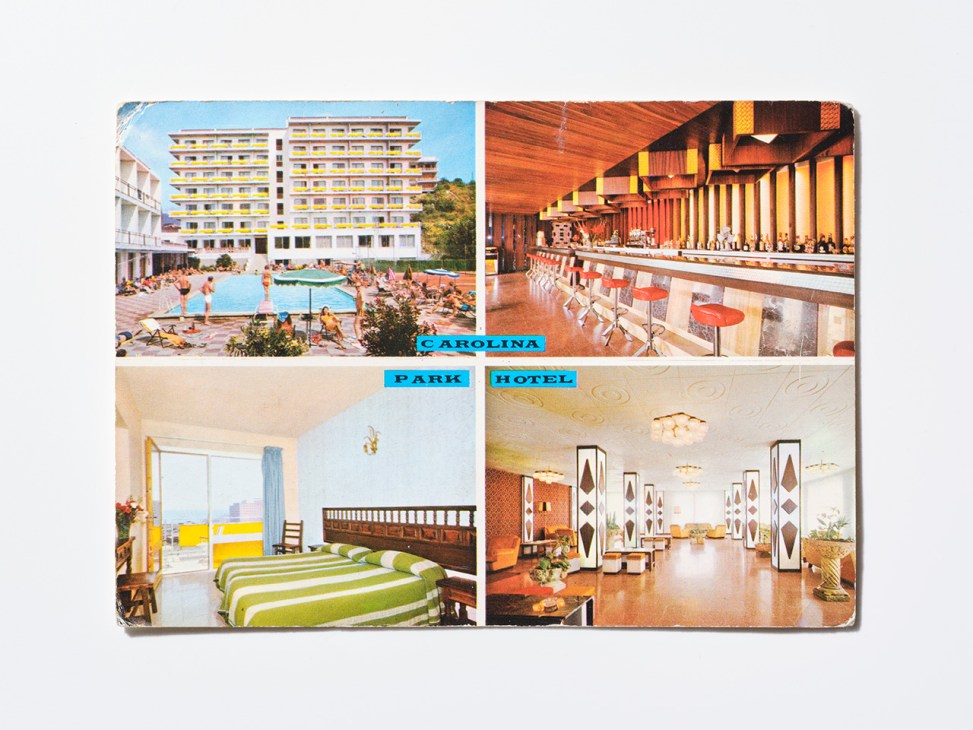
From Callela de la Costa, Spain, to North Wembley, Middlesex (date unknown)
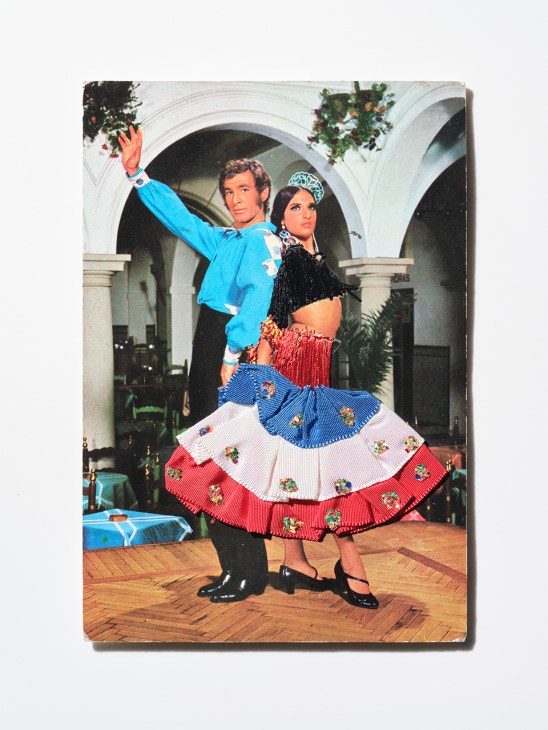
From El Arenal, Mallorca, to Hove, Sussex (September 1970)
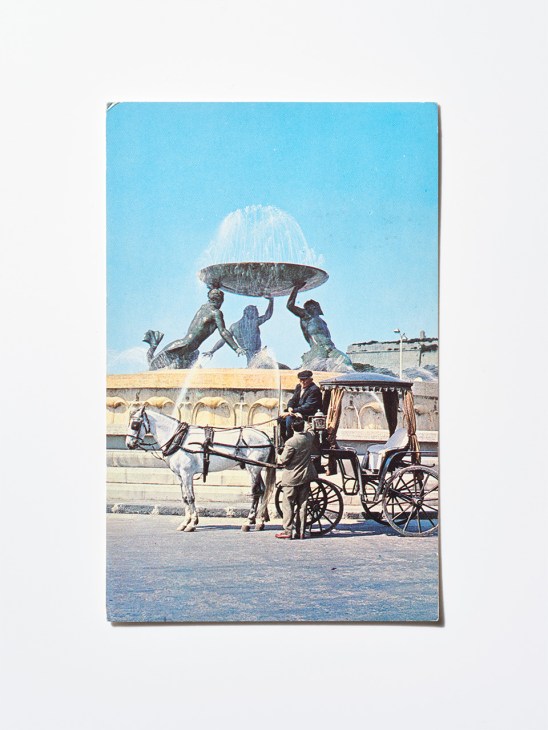
From Malta to Stoke Bishop, Bristol (November 1956)
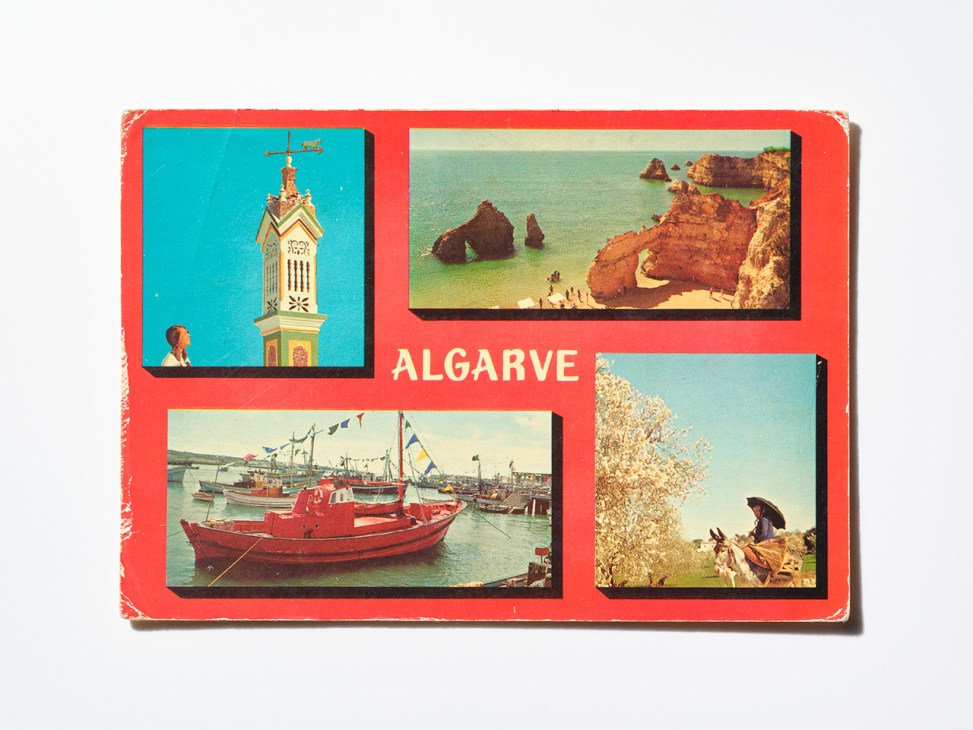
From Algarve, Portugal, to Portsmouth, Hampshire (April 1972)
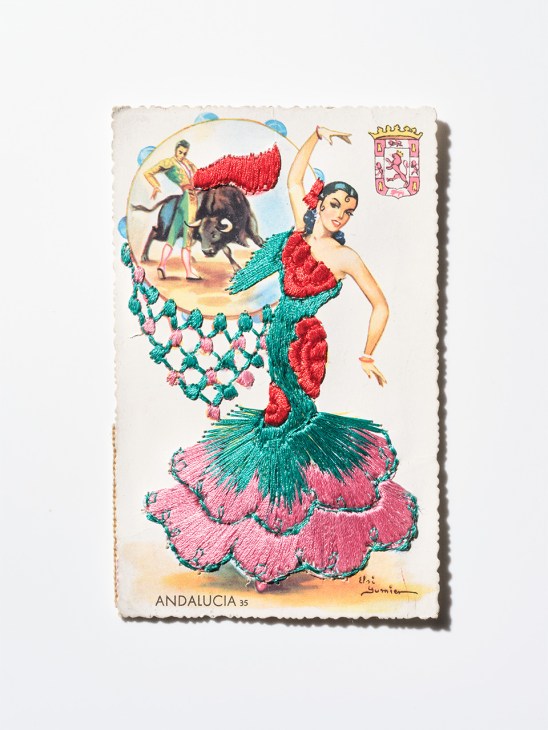
From San Sebastián, Spain to Burton-on-Trent, Staffordshire (September 1957)
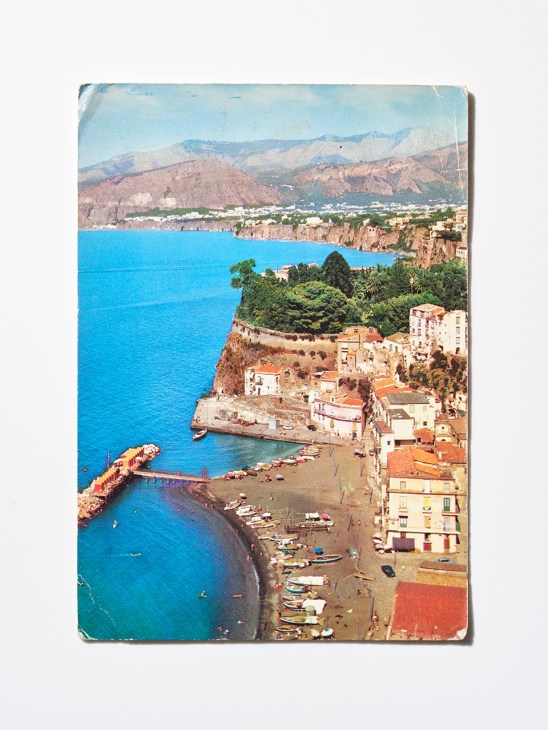
From Sorrento, Italy, to Widnes, Lancashire (July 1968)
By the 1960s, Italy and France were opening up too. Yes, Cannes, Nice and Monte Carlo had long been the playground of the moneyed, but now the Côte d’Azur was encouraging visitors. Postcards suggest that French tourism was more diverse, with smaller hotels, rentals and camping. Visitors to France could write home on exquisitely composed, beautifully produced photographic cards by publishers such as Yvon, Artaud Frères or Iris. “Isn’t it gorgeous living on fresh melon grapes, wine and cheese?” one from my collection muses.
Iris cards, printed using the mysterious Mexichrome process, were aware of their superior quality, exhorting: “Collectionnez les Cartes Postales!” Collect postcards! And the recipients did. Cards from Italy show lower-rise hotels, crammed in front of or stacked on top of cliffs; they seem to favour high wide-angle shots of beaches, sunbathers little more than dots – a glimpse of modern mass beach tourism but on a slightly less industrial scale. Looking through thousands of these cards, changes in tone emerge: the early wonder of the 1960s sours slightly by the late 1970s. The thrill of “fresh melon grapes wine and cheese” increasingly gives way to cheap alcohol and plenty of it. By August 1977, Brian’s holiday in Palma Nova, Mallorca, sounds plain brutal. “Ossie & I stoned out of our minds on Sunday night, he fell asleep on the pavement. Hotel is okay but the food is the worst I’ve ever had. Head waiter is a bit of a nark so it’s the swimming pool for him.” Yikes.
But innocence is always glimpsed in the rear-view mirror. As early as September 1958, a correspondent sent a black-and-white postcard, a panorama of Benidorm, to South Kensington, complaining that: “The place is now super developed, shops with plate glass doors & self-service groceries, milk bars, Americans & still patches of oil on the beach. Hordes of people, return fare from London & 14 days here for £44!!” The traditional visitor was losing his exclusive hold on the place: the masses were coming and, with them, changes.
A holiday is an attempt to step outside the calendar but, as Sue discovered in Torremolinos in 1975 – and as visitors to the Gulf found in February 2026 – even from your sunlounger the movements of the world are inescapable: political and international events can all too easily upset your idyll. Now, tourism itself is changing: leisure travel is a global industry and its impact is under scrutiny. In 2024, thousands of locals protested in the Canary Islands against overtourism. In Barcelona, protesters called for an end to the overuse by visitors of resources, public spaces and public services.
Time and the turning of the world will chase us all from our poolside reveries eventually. These holiday moments still urge us to snap countless pictures and squirrel them away. The intention might be the same – to capture and share a moment – but often our digital equivalents never see the light of day. More than 50 years have passed since these many millions of postcards were written, sent and received. Yet, by freezing to perfect stillness those beach scenes in Magaluf, flamenco poses, or donkeys in Lloret de Mar, by capturing in ink the fleeting thoughts and feelings of a particular sunburnt holidaymaker at a specific moment, these resilient little cards have, in a small way, held back the deluge and beaten time itself.

From Malgrat de Mar, Spain, to Edinburgh, Scotland (August 1968)
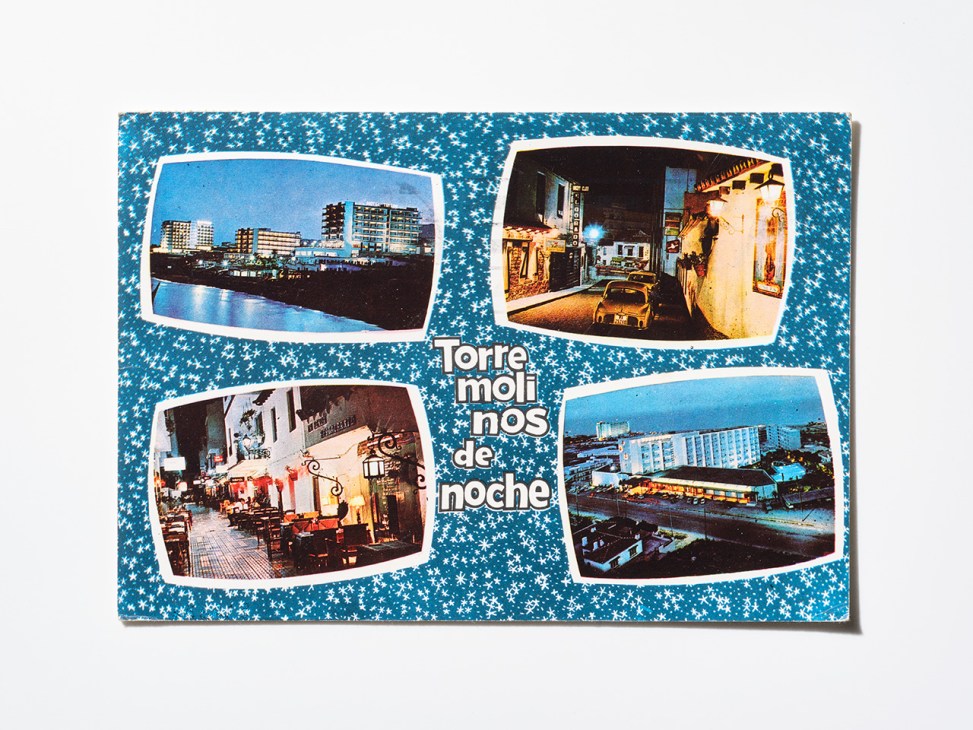
From Torremolinos, Spain, to Kenilworth, Warwickshire (September 1974)
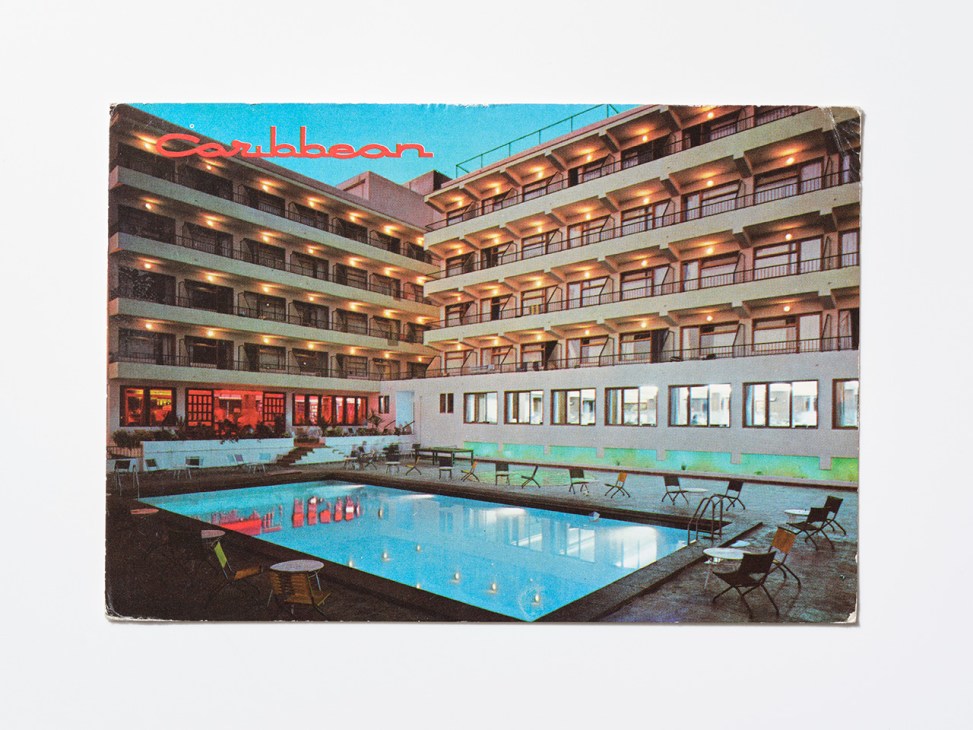
From El Arenal, Mallorca, Spain to Wakefield, Yorkshire (1968)
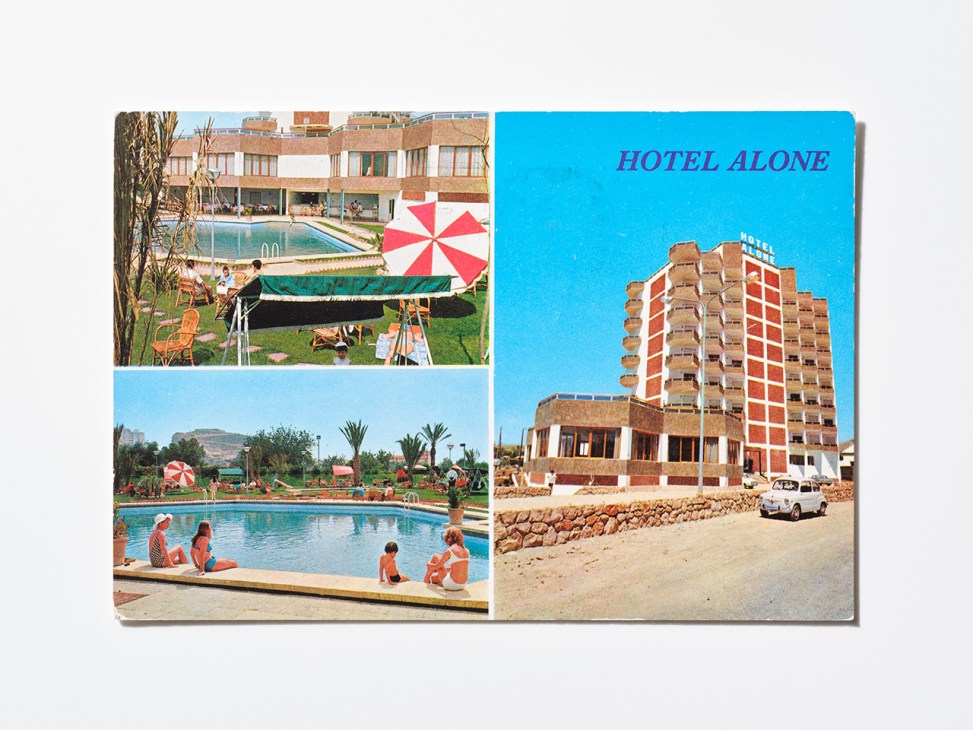
From Benidorm, Spain, to Dundee, Scotland (September 1971)
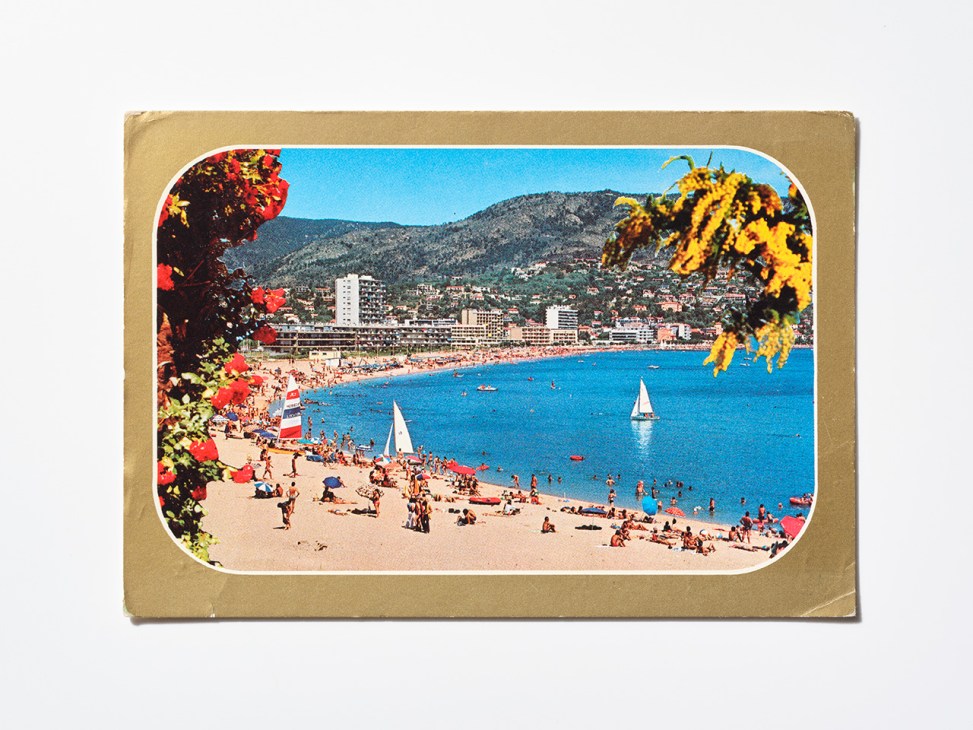
From Le Lavandou, France, to Uxbridge, Middlesex (July 1977)
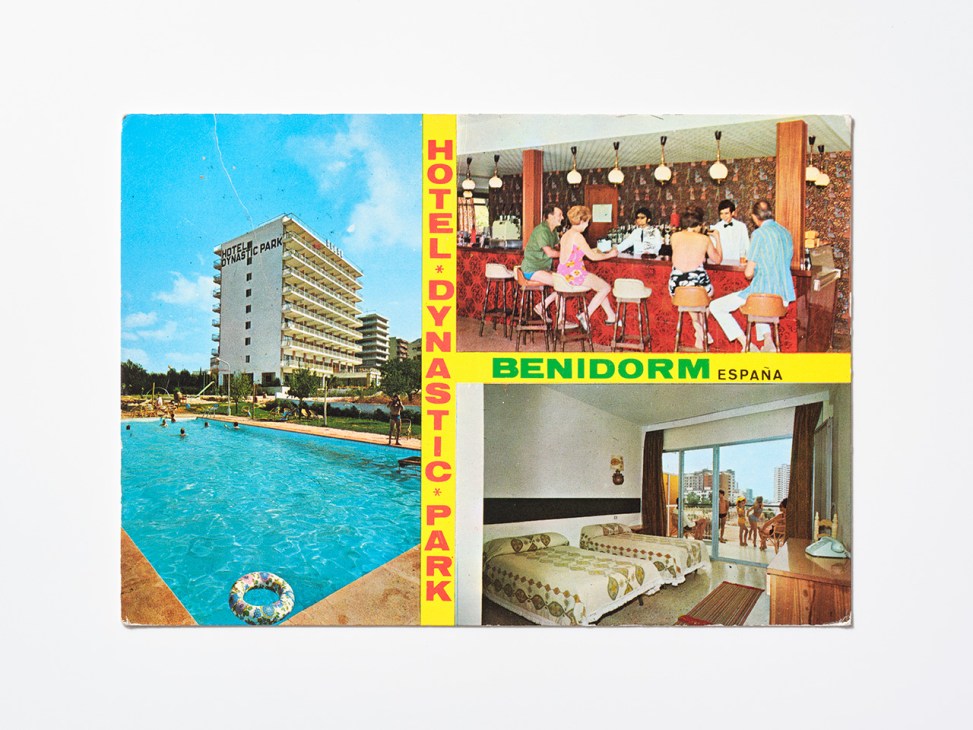
From Benidorm, Spain, to Tiverton, Devon (May 1978)
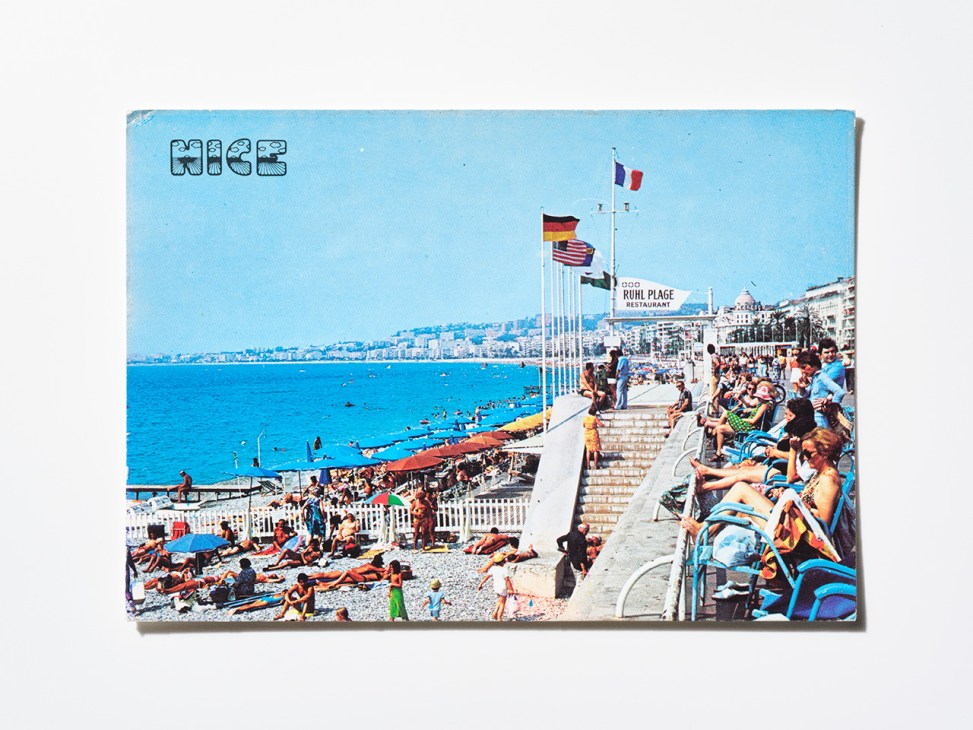
From Nice, France, to London (September 1978)
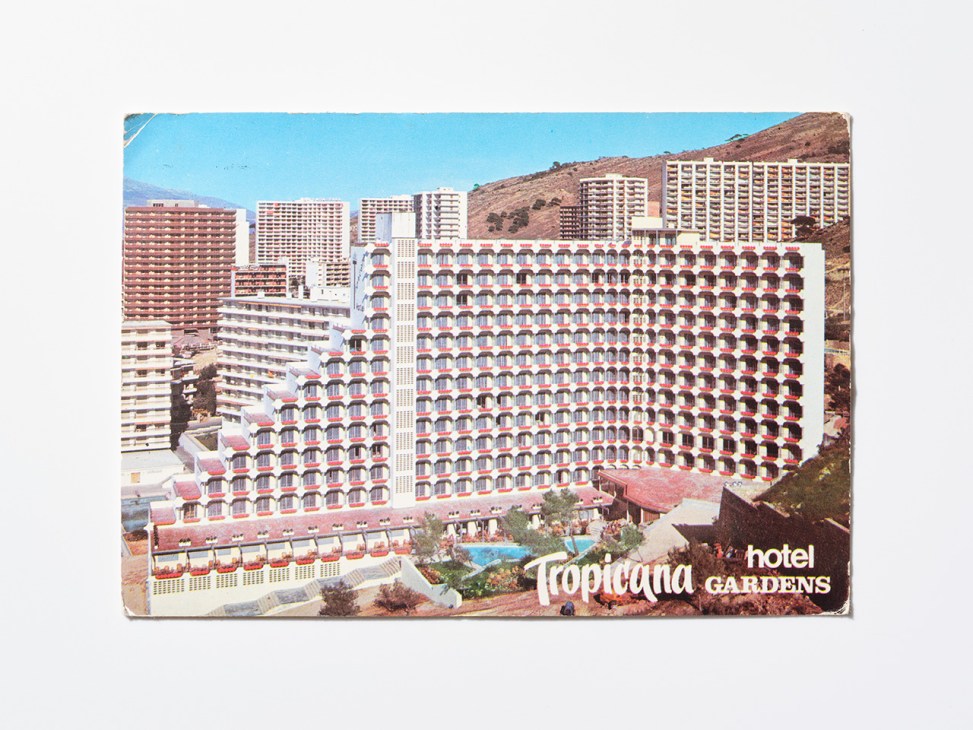
From Benidorm, Spain, to Bourne End, Buckinghamshire (July 1973)

From Ibiza, Spain, to the Savoy Hotel Kitchen, London (August 1978)
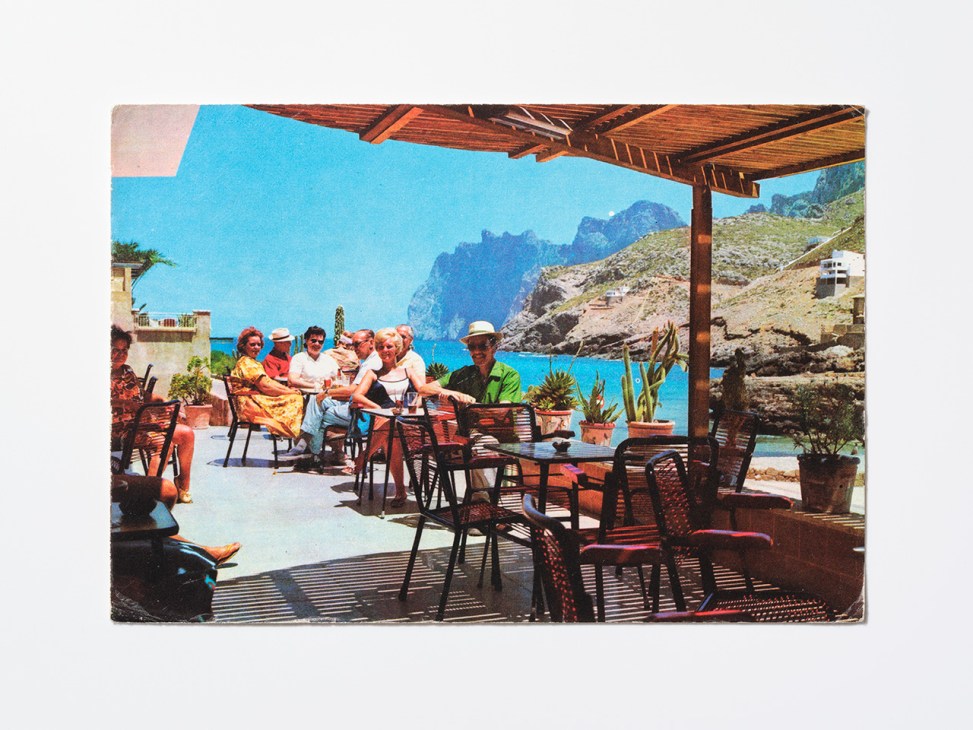
From Hostal Mayol, Mallorca, Spain, to Fife, Scotland (September 1968)
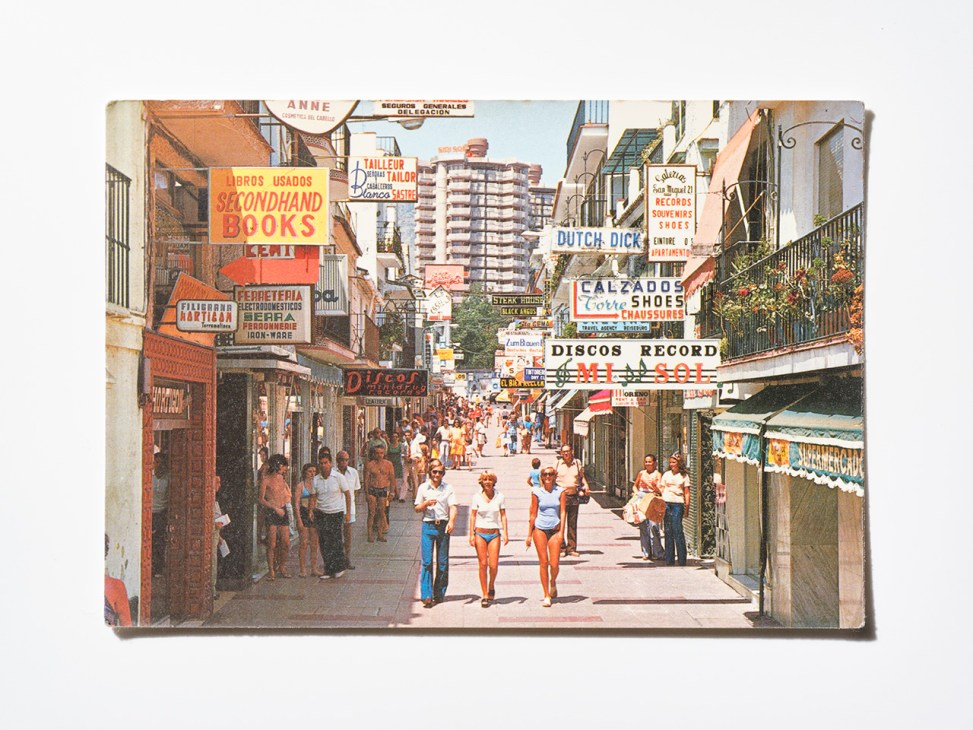
From Torremolinos, Spain, to Liverpool (February 1978)
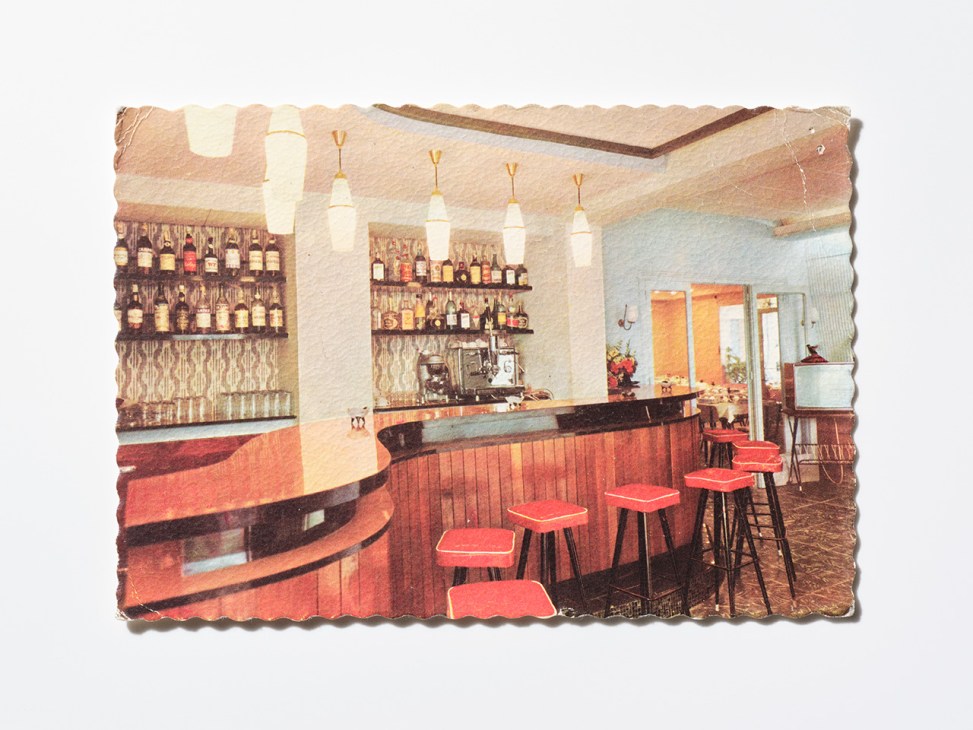
From Lloret de Mar, Spain, to Dundee, Scotland (August 1968)
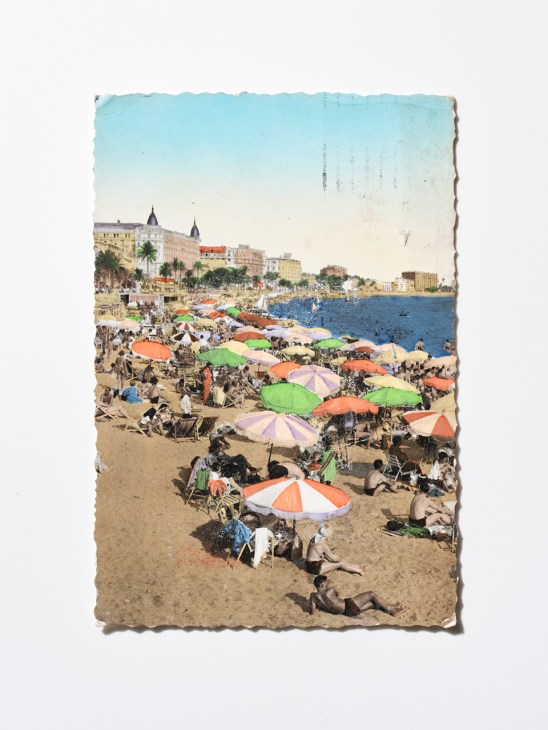
From Cannes, France, to Newtongrange, Midlothian, Scotland (June 1953)
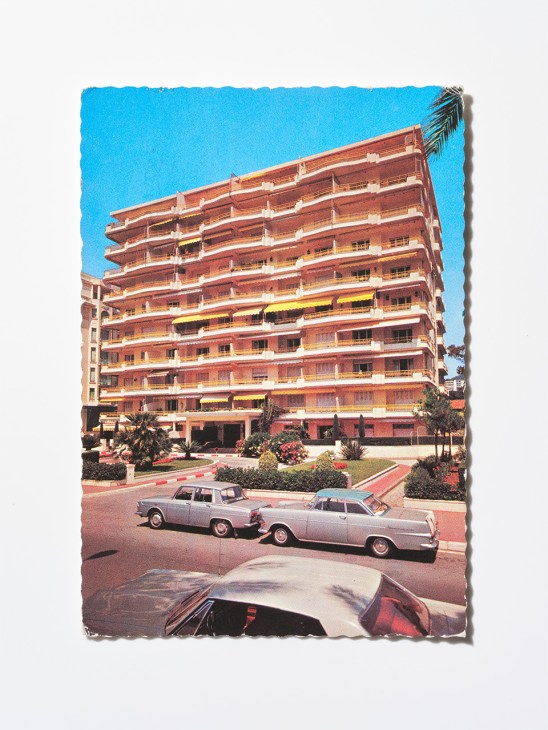
From Cannes, France, to Liverpool (June 1972)
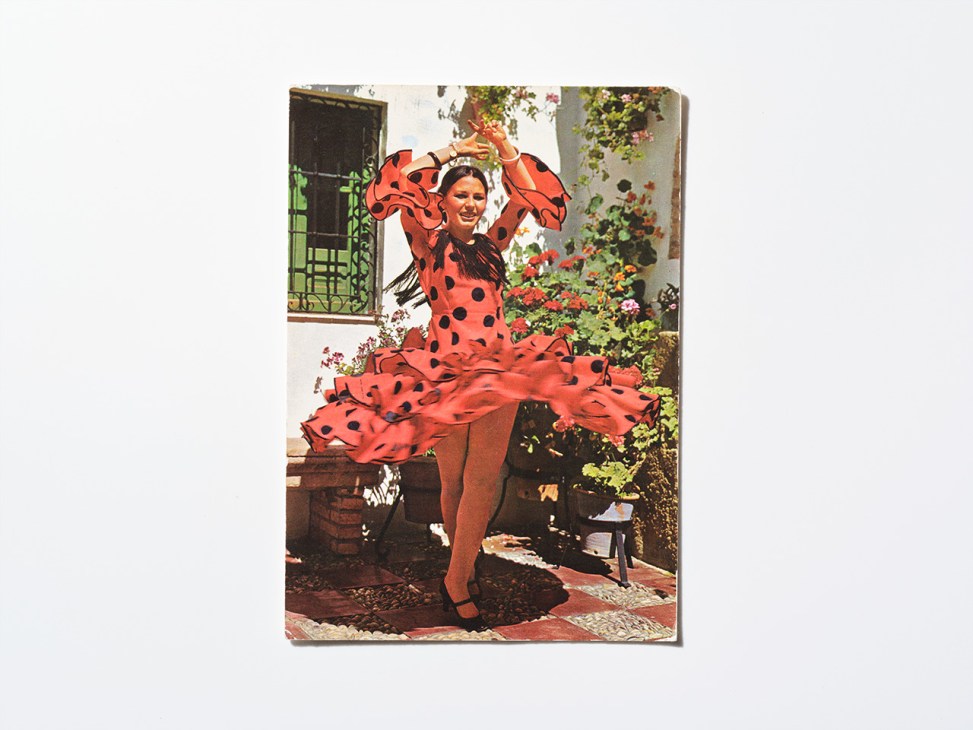
From Torremolinos, Spain, to Accrington, Lancashire (July 1973)
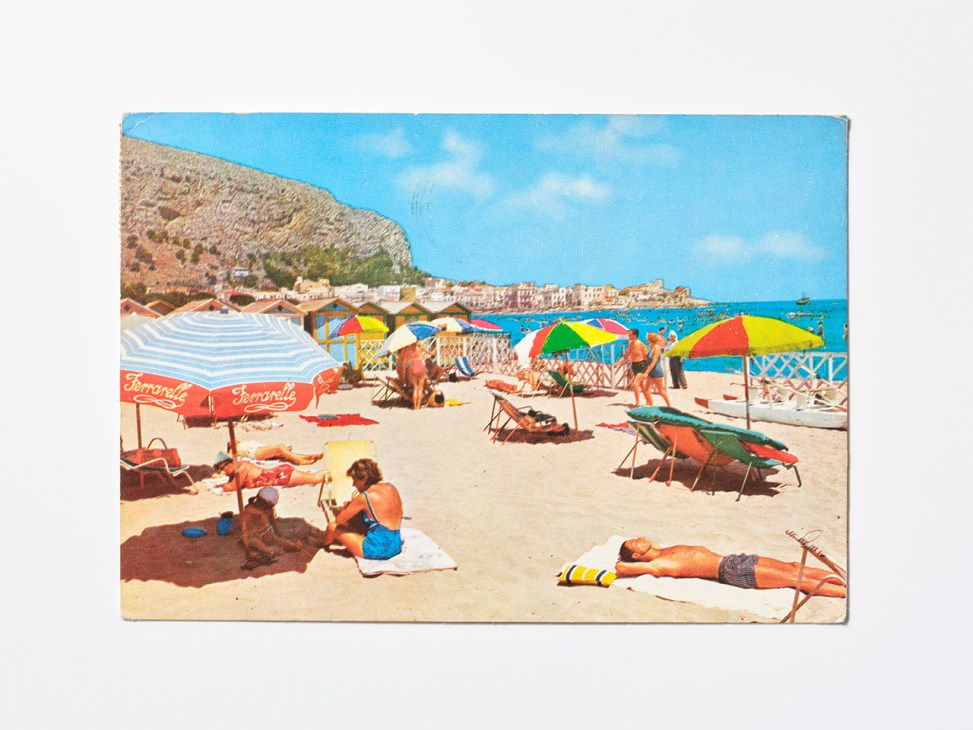
From Mondello, Sicily, to Jersey, Channel Islands (December 1971)