As autumn takes hold in the northern hemisphere, wildland firefighters are hoping for a much-needed reprieve after a scorching summer. While the July fires in France’s Gironde region and Spain’s Almería province might have generated the most attention, more than 1.2 million hectares burned across southern Europe and North Africa, according to EU data. And yet extreme conditions persisted through September, with new forest fires cropping up south of Perpignan, along the Amalfi Coast and in central Greece.
North America faced its own bruising wildfire season, with flames ripping through residential neighbourhoods in Spokane, Washington, and continuing to burn through Canada’s far-northern boreal forests and across the thickly timbered mountains of the Pacific Northwest.
Even as the temperatures cool and much-needed fall rains help to quench the remaining blazes north of the equator, wildfire season is about to heat up in the southern hemisphere. From Australia and Chile to South Africa, the austral summer has its own sobering track record. Meanwhile, January will bring the two-year anniversary of the Palisades and Altadena fires in Los Angeles, a reminder that fire conditions can even develop in winter.
So with an increasingly year-round global wildfire season, who is in the business of detecting and tamping out the flames? Here are five companies sparking new ideas – from analog aviation retrofits to high-tech AI-enabled cameras – to help firefighters on the front lines.
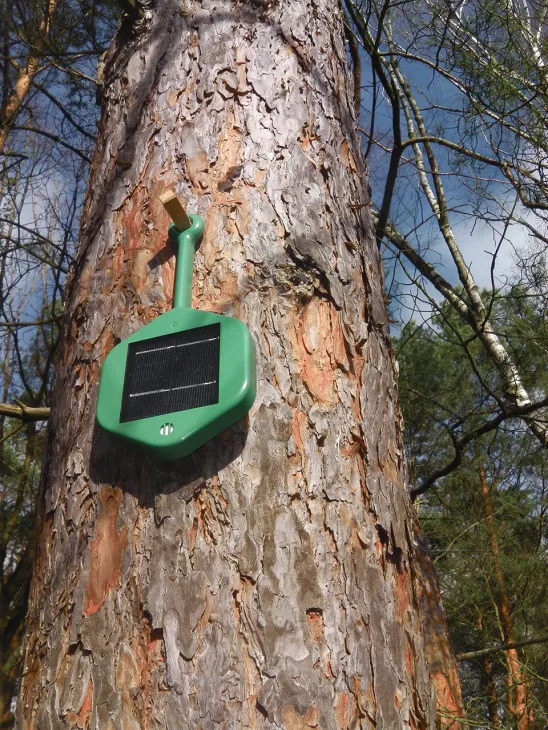
Dryads are tree nymphs in Greek mythology. But in modern-day Germany, it is the brand behind an innovative wildfire-detection system. The company’s green pendulum-shaped sensors hang from trees to catch forest fires almost from the moment of ignition by sensing the gas compounds that are released from burning wood. In thick tree canopies, this method can be faster than camera-based systems.
In 2023 Dryad secured €10.5m in Series A funding to scale its ambitions globally and opened an office in Australia last year. Over the summer, a Korean national-park delegation inspected a Dryad installation deployed in California, while a Dryad team was busy running tests in a remote part of Alaska en route as a finalist for the Xprize Wildfire competition.
dryad.net
In 2020 Brazil was hit by devastating wildfires in the Amazon rainforest and the Pantanal. In the latter, flames tinged roughly a quarter of the vast wetland, which is spread mostly across Brazil, as well as parts of Bolivia and Paraguay. The fires shook up a nation whose identity is defined by its close relationship to nature and sparked a desire for domestic technology to detect future fires.
Enter Umgrauemeio, which translates to “one point five”, a reference to the goal of keeping global warming below 1.5C. Using its own high-resolution cameras coupled with satellite data – all fed through proprietary AI-led analytical software – the country pledges to detect new wildfires in under three seconds with its Pantera system. Today, Umgrauemeio has more than 39 million hectares under surveillance across Brazil and Spain, while its wildfire-prevention campaigns have won awards from the likes of the UN.
umgrauemeio.com
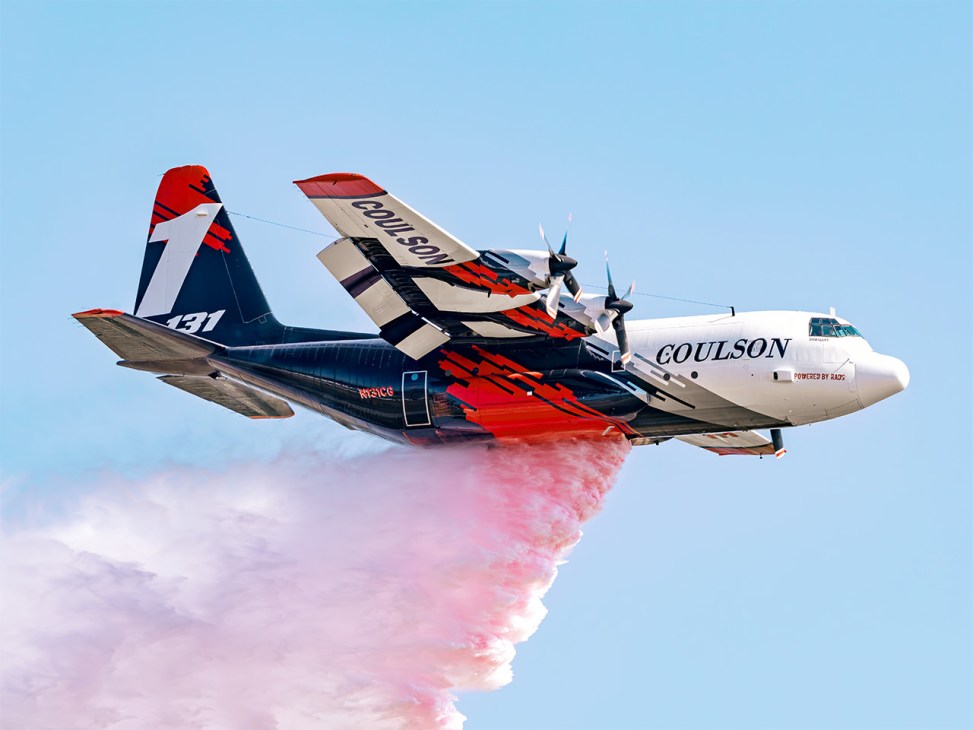
Coulson Aviation was founded in Port Alberini, British Columbia in 1960 by a Second World War veteran tank driver. Though it originally served the timber industry with heavy equipment, the family-owned company pivoted to aerial firefighting in the 1980s. In 2018 it branched out into conversions, transforming four-engine C-130 Hercules cargo planes into water tankers similar to US-based 10 Tanker’s converted DC-10s. Coulson’s 10-craft squadron of C-130s was already the world’s largest private fleet of the Lockheed Martin workhorse. The force doubled in size in August with the announcement that 10 retired cargo planes are set to transfer from the hands of the Canadian government to Coulson.
coulsonaviation.com

1/2
Page 1 of 2
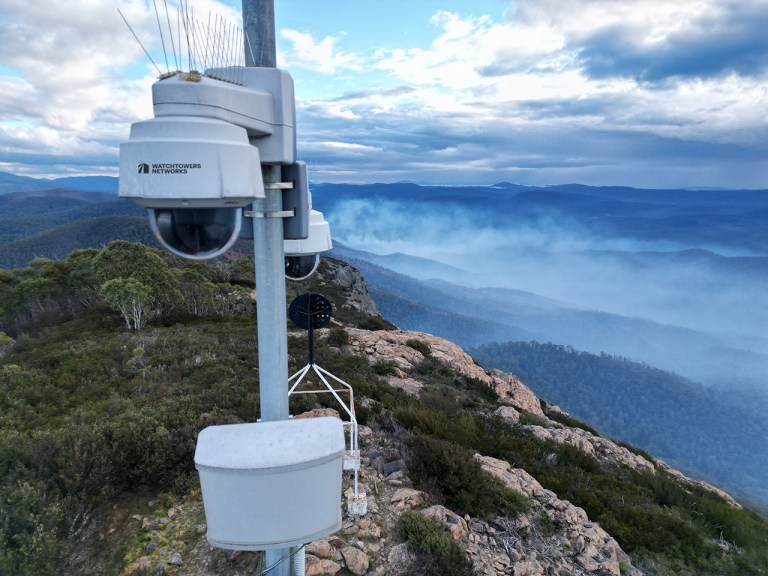
Eye in the sky: Watchtowers Networks’ panorama surveillance system
(Image: Courtesy of Watchtowers Networks)

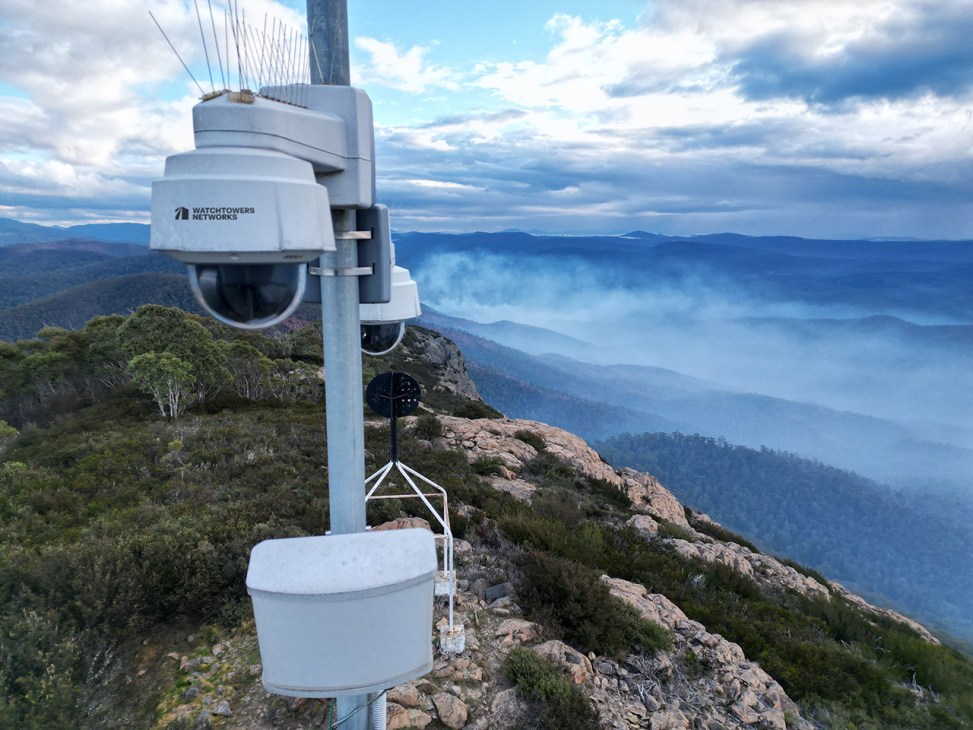
The fire lookout perched on a lonely mountain peak once inspired literature. Jack Kerouac’s Desolation Angels is based on his 63-day stint on Desolation Peak while Gary Snyder’s “Mid-August at Sourdough Mountain Lookout” is a classic Beat poem. Sadly, a set of human eyes deep in the wilderness is a lost art, one to which Australian start-up Watchtowers Networks pays homage with its dual-camera automated systems that rotate continuously to provide a 360-degree panorama over remote forests up to 70km away.
Founded in the wake of the so-called Black Summer bushfires that devastated large swaths of land Down Under from late 2019 to early 2020, Watchtowers’ systems are now in service in New South Wales and the Australian Capital Territory, as well as the US state of Utah, while the company’s new Lookouts service provides a wholly Australian AI smoke-detection model.
watchtowers.io

1/2
Page 1 of 2
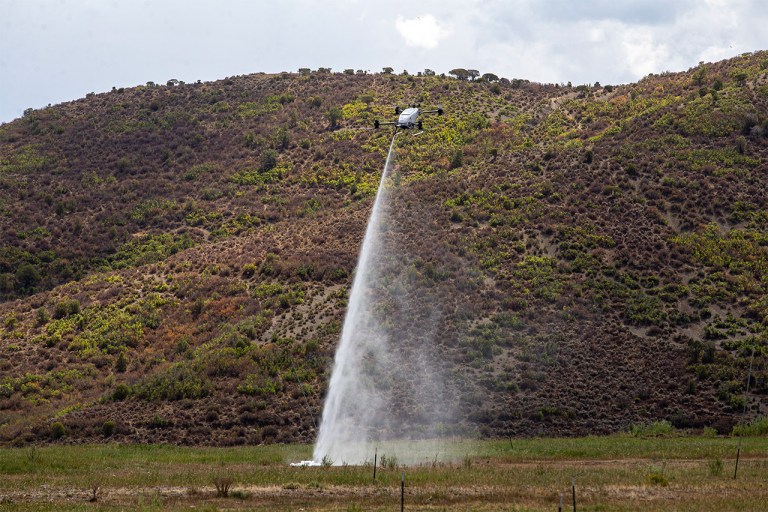
A new tool in the toolbox: Drone technology is increasingly essential to first responders
(Image: Courtesy of Seneca)

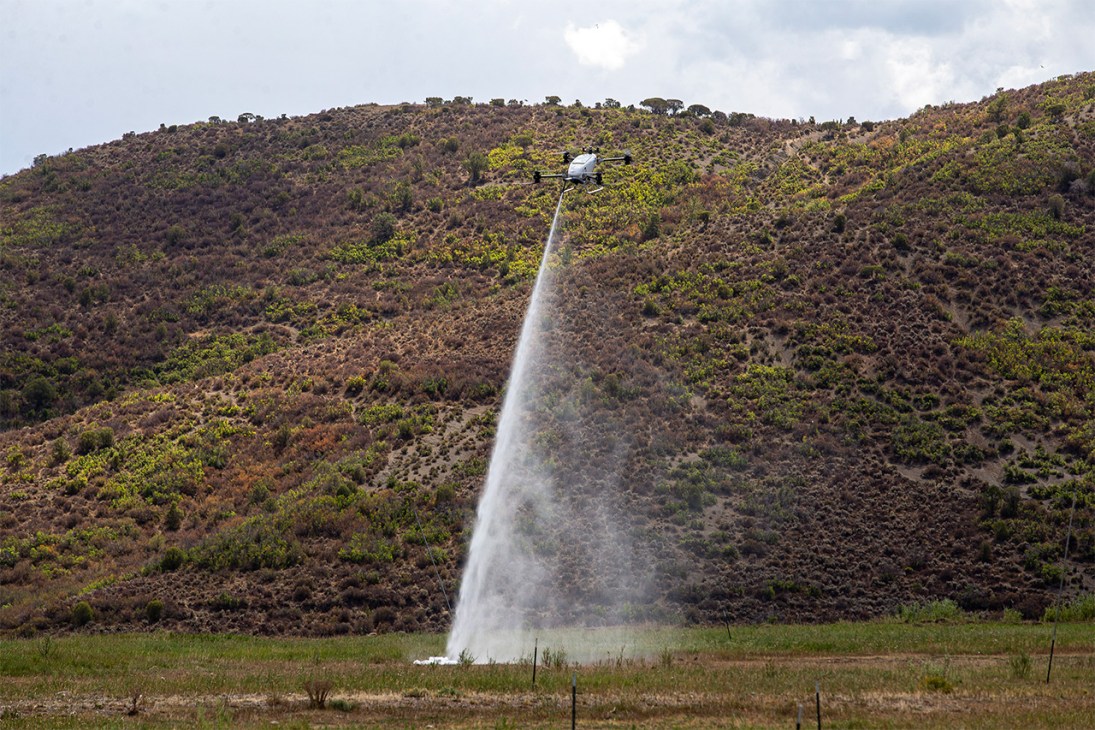
Drones can fight wars, rescue disaster victims and deliver pizzas, so surely they can fight fires too. San Francisco-based Seneca launched last year with $60m (€53m) in venture funding; an advisory board stocked with wildland fire professionals; and a compelling product: autonomous suppression drones that can carry 75 litres of water or foam retardant and spray down spot blazes with high-pressure hoses. Designed to complement, not replace, firefighters, the heavy-duty drones are more like mini-helicopters. They take a few beefy firefighters to muscle but they are small enough to transport on the back of a pick-up truck to a remote fire site.
seneca.com