This article contains affiliate links. We may receive compensation if you make a purchase using one of these links at no additional cost to you. See our Disclaimers and Terms of Use for more information.
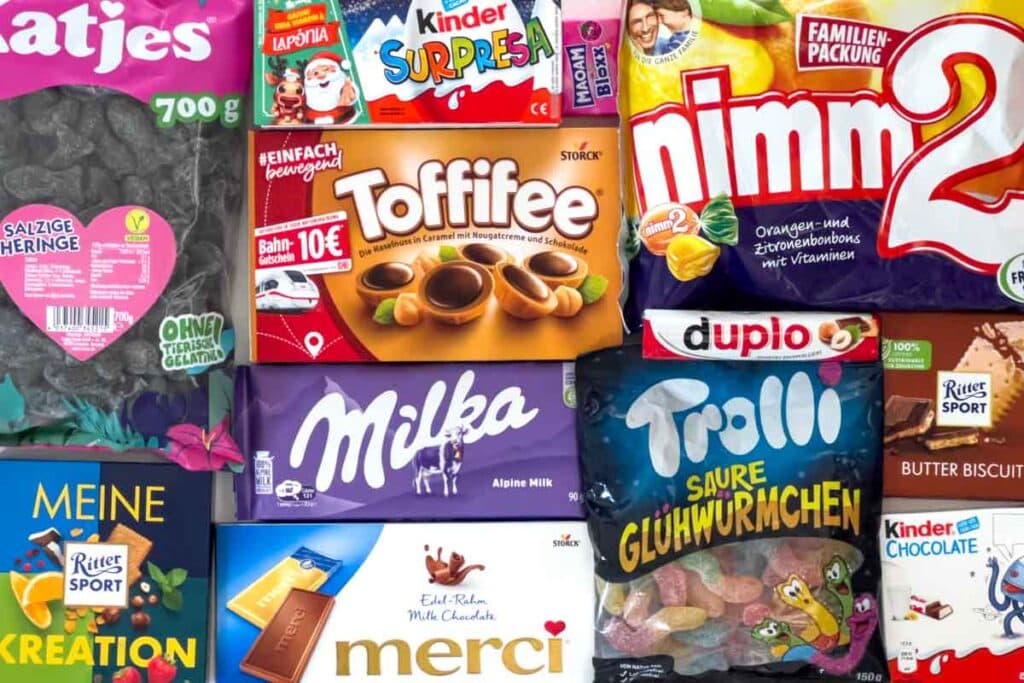
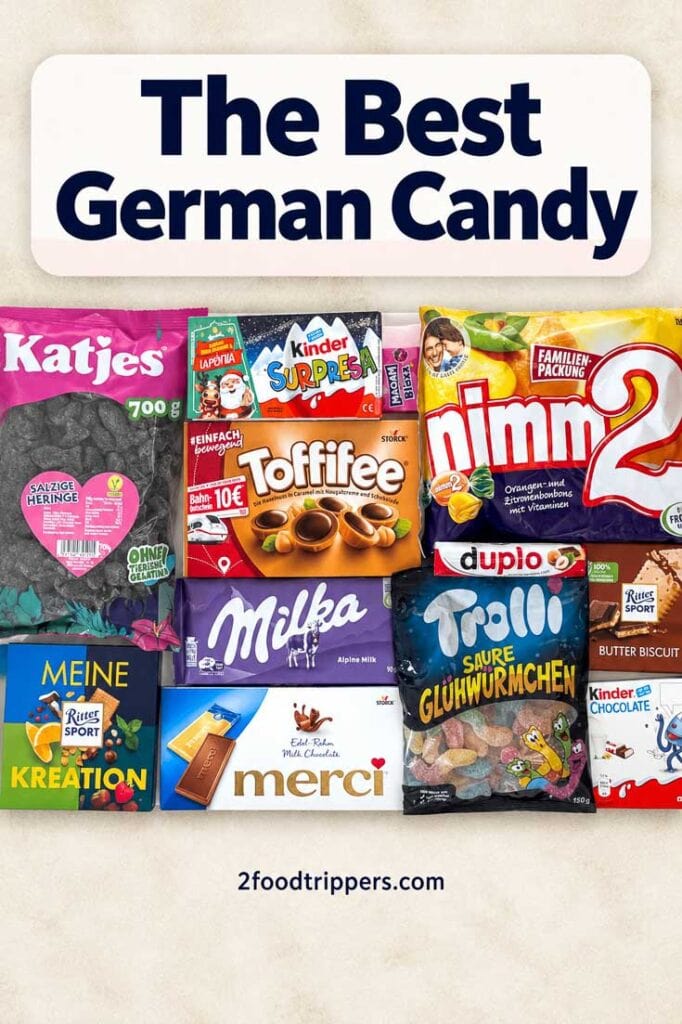
Germany gave the world the gummy bear in 1922 and the perfectly square chocolate bar a decade later. But these aren’t the country’s only candies worth eating. German grocery store aisles are packed with chewy fruit candies, chocolate-covered wafers and caramels in addition to gummy bears and chocolate bars.
🔑 Key Takeaways
- German candy makers invented the gummy bear (Haribo) in 1922 and the square chocolate bar (Ritter Sport) in 1932.
- Kinder is the candy brand German shoppers choose most often. Haribo is a close second.
- Not every popular German candy is strictly German. Duplo, Hanuta and Kinder have Italian roots, Milka started in Switzerland and Katjes has a Dutch name.
- Storck makes a lot of popular German candies. The company’s Dickmann’s, Knoppers, Mamba, merci, Nimm2, Riesen, Toffifee and Werther’s Original are all in this guide.
- Some German candies change names or disappear across the pond. Toffifee is called Toffifay in the US, and Kinder Überraschung is banned there.

Our exploration of German candy started years ago in Philadelphia. Back then, we didn’t care that Haribo gummy bears came from Germany. We just knew that they tasted good. Ritter Sport chocolate bars attracted us because they seemed exotic and tasted great.
Things changed when we perused the candy aisle at a Bavarian grocery store. The options were seemingly endless, and we were hooked. More than a decade later, we still light up when we encounter candy in German cities like Baden-Baden, Berlin and Hamburg.
We experienced the same joy when we tasted the German candies featured in this guide. We then ranked the candies based on popularity and how much we liked them. Keep reading to see if your favorite German candy made our list.
1. Kinder Schokolade
Year Introduced: 1967
Manufacturer: Ferrero
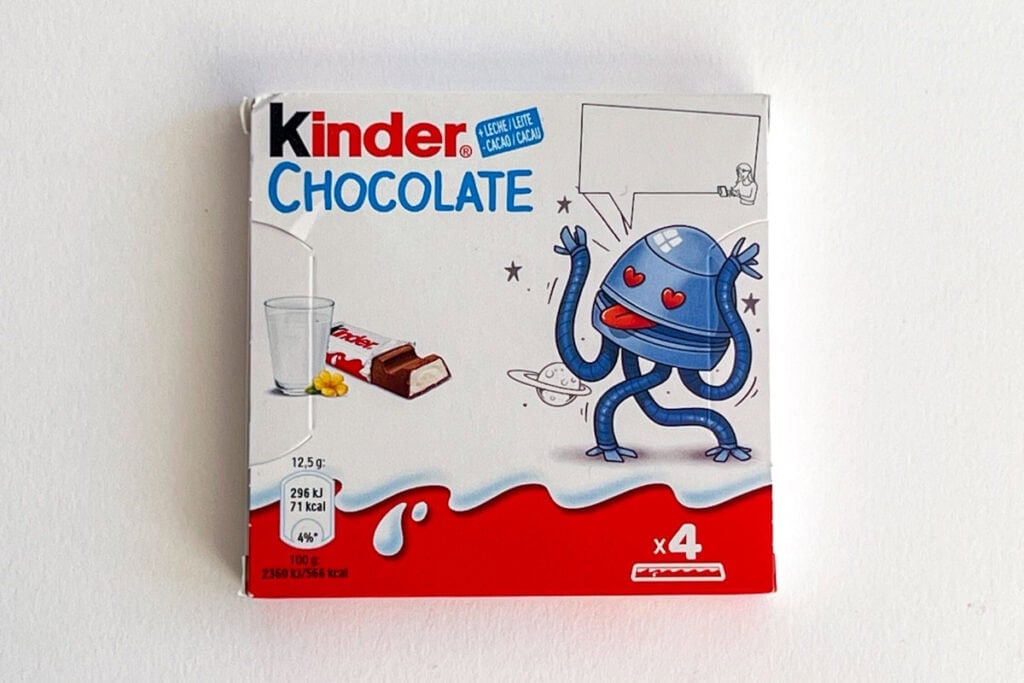
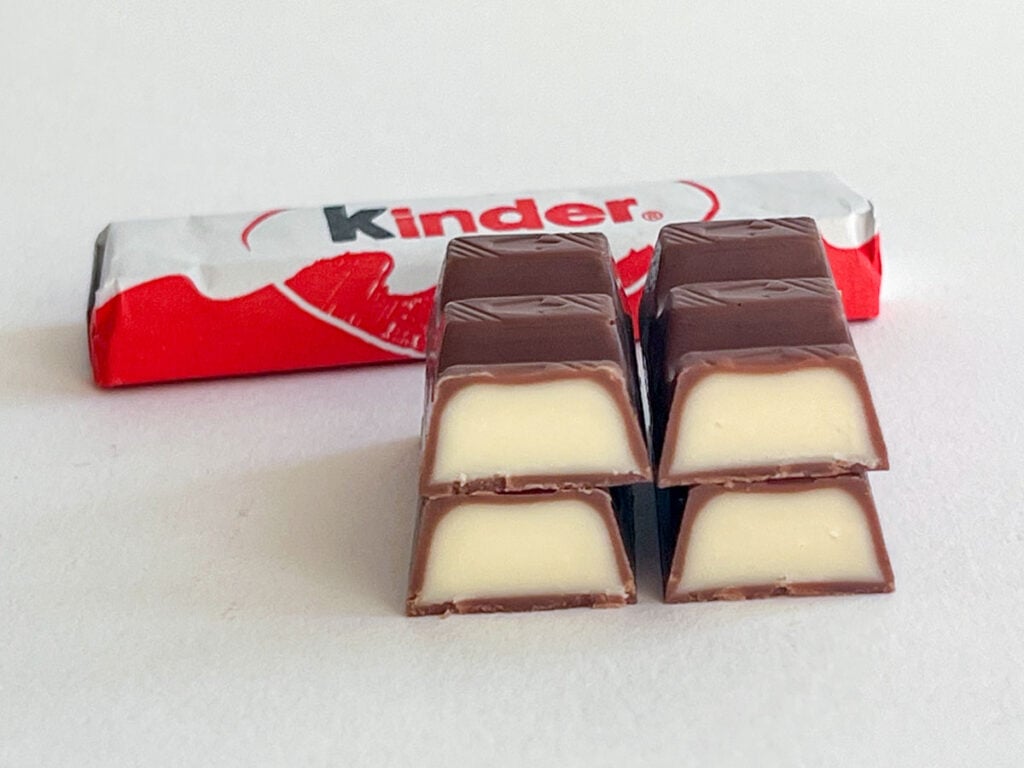
Kinder Schokolade (i.e., children’s chocolate) debuted in Germany in 1967 and has barely changed since. Each individually wrapped bar pairs a thin milk chocolate shell with a sweet milk cream filling. It’s the flagship of Kinder, the confectionery brand German shoppers choose more often than any other. Although we’re not German, we get why Kinder Schokolade is so popular in Germany. It’s super sweet, delightfully creamy and incredibly indulgent.
We also get that Ferrero is a candy company based in Italy. However, Ferrero developed Kinder Schokolade for the German market, and the company produces Kinder candy in Stadtallendorf, Germany. Since its debut in Germany more than a half-century ago, the Kinder line has grown to include the Kinder Bueno, a hazelnut wafer bar, and egg-shaped confections with toys inside.
2. Kinder Überraschung
Year Introduced: 1974
Manufacturer: Ferrero
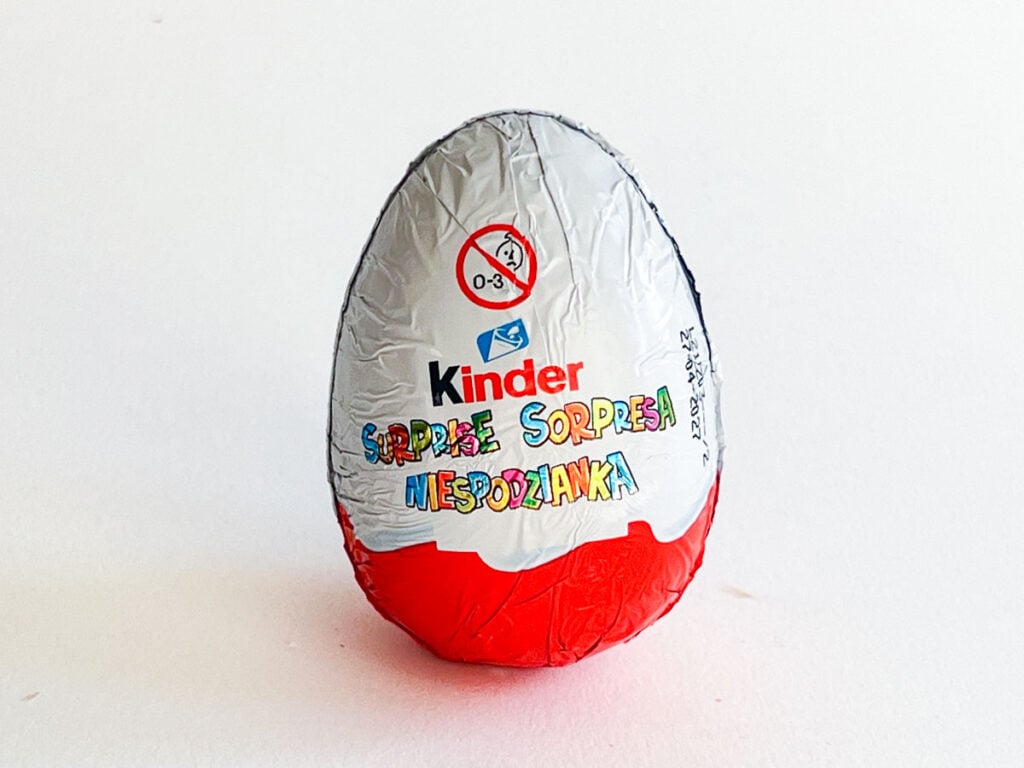
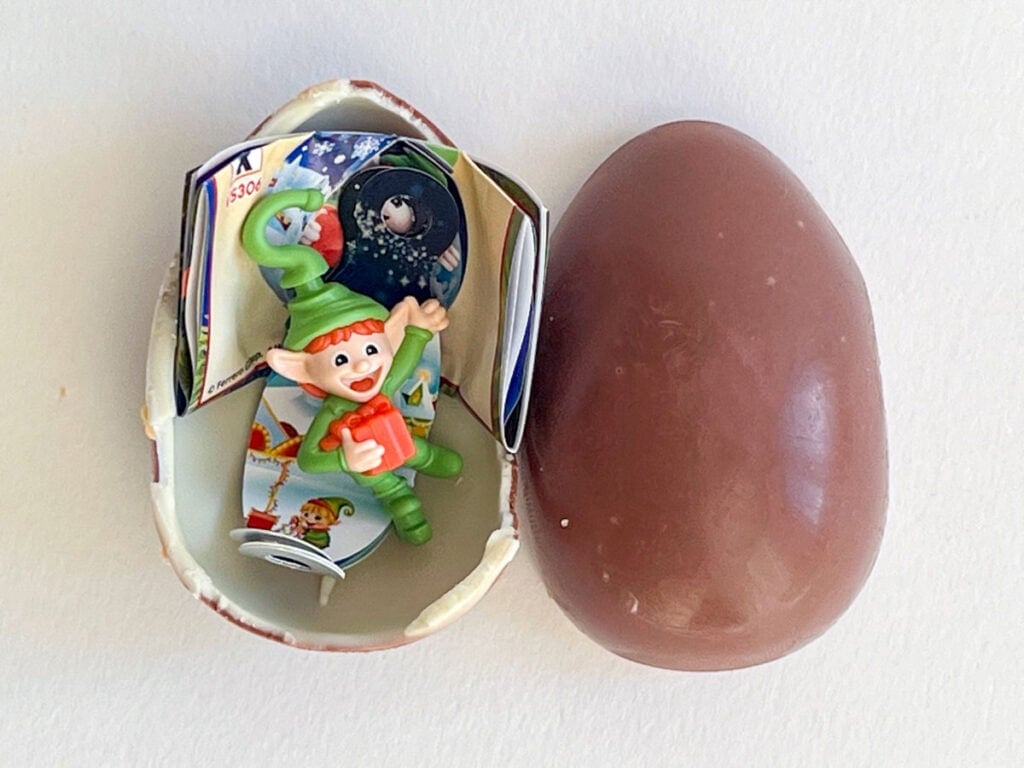
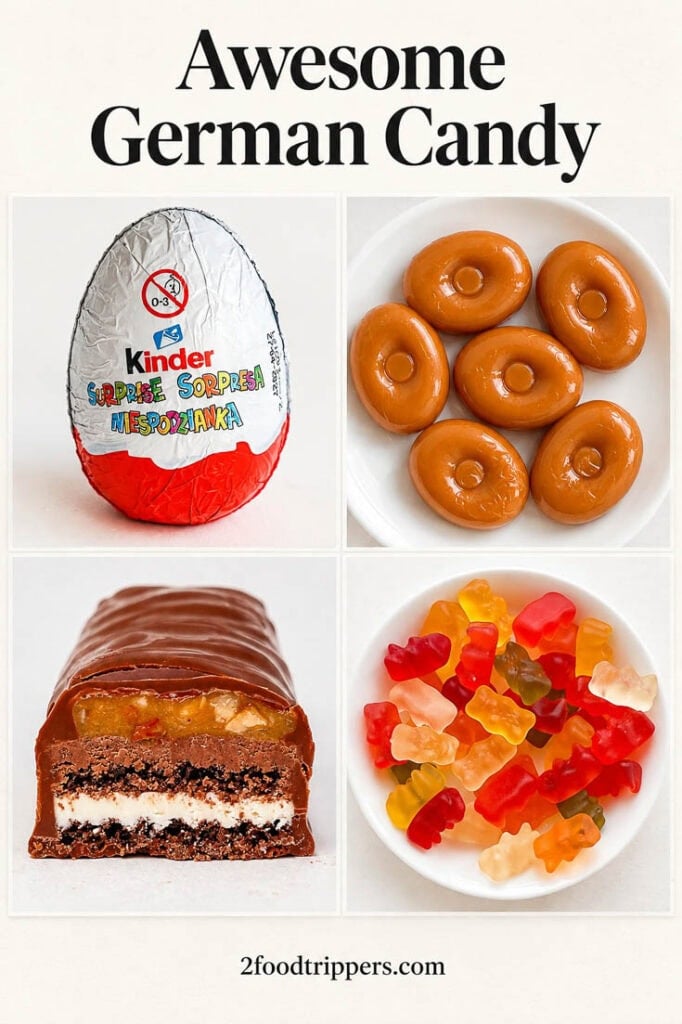
Kinder Überraschung (i.e., Kinder Surprise) is a hollow milk chocolate egg lined with white chocolate. Inside is a plastic capsule holding a toy along with simple assembly instructions. Ferrero launched the oval treat in 1974 and now sells millions of eggs each year. A big chunk of those eggs are purchased in Germany.
We bought a 3-pack in Lisbon, where the chocolate eggs are called Kinder Sorpresa. While we liked the pairing of milk and white chocolate in each bite, we were more enamored by the toys hidden inside our eggs.
Fun Fact
Kinder Überraschung is banned in the US, where federal law prohibits embedding non-food objects in candy. Ferrero’s workaround, Kinder Joy, keeps the toy in a separate compartment within the egg. We tasted a Kinder Joy egg for comparison purposes and liked the crunchy yet creamy candy egg more than the original version.
3. Haribo Goldbären


Year Introduced: 1922
Manufacturer: Haribo
Bonn candy maker Hans Riegel created the world’s first gummy bear in 1922 and called it the Tanzbär (i.e., dancing bear). Over the years, Riegel’s chewy candy became Goldbären (i.e., gold bears) and spawned an international candy category. Today, Haribo sells dozens of gummy candies in all shapes and colors; however, none is more popular than its gummy bears. The company produces 160 million Goldbären every day and sells them around the world to kids of all ages.
Firm and chewy, OG German Goldbären come in six fruity flavors: apple, lemon, orange, pineapple, raspberry and strawberry. (The American version omits apple as a flavor.) Haribo also sells Sour Goldbears, Tropical Goldbears and Wild Berry Goldbears. While we love them all, we love the original six flavors most.
4. Milka
Year Introduced: 1901
Manufacturer: Mondelēz International
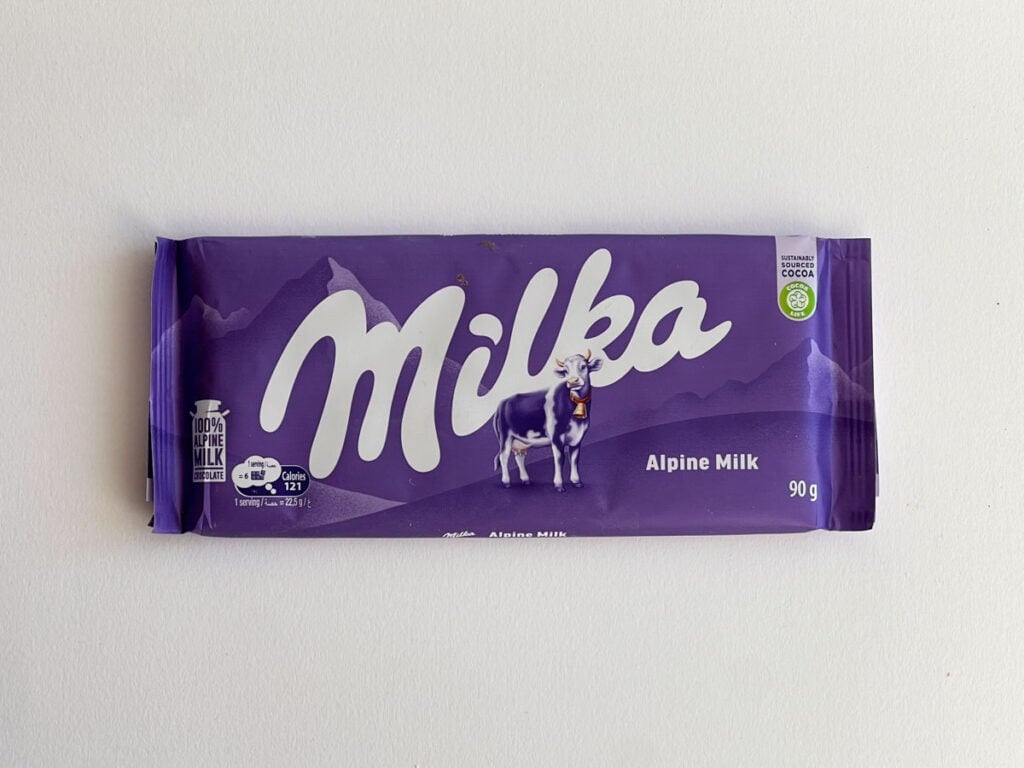
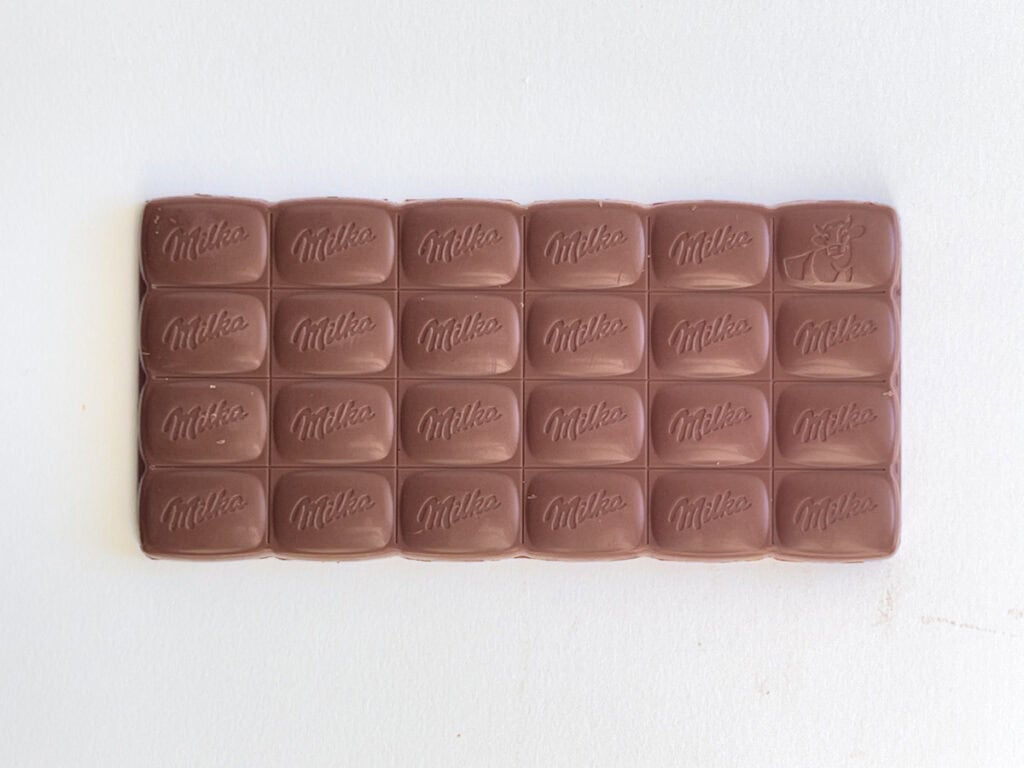
Milka is another popular German candy with roots that aren’t strictly German. Swiss candy maker Philippe Suchard created the Milka candy bar in 1901 and named it after two German words: Milch (i.e., milk) and Kakao (i.e., cocoa). However, despite its Swiss roots, Milka chocolate bars have been produced in Lörrach, Germany, for more than a century.
While Milka started out with one simple flavor, Alpenmilch (i.e., Alpine Milk), its core line now includes bars made with dark chocolate, hazelnut, strawberry yogurt and white chocolate. The company also sells mash-up flavors, including the popular Milka Oreo bar with Oreo pieces. We’ve tried several flavors but keep going back to Milka’s original milk chocolate bar.
5. Ritter Sport
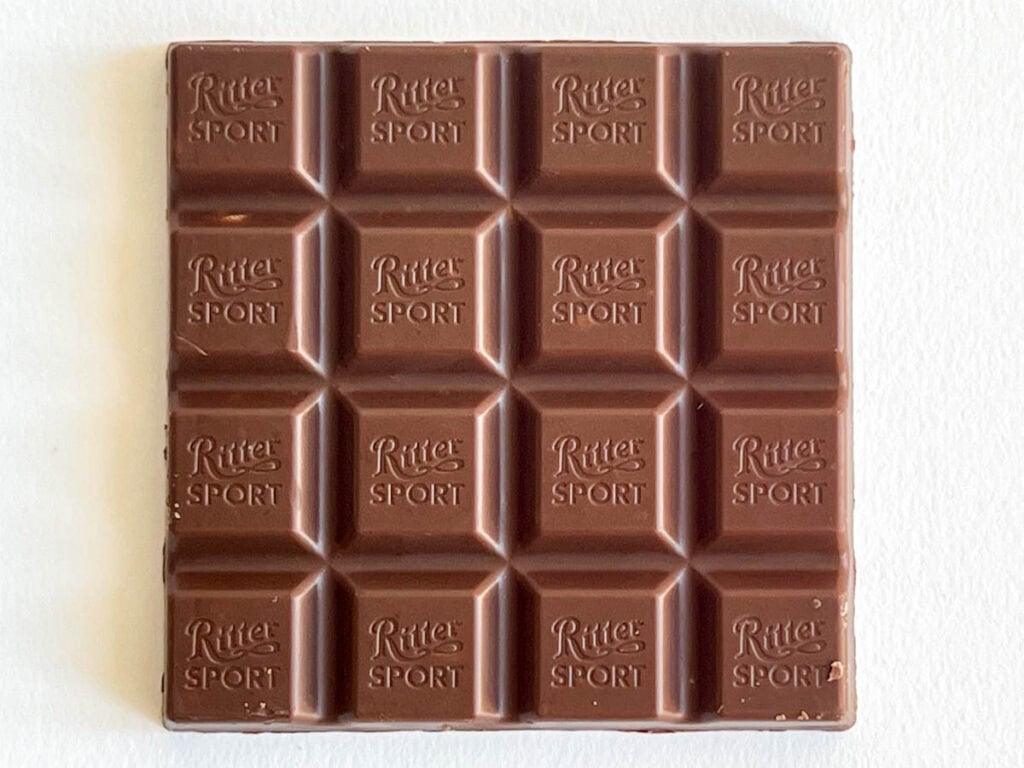
Year Introduced: 1932
Manufacturer: Alfred Ritter GmbH & Co. KG
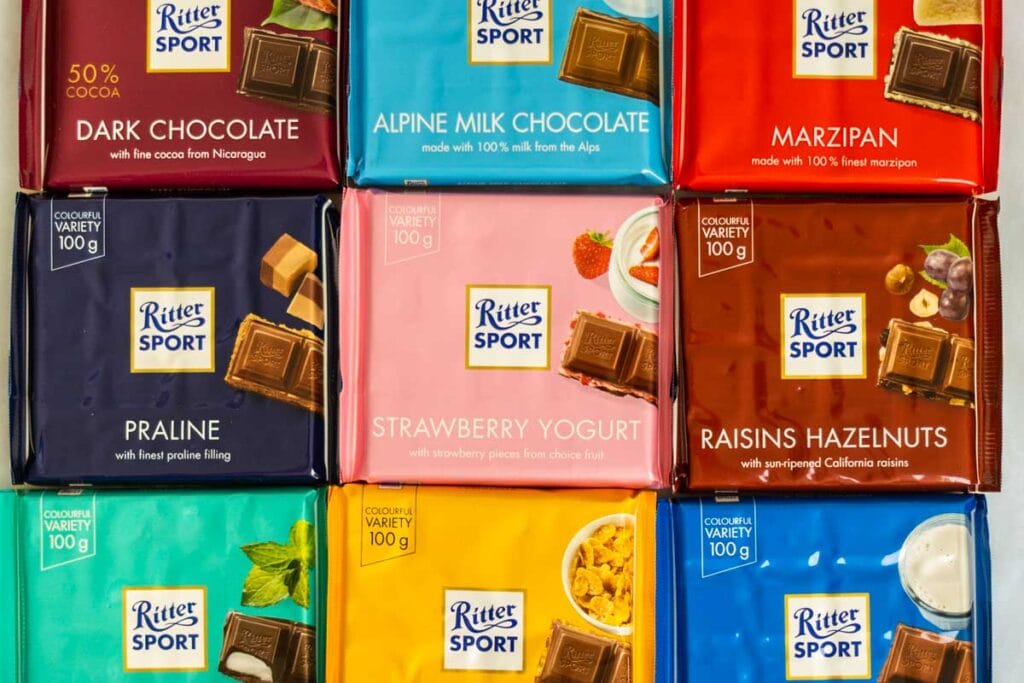
The folks at Ritter Sport built a better mousetrap, or in this case candy bar, when co-founder Clara Ritter came up with the idea of making square-shaped bars that would easily fit inside sports jacket pockets. The German company sold its first square-shaped milk chocolate bars in 1932 before introducing additional flavors like marzipan, rum raisin with hazelnuts and yogurt.
Fast-forward almost a century later, and Ritter Sport now produces a literal rainbow of flavors. While most flavors have dark, milk or white chocolate bases, each flavor has a uniquely colored wrapper. We’re partial to the Cornflakes Ritter Sport bar that comes in a golden yellow wrapper. It’s the flavor that started our multi-decade Ritter Sport infatuation, and we still love it.
6. Katjes
Year Introduced: 1950
Manufacturer: Katjes Fassin
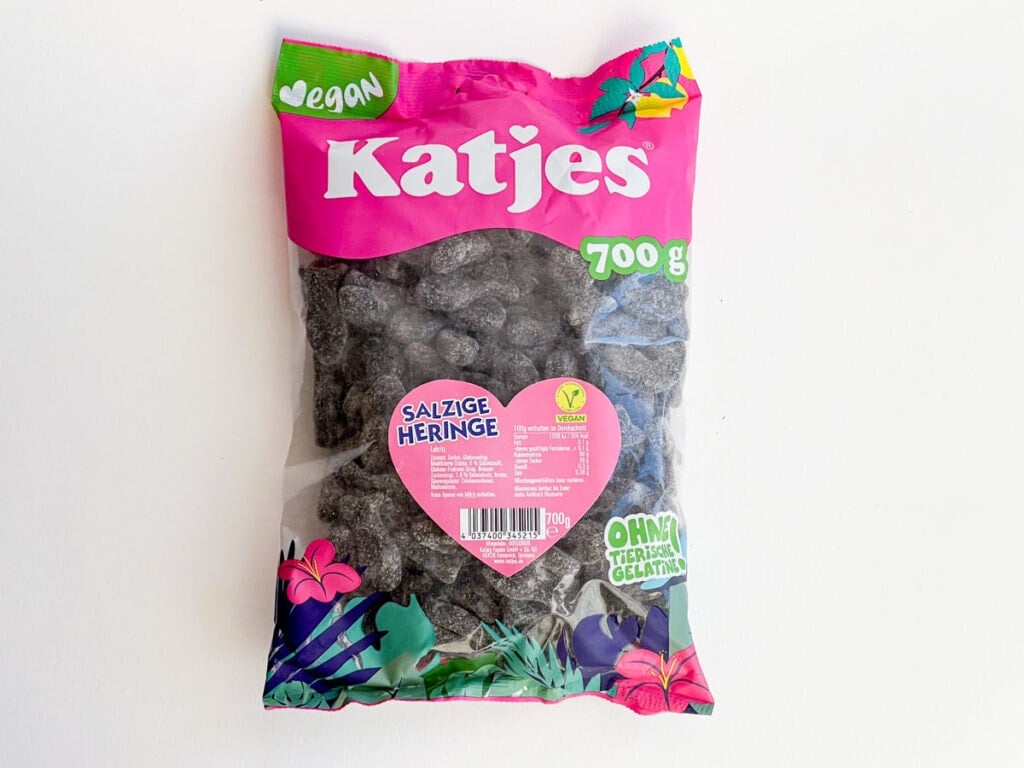
Katjes is a German candy company with a Dutch name and Sicilian roots. Klaus Fassin founded the company in Emmerich am Rhein, a German town on the Dutch border, with one product: cat-shaped licorice candies. However, he wasn’t the first Fassin to sell cat-shaped licorice. His father, Xaver Fassin, started the tradition with a licorice recipe from Sicily.
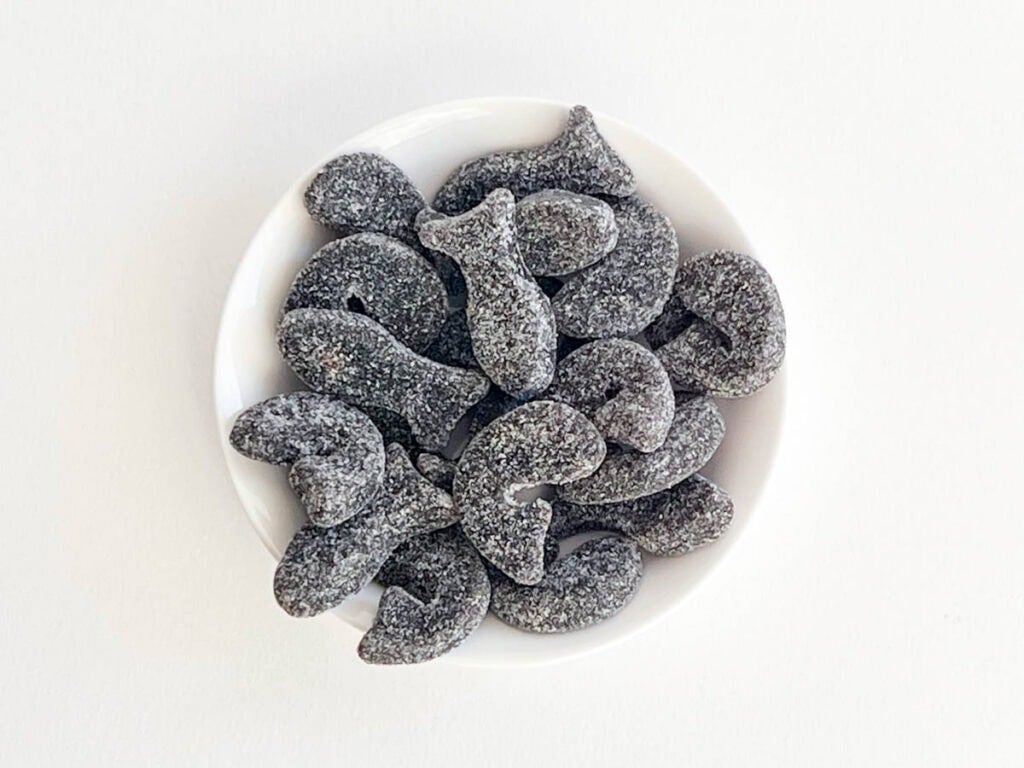
Today, popular Katjes flavors come in various shapes (think cat paws and bunny rabbits). Many are gummies. Still based in Emmerich and now helmed by Bastian Fassin, Katjes no longer uses artificial flavorings, and all of its candy is now vegetarian. Some, like the Salzige Heringe (i.e., salty herrings) flavor we ordered online, are vegan. Shaped like little fish and coated in salty sugar, it’s not a flavor that everybody likes. One of us (Mindi) loves it more than every other candy in this guide.
7. merci
Year Introduced: 1965
Manufacturer: Storck
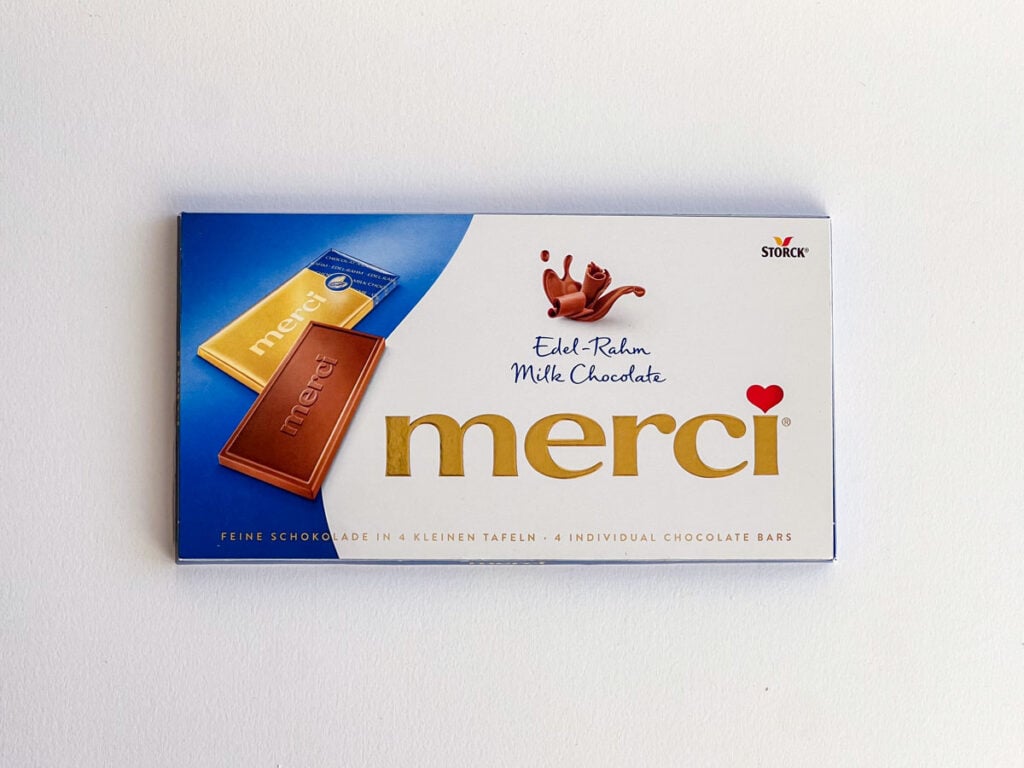
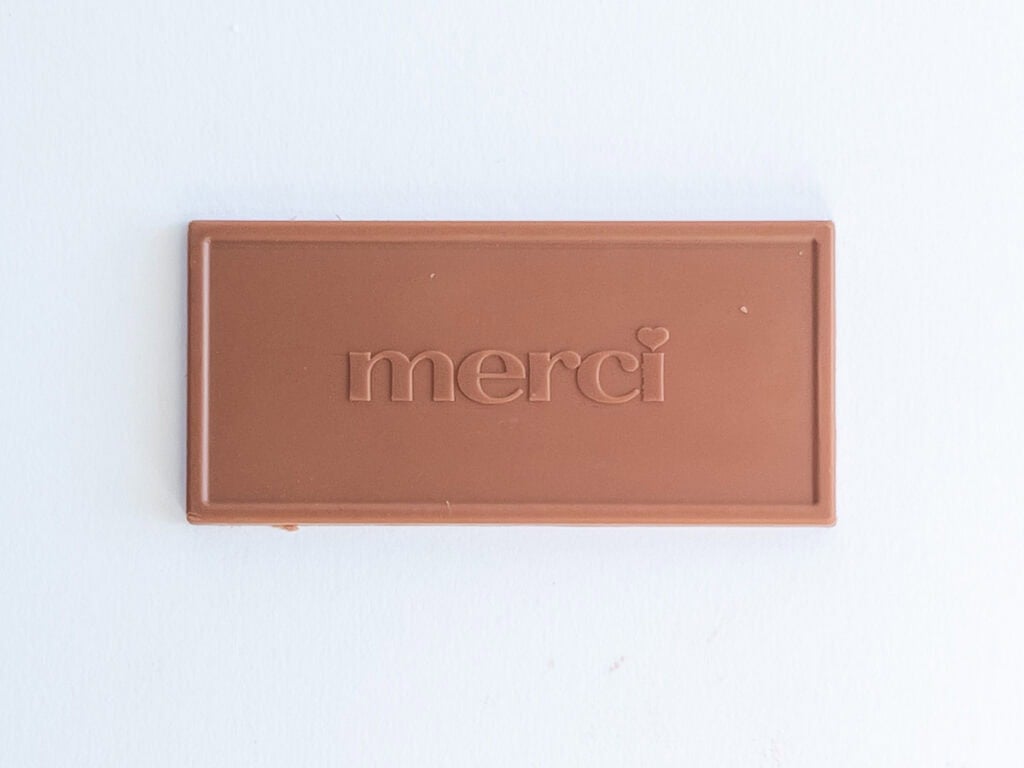
Everything is German about merci except its French name. This candy is produced by Storck, a German company, in the German cities of Ohrdruf and Berlin. And, although merci is sold in more than 70 countries, the chocolate candy was developed for the German market. That name, which translates to thank you in French, refers to the way that this candy is packaged as a “thank you” gift for hosts, teachers and service providers.
Popular merci flavors include coffee and cream, dark cream, hazelnut almond, hazelnut crème, marzipan, milk chocolate and praline crème. While it’s typically sold in red boxes with an assortment of those flavors, the package we bought at a Spanish grocery store had five Edel-Rahm milk chocolate bars. Thankfully, it was a good flavor, pun intended.
8. Knoppers NutBar
Year Introduced: 2017
Manufacturer: Storck
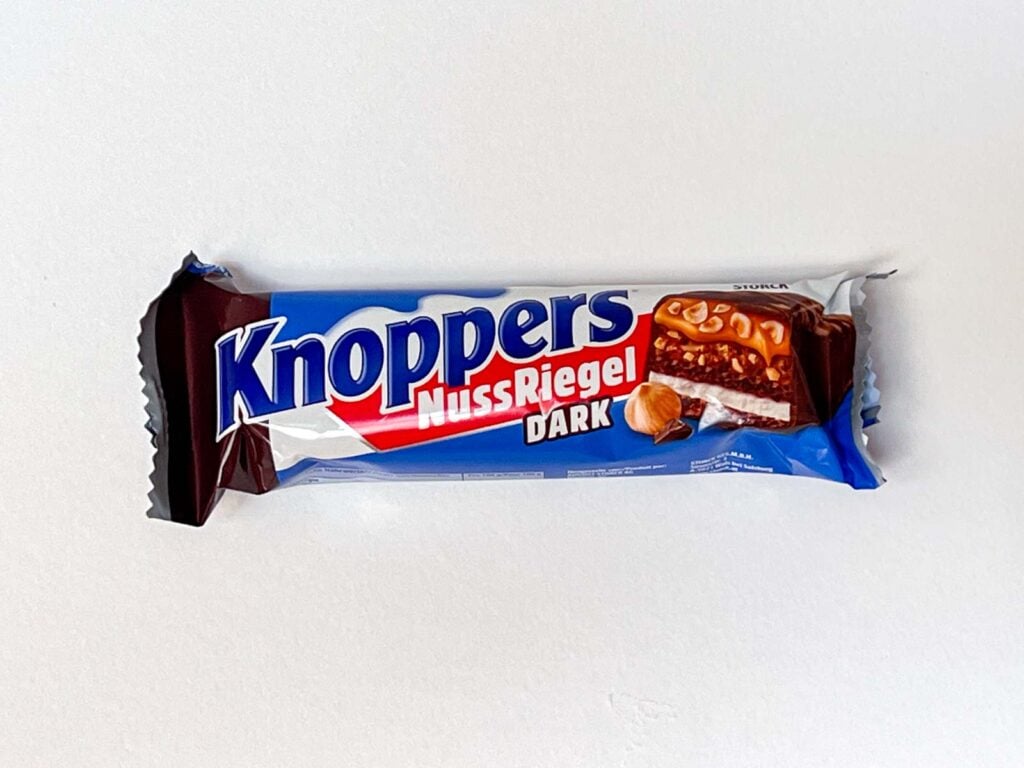
Despite its sweet ingredients, it’s a stretch to classify the original Knoppers wafer sandwich as candy instead of a snack. However, there’s no debate that the chocolate-coated Knoppers NutBar firmly fits in the candy category.
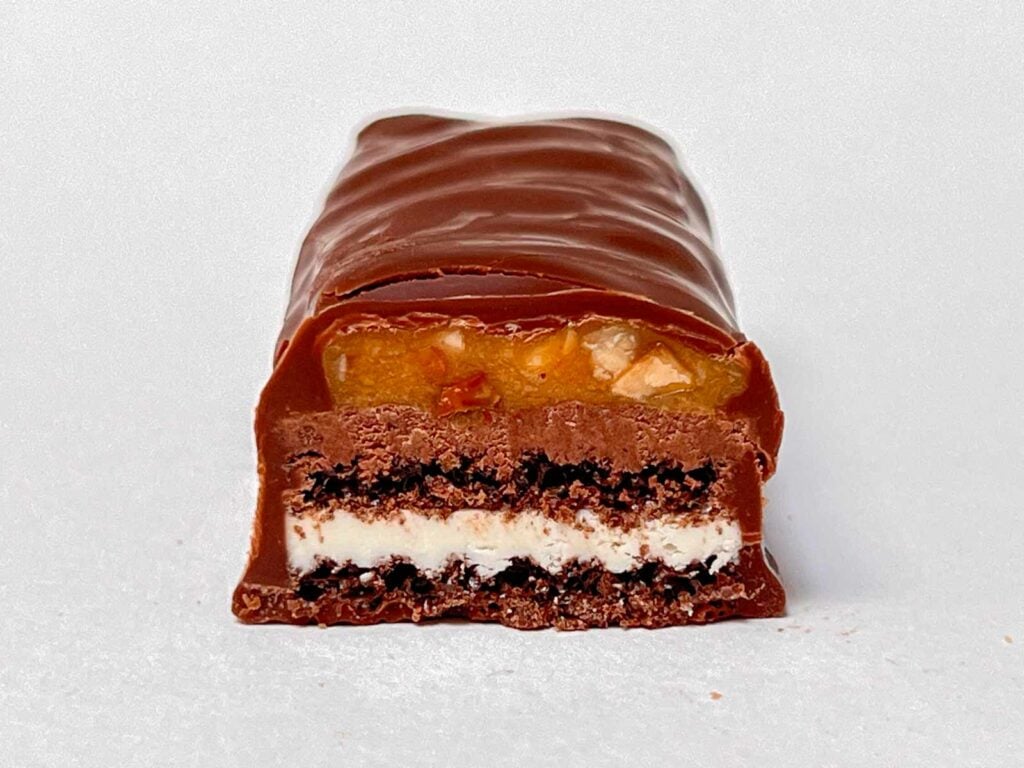
Introduced in 2017 and currently sold in four variations (NutBar, NutBar Dark, PeanutBar and CoconutBar), this Storck candy bar packs a wallop into every bite. The dark chocolate-coated NutBar we bought in Berlin had five layers: a crispy wafer, caramel, milk cream, nougat and chopped hazelnuts. Yes, that’s a lot of layers. And yes, the layers work in beautiful German harmony.
9. Hanuta

Year Introduced: 1959
Manufacturer: Ferrero
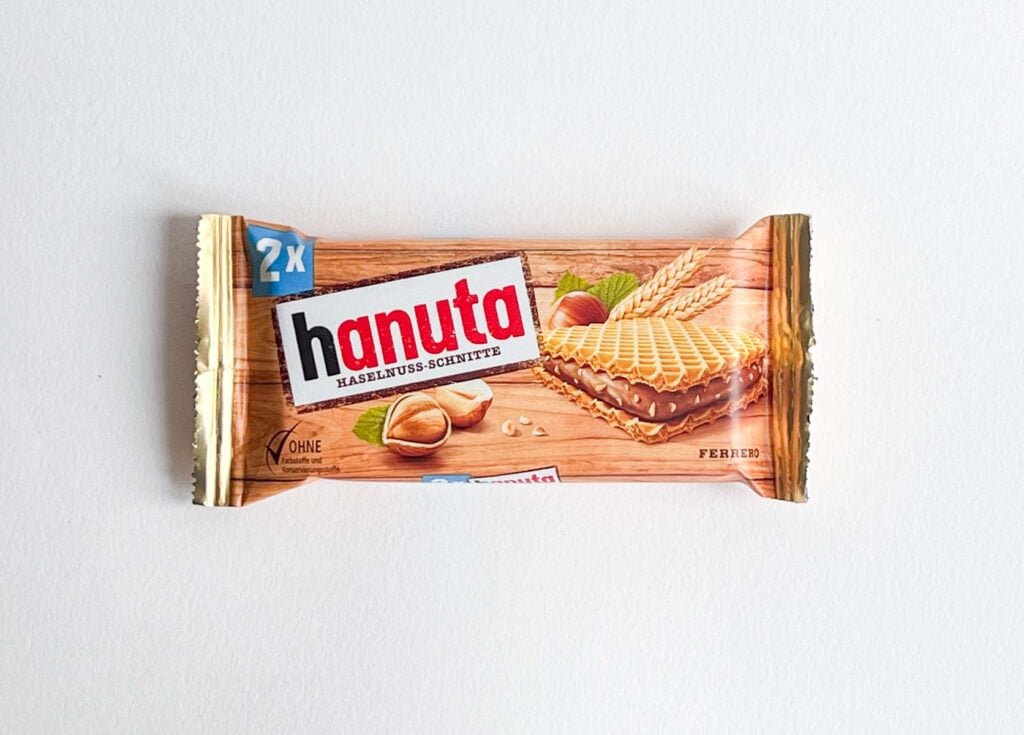
Hanuta isn’t a typical candy bar. It’s also not a real word. (Hanuta is an abbreviation of the German word Haselnusstafel, which translates to hazelnut bar.) Instead, it’s a sandwich with two thin wafers and a thick slab of chocolate-hazelnut cream.
Produced by Ferrero in Germany since 1959, Hanuta is easy to find in Germany as well as in other European countries. We found and bought a Hanuta bar at a Danish store in Lisbon. It hit our candy sweet spot thanks to its satisfying Nutella-like center.
10. Duplo
Year Introduced: 1964
Manufacturer: Ferrero
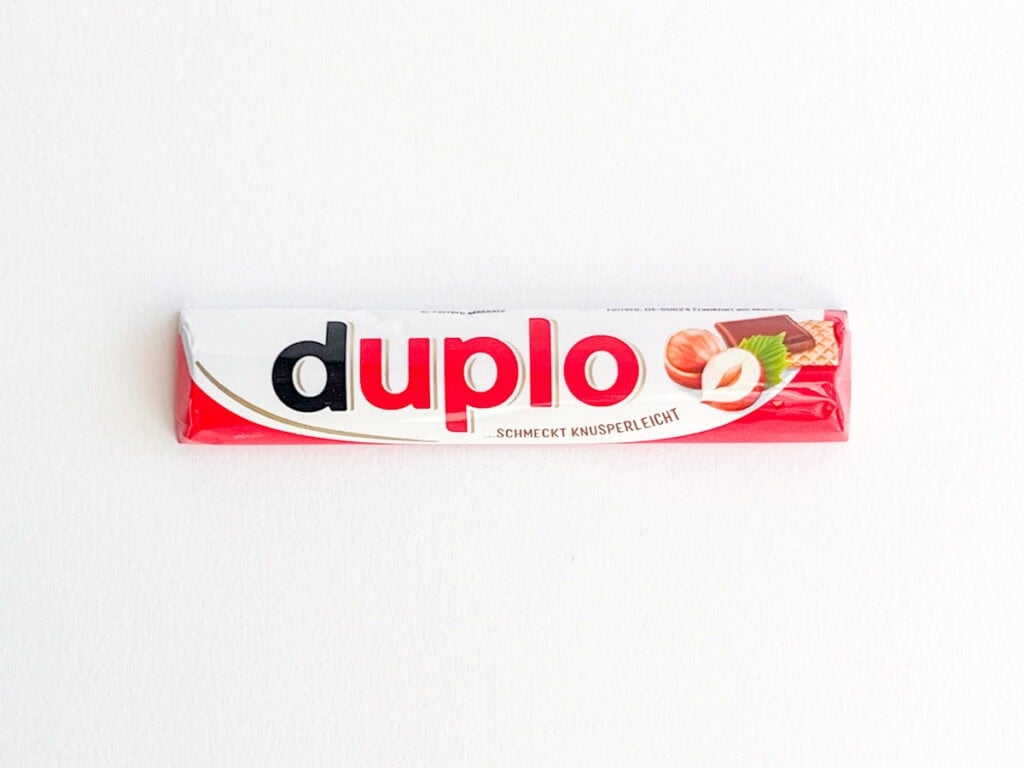
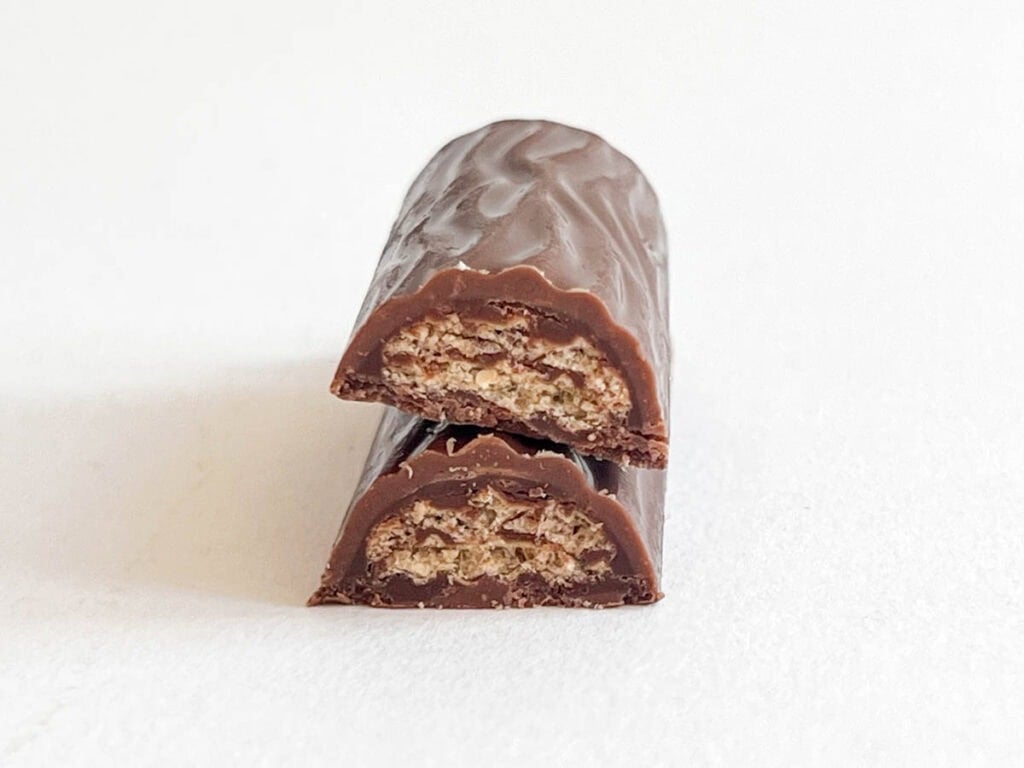
It would be understandable to confuse Ferrero’s Duplo with LEGO’s Duplo toy designed for toddlers. That won’t be an issue after you taste the candy, which layers soft nougat cream and crisp wafers inside a milk chocolate coating. It’s that memorable.
Ferrero launched the Duplo candy bar in Germany in 1964. German supermarkets typically sell individually wrapped Duplo bars in 10-packs with flavors that include Duplo Classic, Duplo Dark Chocolate and Duplo White. In Italy, Ferrero produces and sells a totally different Duplo bar with whole hazelnuts.
Fun Fact
For decades, Ferrero has advertised Duplo as “die wahrscheinlich längste Praline der Welt” (i.e., probably the longest praline in the world).
11. Toffifee
Year Introduced: 1973
Manufacturer: Storck
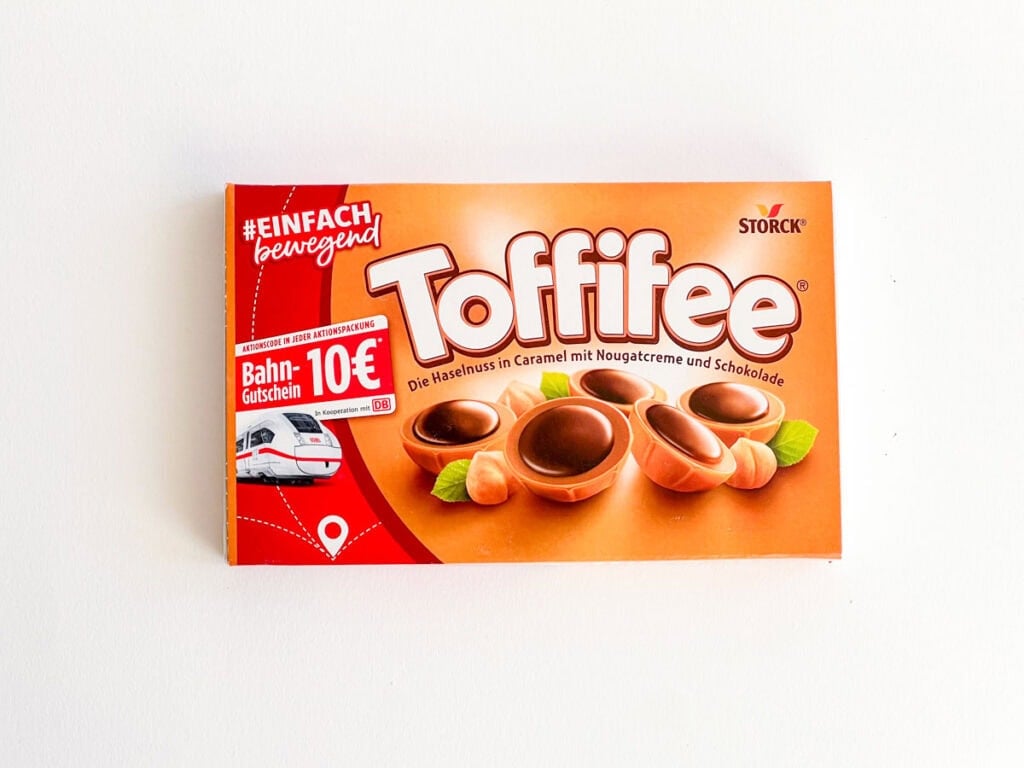
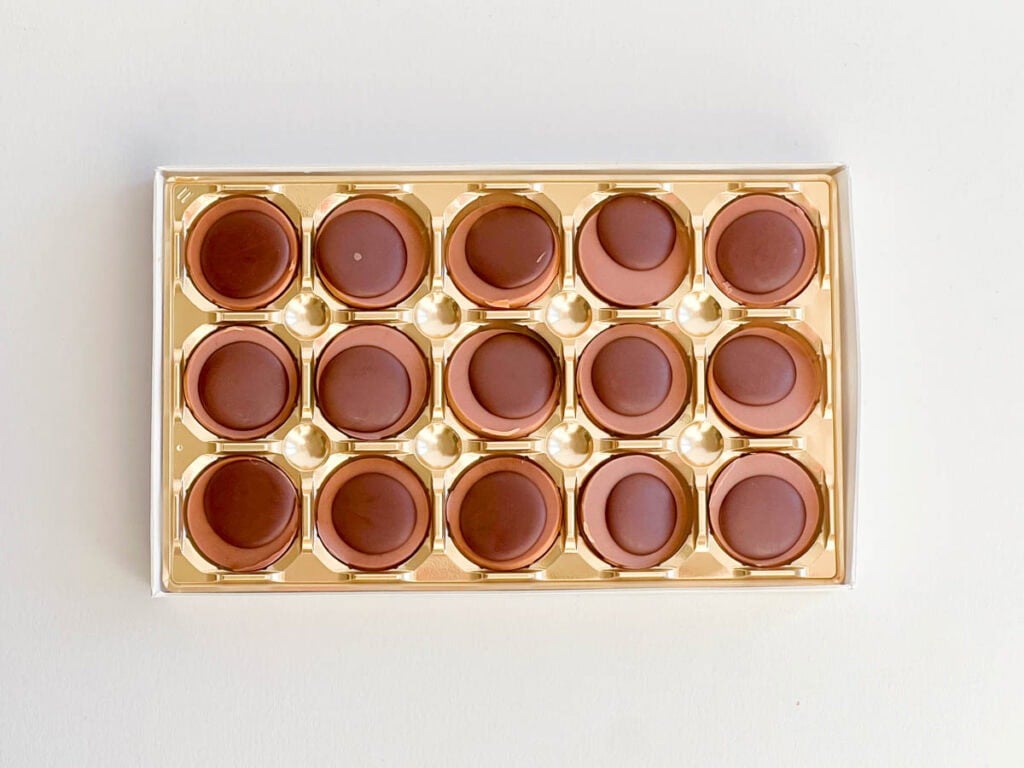
Typically sold in packages with 15 and 48 pieces, each bite-sized Toffifee candy has a caramel shell, a whole hazelnut, nougat cream and a chocolate button. The candy has been popular in Germany since Storck launched it in 1973.
We were initially confused since we knew the candy as Toffifay in the US. But, despite the slightly different name, it’s the exact same candy. We didn’t love the candy in America, where we found it too one-note despite its four layers. We feel the same in Europe.
12. Werther’s Original
 Pin

Year Introduced: 1969
Manufacturer: Storck
Storck released its signature butter candy six decades after the company started selling confections in Werther, a town located in northwestern Germany. Germans called it Werther’s Echte until 1998. Now it’s called Werther’s Original everywhere.
The nostalgic candy, which is now produced in Halle (Westfalen), is popular with octogenarians on both sides of the Atlantic. Storck has introduced additional caramel products, including chewy caramels and caramel popcorn, in an attempt to reach out to younger generations. We’ve tried all of these products and like the cream candies best.
13. Nimm2
Year Introduced: 1962
Manufacturer: Storck
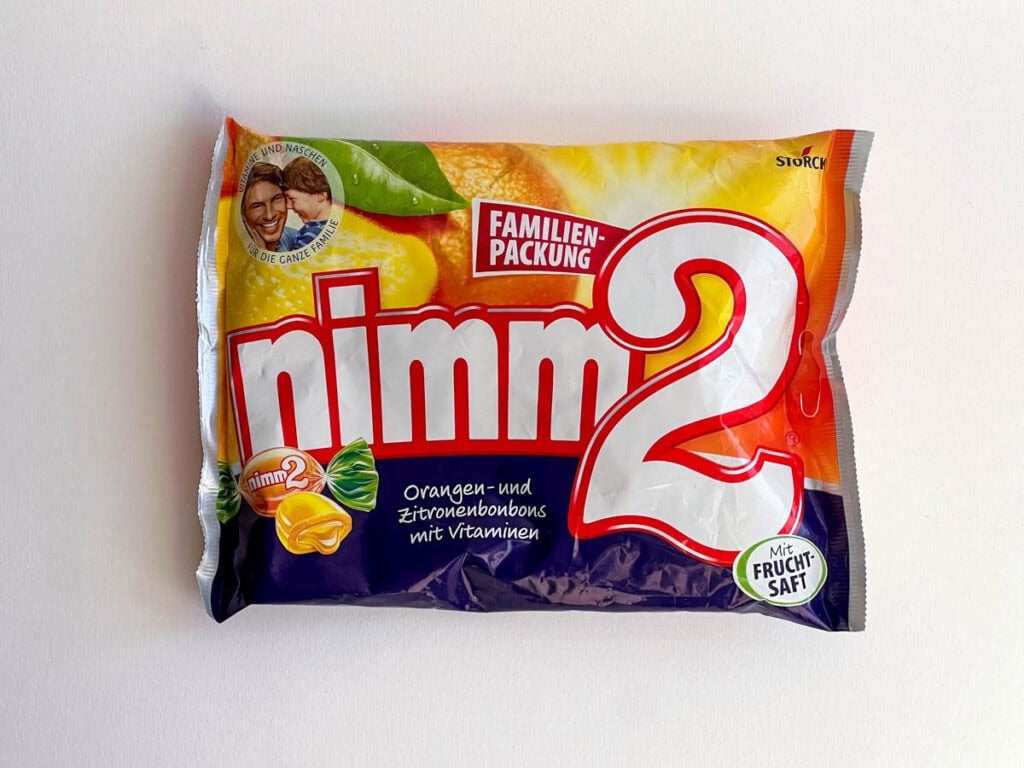
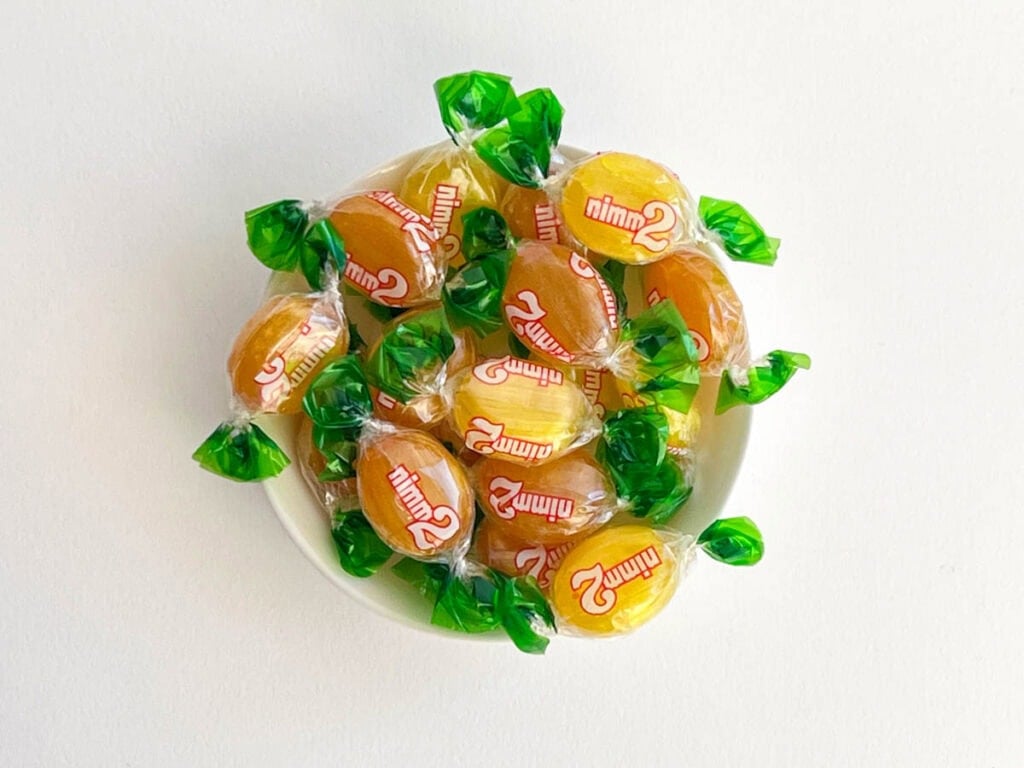
The original Nimm2 (i.e., take two) hard candies had two flavors: orange and lemon. The vitamin-fortified candies also had liquid centers made with fruit juice concentrate. The current Nimm2 roster includes those original flavors plus a red fruit flavor duo: currant and cherry. It also includes vitamin-fortified gummies and lollipops.
We’d never heard of Nimm2 until we started our German candy deep dive. Not able to find the candy in Lisbon, we ordered a bag of the original orange and lemon hard candies online. While we appreciate the bag’s mix of sweet orange and tangy lemon candies, we’ll probably save them for when we have a cold or the flu.
14. Maoam
Year Introduced: 1931
Manufacturer: Haribo
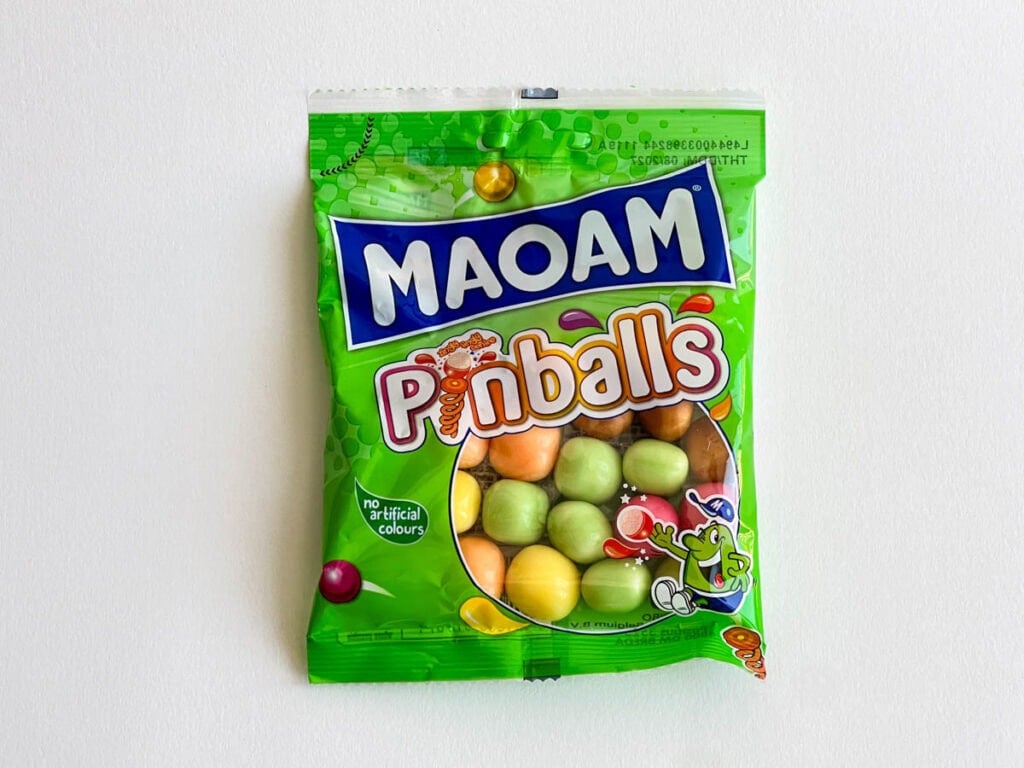
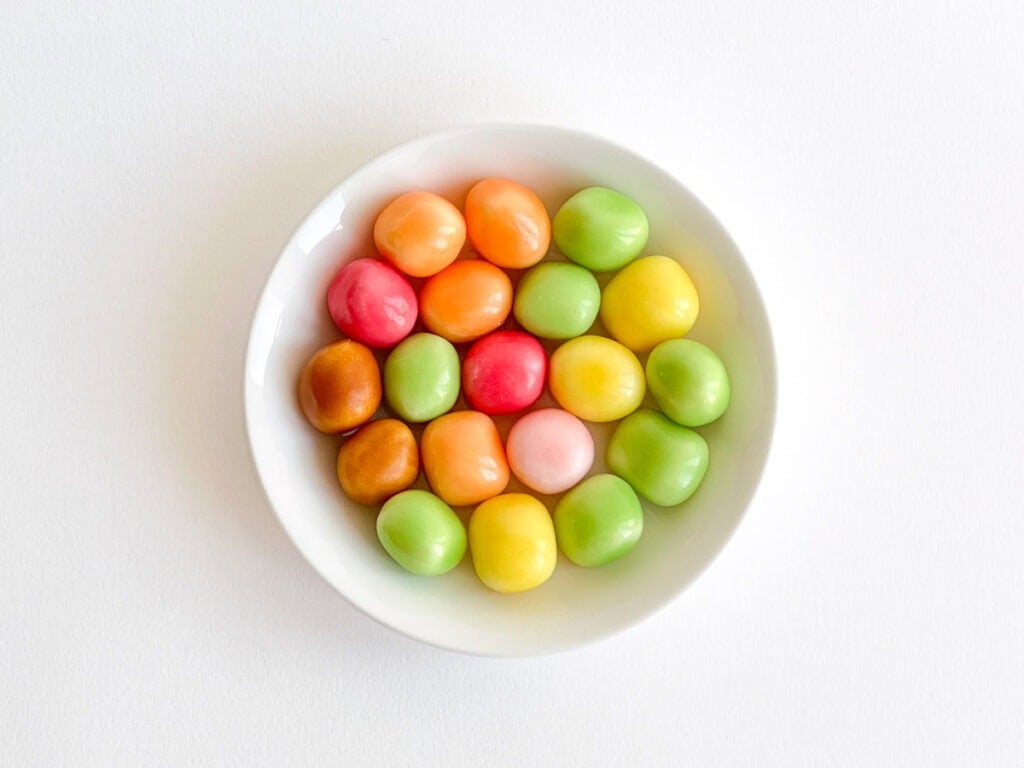
Düsseldorf candy maker Edmund Münster launched his signature Maoam fruit chews in 1931. Haribo bought the company in 1986 and moved the operations to nearby Neuss. Haribo still sells Maoam’s fruity Bloxx chews as well as equally fruity Stripes and Pinballs. We found all three flavors at a Haribo outlet store in Portugal.
Unlike Katjes (see above), Maoam’s chewy candies are neither vegetarian nor vegan. We’re okay with that since we’re candy-loving carnivores without any dietary restrictions.
15. Trolli
Year Introduced: 1975
Manufacturer: Trolli GmbH (Mederer Group)
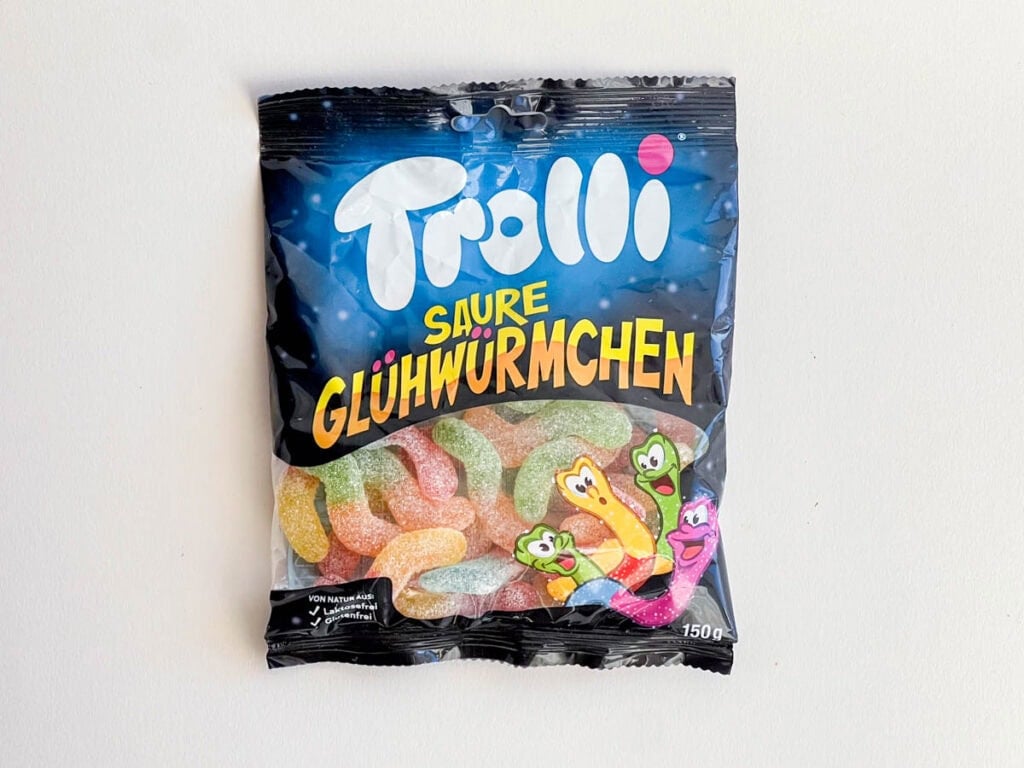
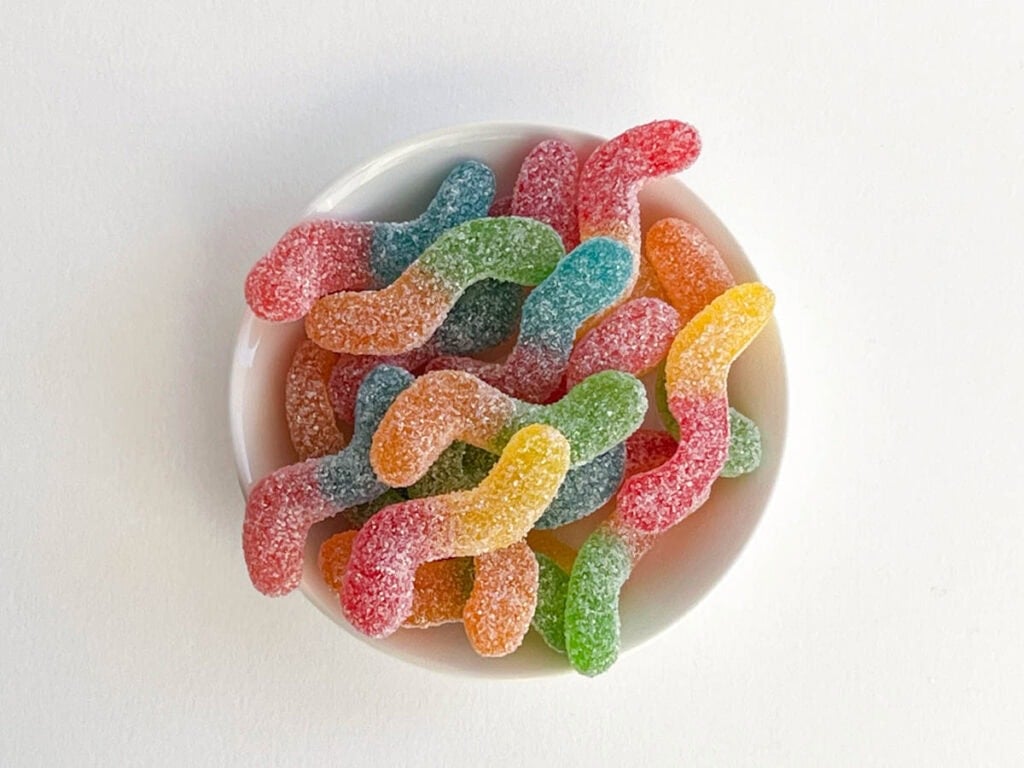
Although Willy Mederer founded his Bavarian candy company in 1948, he didn’t launch the Trolli brand until 1975. It was a good move. Trolli invented the gummy worm, and its Saure Glühwürmchen (i.e., sour glowworms) are the brand’s best-known candy.
Since we couldn’t find the colorful worms in Lisbon, we ordered a bag online. We did, however, find Trolli peach marshmallows and Trolli octopus gummies at local stores. Both colorful gummy flavors were a solid alternative to Haribo. The peach-filled, peach-flavored marshmallows made our peach-loving mouths smile.
Fun Fact
In the US, Trolli candy is made by Ferrara, not the German company Mederer.
16. Dickmann’s
Year Introduced: 1985
Manufacturer: Storck
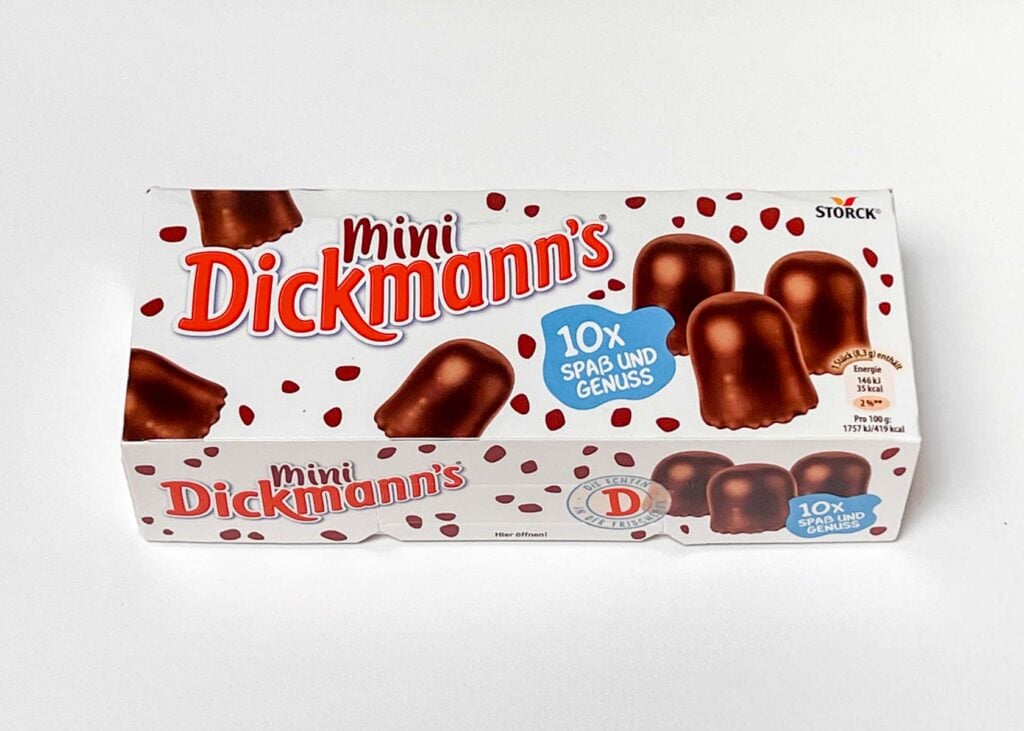
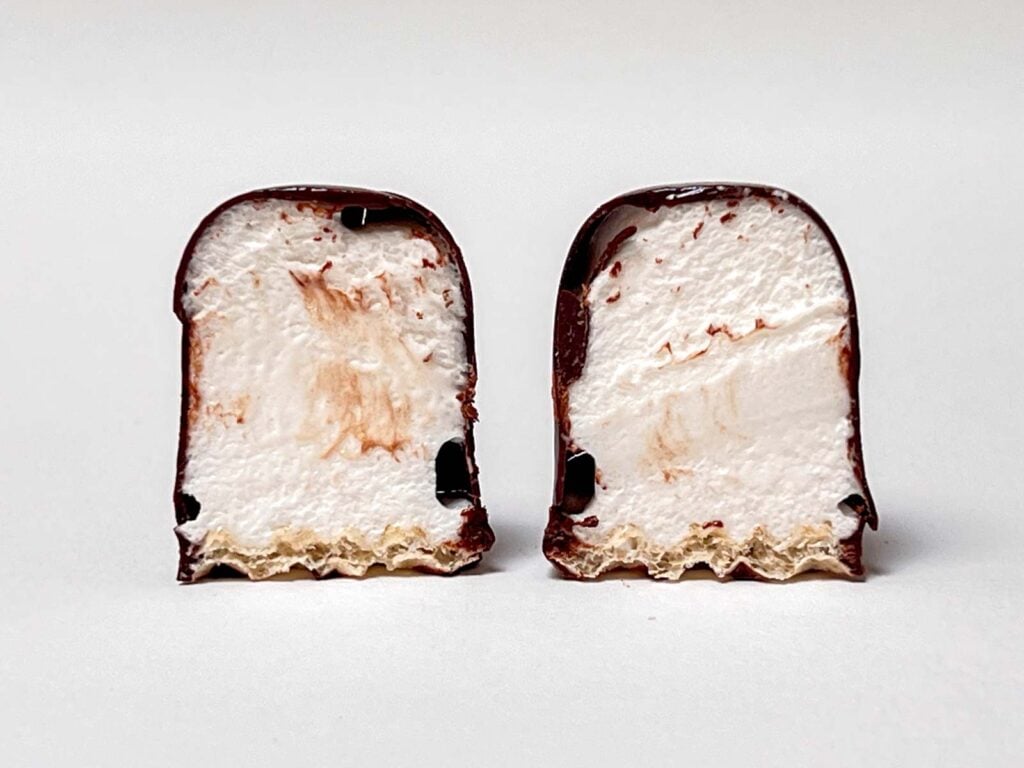
Mini and Super Dickmann’s are Schokoküsse (i.e., chocolate kisses) with fluffy marshmallow-like foam and a wafer base. They’re named after Johannes Dickmann, the owner of Firma Dickmann, a candy company located in Iserlohn. After buying Dickmann’s company in 1981, Storck launched jumbo Super Dickmann’s in 1985 and smaller Mini Dickmann’s in 1990.
It’s no surprise that we enjoyed eating the 10-pack of Mini Dickmann’s we bought at a Berlin grocery store. We previously enjoyed eating flødebolle in Denmark, Mallomars in the US, têtes choco in France and Tunnock’s Teacakes in Scotland. Despite the different names, they’re all chocolate-covered marshmallow treats.
17. Corny
Year Introduced: 1984
Manufacturer: Schwartauer Werke
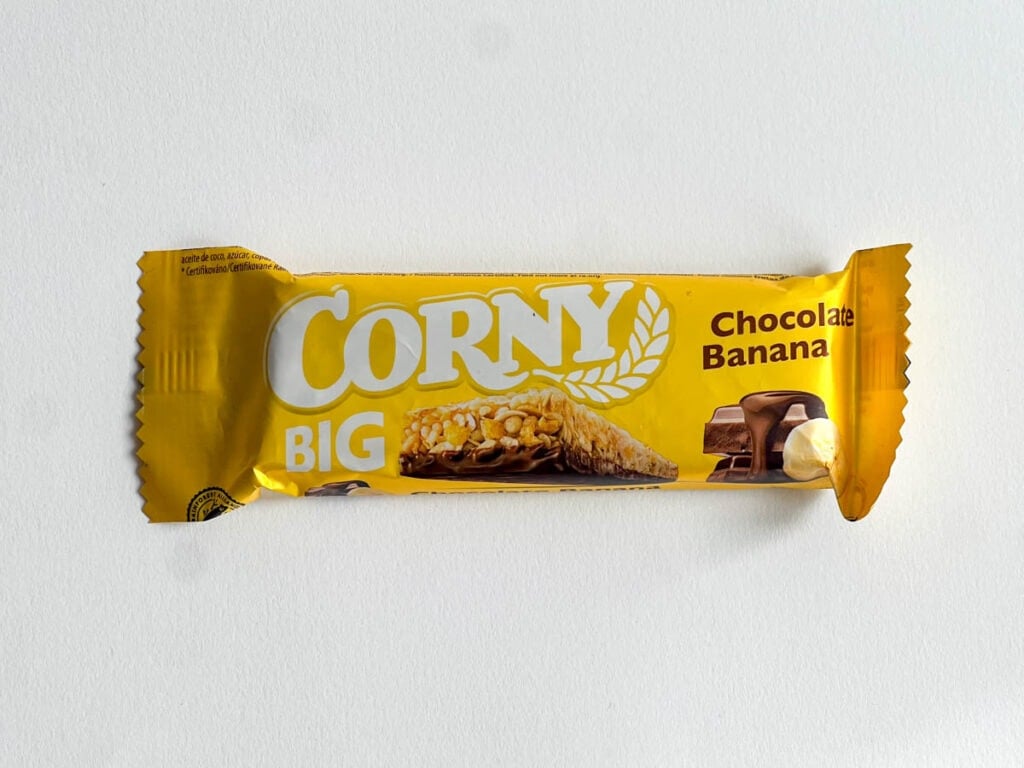
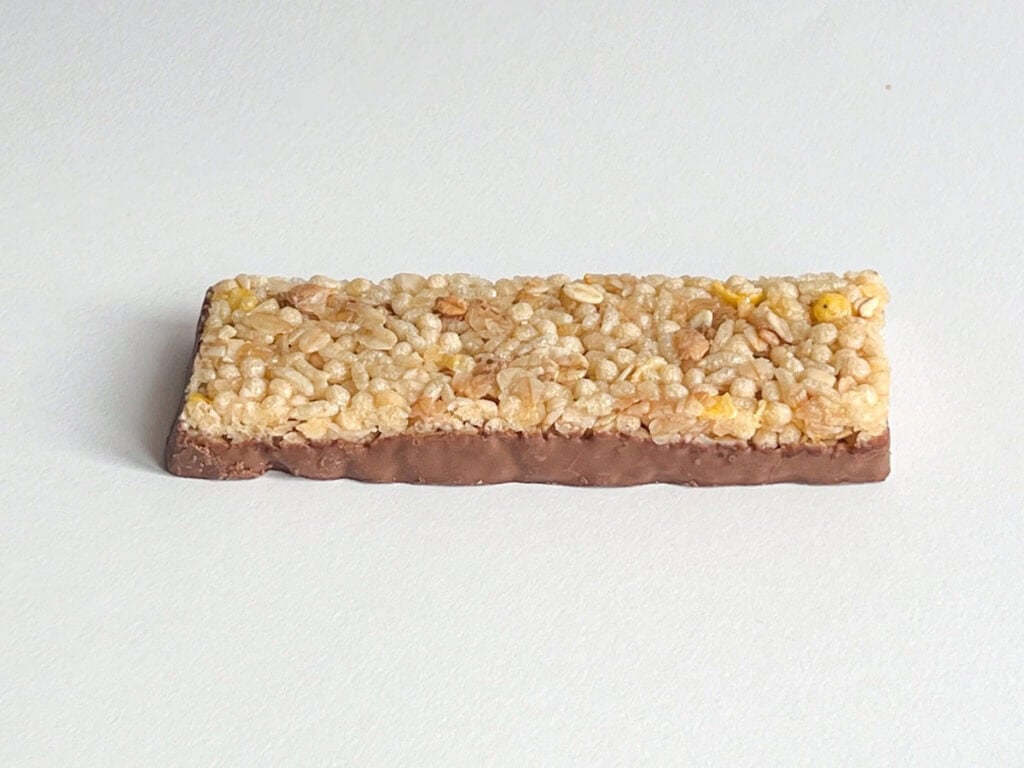
Now owned by Switzerland’s Hero Group, Schwartauer Werke has been producing Corny bars in Bad Schwartau since 1984. The company’s Corny Classic flavors include chocolate and strawberry yogurt. Corny Big flavors are more fun with options like brownie, chocolate banana and salted caramel.
Corny bars aren’t typical candy bars. Instead, they’re Germany’s best-known Müsliriegel (i.e., granola bar). Despite that classification, we consider the Corny Big bar we bought in Lisbon to be a candy bar since it was flavored with banana bits and coated with milk chocolate. The combination satisfied our hunger pangs and sweet tooth cravings in one fell swoop.
18. Schogetten

Year Introduced: 1962
Manufacturer: Ludwig Schokolade (Krüger Group)
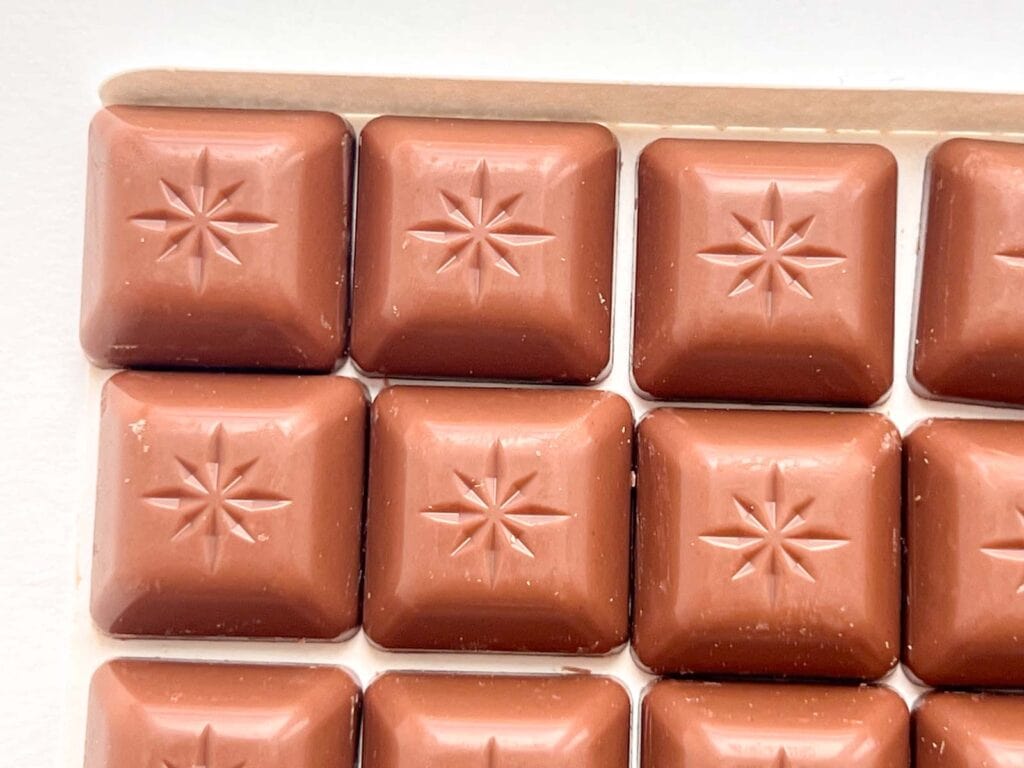
With so many German chocolate bars (see merci, Milka and Ritter Sport above) on the market, Schogetten bars stand out in one specific way. Each bar is pre-cut into individual chocolate pieces. This means that you can eat a flower-stamped square (or two) without unwrapping the entire bar.
Ludwig Schokolade launched Schogetten in 1962 and produces its bars in Saarlouis near Germany’s French border. Schogetten’s classic line includes nutty, fruity, crunchy and creamy bars made with dark, milk and white chocolate. (Our favorite is made with alpine milk chocolate.) The company also produces limited edition bars and seasonal specials. And, yes, all of the bars are divided into individual pieces.
19. Riesen

Year Introduced: 1934
Manufacturer: Storck
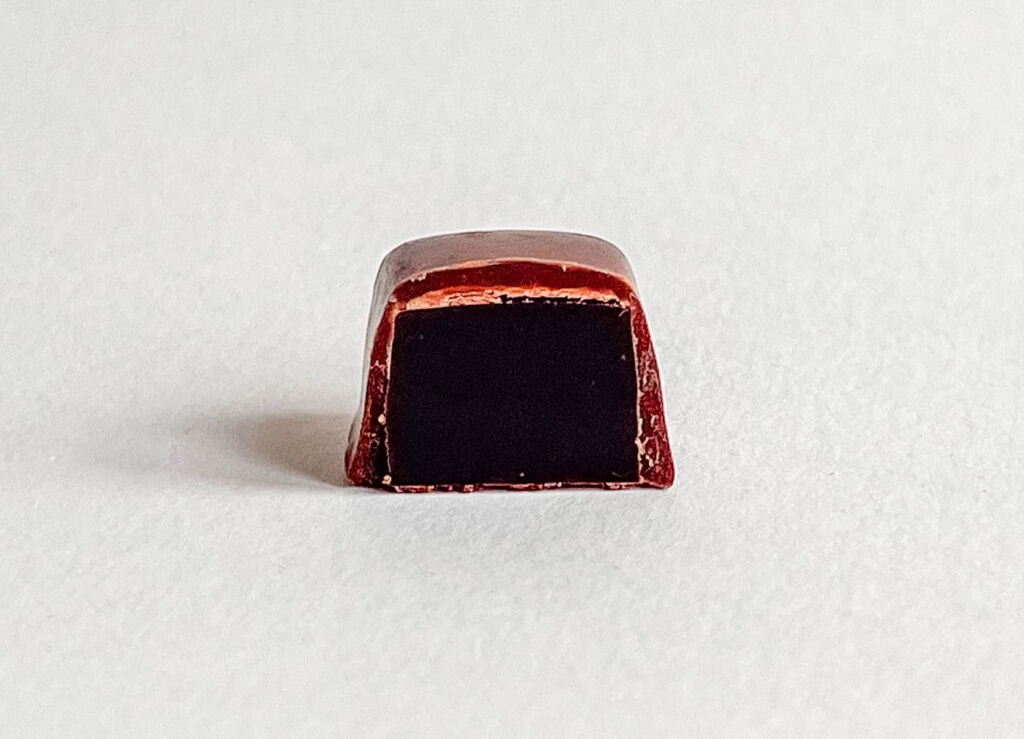
Originally called the Storck 1 Pfennig Riesen, Riesen candy started out as individually wrapped caramels that cost one pfennig each. By the late 1930s, it was Germany’s most popular candy.
While Riesen is still popular today, it’s not the same candy that debuted in 1934. The caramel is now chocolate-flavored and covered with a dark chocolate coating. In other words, there are now two reasons for chocolate lovers to pop a Riesen into their mouths. (Daryl is one of those chocolate lovers.)
20. Mamba
Year Introduced: 1953
Manufacturer: Storck
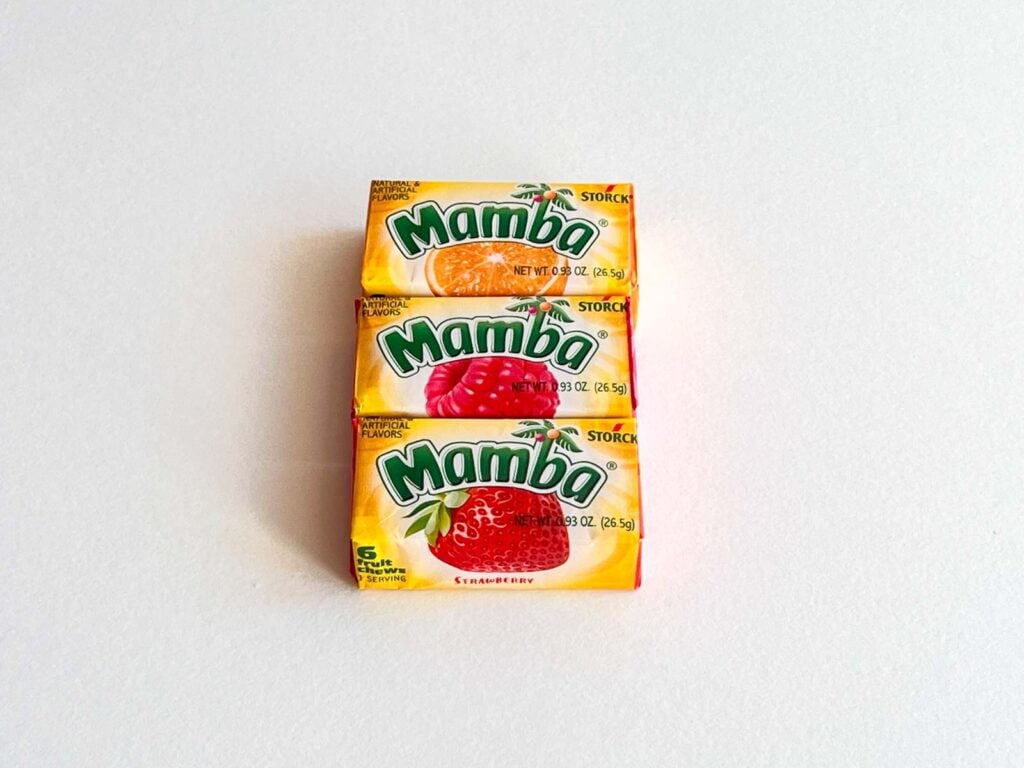
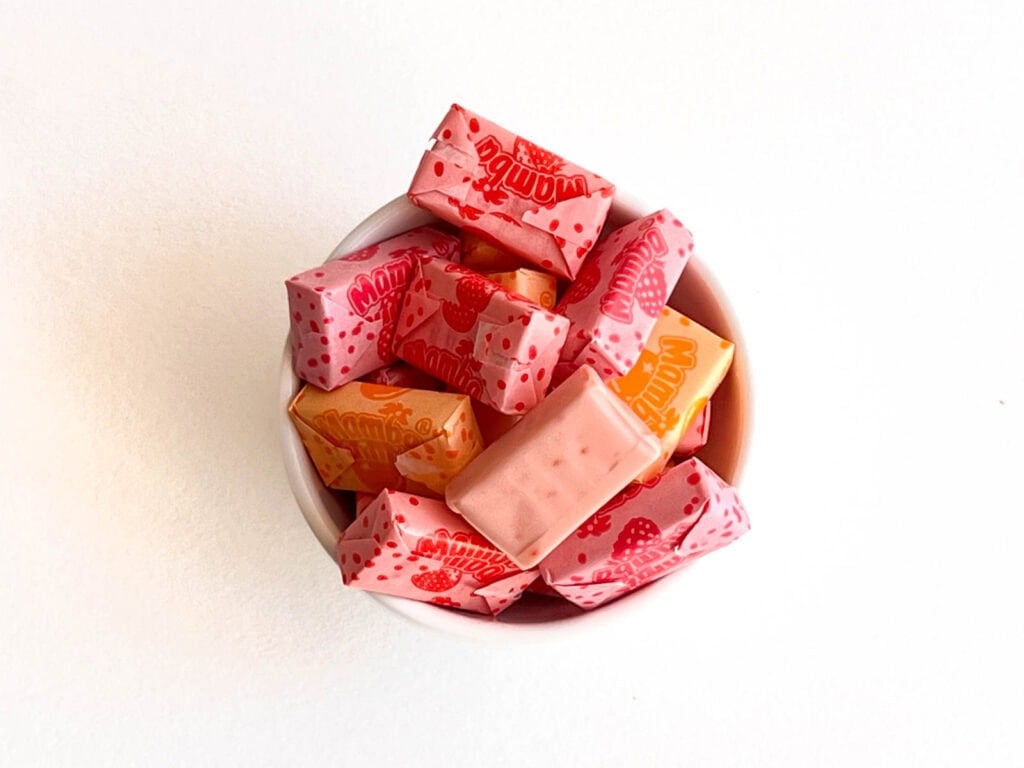
When Mamba fruit chews launched in 1953, the fruity candy became Storck’s second major brand. Back then, the original Mamba flavors were cherry, lemon, orange, raspberry and strawberry. The German candy has since gone global. It entered the US candy market in 1986.
Beyond taking Mamba global, Storck has introduced tropical and sour flavors as well as Mamba Magic Sticks that change flavors in the mouth. While we haven’t yet encountered those magical sticks, we were pleased to find a pack of original Mamba fruit chews at a Bronx bodega. The candies reminded us of softer Starburst fruit chews.
💡 Frequently Asked Questions
Kinder is the brand German shoppers choose most often. Haribo is a close second.
Hans Riegel, founder of Haribo, created the first gummy bear in Bonn in 1922.
No. Kinder is made by the Italian company Ferrero. However, Kinder Schokolade was first developed and sold in Germany in 1967.
Milka started in Switzerland in 1901. Today, it’s owned by the American company Mondelēz International and largely made in Germany.
Check out our picks for the best German food as well as the best German desserts and the best German drinks so you don’t miss a delicious bite or sip.
🎥 Video Recap
🍬 More Candy

The Best Candy in the World
50 British Candy Favorites
Top 50 American Candies: A Complete List

16 M&M Flavors: Ranked and Reviewed
📍 Pin This Article
 Pin
 Pin