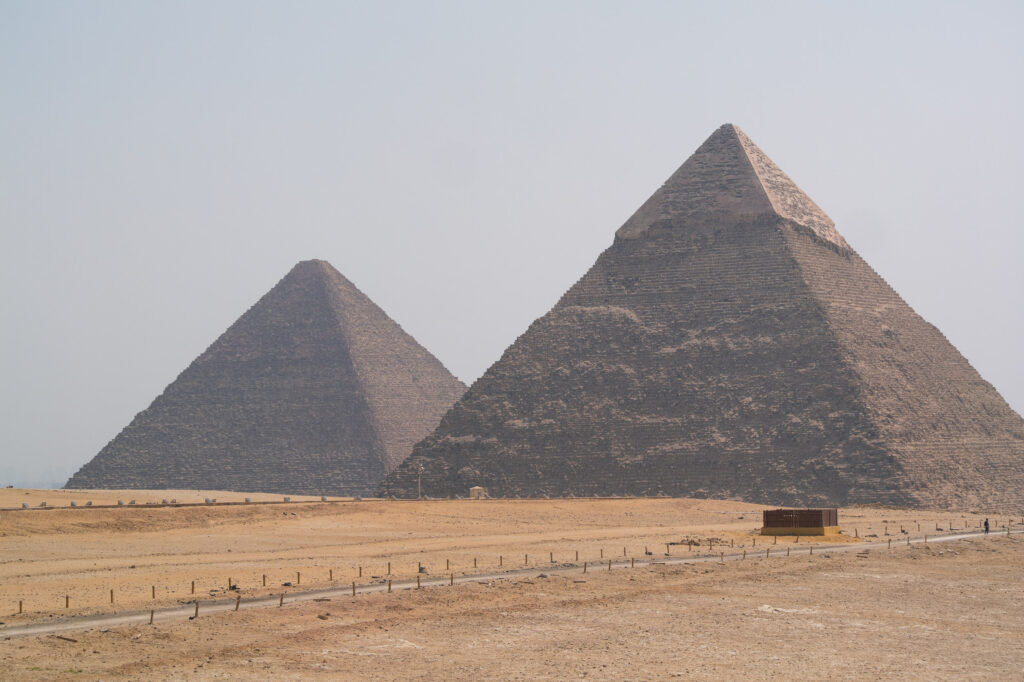
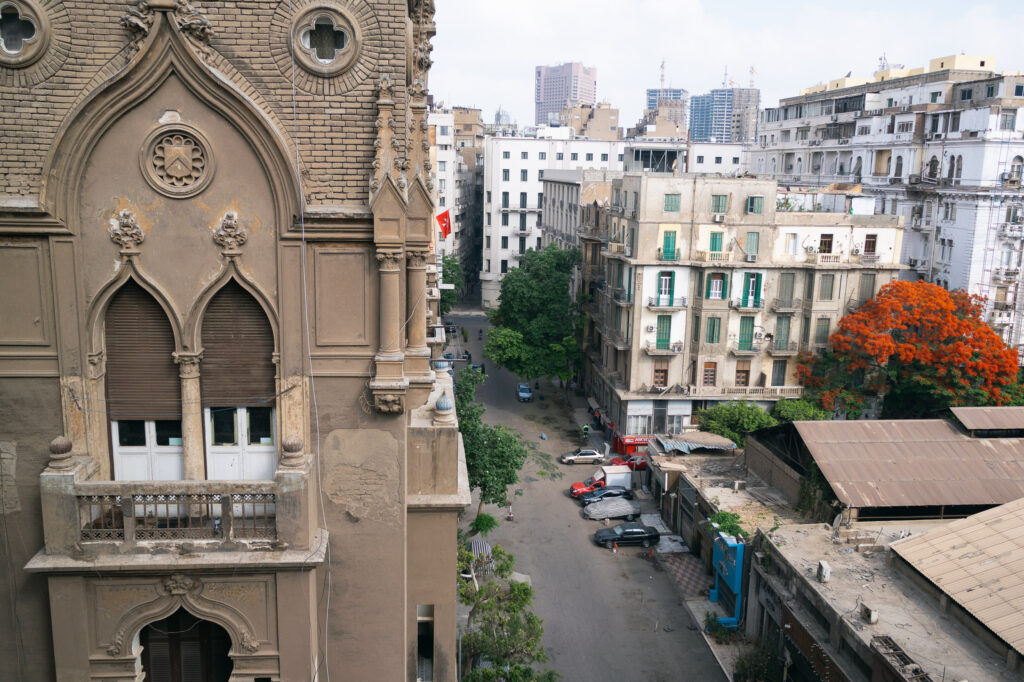
Entering the Giza archaeological zone for the first time, I’d been bracing myself for the worst. For years I’d been hearing how the world’s most famous monument is actually far from a revelatory experience — instead described time and again as an absolute nightmare gauntlet of sellers, scammers, and touts. I took a breath and stepped in.
So imagine my surprise when I simply found myself contemplating, alone and unbothered, the sheer impossibility and majesty of the Great Pyramid of Khufu. I wandered the site for half a day, immersed in the wonders of Ancient Egypt, and was only once (and only briefly and politely) approached by one camel rider.
Oh dear… was the internet wrong?
Actually, Egypt has changed quite a bit recently, but its past reputation lingers. Just browse some threads on Reddit about ‘the worst countries to travel to’ or ‘places you would never go back to,’ and it seems like half the responses include Egypt. I’d avoided visiting for this reason, and I suspect I’m not alone.

I’m glad I finally gave Egypt a chance because it’s really not as bad as I’d been led to expect. While Egypt definitely comes with its challenges — and at times I recognized some of the common complaints — I’m relieved to say my trip was positive overall.
That may be partially down to how I approached the trip, but I also think there have been some genuine changes in Egypt over the last six months to a year, particularly in Cairo, that have made things a lot easier.
Which brings me to my first tip.

1. Beware of outdated travel guides
If you’re researching an Egypt trip, be sure to actively check when the information was published.
A lot of the guides I read beforehand were substantially out of date — and it felt more so than other destinations I’ve researched over the past few years.
I came across a lot of vlogs and blogs that weren’t yet talking about the new Grand Egyptian Museum or how the situation at Giza has completely changed. Some sources even still reference the security challenges Egypt had a decade ago. Many of the top-ranked Google results for Giza, Cairo, and other hotspots — at least when I was doing my research — seemed to be still from another era.
This is not a dig at other travel blogs. I know not every page on the internet can be kept up to date; I’m just highlighting how it seems to be a bigger issue with Egypt in particular. This article will eventually become outdated too, but writing this in 2026, I can give you a more current picture.
Note: My trip focused mainly on northern Egypt and the Sinai, with an extended stay in Cairo. I haven’t yet been to Aswan and Luxor, which I’m keeping for a future trip. However, the following tips should all apply to Egypt generally.
2. Taxi scams and how to properly use Uber
I heard so much about taxi scams before coming — overcharging, meter tricks, aggressive demands for more money than was agreed. The reality is that you can bypass 90% of the potential issues by just using apps.
There is Uber in Cairo and I strongly recommend using it. You’ll get transparent pricing and it’s totally straightforward. Uber is not available everywhere in Egypt, but in other places you may be able to use InDrive, a roughly similar app. Your accommodation can also set you up with a trusted driver if needed.
That said, there is still some scammy behaviour even with Uber. If you book a ride and the driver doesn’t appear to be moving (just sitting in one spot) and they open a chat in the app and try to convince you to cancel and pay cash instead, just cancel the ride and request someone else.

My first run-in with this was right at Cairo airport. I’d booked my Uber, and a guy showed up with a car that was different from the one in the app. He pressured me to cancel and offered to take me to the city for “only $15”, which was at least three times what the app was showing. I could see exactly what was going on, so I just told him “no thanks, I’ll take a real uber” and got out of the car. He seemed genuinely shocked that I’d just bailed. I booked a real Uber, a proper driver showed up, and he took me for the normal fare.
When they see you waiting for an Uber ride, taxi drivers will also try anything to convince you that Uber doesn’t work, is illegal, or won’t go where you’re headed. All of this is nonsense. You’ll have to be sure-footed and just ignore them completely.
Whenever I got a proper Uber driver in Cairo, the experience was actually seamless. They were super friendly and wouldn’t even ask for a tip or a star rating. I still gave them a generous tip through the app, because I think tourists should pay a bit more than locals — but only if they provided a low-stress service.
I do recognize that even having to stay vigilant while booking Ubers is not everyone’s idea of “easy travel”. And especially if you’re a less experienced traveller, being besieged by taxi drivers offering rides may feel like a high-stress situation — and people respond to stress in different ways.
I’m not claiming that navigating Egypt is always a casual walk in the park, but things seemed at most ‘medium difficulty’. It will help if you’ve travelled in more chaotic or developing countries before.

3. Dealing with touts and sellers
It’s true that touts and aggressive sellers are everywhere (but especially, and predictably, at markets). This can honestly spoil the fun if you are just having a stroll or casual browse.
My own personal filter for interactions is quite simple. People who approach you spontaneously are probably going to try to sell you something or mislead you. People you approach (such as in restaurants, hotels, or in general public) tend to be genuinely warm and friendly.
In my world travels I’ve had plenty of practice ignoring unsolicited approaches, but even that got tested here. Coming out of the GEM museum with my Uber already booked, I was just waiting outside the gates for a few minutes. In the span of about five minutes, ten different taxi drivers came up to me: “good price, good price, you come with me.” It can be very hard to get them to back off.
You can say “no, I don’t need a taxi” — or in Arabic: laa, laa, shukran (“no, no thank you”). A good mnemonic is to think of “lalala, I can’t hear you!” to remember how to say no in Arabic. I also tend to just simply turn away from whoever’s approaching necessary, not even bothering to make eye contact.
However, in that situation outside the museum with like ten people at once, I was basically spinning in circles like Pac-Man dodging ghosts, and it wasn’t working. So I just retreated back into the parking lot and waited there until my Uber arrived, then walked back out. I should say this scenario happened only once, but it’s just to say that sometimes all you can do is eject from the situation completely.
4. The Giza plateau: better than you’ve heard
Okay, maybe my tips at this point already make it sound like Egypt comes with a very thick user manual. So let me now tell you about Giza, a place where you can safely throw away the old manual.
I had been warned that the Pyramids of Giza would be a nightmare — a place where you’ll be besieged by sellers, camel touts pressuring you into rides and then demanding far more than agreed, and more. I was genuinely bracing for a bad experience, but it turns out everything at Giza has changed.

It’s a meaningfully different experience now from what’s described in most older content. Site management changed in late 2025, and since then, things have been properly cleaned up.
There’s now a free shuttle bus that takes you to all the major points on the site, so you don’t need to rely on camels or horses to get around (those are now purely optional if you want a photo opportunity or an “arrive in style” moment). There’s also been a real crackdown on touts and sellers, who are now only permitted in a specific area.

I walked around the whole site independently, without a guide, without being bothered by anyone — just as you’d expect to be able to do at any other world-class heritage site. Old advice said you need a guide specifically to bat away all the annoyances, but that’s not the case anymore.
There are now cafes on site with AC where you can have a coffee with a view of the pyramids. Camel prices are also standardised, and the operators have to pass assessments and the animals have to go to the vet, which makes the animal welfare side slightly better (I’m not able to say with confidence how well the rules are actually followed though, so use your own judgment).


The one area that still has sellers is the market section of the site. I overheard other tourists engaging with them, noticing the prices were ridiculous, and then the seller going into a classic routine: “… but madam things are very expensive in Egypt, I had a lunch for 40 euros!”. You can tell immediately that it’s nonsense. My advice is not to buy souvenirs in that area and just focus on the archaeological site.
For more practical tips on the best time to visit Giza, how the ticketing works, and more, be sure to check out my detailed guide to Cairo.
5. My markets survival tips
The one place where you should still mentally prepare yourself is the markets. Obviously you’re willingly walking into a high-pressure sales environment, and that dynamic definitely still exists.
If you can let it wash over you, great. But if you don’t like that kind of environment or you’re less experienced with that kind of thing, consider going with a local guide for the first time.

In Cairo, I used Guruwalk for free (donation-based) walking tours. The difference from other platforms of this kind is that on Guruwalk you can see exactly who the individual guides are, how well they’re rated, and what they specialise in.
My guide for Cairo’s markets did an excellent job giving me the historical background and showing me the hidden corners of the bazaar, turning what could be a potentially stressful experience into a really good one. You can also find local guides on GuruWalk for Alexandria, Luxor, Aswan, and the Siwa Oasis, among other places.
more details on the free guide i took
6. My blind spot: solo female travel
I should say at this point that I’m a guy, so everything here is seen through a male traveller’s lens. This can actually make a big difference: Egypt has a very mixed reputation among (solo) female travellers due to unwanted attention from men, catcalling, and other annoyances.
I’m fully aware of these issues in a reputational sense, but I should also say that as a man travelling in Egypt, they are also 90% invisible to me personally. So keep that in mind if you’re a woman, you may wish to read some female bloggers’ takes to get a more rounded impression.
I’ve met solo female travellers in Egypt who considered the challenges manageable. I’ve also heard, mainly from travel forums and chat spaces, from many who consider Egypt “not worth it” and who recommend going only as a couple or group or taking a fully organized tour.
For what it’s worth, serious crime seems rare in Egypt, which is ruled with a pretty hard fist. However, inappropriate situations appear to be widespread. On my trip I heard of a female traveller had her butt groped by a local man in the bazaar while on an organized tour, so even being in a group doesn’t guarantee you’ll be left alone.
A piece of travel advice you see often is not to go on a tour one-on-one with a male tour guide in case they get creepy. Luckily there are also female guides to choose from. In a group tour setting, there are also fewer risks of any unwanted situations involving the tour guide itself.
Based on my limited male perspective, I’d say that on random streets and markets it can be particularly troublesome being a woman traveller in Egypt. However, there are certain distinct safe/relaxed bubbles you can navigate between – for instance, Giza and the Grand Egyptian Museum are very regulated spaces where you can let your guard down. These, plus the ‘bubbles’ of organized tours or day trips, can still let you travel more or less independently.
But in any case, I believe having some travel experience under your belt will be very useful if attempting a solo female trip.
7. “Bakshish”: the tipping culture
Separate from scams, there’s the Egyptian tipping culture called “bakshish” — the expectation that if someone helps you, a small tip is appreciated. We’re talking very small here: usually 20–50 Egyptian pounds, which is under a euro or a dollar. This comes up in situations like hotel porters helping with luggage, or cleaners in public restrooms.
Some takes on Egypt seem very negative about this, but I think that’s a bit unfair. These are often people not earning much, and a small tip for a legitimate service does no harm. Of course, if someone insists on ‘helping’ you when you didn’t ask or want it, and then still expects bakshish, it’s totally fair to ignore that. But if someone genuinely does something useful, what’s the harm in giving them a small tip?

I should mention here that bakshish isn’t just for tourists. If you’re a more affluent Egyptian, you’re also often going to be asked for bakshish. That’s why I don’t think this fits under the same header as scams or begging; it’s more of a way for a country with huge levels of inequality to help each other out a little. It’s just done in a way that maybe you’re not used to.
A practical tip: be sure to break larger bills into smaller change whenever you have the opportunity, so you’ve always got something to hand. I gave bakshish only a few times on my trip though — a porter here, a cleaner there, but that’s about it.
One caveat: in official contexts like airport security, there are often signs explicitly saying not to give money. In these situations, just follow these signs.
8. People offering tour guide services
Occasionally, you might get approached by freelance tour guides just wandering around certain sites looking for potential customers. In my experience, these tend to be respectful offers, and they’ll leave you alone if you’re not interested.
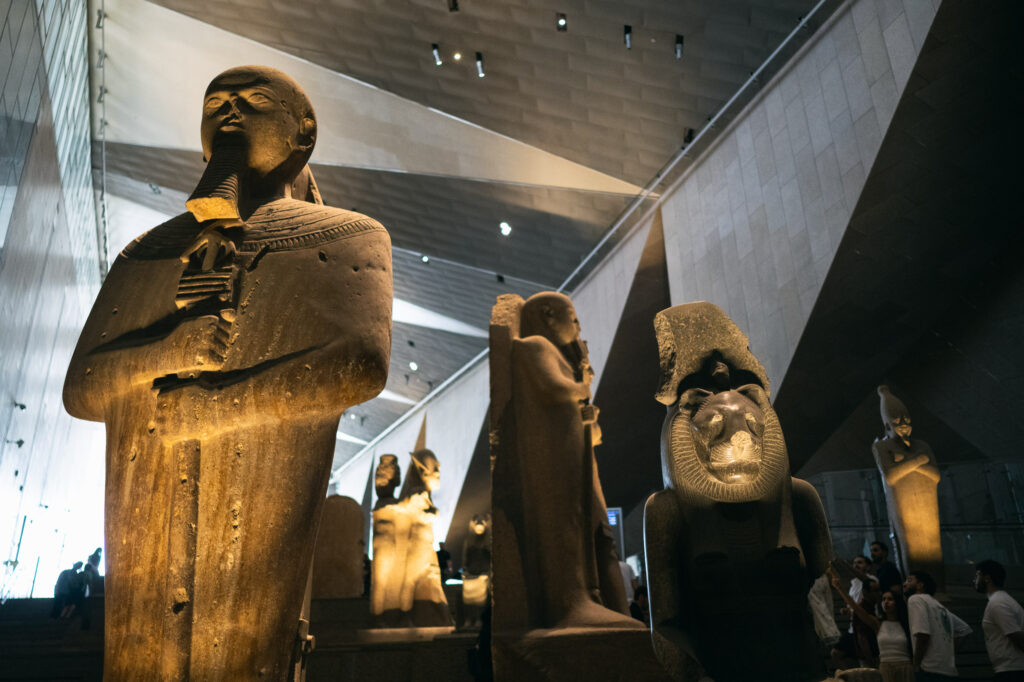
It happened a few times in the Grand Egyptian Museum. This brand new museum is brilliantly laid out and you can explore it completely on your own without anyone bothering you. That said, there are some official guides who’ll introduce themselves, explaining which languages they speak and that they can tell you more about the exhibits. They leave you alone if you’re not keen.

Similarly, at the Citadel in Cairo I was approached by someone flashing an official tour guide badge and the offer to take me around. When I said no thanks, they just said “no problem, I’ll be here if you change your mind.”
There seems to have been a deliberate instruction to these guides not to harass people, at least in the officially managed sites.
9. Cameras and filming at sites
One more thing I’ve often seen mentioned as a negative for Egypt is actually not so much of a problem at all, as long as you’re aware and you follow the rules.
For commercial shoots at archaeological sites, you actually do need a permit in Egypt. If you just show up with a phone, an action camera (like a GoPro), or a small compact camera, that won’t be an issue at all. However, if you show up with full professional camera rigs — tripods, microphones, the lot — then you’ll probably get stopped by security asking for permits.
One reason this issue gets blown out of proportion is that most vloggers and content creators with a wide reach fit into the latter category, even though they’re not really a ‘professional film crew’. I understand their frustration, but their lengthy video rants on the subject seem really just like venting, because the average tourist will never have to worry about it.
Your luck may vary, but here’s how it personally went for me. I actually came to Giza with a mirrorless camera, two extra lenses, an action camera, and two monopods, and the only thing they wouldn’t let me bring in was my microphone.

They know that professional videographers won’t even think of filming anything without proper audio, so that’s where the main cutoff is for them. I simply filmed using the internal mic, and even did about 20 minutes combined of A-roll takes at Giza without anyone ever tapping me on the shoulder.
At another historical site, I recorded multiple A-roll takes standing within direct line of sight of a security guard who was utterly unbothered. So I’m just going to say that vlogging in these places is fine.
It probably helped that my micro four-thirds camera is by its nature on the smaller side. If you use a bigger system, or big tele-lenses, you may not have as much luck.
The mic, by the way, I could leave in a locker at security to collect again later. It did take some bakshish for them to release it, but that’s just how it goes in Egypt.
The larger your rig, the more scrutiny you can expect. There’s one absolute though: don’t bring a drone. They’re not permitted in Egypt and will likely be confiscated at the border.
For the 95% of tourists who travel without professional gear, there won’t be any issues.
10. Budget and final thoughts
All in all, I had a great experience in Egypt — and I encourage you to read my specific travel guides and check my vlogs (when they’re posted).
When you go down the rabbit hole of reading travel tips for Egypt, you could be left with some negative impressions. However, the day-to-day experience is still very rewarding, especially when it comes to the wonders of the Ancient Kingdoms and the underwater wonders in the Red Sea.


The costs were also a big positive surprise. The exchange rates are currently very favourable, so for things like food and accommodation, the costs are very low. I had a room in a boutique hotel in central Cairo for about Approximate — rates updated daily per night.
While it’s cheap, I’d recommend not pushing yourself onto the lowest possible backpacker budget. Having a little financial buffer means that if you do get slightly overcharged somewhere, it’s annoying but not devastating. If giving just a little bakshish will be a painful experience for you, maybe leave Egypt for another day.
Personally, I was travelling a little more “flashpacker” style on my trip (e.g. slightly nicer accommodation, taking Ubers) and that made the whole thing run more smoothly.

Overall, I expected Egypt to be much harder than it was. There are stressful moments for sure, but as a medium-difficulty destination, it’s been well worth it.
Contrary to those Reddit commenters I’d read (whose opinions I respect), I actually do plan on going back in a few years — specifically, to tackle the classic Aswan/Luxor that I’ve been saving for next time.