The world-renowned English designer behind Azabudai Hills and Olympia is on a mission to make buildings that better serve our wellbeing.
Banal buildings are bad for us. They are the design world’s equivalent of ultra-processed food. Such edifices fail to provide emotional nourishment, not only to the people who live or work in them but also to an often-ignored constituency: the people who have to walk past their dull façades every day.
This is the view of designer Thomas Heatherwick, whose global projects span the wave-roofed Azabudai Hills retail scheme in Tokyo to the just-opened Olympia redevelopment in west London. For the latter, Heatherwick has created a dramatic elevated street that runs across the roof of the revitalised entertainment and exhibition site.
Now, Heatherwick is out to get us all thinking big and off the “fast-food design diet”. He aims to do this by providing developers and architects with data that shows the risks posed by bad architectural design – and the opportunities that come with improving it – via a new not-for-profit research organisation called Humanise.
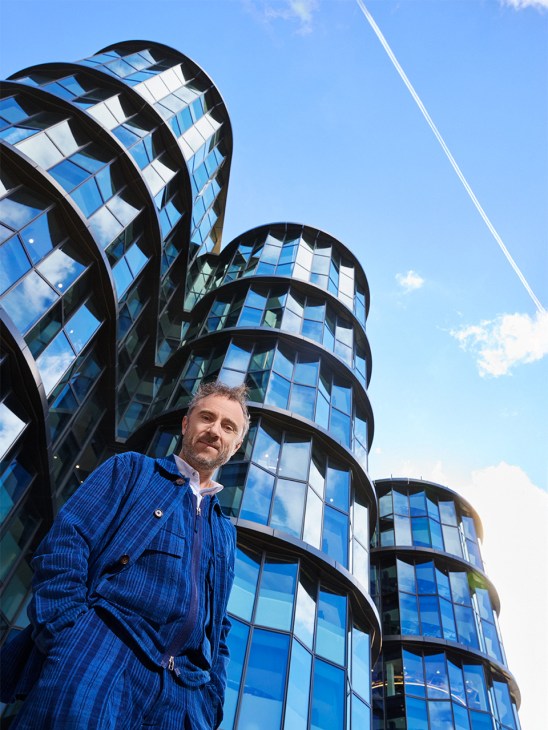
“It has been looking at how buildings affect our health,” says Heatherwick, when he visits Monocle to record an episode of our podcast, The Urbanist. “It’s so obvious that the buildings around us will have an impact on our health but our industry has not been measuring the impact on society or on passers-by of what we build. We’re in an industry where, if the public doesn’t like what we do, we say that they’re stupid.”
Of course, there are also risks if you always go for the experimental and the daring. Costs can balloon and delivery timelines can stretch. Plus, some people don’t like architecture that looks novel. Heatherwick has, in the past, been hit with all these criticisms but he has weathered them and mostly come out on top with public opinion swaying in favour of his work.
“Where is there cultural confidence to dare to make places that are generous and give back to society?” he says. “When [you lack] that confidence, you get this sort of inward spiralling [and think] ‘Oh, we’d better be safe!’ Then you end up with places that no one cares about and – surprise, surprise – they’re not commercially successful and end up being demolished in 20 years.”
Heatherwick makes an important point. Buildings that are hard to love quickly find themselves ignored by potential tenants and are eventually regarded as unwanted stock on a landlord’s inventory. We cannot, however, keep swinging the wrecking ball at jilted real estate because the carbon costs involved are unsustainable. It’s vital that we create architecture that people are drawn to and cherish.
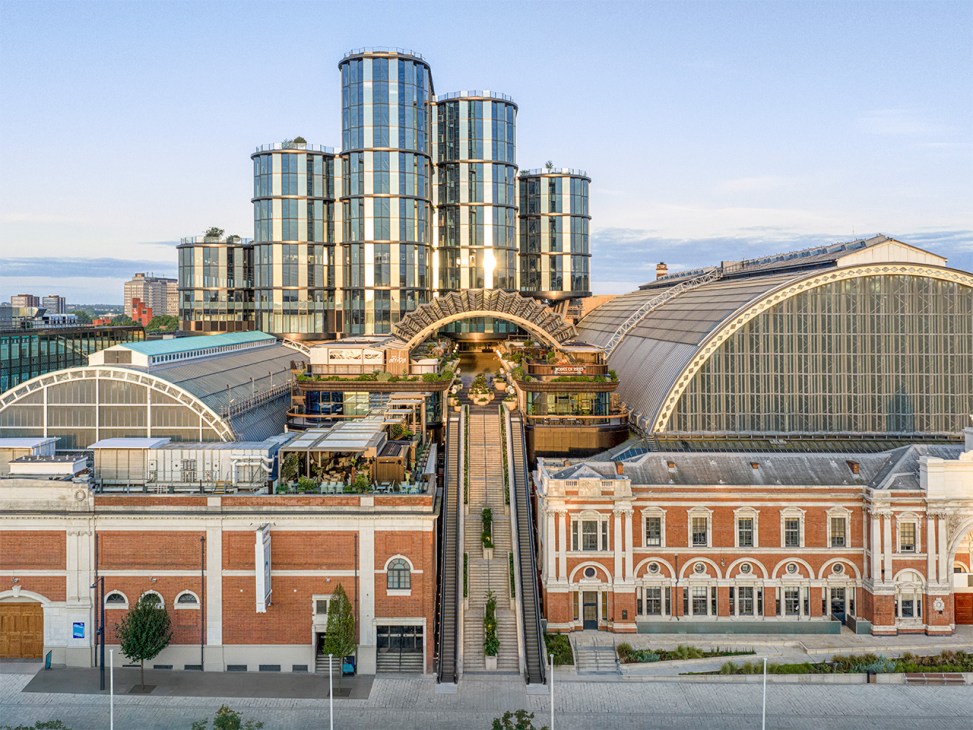
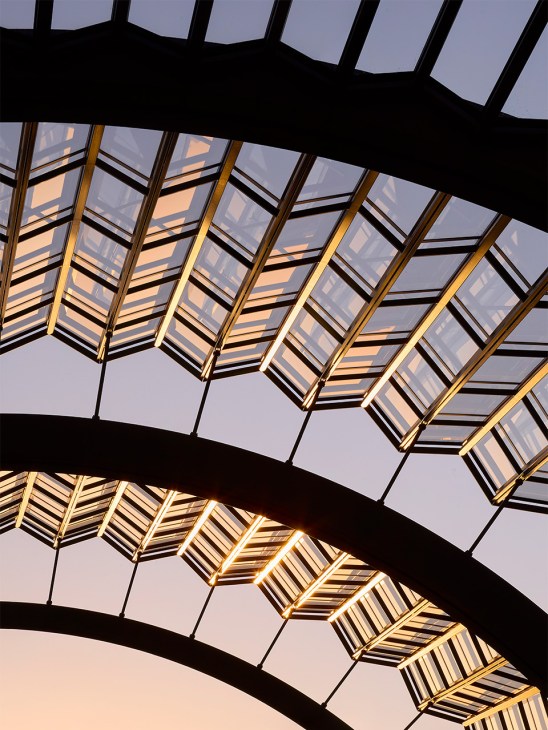
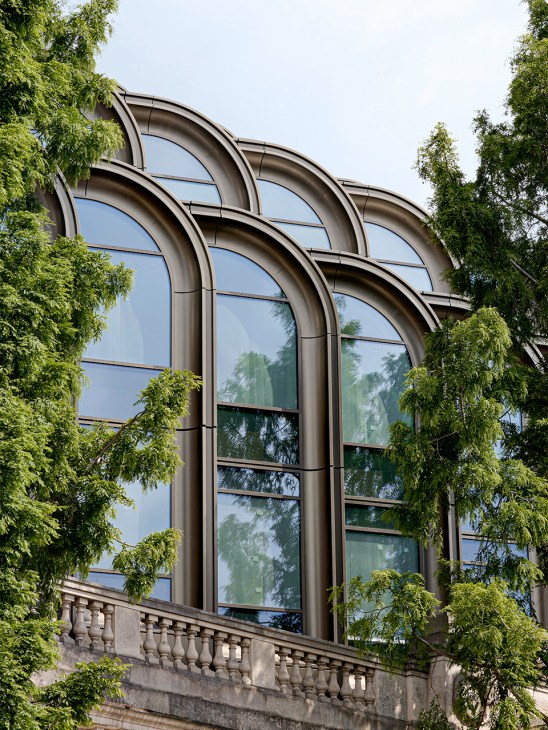
This is the reason why the English designer was delighted to breathe new life into the buildings at Olympia that were coming to the end of their lives. “The Victorians who built them weren’t timid; they believed that you needed to do brave things,” he says, adding that their work inspired him to be audacious today too.
Yet audacity can be a hard emotion to hold onto, especially when faced with the need to trim costs. Or when a project simply runs for years and years. The solution, says Heatherwick, is to start with a manifesto.
At Olympia, the focus was about making public space truly available for everyone. “The best projects [happen] when you have a clear manifesto,” he says. “If you’ve got the true values down, you can stay true to those even if you need to clip here and there. [This way] you know what you’re all there to do and also what an honour it is to create a space that millions of people will use,” he adds, with the tone of a man who has often been confronted with these situations.
In the end, it’s about making places that people care about. As Heatherwick says, “It’s so obvious.”