Istanbul airport is the world’s largest aviation hub under one roof. But with steep costs, long waits and busier transport links, it shows that bigger isn’t always better.
Heathrow is no longer Europe’s busiest airport. That crown was taken in July by Istanbul Grand Airport (IGA), the gargantuan hub on the Black Sea that opened in October 2018. Some 8 million passengers passed through its single terminal last month, just ahead of the 7.86 million that passed through Heathrow’s four. Advocates for Heathrow’s expansion point to the figures as proof of the need for a third runway; the two that it currently operates are running at near-full capacity. For passengers, however, bigger airports aren’t necessarily better.
IGA replaced Atatürk Airport, which had served as the base for flag carrier Turkish Airlines since its foundation in 1933. Like New York’s JFK, Atatürk was shabby, mid-sized, unglamorous – but it was much loved thanks to its location, with quick routes in and out of the city centre. These days it only serves commercial or private flights and hosts the odd political rally for president Recep Tayyip Erdoğan.
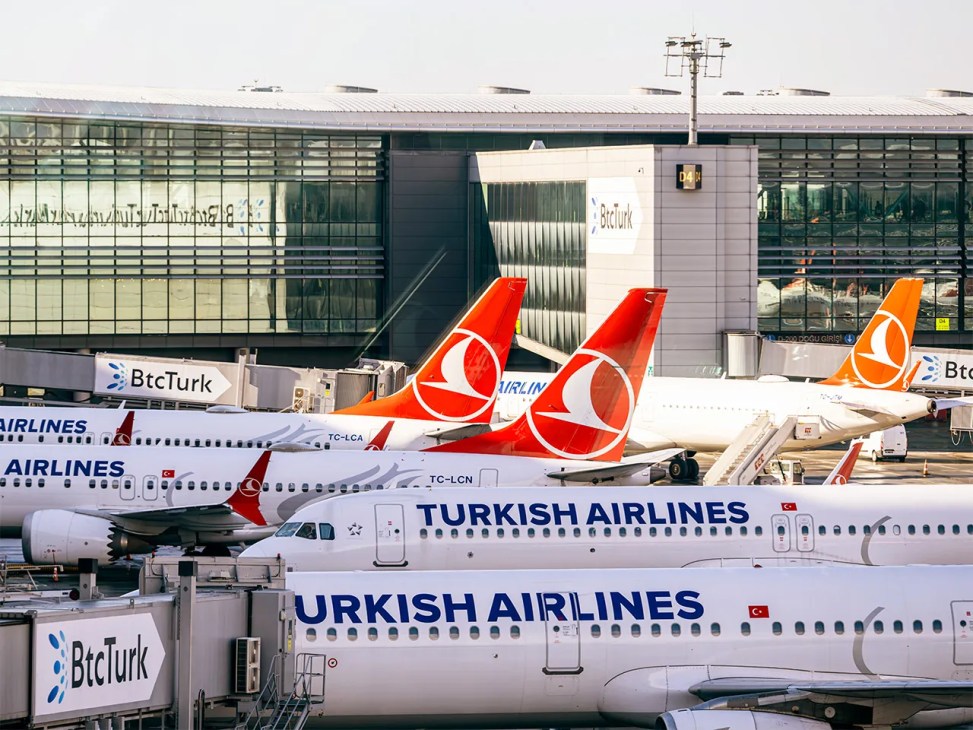
IGA, meanwhile, is a gilded behemoth, filled with food outlets and designer shops. It is the world’s biggest airport under one roof and there’s plenty to do within it. Walking from passport control to your gate will ensure that you reach your daily step-count goal. Friends flying through the airport for the first time message me to complain that their plane takes half an hour to taxi from the runway to the terminal. And if your airline doesn’t have a jet bridge, you’ll spend another 30 minutes on the shuttle bus.
Then there are the prices. Airports tend to rip off passengers but in departures at IGA you should expect to pay €9 for a bottle of water. In April last year, Italian newspaper Corriere della Sera conducted an analysis on 17 European airports and found that prices at IGA were up to 10 times pricier than in other hubs on the continent, largely a result of high rental costs in the new luxury space. Getting to and from the airport – about 40 kilometres from the city centre – is expensive and convoluted too.
After Atatürk closed, I tried to stick to the city’s second main airport, Sabiha Gokcen, which is located on the Asian side of the Bosphorus but far closer to the action and served by a direct metro line. It is small and unfussy but you can get through security and to your gate with a carry-on in a fraction of the time that it will take you at IGA.
In London, too, there are reasons to favour smaller airports over lumbering Heathrow. Flying from London City is joyful, both for its ease of access and the views of London as you take off and land, though its route map is limited. Gatwick is unappealing but functional. The journey to Stansted on Anglia’s recently upgraded trains is usually relaxing and quick, though that has to be weighed against the fact that it’s mostly served by budget airlines. Luton, admittedly, is always best avoided unless you’re lucky enough to be taking a private jet.
The Istanbul experience shows that Heathrow and its passengers should be careful what they wish for. When airports are expanded or beautified, it’s the customers that end up paying for it; Heathrow’s management is considering charging airlines more for its services to cover £320m (€374m) of the costs of a third runway. The end result will be higher ticket prices and busier transport links, as well as more terminal shops to make up the shortfall. That’s fine if you enjoy retail therapy in departures – but if your aim is to get to your seat as quickly as possible, bigger isn’t always better.
Hannah Lucinda Smith is Monocle’s Istanbul correspondent.For more opinion, analysis and insight, subscribe to Monocle today.
Further reading:
– If Greenland wants more visitors, it must fix its airports
– Can building Africa’s largest airport turn Ethiopia’s fortunes around?