The Wall Street Journal reported that SpaceX showed investors a prototype handset-like AI device. Elon Musk called the report “utterly false.” Here is what we actually know, what we do not, and why the idea keeps coming up.
What the WSJ Actually Reported
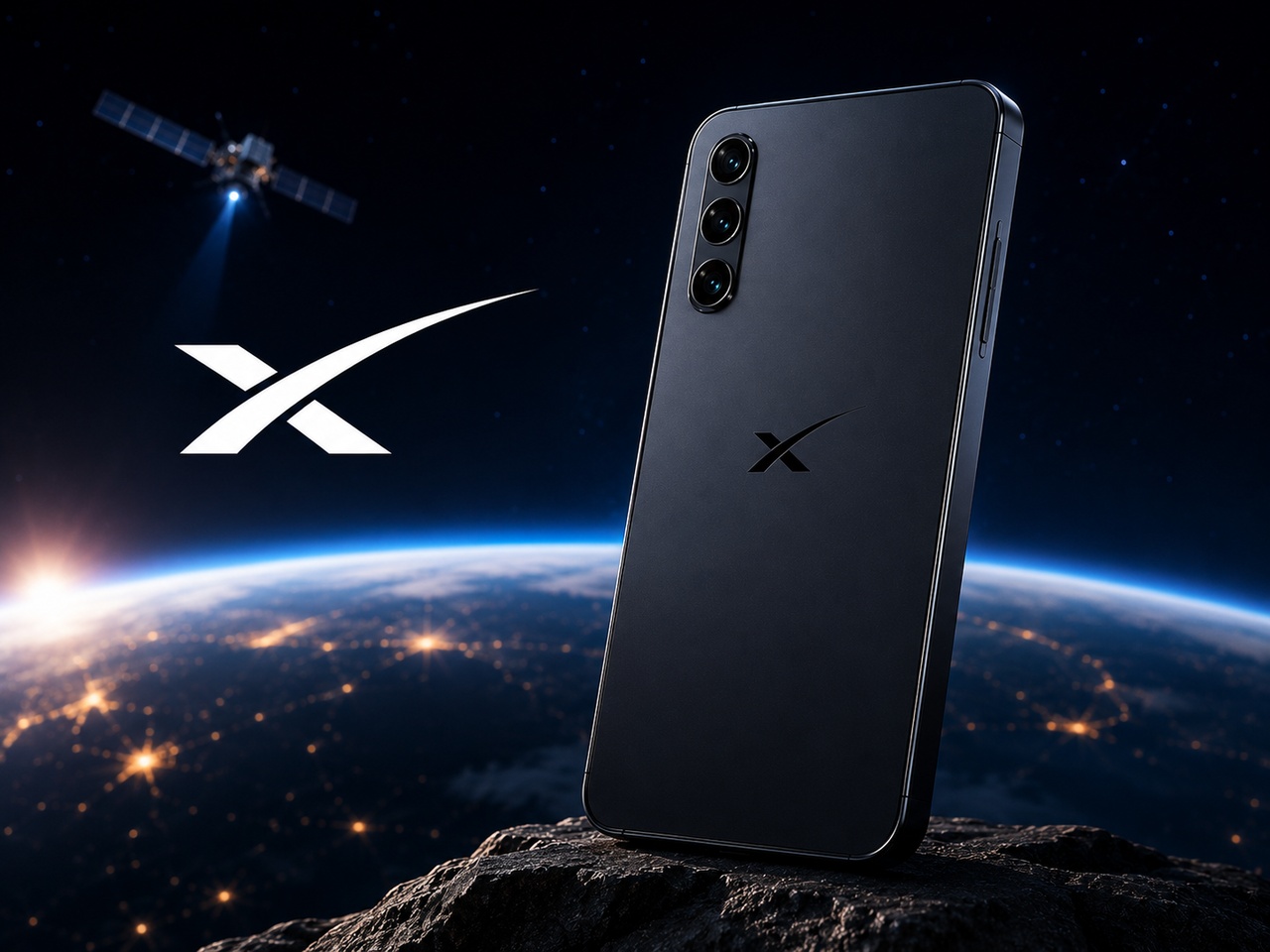
On July 1, the Wall Street Journal published a story citing people familiar with the matter. According to the report, SpaceX showed some investors a prototype of a handset-like device. The prototype was described as “slimmer than an iPhone.” It reportedly ran on a proprietary operating system, used a Qualcomm Snapdragon chipset, and integrated AI features from xAI, Musk’s company behind Grok.
The WSJ sources also said the project was early-stage. The design could still change. The device might never be produced or commercialized at all. This was not presented as a finished product or a near-term launch. It was described as a concept shown to investors in the context of broader IPO conversations.
The IPO angle matters here. SpaceX has been laying the groundwork for a public offering, and a slim AI handset is exactly the kind of story that gets investors leaning forward in their chairs. Look at what the company has already banked: $17 billion in wireless spectrum in September 2025, then xAI folded in outright in February 2026 at a combined $1.25 trillion valuation. That is the spectrum, the AI backbone, and the satellite layer all sitting under one roof, waiting on a device that might never ship.
The Verge, Tom’s Hardware, Forbes, TechCrunch, and MacRumors all followed up with their own reporting. None of them confirmed the device exists. All of them attributed the claims to the WSJ’s anonymous sources.
What Elon Musk Denied
Musk responded on X the same day. His reply to a post summarizing the WSJ story: “Utterly false.” Tom’s Hardware and Forbes both reported the denial. The Verge confirmed Musk said the report was “utterly false” and quoted his past comments on the same topic.
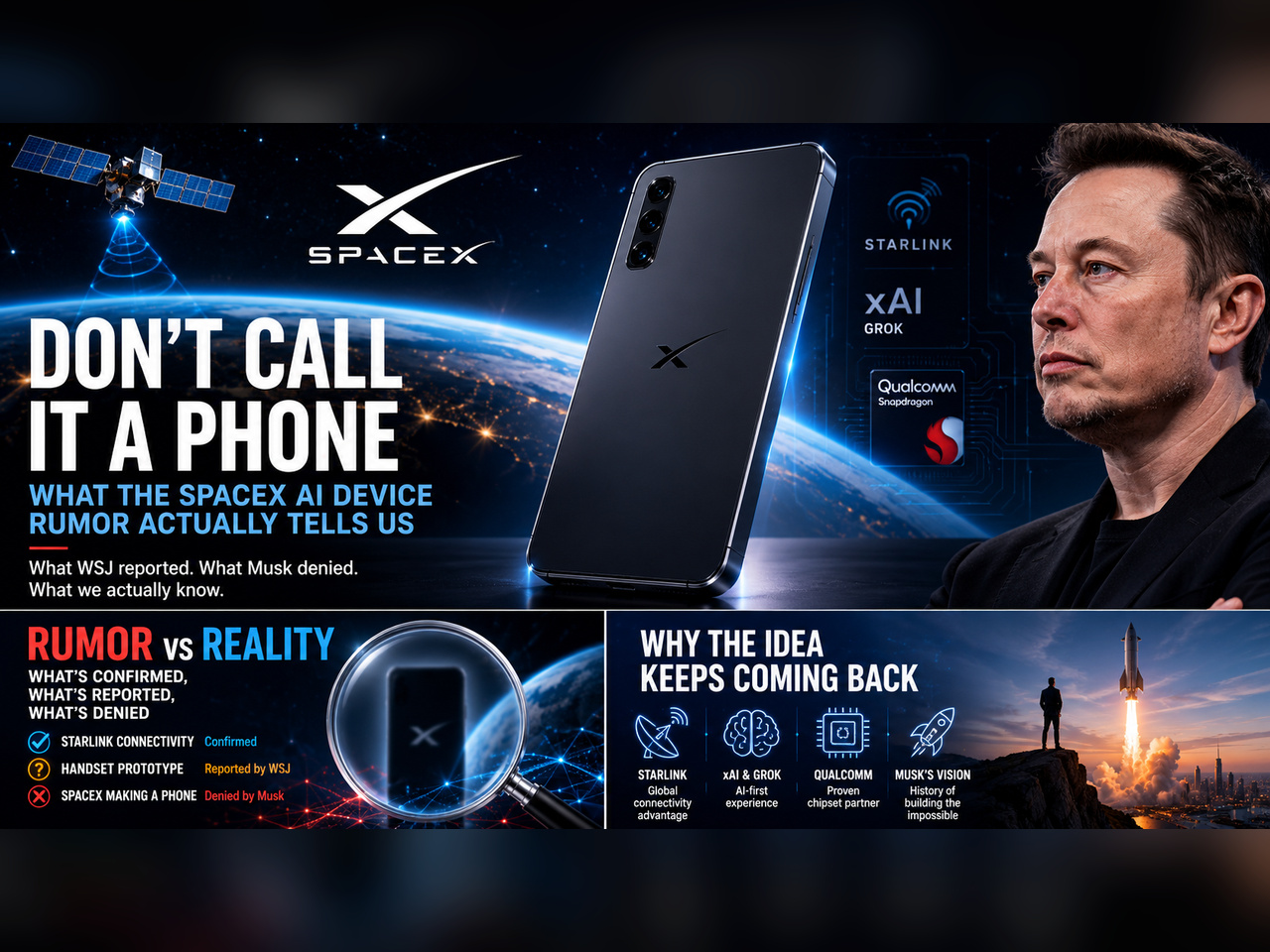
This is not the first time Musk has pushed back on this idea. In February, he said SpaceX is “not developing a phone.” At an event in Pennsylvania last year, he said “the idea of making a phone makes me want to die,” though he added “if we have to make a phone, we will, but we will aspire not to make a phone.”
Why This Rumor Keeps Coming Back
The SpaceX AI handset rumor is not a new idea. It keeps resurfacing because the pieces exist even if the product does not.
SpaceX operates Starlink, a satellite network that already supports direct-to-cell connectivity in partnership with T-Mobile. Gwynne Shotwell, SpaceX’s COO, previously told investors the company was considering launching a mobile service in the US that would connect to Starlink. If you already have a satellite network that can connect to phones, the next logical question from investors is whether SpaceX should build its own phone.
xAI gives Musk another piece. Grok is a conversational AI that could power a voice-first or AI-first device. Building that into dedicated hardware would give xAI a distribution channel it currently does not have. That is the same logic driving every other company putting AI into a dedicated gadget right now.
Qualcomm makes the chips that power basically every premium Android phone and a growing number of AI-focused devices. A partnership between SpaceX and Qualcomm for a custom chipset is not a wild idea on paper, even if this specific report is not accurate.
The combination of a satellite network, an AI company, a chip partner, and a founder who has repeatedly talked about vertically integrating hardware and software is exactly the kind of thing investors want to hear about. It is also exactly the kind of thing that generates press attention whether or not a real product exists.
Musk has floated a bigger prediction too: phones, apps, and operating systems all going extinct within five or six years. In his version, the device shrinks to an “edge node for AI inference,” a screen and a speaker that guess what you want before you ask, with Grok doing the thinking. You do not have to buy that timeline to spot the pattern. It is why his name lands on every phone and AI gadget rumor going, no matter how fast he swats them down.
Why Building a Phone-Like Device Is Hard
Even if the report were accurate, shipping an actual consumer device is a completely different challenge from showing investors a prototype.
The smartphone market is the most competitive hardware market in the world. Apple and Samsung spend billions on supply chains, custom silicon, carrier relationships, and distribution. A new entrant would need to match or beat that from scratch.
App store control is the bigger barrier. Apple’s iOS and Google’s Android are not just operating systems. They are app ecosystems with millions of developers, years of tooling, and user behavior that is extremely hard to replicate. A proprietary OS with xAI integration would need to convince developers to build for it or ship without the apps people actually use. Neither is an easy sell.
The economics do not help either. The average smartphone buyer upgrades every three to four years and chooses between two dominant platforms. The margins on hardware are thin even for the companies that have been doing this for decades.
This is why most attempts to disrupt the phone market fail. The Essential Phone failed. The Rabbit R1 was a curiosity, not a category. The Humane AI Pin was a well-reviewed concept that never reached meaningful adoption. Building a device is hard. Building one that replaces the phone in someone’s pocket is near-impossible.
The “Tesla Pi phone” rumor lives in this same graveyard. For years, people have passed around renders of a Tesla-branded handset with Starlink signal and Grok baked in, all of it fed by Musk’s habit of blurring the lines between his companies. The SpaceX AI device story is that same rumor wearing a fresh logo. Search the Tesla Pi phone today and you will still scroll past concept art, invented prices, and launch dates that never arrived.
What Makes Starlink Different
The one factor that makes a SpaceX device more interesting than any other phone rumor is Starlink.
Starlink already has a satellite constellation that can provide connectivity almost anywhere on Earth. A device that connects directly to Starlink would not need a cellular carrier. It would not need roaming agreements. It would work in places where no phone works today.
That is a genuinely different value proposition. It is not about making a better iPhone. It is about making a device that works where iPhones do not.
But that capability comes with real trade-offs. Starlink direct-to-cell has limited bandwidth. It is not built for streaming video or downloading large files. It is built for messaging, voice calls, and emergency connectivity. A device optimized for Starlink would need to work within those constraints, which makes it a very different product from a mainstream smartphone.
If Starlink connectivity interests you, read our Starlink-ready portable power station guide for field gear that pairs with satellite setups.
What to Actually Take Away
The clearest read on this situation is that the WSJ report and Musk’s denial are both consistent with the facts we have got. The WSJ’s sources said a prototype was shown. Musk says it is not a real product. Those two things can both be true. Companies show investors concepts all the time. Many of those concepts never ship. Investors want to hear about future possibilities. That does not mean every possibility becomes a product.
Readers should treat this as an interesting rumor with zero confirmed product details. There is no launch date. There is no price. There is no confirmed OS, no confirmed chip, no confirmed design. There is a denied WSJ report and a lot of reasonable speculation about what Musk could build if he wanted to.
The Gadgeteer’s Take
This is worth watching because of what it would mean, not because it is happening. If SpaceX ever did ship an AI device with Starlink connectivity, it would be a genuinely new category. It would not compete with the iPhone. It would compete with the idea of needing a phone at all.
But that is a long way from an investor pitch deck to a product on a shelf. For now, the most useful thing you can do is ignore the hype, watch what SpaceX actually announces through official channels, and remember that Musk has already said SpaceX is not making a phone. Until that changes, treat this as what it is: a disputed report, not a product announcement.
For more on the AI devices space, check out our Snapdragon Summit 2026 preview to see where Qualcomm’s mobile and AI silicon is heading.
Sign up for our newsletter today.
No ads, no spam, just links to our latest articles!

Azimuth Articles Small Mouse Pad with Design | Small Mouse Pad for Laptop or Desktop Computer, Smooth Surface for Easy Computer Mousepad Tracking, Non-Slip Base (Black & White Waves, 8.6″ W x 7.1″ L)
(as of July 2, 2026 19:10 GMT -05:00 – More infoProduct prices and availability are accurate as of the date/time indicated and are subject to change. Any price and availability information displayed on [relevant Amazon Site(s), as applicable] at the time of purchase will apply to the purchase of this product.)

Small White Mouse Pad with Black Line Art Design | Small Mouse Pad for Laptop or Desktop Computer with 1980s Pop Art Design | Smooth Surface for Easy Mousepad Tracking, Non-Slip Base (8.6″x7.1″)
(as of July 2, 2026 19:13 GMT -05:00 – More infoProduct prices and availability are accurate as of the date/time indicated and are subject to change. Any price and availability information displayed on [relevant Amazon Site(s), as applicable] at the time of purchase will apply to the purchase of this product.)