Motion sensors are one of the simplest smart home devices to understand. When they detect motion, they can trigger an action, such as turning on the light when you walk into a room.
Presence sensors are a little different. Unlike motion sensors, they can keep tabs on you even when you’re sitting still. I decided to put both sensors to the test to see which would win.
Setting up a fair fight
A presence sensor zone covering the room versus a motion sensor
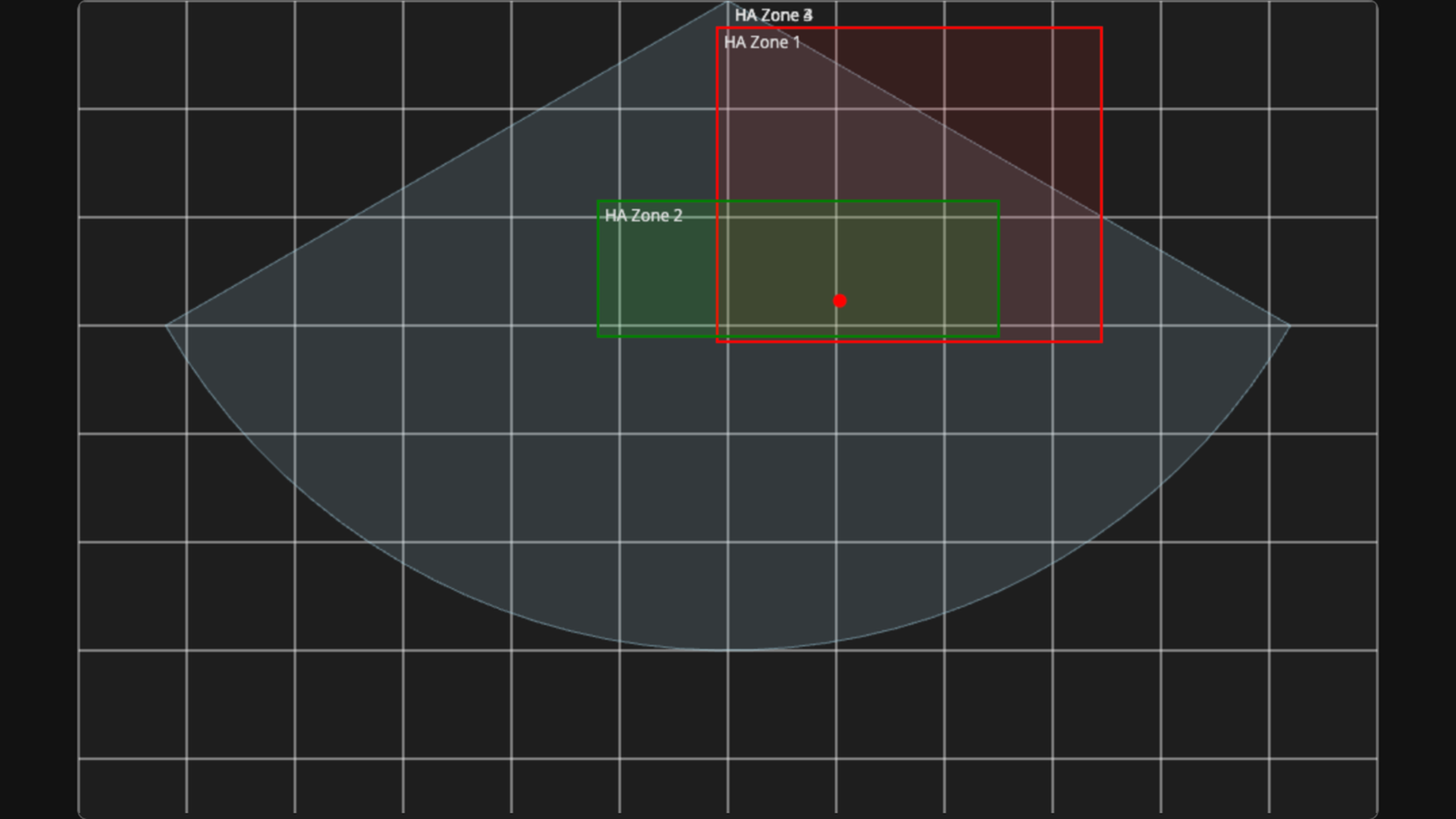
For this experiment, I decided to test a common use for both types of sensors: turning on the lights when you walk into a room and turning them off again when you leave. Rather than trying to guess how quickly each sensor responded, I used Home Assistant to track exactly when each sensor changed its state.
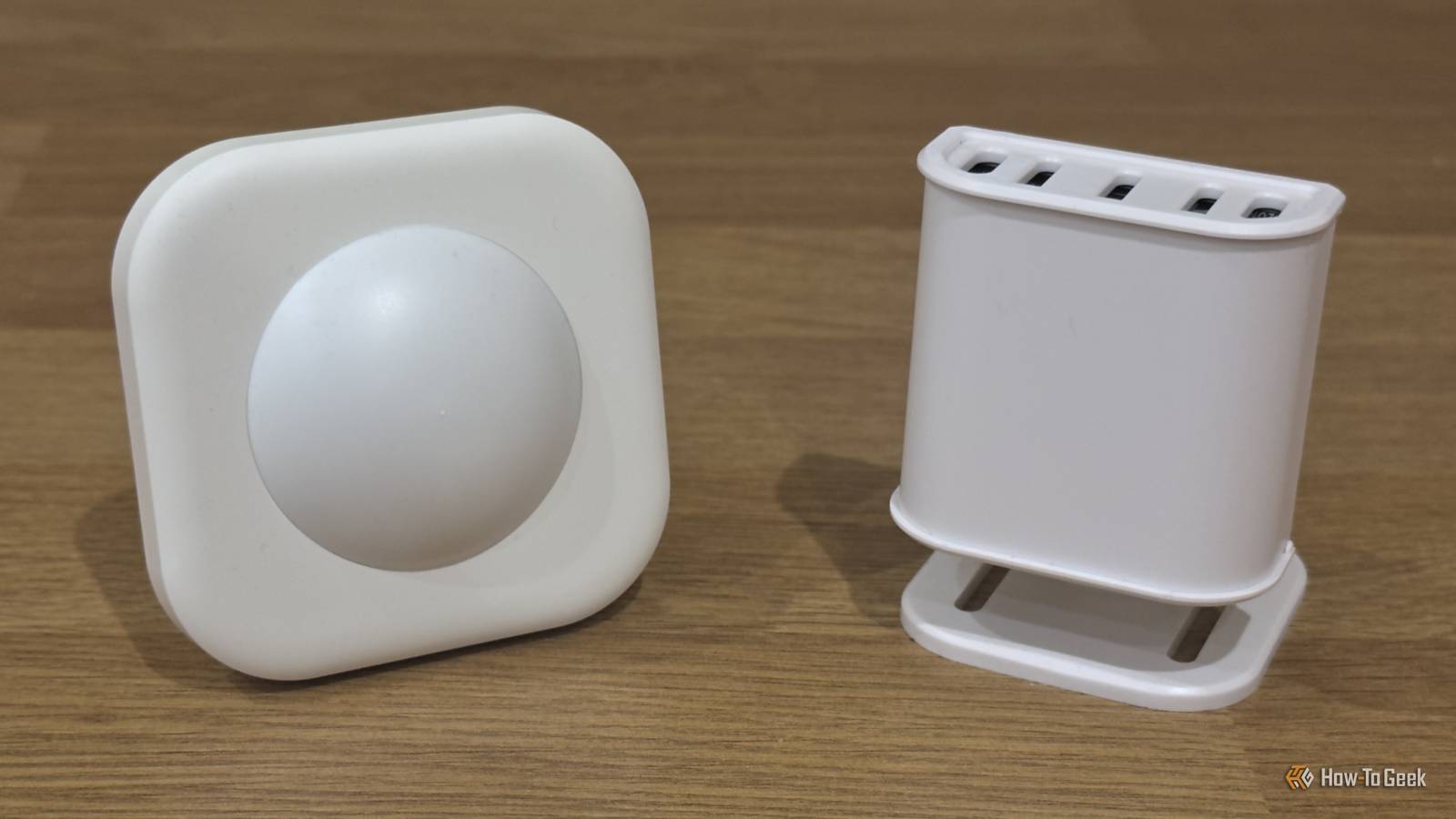
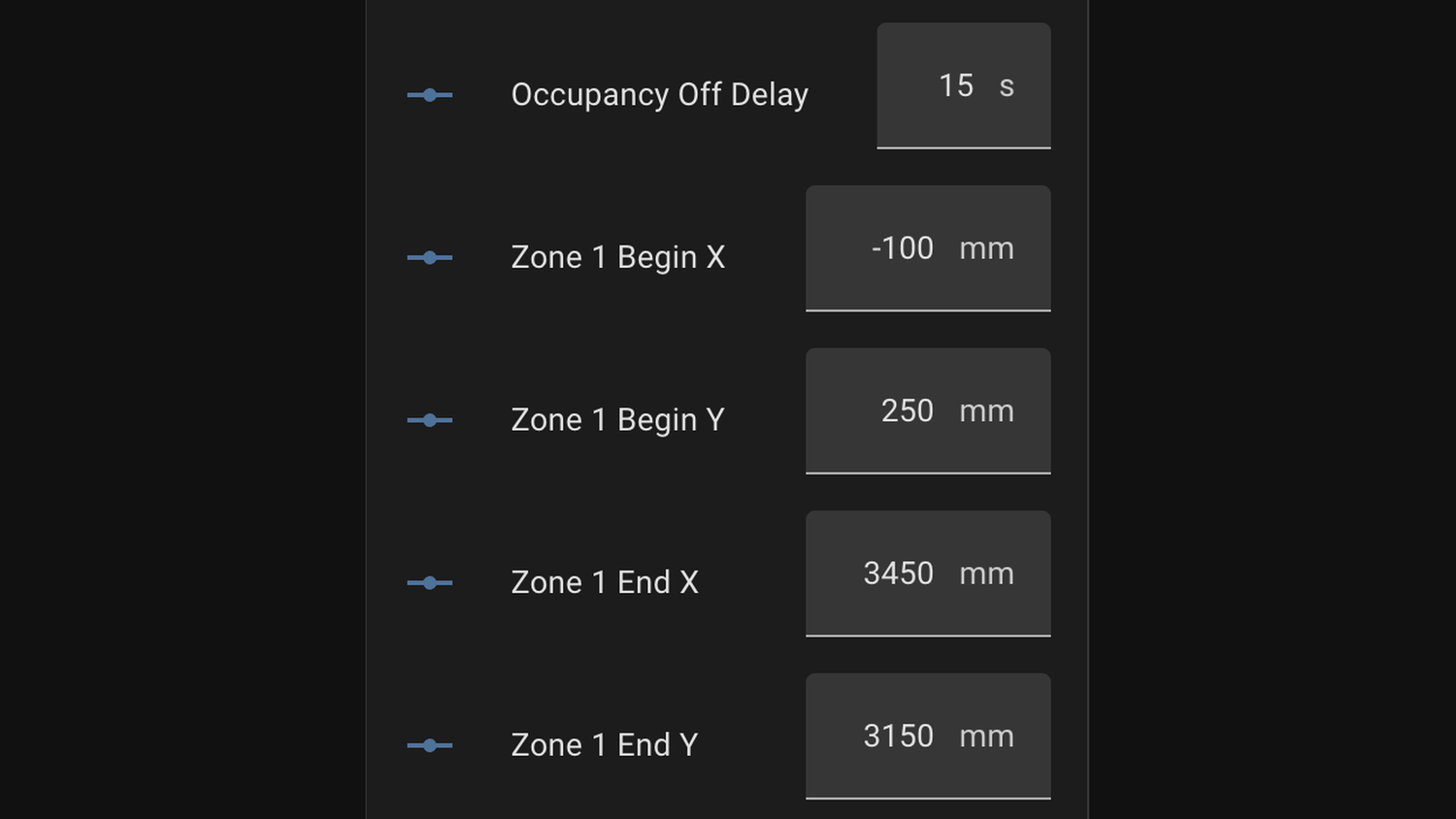
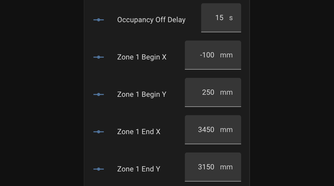
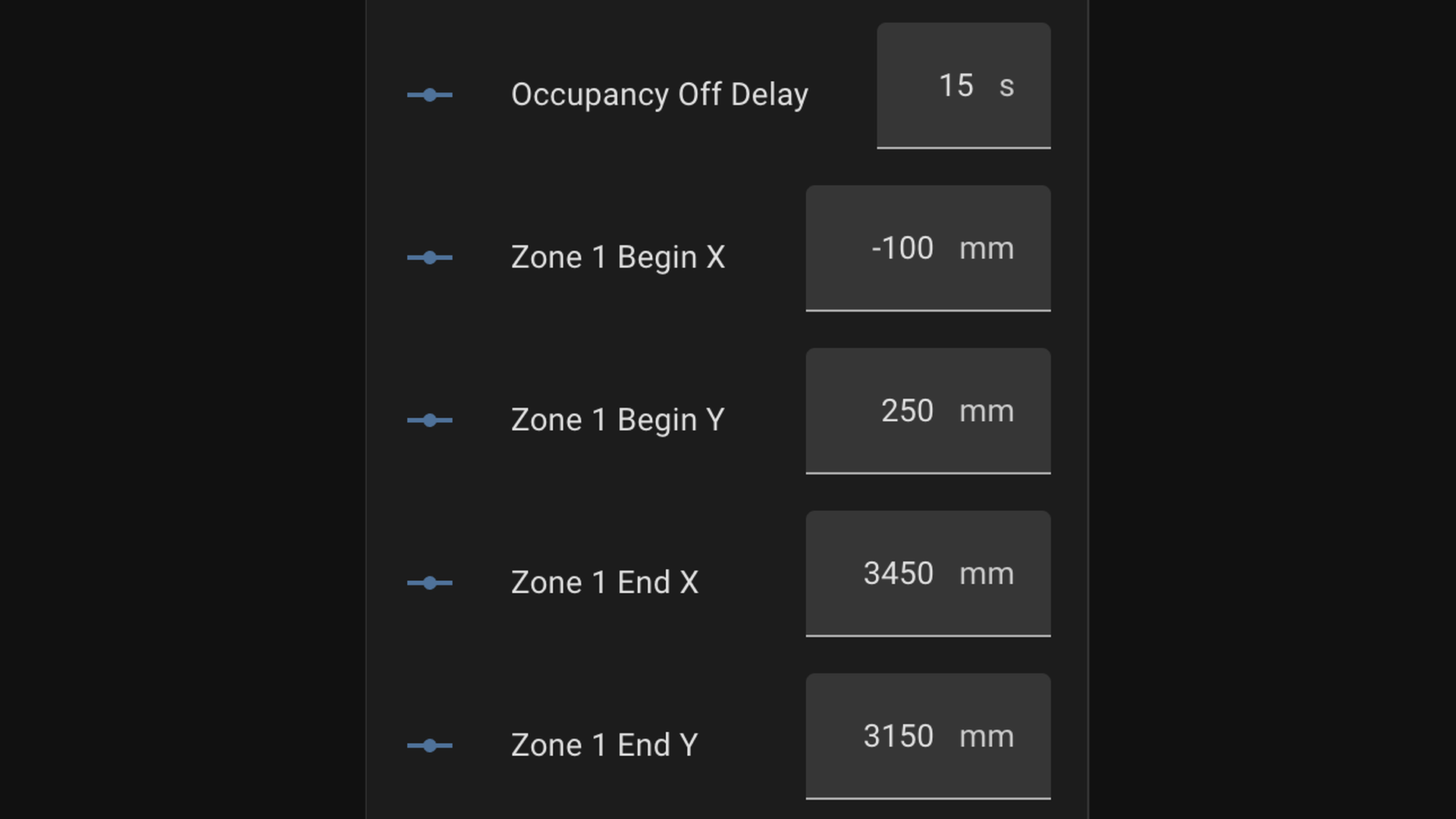
I used an Everything Presence Lite as the presence sensor, and an IKEA Vallhorn motion sensor. My presence sensor can detect motion through solid objects, and using its full range, it was able to detect when I was standing outside the living room door, making the light turn on before I’d even walked in. To make it a fair fight, I set up a detection zone that only covered the living room itself.
Walking in was a win for the motion sensor
The presence sensor was always slower to react
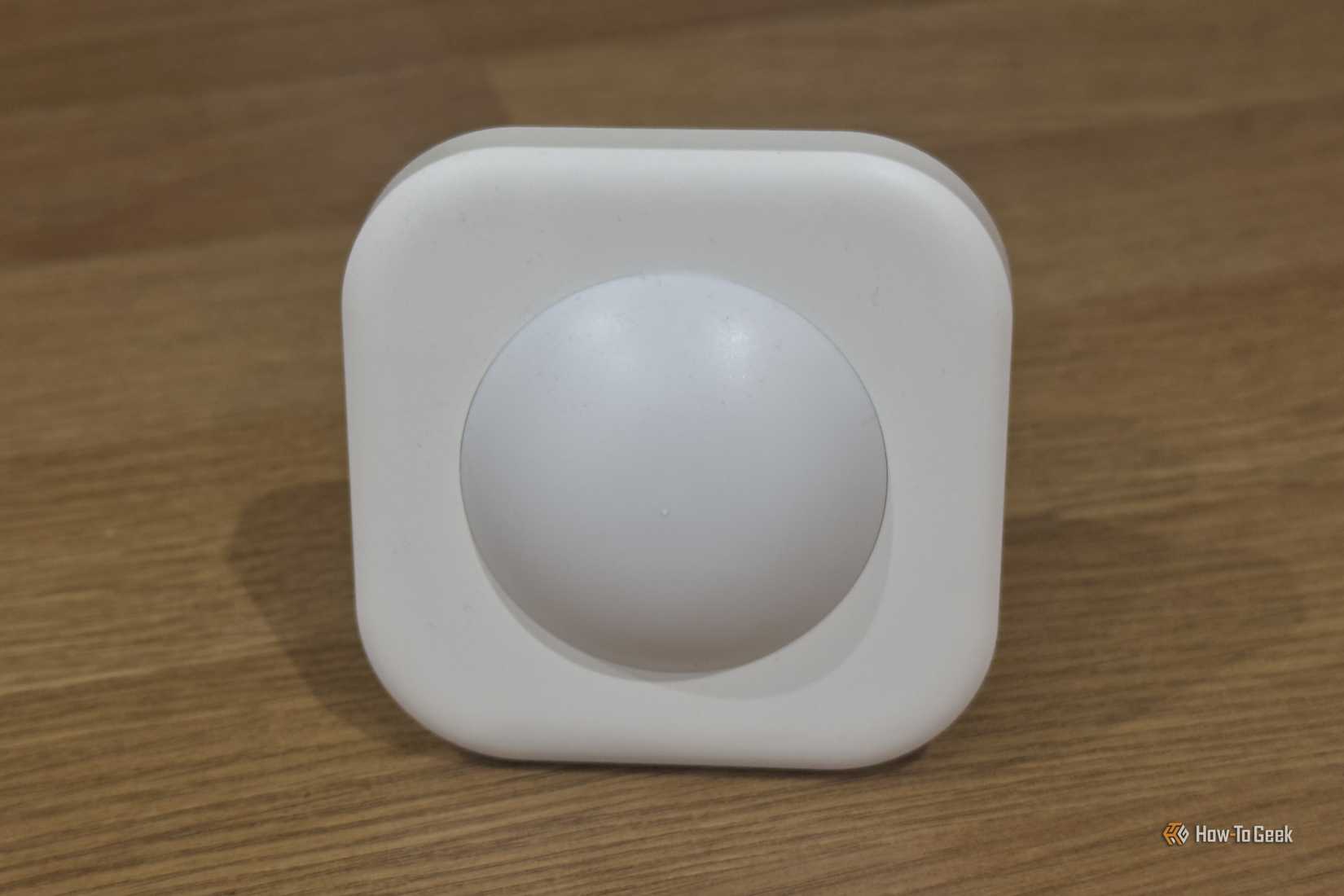
The first test was simple. I walked into the room, and Home Assistant measured how quickly each device detected that I’d entered. I repeated the test several times in case there were any outliers.
My expectation was that the motion sensor would win this round. These sensors are very good at detecting movement at close proximity, and the sensor was positioned fairly near the door. Presence sensors use radar to track targets and are known for being a little slower to react.
That’s exactly what I found. In one test the motion sensor was only 0.05 seconds faster, while in another it was more than 3 seconds faster, but on average, the motion sensor was about half a second faster to detect that I’d entered the room.
Waiting more than 3 seconds for the lights to turn on isn’t ideal, so this is a clear win for the motion sensor. The presence sensor was mostly just a little slow, but it wasn’t nearly as consistent.
Leaving the room was a tie
Both devices took a similar amount of time to clear
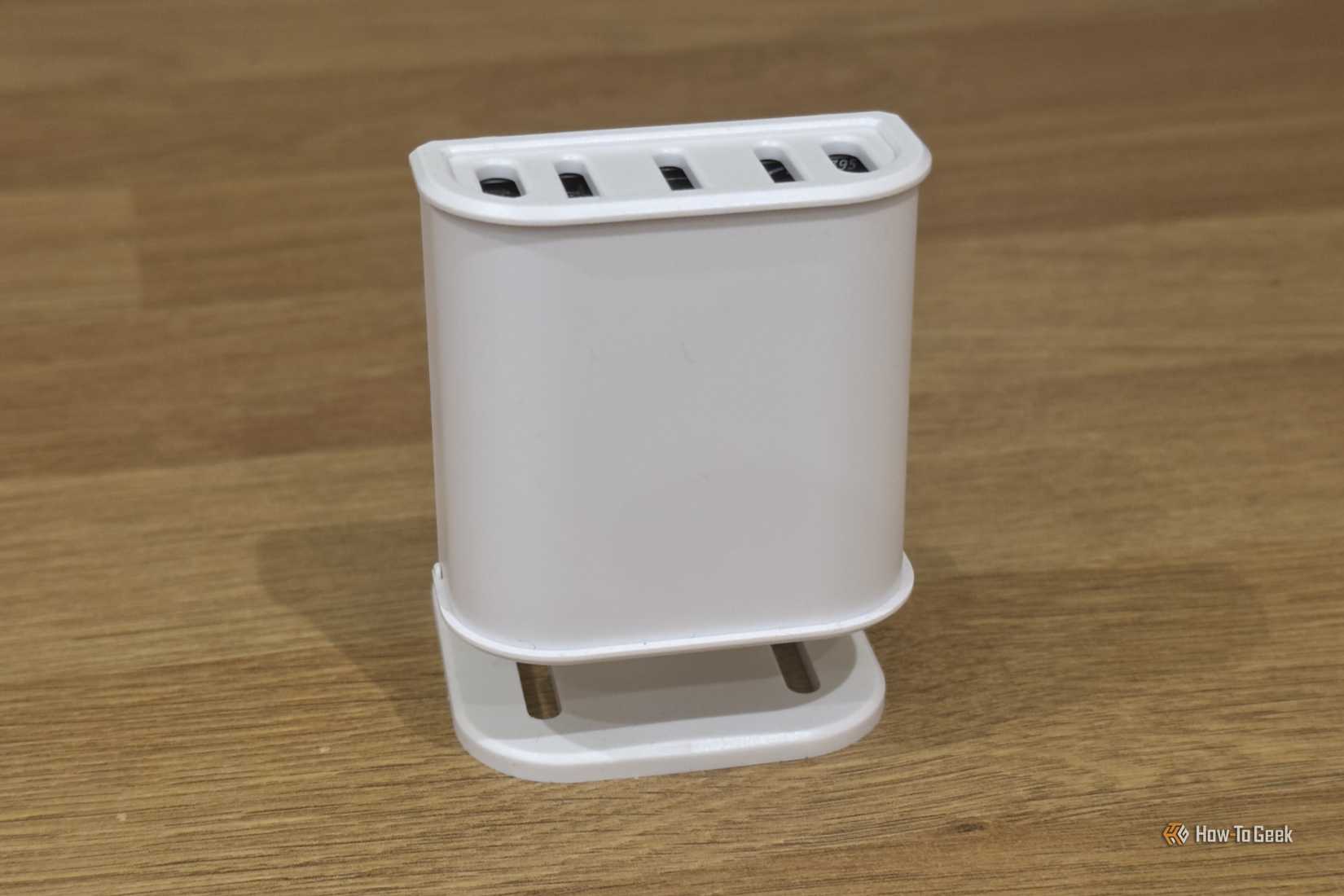
The second test was how quickly the sensors could tell that I’d walked out of the room. Having your lights turn on when you enter the room is useful, but you need them to turn off again once you’ve left.
It’s possible to configure how long a sensor needs to detect no motion or presence before its state changes to “clear”, so this wasn’t really that fair a test. The Everything Presence Lite was set to report as cleared after no presence had been detected for 15 seconds, but I wasn’t able to change this setting for the motion sensor or even find what its value was.
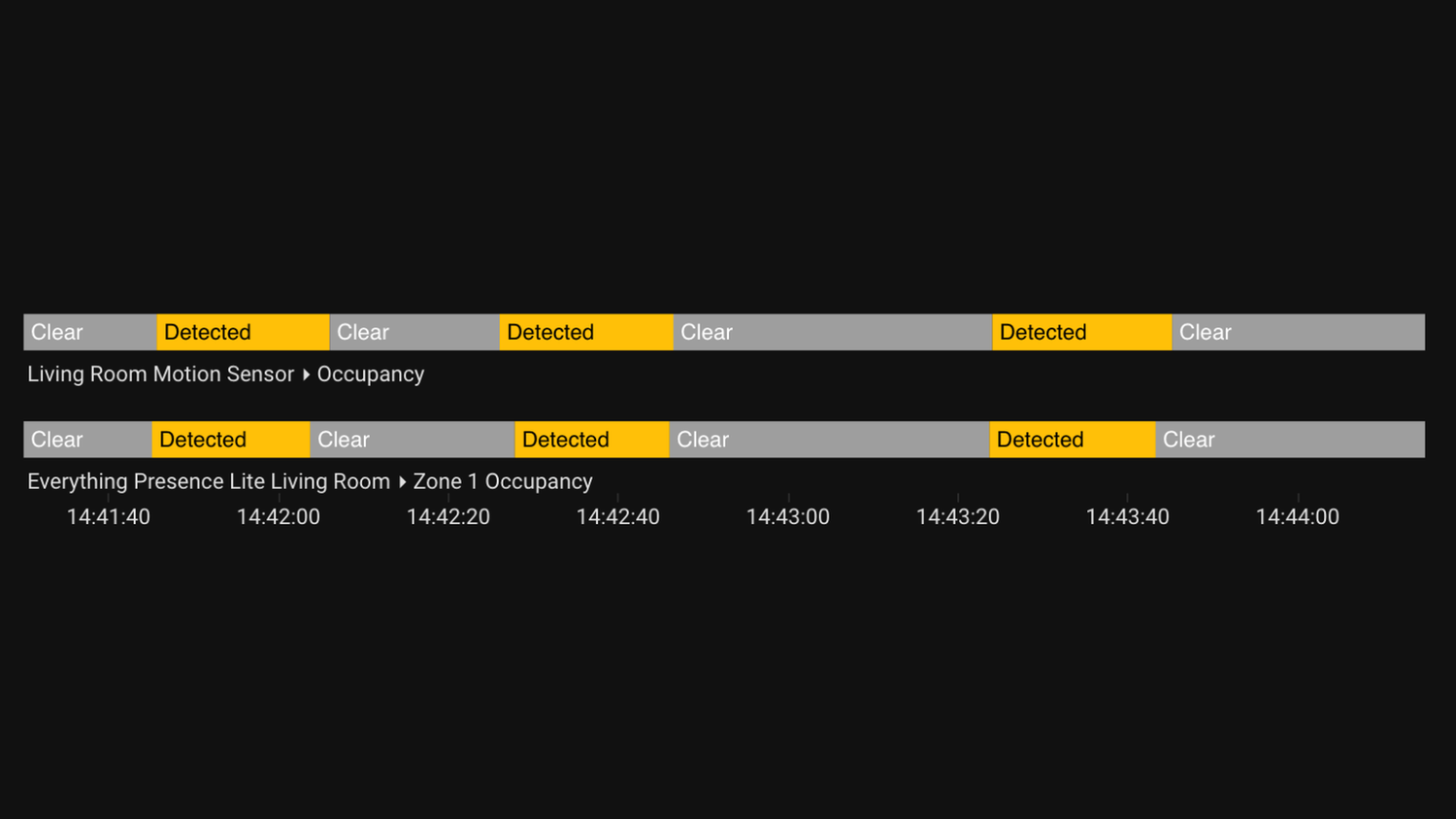
I decided to run the test anyway to see how the presence sensor fared against the default setting of the motion sensor. In each case, both sensors reported that motion or presence had cleared within a second or two of one another. Neither device was consistently ahead of the other, so this challenge was a tie.
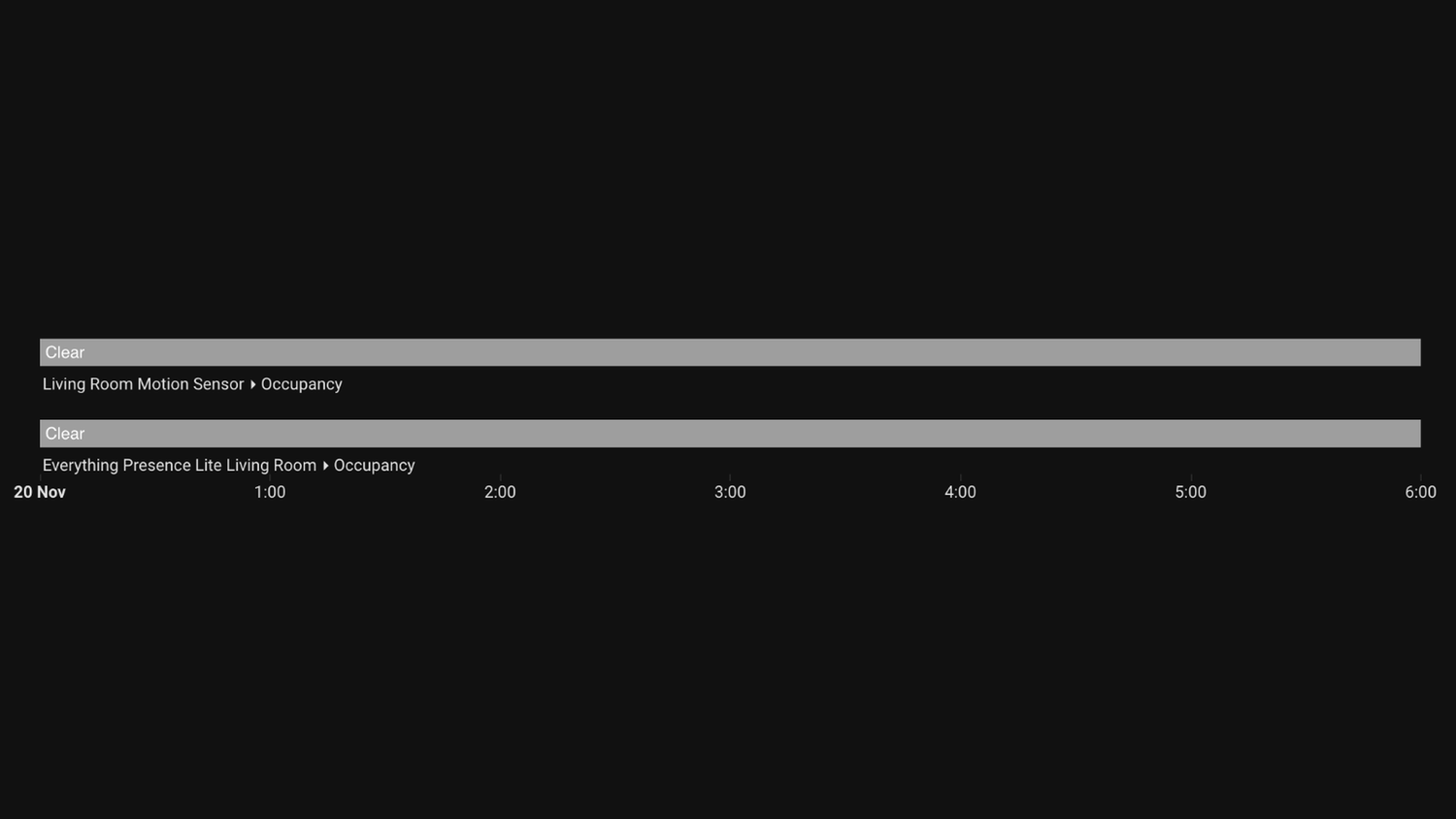
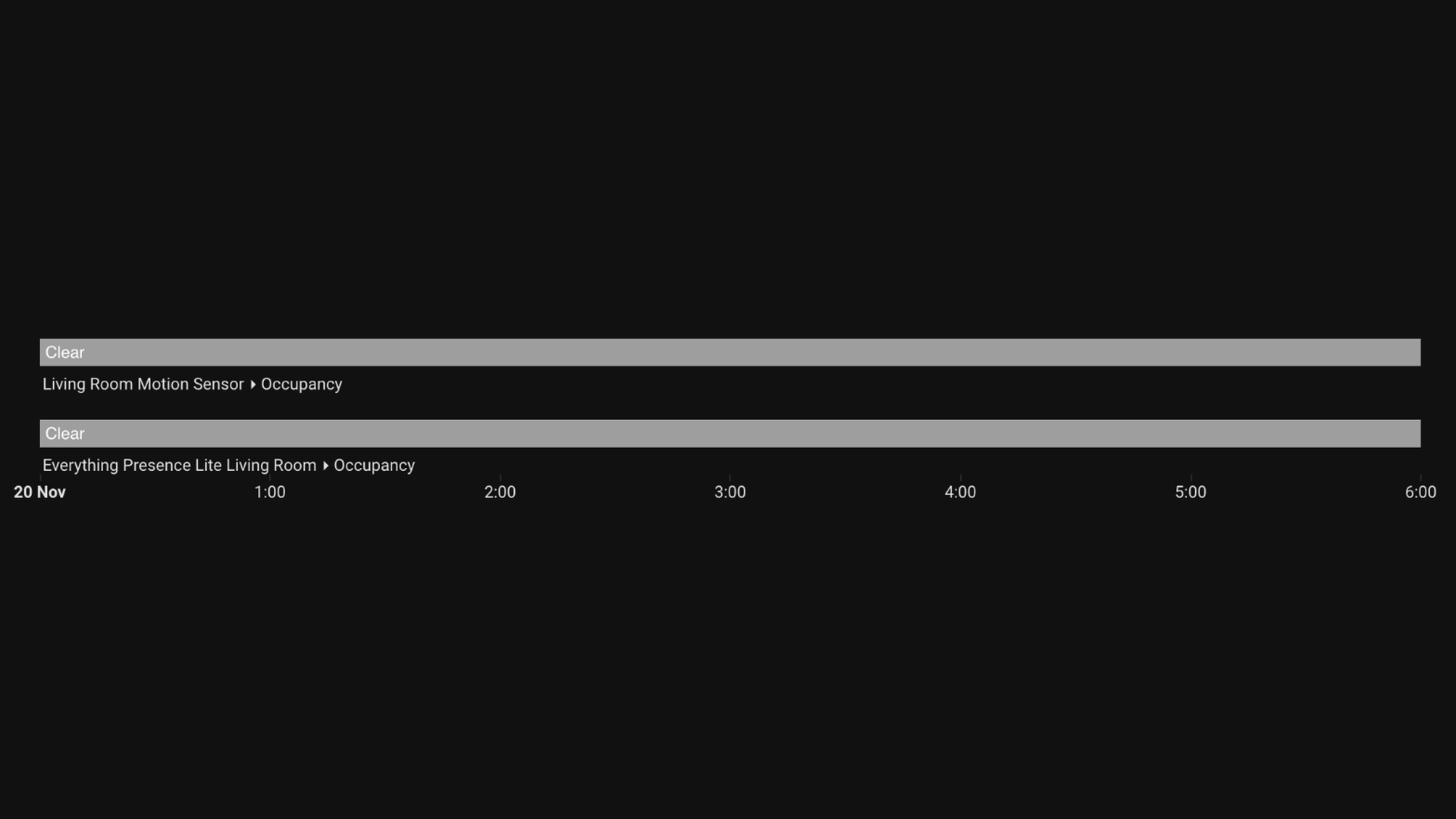
I also looked at data overnight to see if either device recorded any false positives when we were all in bed. Both sensors showed as cleared for the entire time.
Sitting still was the big win for presence sensors
A motion sensor doesn’t like it when you sit still







This was the part where I knew there would be a clear winner. One of the biggest reasons that people buy presence sensors is that motion sensors have a significant flaw: they can only detect you when you’re moving.
You can use a motion sensor to turn on your lights when you enter a room, and it can turn off the lights again after you’ve left the room and no motion is detected. The problems arise when you enter a room and then sit still.
If you sit still for too long, the motion sensor no longer detects movement, and as far as it knows, you’ve left the room. If you’re using the motion sensor to control your lights, this means that you can end up being plunged into darkness if you sit still for too long.
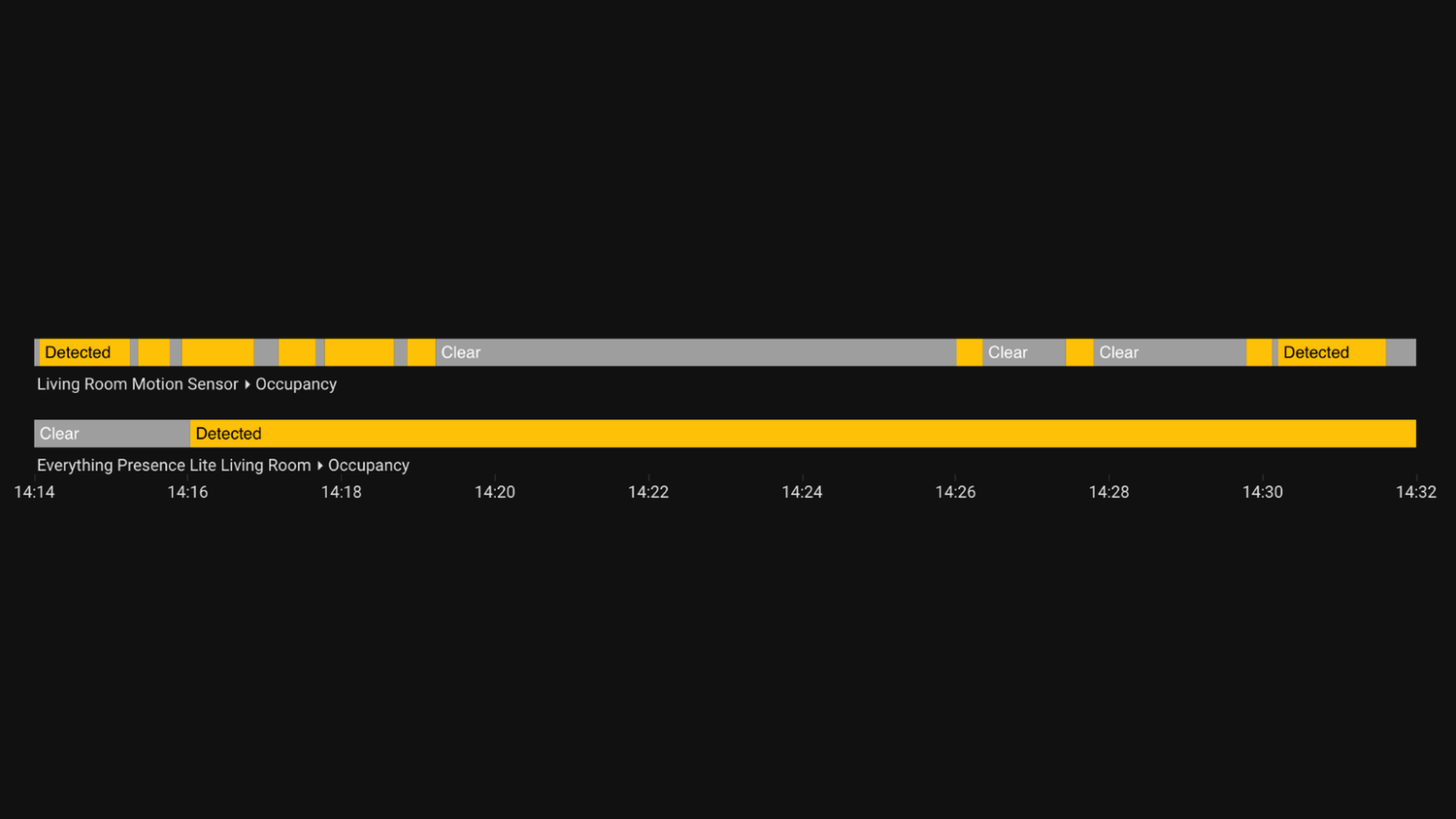
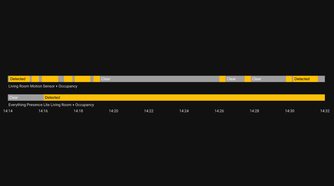
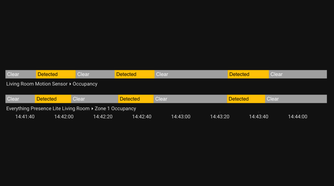
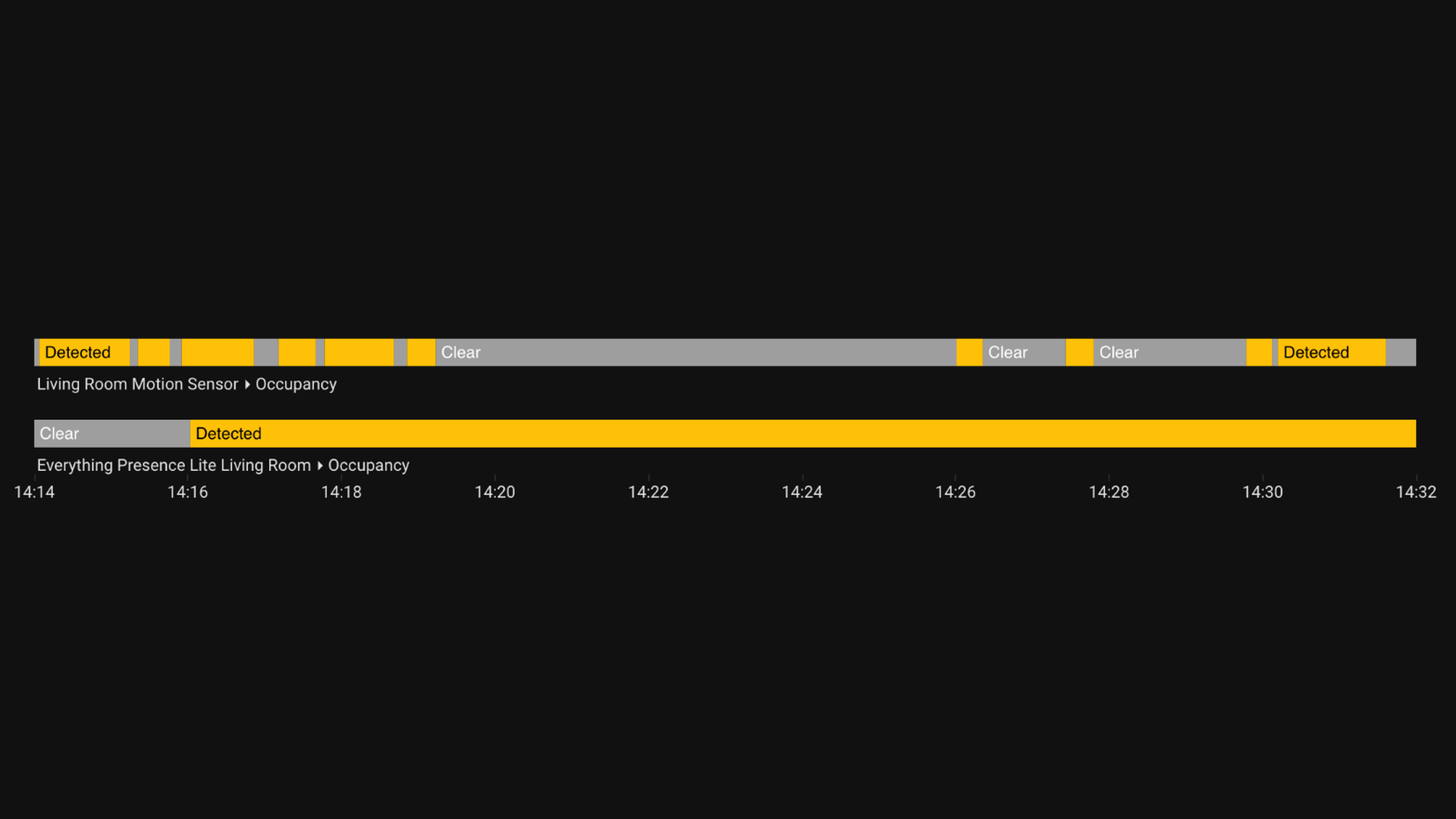
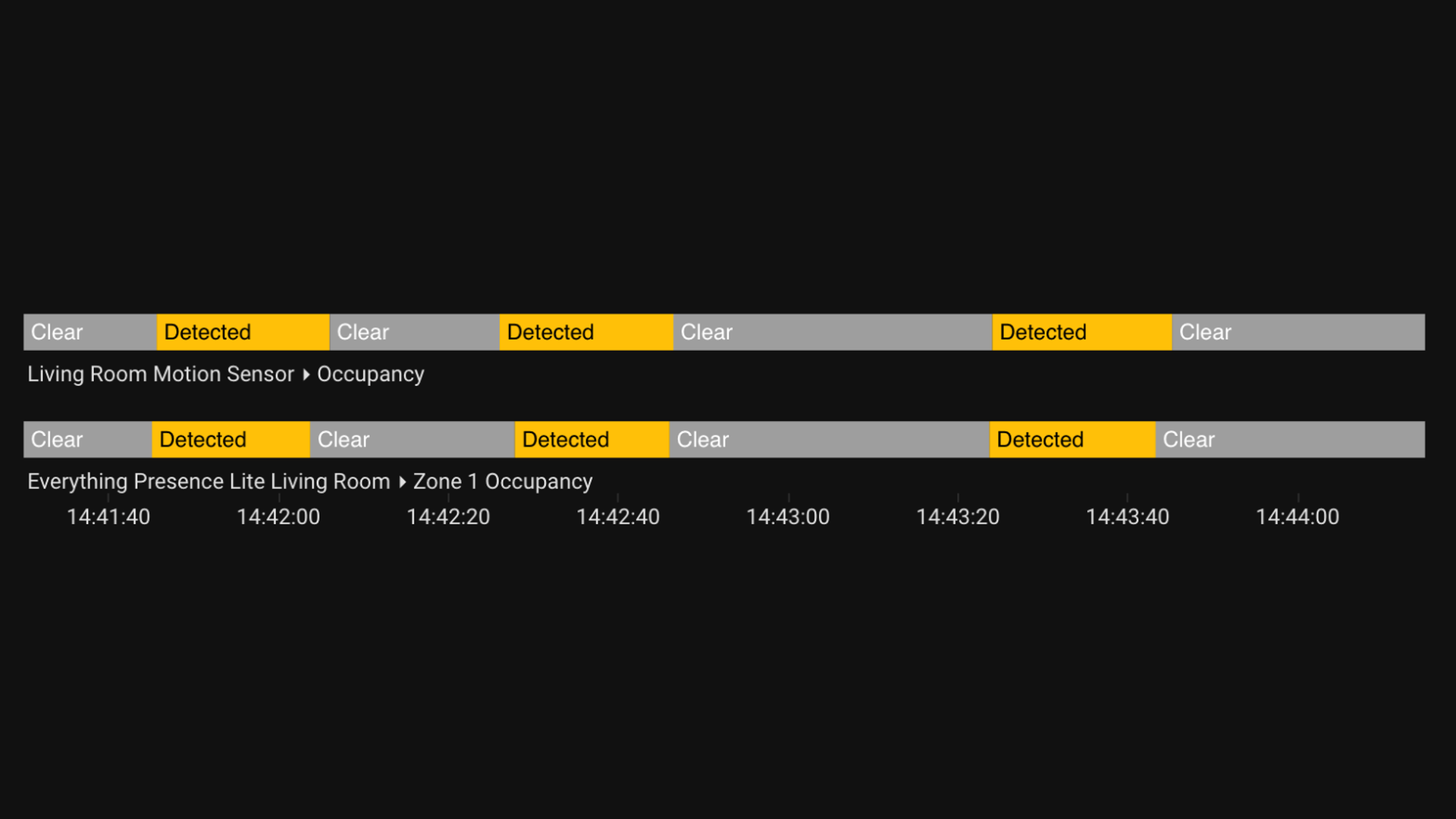
I tried exactly that. I walked into the room, then sat down and stayed as still as I possibly could for what ended up being 13 minutes. The results showed the real benefits of presence sensors.
My Everything Presence Lite detected my presence for the entire time I was sitting still. At no point did it show the room as being empty; my presence was stable for the full 13 minutes.
The motion sensor, however, only recognized that there was anyone in the room for less than three of those 13 minutes. There were about 10.5 minutes where the sensor’s state was “clear” even though I was sitting in the room.
Even worse, the state changed six times during that period. That meant if I was only using the motion sensor to control my lights, they would have turned on and off six times within that 13-minute period, which would soon get very annoying.
A better option is to use both
None of the results of my experiment were a surprise, but it was interesting to see exactly how many times the motion sensor changed state in a fairly short period of sitting still. In general, motion sensors are better at detecting when you enter a room, but presence sensors are far better at determining when you’re still in the room. Thankfully, there are plenty of great devices that include both PIR and mmWave sensors, giving you the best of both worlds.