If you’d asked me on my fifth night, counting stars above a broken down quadbike on Ometepe Island, if I liked Nicaragua – I probably would have told you no. It was wild and unforgiving, and just when everything seemed straightforward, Nicaragua changed the rules.
The landscape shapeshifts hour by hour, moody volcanic hills turn to pristine Pacific beaches, remote and rugged islands lie a stone’s throw from arty and historic metropolises and yet each stop comes with its own amnesia — on the rooftops of Leon or the shores of Ometepe, you forget any other kind of Nicaragua exists. It is a greatest hits album of Central America, played out along a tree-lined highway and a few unpredictable ferry crossings.


After a month in the country, I secretly wished my onward travel in Costa Rica would cancel on me. What had started as a seemingly difficult introduction, relying on the kindness of strangers to pull a bike from the mud in the pitch black, turned into an appreciation for the indifference of Nicaragua and the unforeseeables it threw up, which often ended in quite a good anecdote.
In fact, when I finally got home, I realised I reached for stories of Nicaragua every time somebody asked me for my best travel tale, my favourite night, my most surprising, funny or impressive encounter.
Nicaragua is the largest country in Central America, but short distances between major highlights makes the terrain more manageable. The country has been an inconsistent favourite on the Central American section of the Gringo Trail, and after a brief period of civil unrest, the nation has rapidly stabilised and returned to steadier visitor levels. Once losing out to regional rivals like Costa Rica or Guatemala, Nicaragua is catching up to its neighbours on travellers’ bucket lists and expert itineraries.
During my time in the country, I went back and forth between must-see cities (even seeing some of them twice), stayed long enough in Managua to advise you not to stay as long as me, and picked up a lot of first-hand, practical advice for this charming but often slightly awkward nation.
Navigating Nicaragua can require some improvisation, so whether you want a week-long ‘Best Of’ tour or an in-depth national adventure, this guide is the perfect place to start.

General advice
Currency & costs
The official currency of Nicaragua is the Cordoba (NIO), but US dollars are accepted widely in tourist destinations. Nicaraguan banks and businesses are quite strict about the condition of cash, and even a small tear can put a note out-of-action – so keep your bills as crisp as possible!
One of my favourite quirks of Nicaragua is that for a cash-heavy culture they are pretty pleased about their lack of ATMs. Cards, and even contactless payments, aren’t uncommon but fees are often high, and ATMs in rural areas can be like gold dust (Ometepe island is over 100 square miles with just two of them), so stay on top of your spending.
That being said, I spent longer in Nicaragua than any other Central American nation and somehow ended up splurging the least amount of money. Nicaraguan average costs felt like a welcome exhale in between pricier neighbouring destinations, and I noticed notable savings on meals out, alcohol and dorm costs.
My spending in Guatemala sometimes reached a daily peak of $70-80, but most days in Nicaragua I barely broke $50. If you have a comfortable budget, you can definitely do Nicaragua in style, and we treated ourselves to quite a few more private rooms and transfers than we expected.
Safety
Safety always feels quite personal and hard to quantify, but in some parts of Nicaragua it seemed a level of pre-planning was necessary to get by.
As a female (but not solo) traveller, my main tip would be to arrange all travel around daylight hours. Managua, specifically, is a disorientating city to arrive in at night. If you need to stay overnight it is worth booking a hotel or hostel within the airport’s vicinity (Casa Montoco is an affordable and close Bed & Breakfast!).
I’d suggest a taxi to any accommodation, even if a Map app shows a short walk, as opportunistic crime along the Pan-American Highway, which passes through Managua and the airport area, is common. Surprisingly for an international airport, there are few spontaneous taxis services outside at night, so pre-arranged private travel is essential if you have a late arrival.
Aside from that, travel and activities in the rest of Nicaragua felt perfectly safe. With normal precautions and common sense, Nicaragua is a friendly, welcoming country with an established transport network and a well-travelled ‘backpacker’ route.
While much-loved by backpackers, it’s worth acknowledging that Nicaragua often has a different reputation generally. In 2026, its leader declared that elections would now be a thing of the past, confirming it’s now a dictatorship. And Americans may know that the US State Department lists Nicaragua as Level 3 – Reconsider Travel.
Just keep in mind political safety issues are often quite different from a traveller’s reality on the ground. Certain warnings may be aimed not at tourists simply having fun in Nicaragua, but people with other business there. Keep your nose out of politics and your main concerns will be regular ones, like petty crime. Other governments’ advisories (UK, Australia, etc.) put much less emphasis on the political situation and are worth reading.
This is just to address a potential concern. My own impressions of Nicaragua were very similar to Phoebe’s!
— Marek (November 2026)
Transport
There are essentially two ways to get around: local buses (cheap but slow) and dedicated minivan tourist transfers (fast and direct, but more costly).
The local routes have quite a few stops, and in rural areas, navigating the transport system can be confusing. We took a public bus from Granada to Rivas (usually a 1 hour journey) and while only costing a few dollars, vendors frequently boarded which added hours to our trip.
On a budget, local services are safe and useful, but if getting from A to B efficiently is a travel worry of yours, then Nicaragua is a reasonably affordable place to choose private services. Most travellers in Nicaragua, it seemed, were using private shuttle buses and transfers.

Language
As a Spanish speaker, I don’t often notice when a nation speaks a lot less English, but Nicaragua stood out as quite a monolingual country. Their tourist industry is quickly expanding, but in rural areas and along transport routes memorising some key phrases definitely won’t do any harm. I’d argue Nicaragua is one of the best countries to test your por from your para for this reason!
Unmissable experiences
One evening in Granada, perched around a low, metal table at a cosy, family-run restaurant, I realised I had never met such a mix of travellers in my life. There were tanned surfers cramming boards onto buses, hiking groups wiping volcanic mud from their boots, friends chasing treehouse raves and pool parties, and those running in the other direction towards yoga retreats and farmwork volunteering.
What I loved about Nicaragua is that it clearly attracts crowds who know what they love and the activities, history or culture they’re after, but leaves so much room for beginners, for those travelling perhaps without purpose, or in search of new experiences.


Colonial Cities, volcanoes and history
Granada
Granada takes the title of the oldest city in mainland Central America, making the colourful clocktowers and cutesy cafe culture a history buff’s dream and an obvious national highlight.
Just an hour from Managua, it is often a first stop for those who’ve arrived in Nicaragua by air, and is what I’d consider a perfect ‘basecamp’ for day trips to nearby lagoons, the Masaya or Mombacho Volcanoes or even Ometepe Island if you’re short on time.


Despite its logistical convenience, Granada is not boring and practical – it is the home of the infamous treehouse rave, brimming with quirky art shops and restaurant concepts, and some of my favourite nights in Nicaragua were spent over pizzas and cocktails on the busy Calle la Libertad.

It’s also where I settled in for a few days. I stayed at Hostal Boca en Boca – a social accommodation in the heart of the city with way too many tours to choose from, spacious dorm rooms, and a HUGE shared kitchen and dining area.
Fun fact: What you wouldn’t expect is that just 20 minutes away lay a tropical 365-island archipelago with numerous secluded bays and unique island eco lodges: the Islets of Granada. Check out our journey through Granada and Las Isletas.
Leon
In the north of Nicaragua, Leon manages to balance an artsy, cultural seriousness with a student town vibe and volcano-boarding madness pretty well. It is the second largest metropolitan area in the country, and arriving on a rainy afternoon, it reminded me later of a moody Bogota, or even a Peruvian cityscape.
Ask anyone what they got up to in Leon, and the first thing they’ll probably say is that they threw themselves headfirst down the side of a volcano.
Descending Volcan Cerro Negro is often an introduction to Nicaragua for those arriving overland, and usually finishes with an evening exploring the city’s vibrant nightlife. If those things sound like an absolute nightmare to you – Leon is still a relatively reasonable city-break with museums, cool cathedral rooftops, street art and hikes outside of town.


I stayed at Big Foot Hostel in Leon, a social traveller’s choice known for wild parties and volcano tours. Don’t be fooled by advertising that suggests Big Foot is the only place that provides hybrid volcanic-hedonistic experiences, the majority of Leon’s hostels are in on the adventure.
You can even daytrip or detour to the nearby highland city of Esteli – a lesser travelled, but vibrant area just two hours from Leon. (After crossing into Nicaragua from Honduras to continue her Central American motorbike trip, Jade headed straight for the peaceful Somoto Canyon, then on to Esteli, where she spent Christmas and New Year’s Eve. Her honest verdict is in her guide to Esteli.)

Beach towns and Pacific surf
San Juan del Sur
On Nicaragua’s southwest coast just an hour from the Costa Rican border, the quirky beach town of San Juan del Sur sits inside a sheltered Pacific bay surrounded by jungly hills. It has a totally different energy to the country’s colonial cities, with all of the cliches of a laidback, Central American surf spot.


Nicaraguans also enjoy San Juan del Sur as a beachy domestic getaway, and the town is teeming with surf shops, boardwalk bars, street markets and the perpetual energy of a place celebrating some sort of national holiday. Known for the ‘Sunday Funday’ hostel crawl event, SJDS definitely attracts a party crowd, but if you need a break — the ‘Christ the Redeemer’ hike, ziplining parks, nearby surf beaches and turtle conservation projects will definitely keep you occupied.

Before you go, know that San Juan del Sur is easy to do with very little planning —with surf, hikes, and volcano day trips all close by. But the kind of trip you get, whether focused on parties or beaches, all depend on where you stay: in town, up in the hills, or out at a beach like Playa Maderas. We break it all down in our San Juan del Sur guide.
Popoyo
I can only describe Popoyo as San Juan del Sur’s younger, slightly more reserved sister.
The smaller town sits about two hours north of SJDS on the Pacific coast, and offers similar experiences with fewer crowds, but a lot less infrastructure. Nicaragua is heavily investing in its Pacific gems, and it’s clear Popoyo is on the brink of a similar breakthrough to San Juan.

With stunning shores, Popoyo attracts both serious surfers and those looking to learn ( especially at ‘beginner’s bay’), with most tours and accommodation based around getting out onto the water. It struck me as the type of place where most people come with purpose – a surf school, a yoga retreat or some coastal hikes that they want to tick off.
Beach-front hostels like Big Surf House definitely enhance Popoyo’s laidback vibes and even only staying one night – we stumbled across a sunset DJ set that definitely made the town more memorable.
Island excursions and the Caribbean
Ometepe Island
I probably shouldn’t be biased but Ometepe Island is one of my favourite places in the world. But, if I’m honest, we didn’t get off to a great start.
The island is magnetic and remote, but broken down bikes and out of order ATMs gave me the impression that Ometepe, and maybe Nicaragua, would be a lot of hard work. It is true that to fully experience the island you need to rent a bike or scooter, but looking back, it was that freedom, that self-sufficient attitude that made me warm to Ometepe in the end.


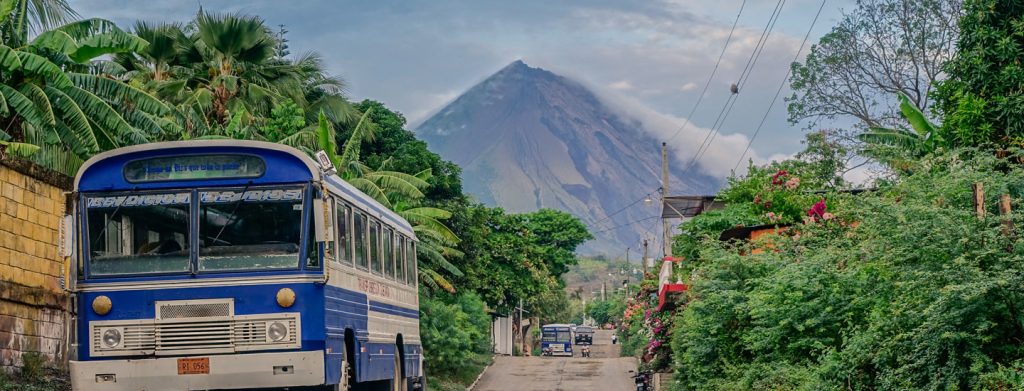
Ometepe is made up of active and dormant volcanoes (Concepción and Maderas) that seem to loom in the background of every photograph and activity. You can relax at Playa Mango, swim in Lake Nicaragua’s still waters, stay at a working chocolate factory in El Pital or hike waterfalls in San Ramon. The island is expansive, with so many pockets of culture, community and natural wonders to explore.
The only downside of Ometepe is that its remoteness means raised prices and renting transport or getting groceries is notably more expensive than on the mainland.

As I was with a friend, we stayed together in a self-contained eco-lodge in the hills of Merida called ‘The Dragon’s Garden’ (on Airbnb). Solo travellers might enjoy hostels like El Zipolte or El Pital.
Ometepe is popular enough that it’s quite easy to find a place that suits your travel style, but the vibe depends on where you base yourself. The island has 5 main hubs, and our Ometepe guide breaks it all down.
Corn Islands
The Caribbean side of Nicaragua is famously underexplored, and requires leaving the straightforward Pacific route – often flying directly from Managua to Bluefields or Big Corn island. If you’re on a budget, a bus ride to Bluefields and taking a seven hour slow boat to the islands is also a possible but very long option!


A tedious journey promises an attractive prize– and palm-lined beaches, car-free communities and a taste of the Nicaraguan Caribbean is definitely worth it. The islands have the free-spirited, friendly energy of somewhere like Caye Caulker in Belize or Bocas del Toro in Panama without the crowds, or super-touristy infrastructure.
Slightly more expensive than the rest of Nicaragua due to their offshore nature, but if you want to explore the country completely and have cash to spare, I’d recommend a detour.

The Corn Islands are two islands, Big Corn and Little Corn, and you can easily do both.
“Little Corn offers the barefoot, unplugged island escape that most weary backpackers crave after months on the road. In fact, something I heard while I was visiting truly described it well — that Little Corn Island is the way Caribbean life used to be, and having visited, I couldn’t agree more”, says Jade, who shares everything she learned in her Corn Islands guide.
Arrival and getting around
People arrive in Nicaragua one of two ways. Either via air into Managua, or overland from El Salvador and Honduras, increasingly including the boat trip from La Union to Potosi that travellers avoiding Honduras for visa or safety reasons tend to opt for.
Arriving in the north often means starting in Leon, which makes the most logistical sense for those travelling down through Central America. The drive from Managua to Leon is only 1.5 hours, so you can easily rejoin the route if you needed to enter Nicaragua via the airport.

A common sequence is: Mexico → Belize → Guatemala → El Salvador → Nicaragua → Costa Rica → Panama
I flew into Managua from El Salvador and stayed a night in the city before moving on to Ometepe. I’d purely chosen this route to match my plans with friends, and if (hopefully when!) I visit Nicaragua again, I won’t waste time in Managua. My arrival in the city (at 3am on a deserted highway after long flight delays!) was slightly spooky, and perhaps got me and Nicaragua off on the wrong foot. I know now that most travellers pre-arrange immediate travel outside of Managua to more tourist-friendly locations.

If I was a solo traveller who enjoys meeting people, I also wouldn’t start on Ometepe island. The island is beautiful and worth doing, but I can imagine quite an isolating introduction without picking up travel friends or getting used to Nicaragua on the way.
Once in the country, most major highlights sit just a few hours from each other, and are easily accessed by private transfers or local services. Most transport links revolve around the town of Rivas – the gateway to Ometepe island, that lies in the middle of San Juan del Sur, Popoyo and Granada but isn’t necessarily a popular town for travellers itself.
Route inspiration
Differing arrivals and distances can make planning a Nicaragua route without feeling like you’re missing out or going ‘the wrong way’ quite difficult, and depending on time or budget, it can be hard to know what to cut from an itinerary to maximise your experience without losing out on a must-do.
The following three routes give an honest assessment of how much you can see and do in each location in any given amount of time.
The best of the best of Nicaragua (10-12 day route)
If you’re short on time in Nicaragua, but want surf, volcanoes and city breaks, this route (starting in Leon) is the perfect whistle-stop tour.
Leon: 3 nights. Enough time to explore the city’s cultural and artistic scene and recover from volcano boarding and any subsequent nightlife endeavours. (1.5 hours from Managua, 2.5 from a Potosi arrival)
Granada: 4 nights. A base to see both the city, surrounding lagoons and volcanoes and take longer, guided trips into the countryside and to Lake Nicaragua. Stay on a Friday for the infamous treehouse rave. (2.5 hours from Leon, 1 hour from Rivas).
San Juan del Sur: 3 nights. Have a long weekend in this Pacific surf town, hitting Sunday Funday and recovering with a hike or lazy beach day. (1.5 hours from Granada, 1 hour from Rivas, 1 hour from the Costa Rican border).
Optional Extras: a daytrip or 2-3 nights on Ometepe Island. Accessed via the ferry port in Rivas, early day trips from Granada can include specific island hikes, and a few days with strategic tours and transport could give you a brief, but well-rounded island experience.
A semi-Nicaraguan circle (15-18 day route)
An average speed traveller will likely match the pace of this route with optional detours and daytrips to lesser known, but still worthy, destinations.
Leon: 4-5 nights in the city is enough even for those with time to spare in Nicaragua, with an extra night to include a potential daytrip to nearby Esteli – a less popular but interesting, cigar-producing highland city near to a significant canyon site. (1.5 hours from Managua, 2.5 from a Potosi arrival, 2 hours from Esteli)
Granada: 4-5 nights. An extra day to recover from the treehouse rave, spend an afternoon at Lago Apoyo or a boat trip on Lake Nicaragua, and/or opt for a longer trek to a neighbouring volcano. (2.5 hours from Leon, 1 hour from Rivas, 30 minutes to Lago Apoyo).
Ometepe Island: 4-5 nights. A good stretch of time to really get a feel for Ometepe, cruise its winding coastal roads, and stay on the side of the island furthest from the ferry, where some of the best views, experiences and accommodation are located. (60-90 minute ferry crossing from Rivas)
San Juan del Sur: 3-4 nights. I still stand by SJDS’s weekender energy, but 4 nights allows for multi-stop surfing days, breathing space between party nights, and is more aligned with that free-spirited, hippie energy that the town exudes (1 hour from Costa Rican border, 2 hours from Popoyo)
Optional extras: Take a day trip, or spend 1-2 nights in Popoyo. Beach lovers and budding surfers who are keen to grab more of the coast would definitely enjoy this add-on, and Popoyo is easily ‘completed’ in a day or two if you’re short on time.
A full Nicaraguan slow travel circle (~ 1 month)
I’d argue for slotting 5-7 days on the Corn Islands either at the start or end of any Nicaragua trip. This often saves doubling back to Managua, you might be able to find flight deal combinations, and the islands are not really ‘on the way’ to anywhere else.
Leon: I’m still holding out for only 4-5 nights in the city, this time with more space to treat Esteli as its own stop.
Esteli: 3-4 nights. This highland town is the home of Nicaragua’s cigar industry and full of historical and cultural quirks unlike anywhere else in the country, you can also take a day trip to the nearby Somoto Canyon.
Granada: 5-7 nights. Just under a week in Granada secures your spot at the treehouse rave, allows for excursions to every volcano and lakeside view within radius, with time to become a regular at Granada’s arty coffee shops or lively courtyard bars.
Ometepe Island: 5-7 nights. To feel Ometepe’s strange and magnetic energy, I do feel like you have to go a little bit crazy there. A week, or even slightly more, is perfect for spacing out adventures, having chilled out days at the beach or throwing a dart on the map and seeing where on the island you end up.
Popoyo: 3-4 nights. Surfers and ocean lovers definitely need a few days to enjoy every corner of Popoyo, and slow travellers could easily set up camp for longer.
San Juan del Sur: 5-6 nights. A farewell to Nicaragua if you leave via the nearby Costa Rican border, enough time to visit all of SJDS’s beaches, mooch about town, enjoy a Sunday Funday and feel the repercussions without a hungover travel day. (2 hours from Managua makes it an easy airport return, too)