This article contains affiliate links. We may receive compensation if you make a purchase using one of these links at no additional cost to you. See our Disclaimers and Terms of Use for more information.

Discover 40 iconic noodle dishes that span the world. They all taste great whether you eat them in Asia, Europe or at home.
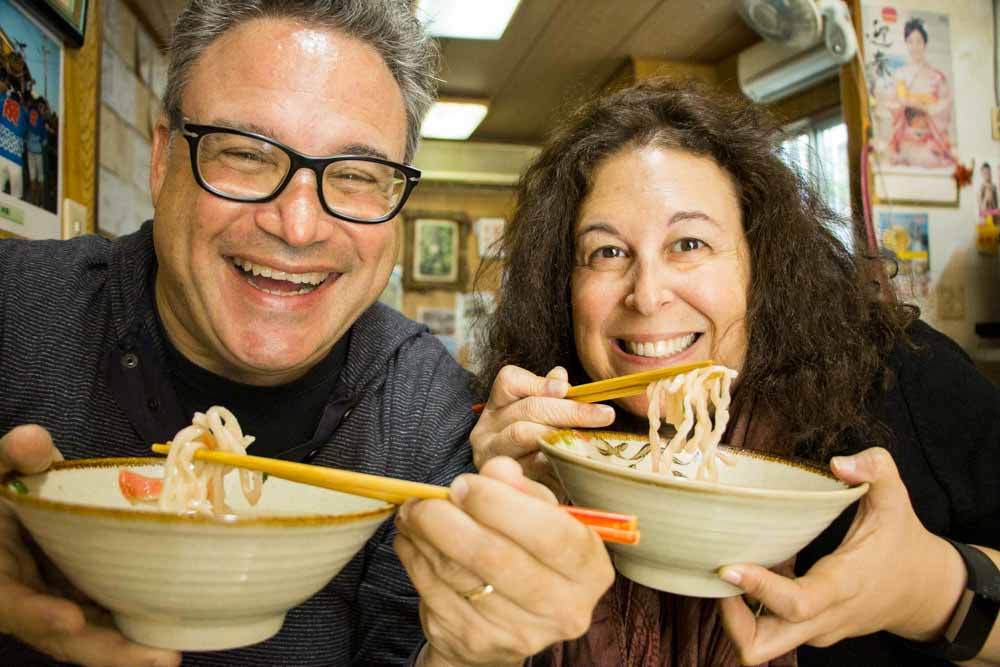
After slurping an auspicious amount of noodles with chopsticks and twirling just as many with forks, we’re ready to share our picks for the best noodle dishes in the world. Some feature noodles extruded through a machine while others have hand-crafted noodles.
We’ve included noodles made with wheat flour, rice flour, buckwheat flour and even sweet potato starch in this list. You really need to eat them all at least once during your life.
Read on to discover our picks for the best noodles in the world:
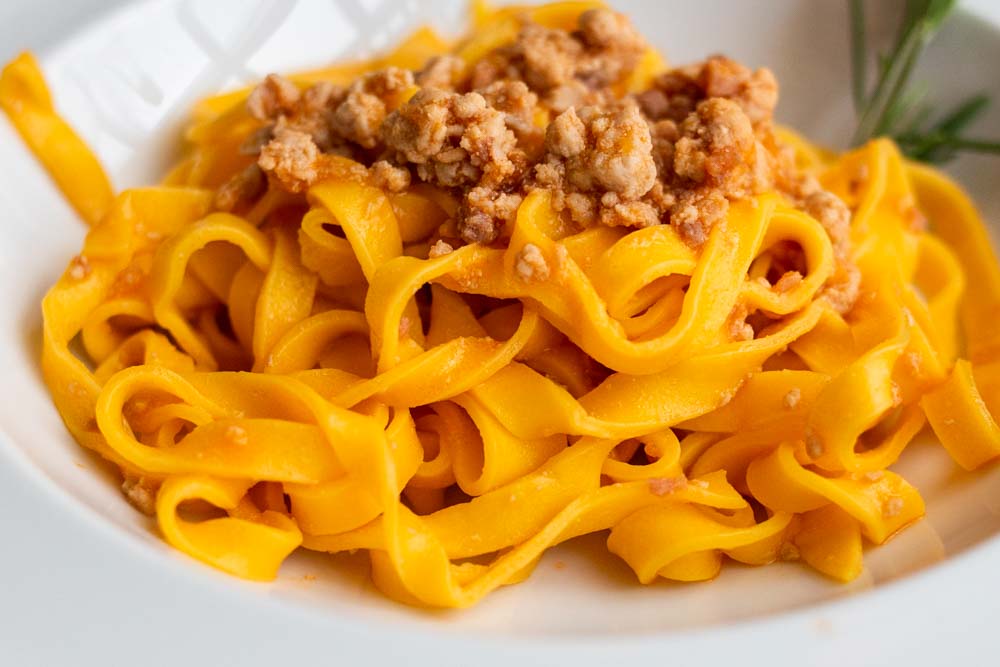
Tagliatelle al ragù is the shining pasta star in Bologna, a city so food-focused that it earned the nickname La Grassa (the fat one) within Italy. Many have copied this noodle dish but there’s nothing like eating a plate of tagliatelle al ragù at the source.
Dating back to the 1700s, classic ragù includes a range of ingredients that starts with a soffrito (a mirepoix of celery, onions and carrots), a small amount of tomato (ironically not the dominant ingredient in Bolognese ragù), olive oil, milk, ground meat (beef, pork and veal), white wine and occasionally nutmeg.
Pro Tip
Pair your tagliatelle al ragù with sparkling, ruby-red lambrusco for maximum enjoyment.
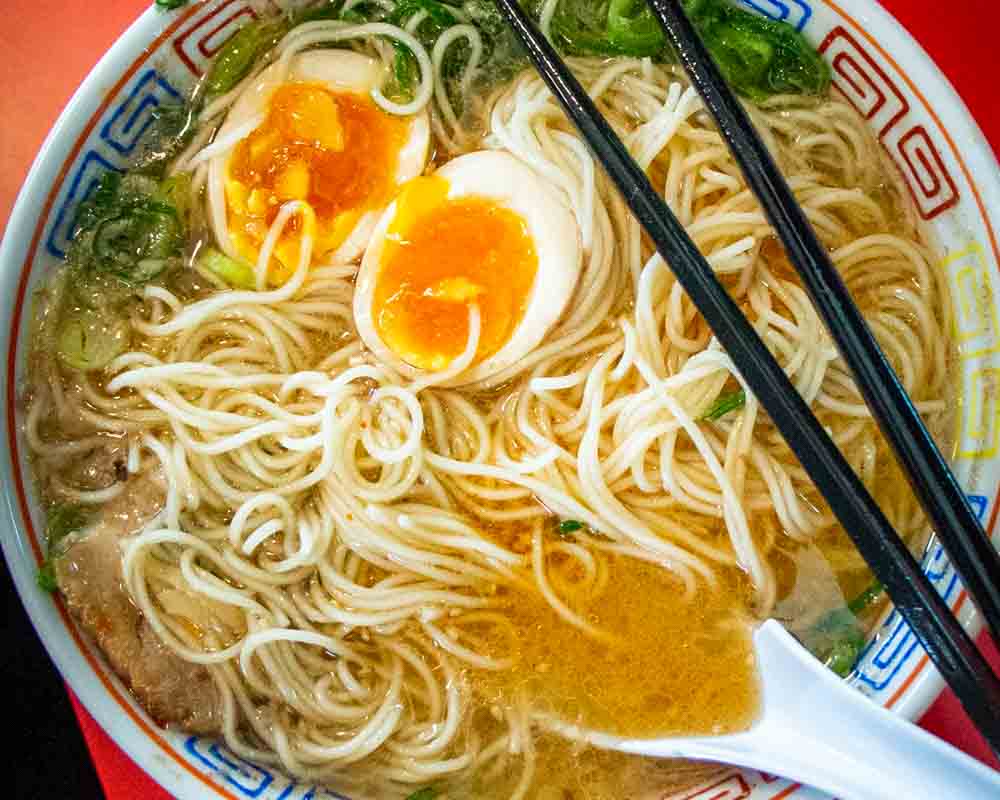
Ramen’s inspiration comes from East China’s wheat lamien noodles; however, after more than a century, it’s fair to give Japan credit for creating one of the world’s most popular noodle soups. This noodle soup features a range of broth options including dark porky tonkatsu, salty dark shoyu, simple seasoned shio and funky miso.
Beyond wheat noodles and regardless of the broth, expect ingredients like chāshū (pork), nori (seaweed), scallions and a softly boiled egg when you order ramen. This applies whether you’re in Japan or anywhere else in the world.
While we’ve slurped ramen in global cities like Budapest, Copenhagen, Girona, Lisbon, London, New York and Paris, none have matched the quality of the bowls we’ve slurped in Japan. Whether we’re in Fukuoka (Hakata ramen’s homeland) or cities like Kyoto, Osaka, Naha or Tokyo, we never regret eating ramen in its home country.
Pro Tip
Ramen is a freestyle eating event. While certain varieties are typically always on offer, it’s not unusual to find regional styles within Japan as well as in destinations like Spain and Tennessee.
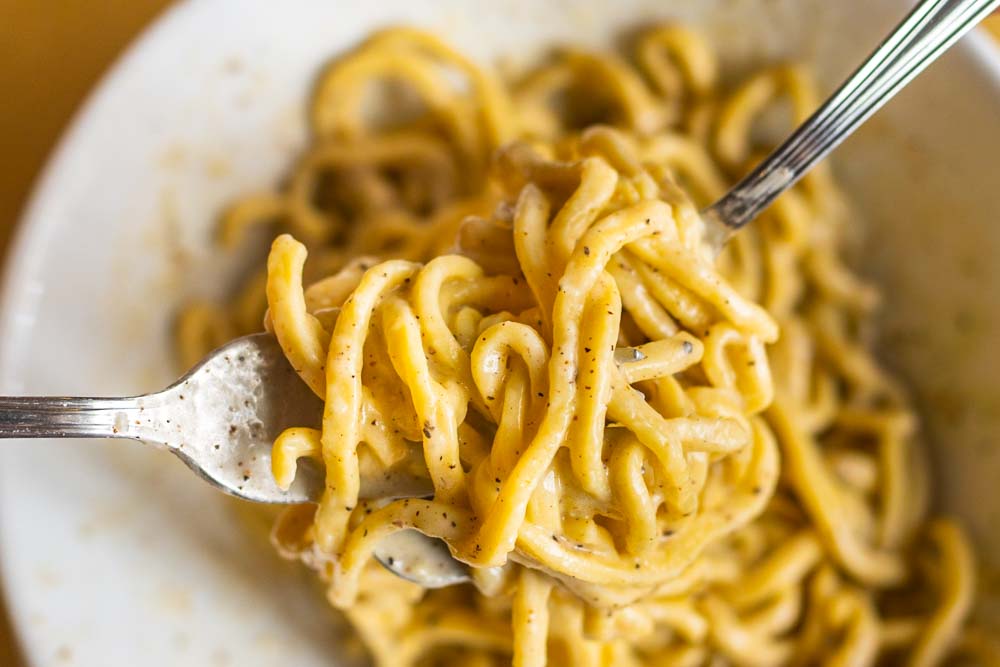
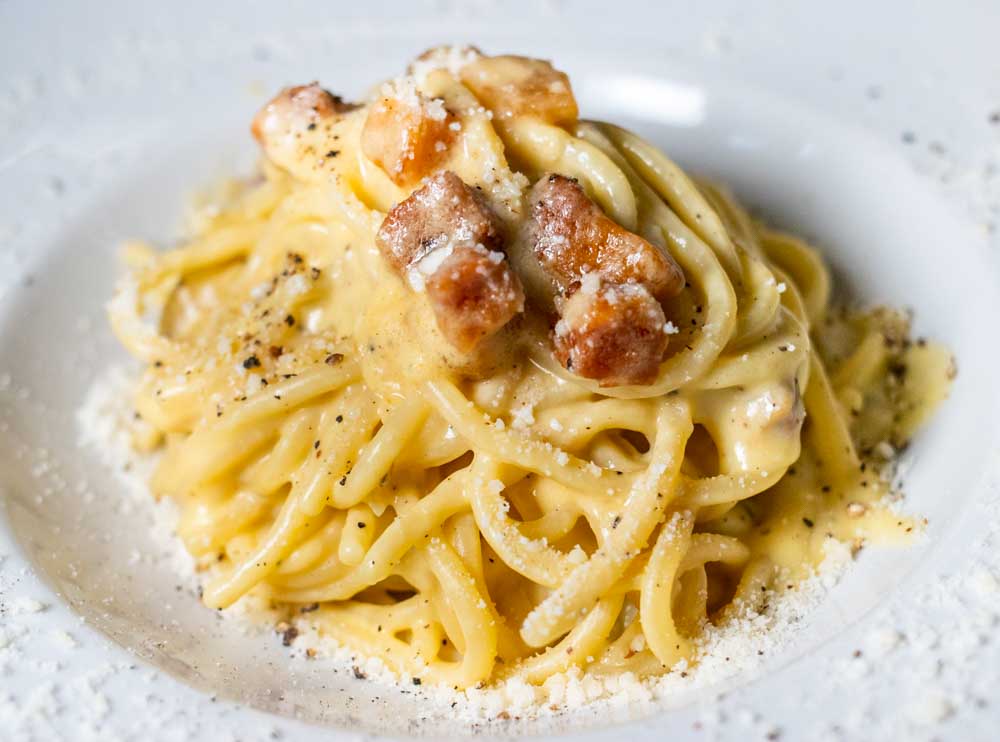
Cacio e pepe is the king of Roman pasta despite a seemingly simple recipe with just three ingredients. Beyond the two ingredients (cheese and pepper) in its name, cacio e pepe’s only other ingredient is pasta.
When we’re not in Italy, we prepare cacio e pepe at home using Pecorino Romano and pasta just like Roman chefs and nonnas use in Rome. We’ve even perfected a cacio e pepe recipe that’s both easy to cook and tasty to eat.
Pro Tip
Consider cooking amatriciana or gricia at home if you want to experience a popular Roman pasta that’s not so easy to find at restaurants outside of Rome.
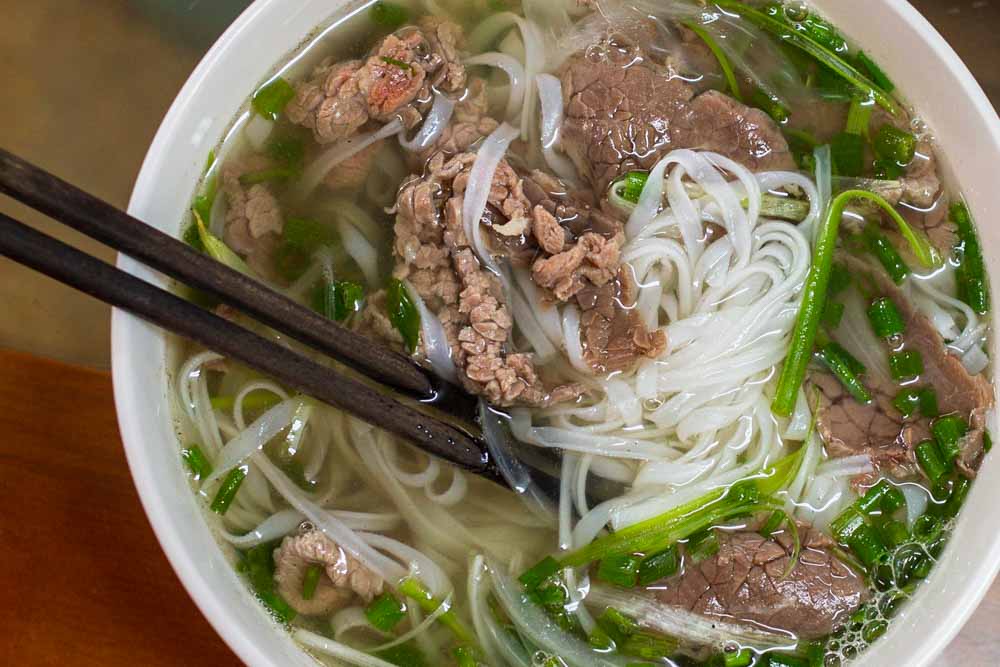
While phở is to Vietnam what ramen is to Japan, the two Asian noodle soups are actually quite different. Unlike ramen, phở has flat, fettuccine-like phở noodles and a broth that varies based on its origin. Also, unlike Ramen which has Chinese influences, phở is more aligned with elements of French cuisine.
In cities like Hanoi, the Vietnamese eat phở for breakfast and throughout the day. Popular varieties include phở bò with beef and phở gà with chicken. Both versions are pure magic when cooked low and slow before being ladled into the bowl and topped with herbs.
Pro Tip
Add red peppers or a dash of hot sauce if you want to spice up your bowl of phở.
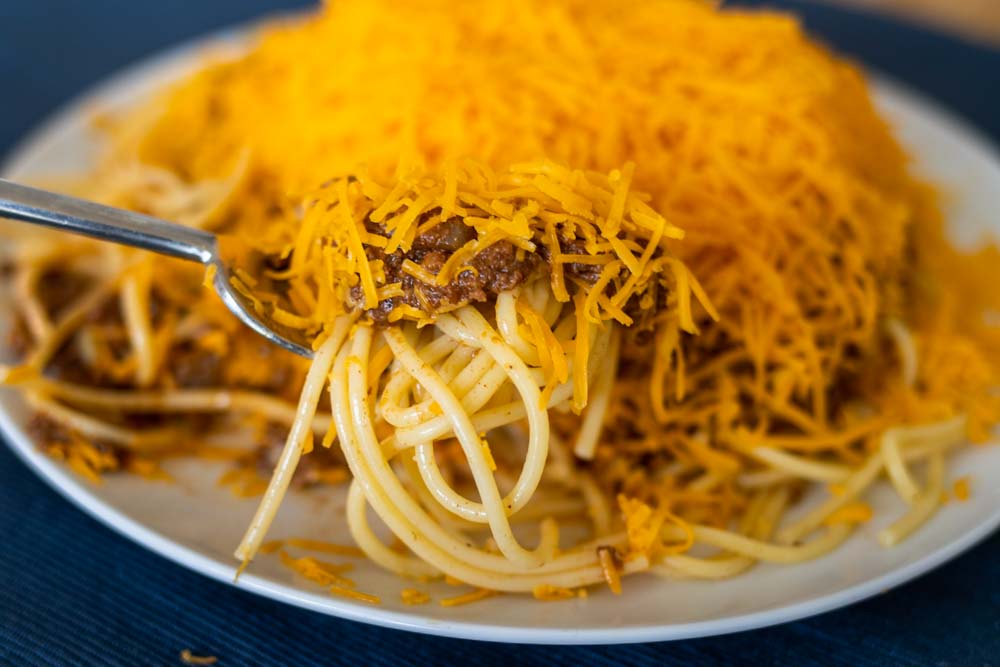
Cincinnati chili is an all-American noodle dish. Not only is this dish big and tasty, but it also reflects the country’s melting pot. Macedonian immigrants invented this dish with Italian noodles and Mediterranean spices while living in Ohio. Phew.
Although adding spices like cinnamon and nutmeg to chili and then piling it on top of spaghetti may sound odd, the combination works. An orange tower of shredded cheddar makes it even better, though some people take the dish even farther by adding chopped onions and kidney beans.
Pro Tip
Order 3-way chili if you just want cheddar cheese. Otherwise, ramp up to 4-way or 5-way if you want to add onions and/or beans.
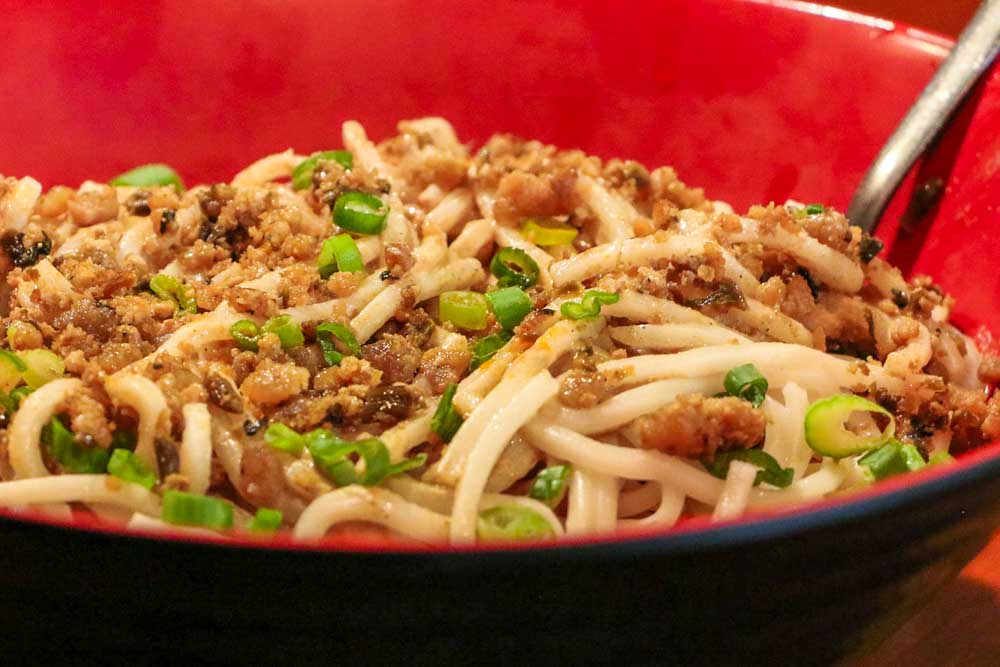
Eating dan dan mian (dan dan noodles) isn’t for the weak. This noodle dish packs a wallop thanks to a one-two punch of burning chili oil and numbing Sichuan peppercorns. But those who love spicy food will love eating this dish whether they’re in China or at a Chinese restaurant like Han Dynasty in Philadelphia.
We fell for the classic Sichuan noodle dish in Chengdu when we ate our first comforting bowl of egg noodles mixed with spicy meat sauce. Despite the mouth-numbing nature of the dish, that first bowl wasn’t our last.
Pro Tip
Have a drink at the ready when you eat dan dan noodles. You may need to take a big gulp to counteract the dish’s spicy flavors.
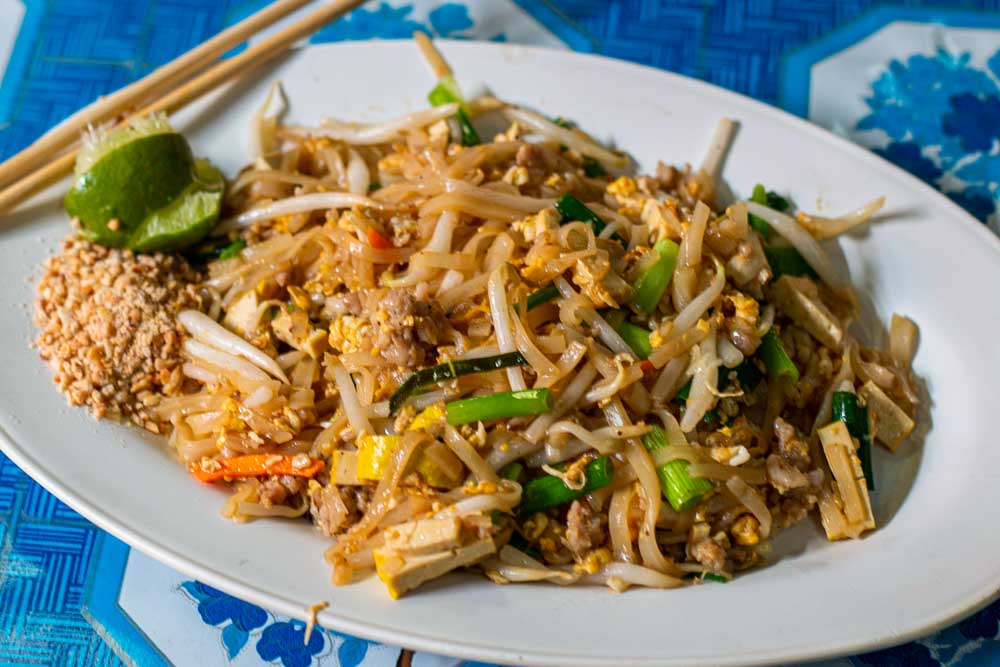
Many of Thailand’s best dishes have long and storied histories. Despite its global fame and mass availability, pad thai is not one of these dishes. Instead, the popular street food noodle dish was invented during the 20th century.
Thai cooks quickly prepare pad thai by wok frying rice noodles, bean sprouts, peanuts, egg and a protein (typically beef, chicken, shrimp or tofu) with lemongrass and kaffir limes in a wok. Much of the dish’s signature flavor comes from additional ingredients like fish sauce, garlic, red chili peppers and palm sugar.
Pro Tip
Don’t forget to squeeze fresh lime juice on your pad thai while the noodle dish is hot.
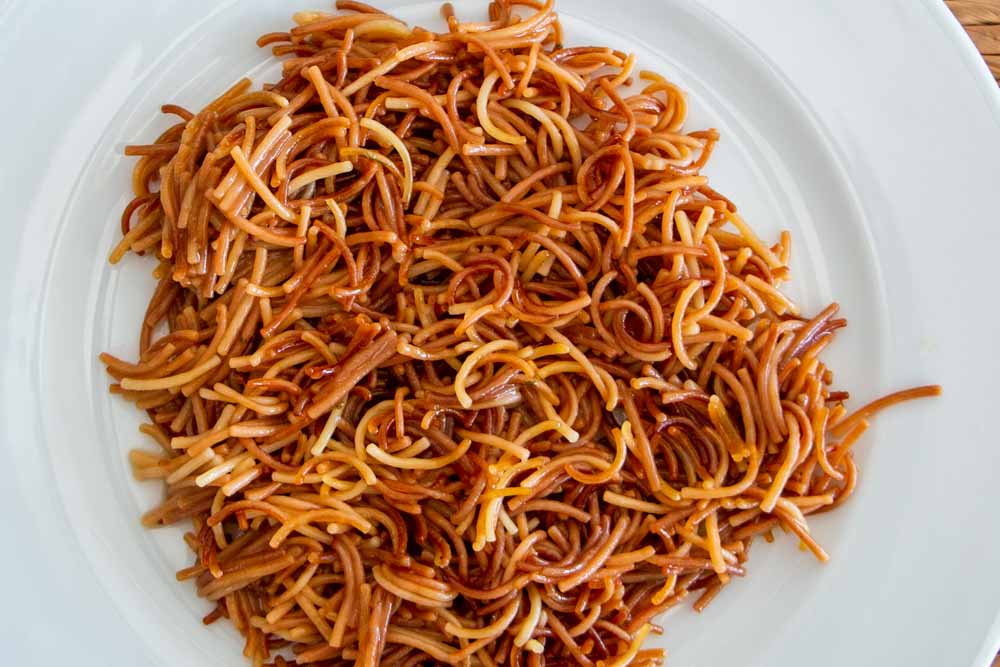
Despite luxurious ingredients like prawns, squid and saffron, fideuà was originally a noodle dish of poverty eaten by Spanish fishermen. We learned this and more during an interactive cooking class at the Palamós fish market during the month we lived in Girona.
We also learned that Catalonian cooks simmer short, golden noodles in rich broth flavored by Costa Brava’s bounty of fresh fish and seafood. Locals typically add a dollop of creamy, garlicky aioli for good measure whether they eat fideuà in a fishing village or in a city like Barcelona.
Fun Fact
Although this Spanish noodle dish is entrenched in Catalan cuisine, fideuà was originally invented in Valencia more than a century ago.
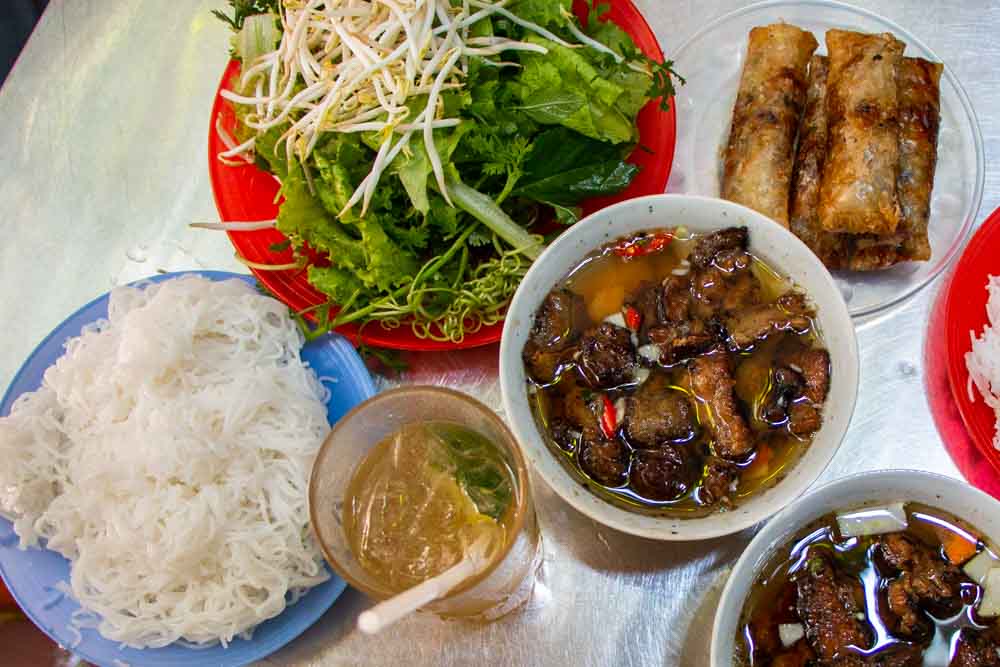
Bún chả was a local Hanoi food favorite until two dining companions catapulted this Vietnamese noodle dish into the international spotlight. Since those two diners were President Barack Obama and the late Anthony Bourdain, global interest was inevitable.
But what is bún chả? This savory noodle dish combines bún (rice vermicelli noodles) with chả (grilled pork) soaked in nước chấm (a sweet, savory sauce featuring fish sauce, sugar and vinegar). A mountain of fresh herbs including perilla (shiso) complete the meal.
Pro Tip
Order a side of nem (fried spring rolls) when you eat bún chả at a Vietnamese restaurant.
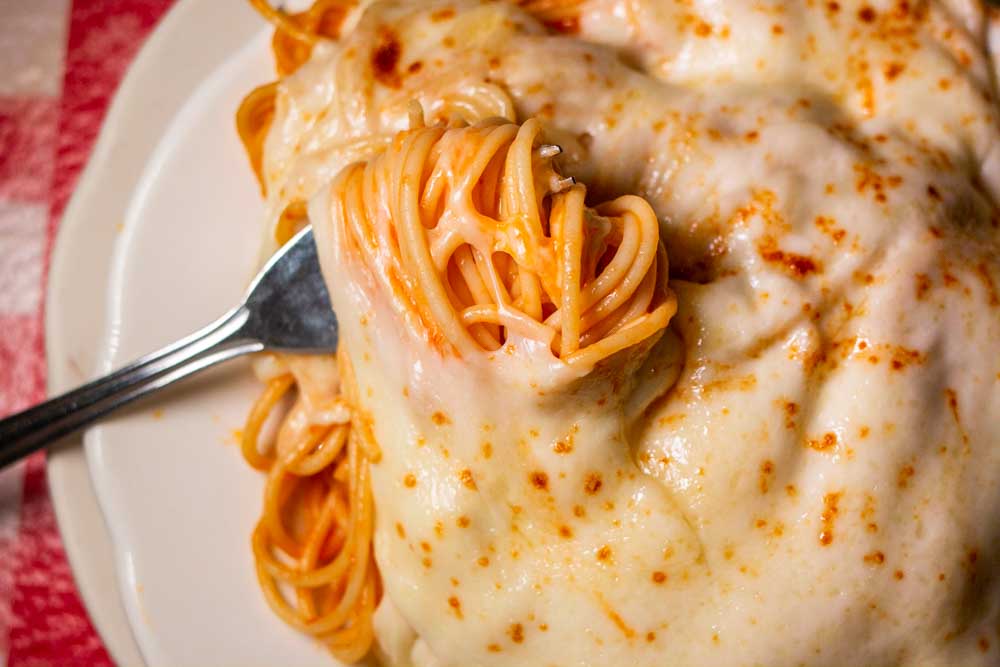
While spaghetti and Parmigiano-Reggiano are Italian products, spaghetti parm is as American as it gets. Or, in this case, Italian American. The team at Chef’s in Buffalo invented the iconic Buffalo dish in the 1960s and it remains the restaurant’s signature dish to this day.
While spaghetti parm has spaghetti as advertised, the chefs at Chef’s smother noodles with mozzarella cheese instead of Parmigiano-Reggiano. Shouldn’t it be called spaghetti mozz? Eaten with a side of marinara sauce, it’s a fun dish that tastes good despite its ironic name.
Pro Tip
Don’t be shy when adding marinara sauce to spaghetti parm. This is not a dish where less is more.
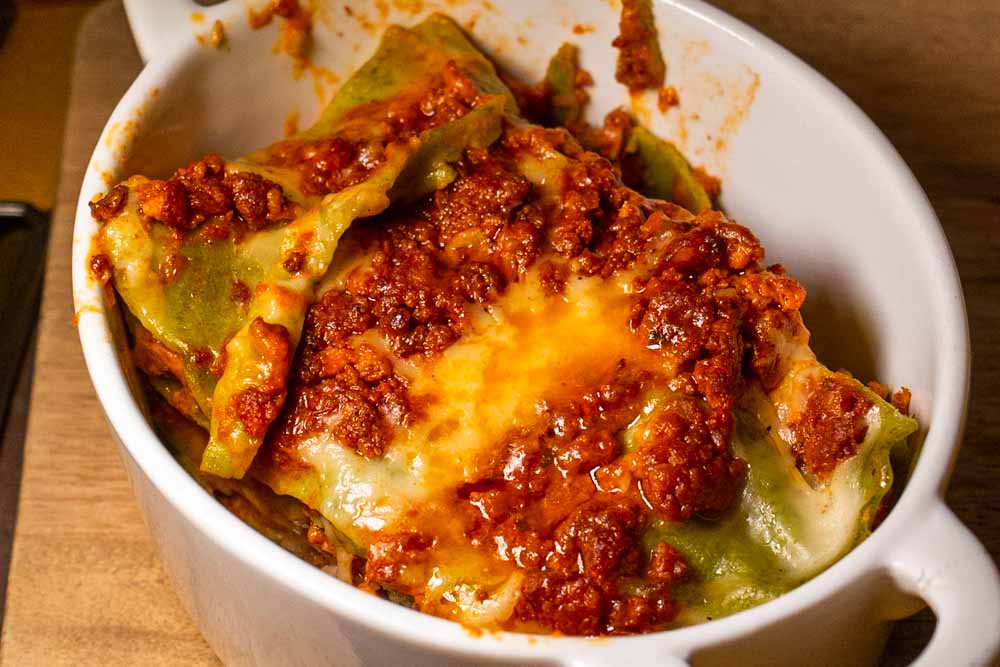
Lasagna is an Italian dish that dates back centuries. Although food historians trace the layered pasta dish back to Naples in the Middle Ages, it’s popularity spread throughout Italy up to the Food Valley in Emilia-Romagna and beyond.
The Emilia-Romagna version with layers of sheet noodles, ragù and Béchamel sauce is a little different from the lasagna of our youth. (That lasagna had ricotta and ground meat. You’ll find something similar to it in Southern Italy.) However, we can’t get enough of Bologna’s lasagne Verdi al forno with its colorful layers of green spinach noodles, ragù, béchamel sauce and Parmigiano-Reggiano.
Pro Tip
Spinach makes lasagne verdi al forno healthy. That’s our story and we’re sticking to it.
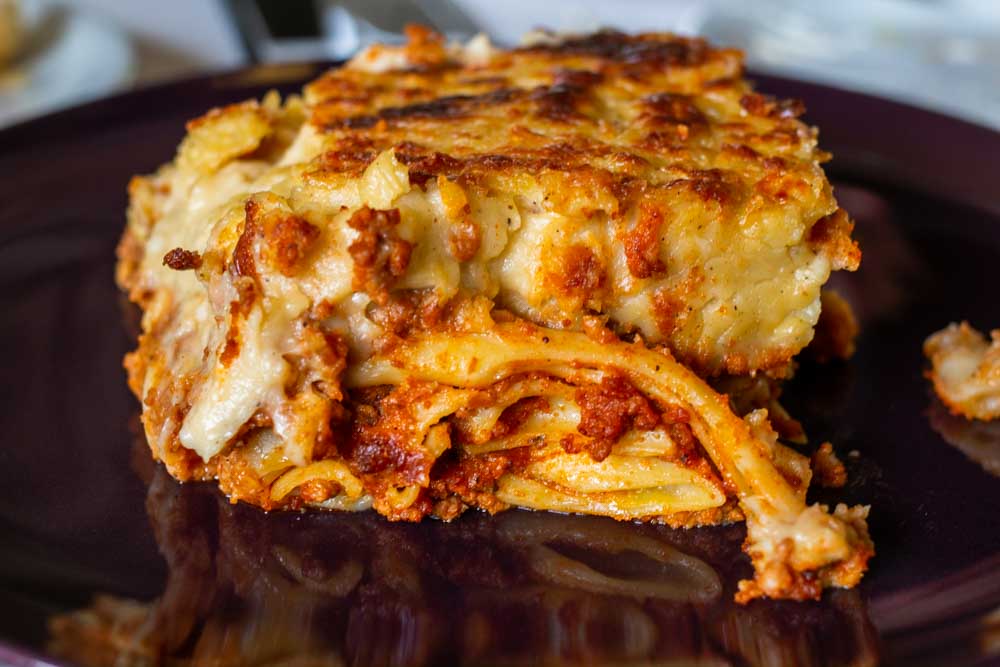
If you think that Greek pastitsio looks like Italian lasagna, you’re not alone. After all, both noodle dishes feature layers of pasta, meat sauce and béchamel. Plus, the word pastitsio has roots in the Italian language.
But, make no mistake, pastitsio is indeed Greek with Mediterranean spices like cinnamon, clove, nutmeg and allspice often in the recipe. A sprinkling of grated goat cheese adds to the Greek dish’s ‘Greekness’ as well as to its flavor.
Pro Tip
While the noodles in pastisio are usually tubular (think penne), other noodles work well in this dish too.
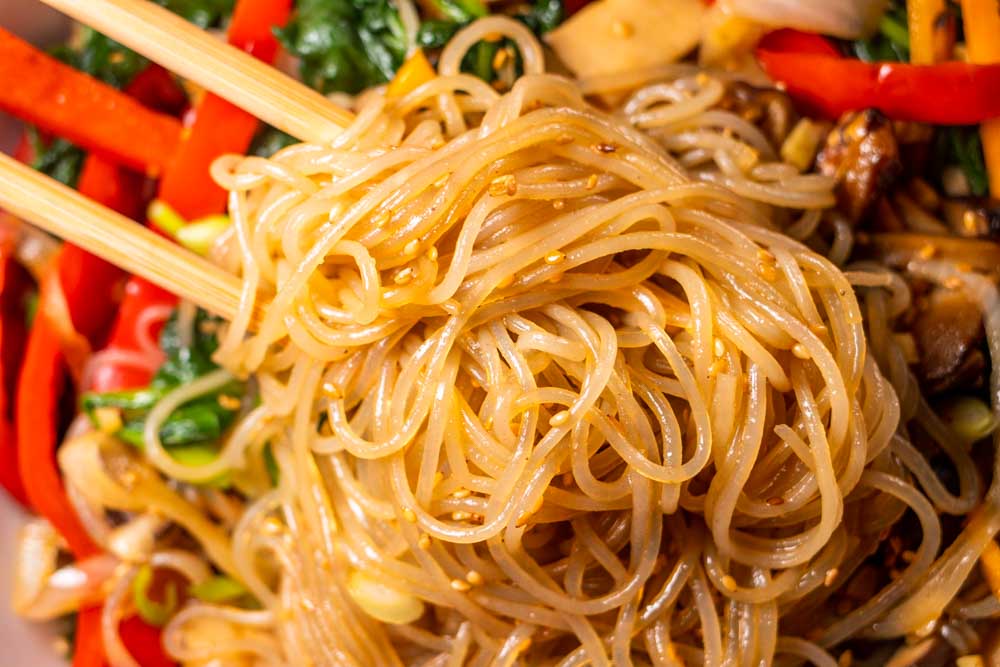
Japchae is a unique noodle dish in this list and not just because it’s the only one that hails from Korea. It’s also the only noodle dish featuring dangmyeon noodles made with sweet potato flour. With a cellophane or glass-like appearance, dangmyeon noodles are as chewy as they are translucent.
Originally a noodle-free dish eaten by royalty centuries ago, japchae became popular with the masses in the 20th century after dangmyeon noodles were added to the recipe. Other japchae ingredients include vegetables like carrots, onions, mushrooms, scallions and spinach as well as proteins like beef and pork. Sesame sauce, sesame oil and sugar provide the dish’s intense flavor.
Pro Tip
You can eat japchae as either a banchan (side dish) or main course.
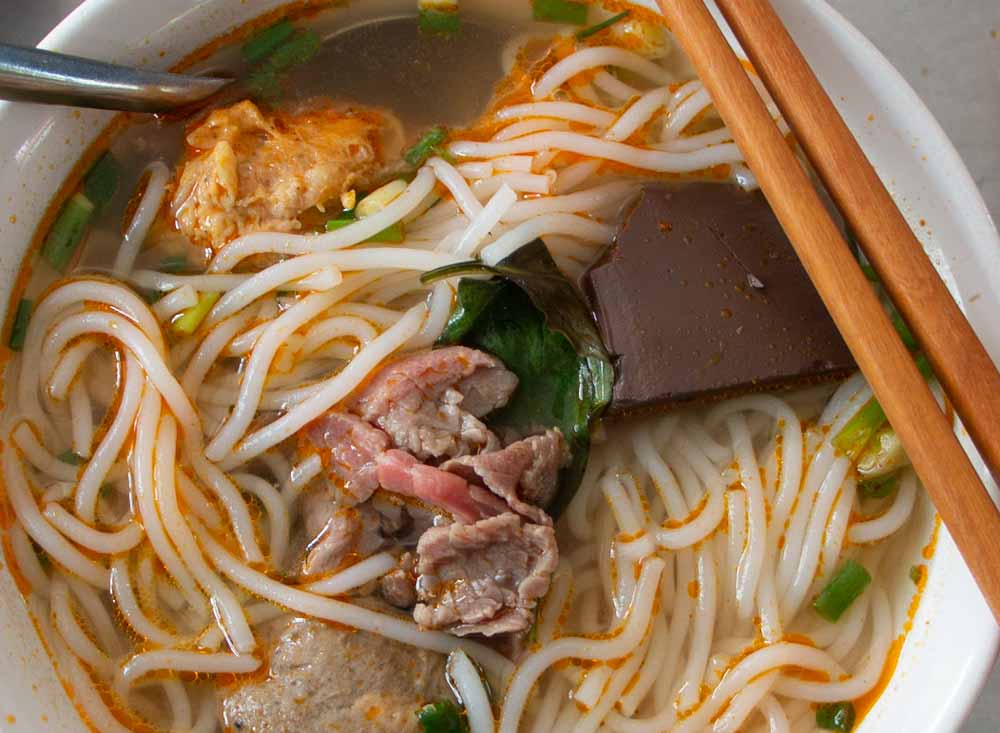
Bún bò huế may not have the global acclaim achieved by phở, but Vietnam’s ‘other’ soup is equally spoon-worthy with its deep and spicy flavors. While both soups have rice noodles, the ones in bún bò huế are shaped like vermicelli. The dish diverges further by adding carnivorous ingredients like beef shank, oxtail and pig knuckle to its recipe. Some bún bò huế recipes include a bonus bit: gelatinous pig blood.
Another difference between the two Vietnamese soups is origin. While phở was invented in Hanoi in the late 19th century, bún bò huế has 16th-century roots in the royal city of Hue. Despite its name, other Vietnamese cities serve this spicy noodle soup though they just call it bún bò.
Pro Tip
Add herbs, banana blossom and hot chili flakes to make this Vietnamese noodle soup’s flavor your own.
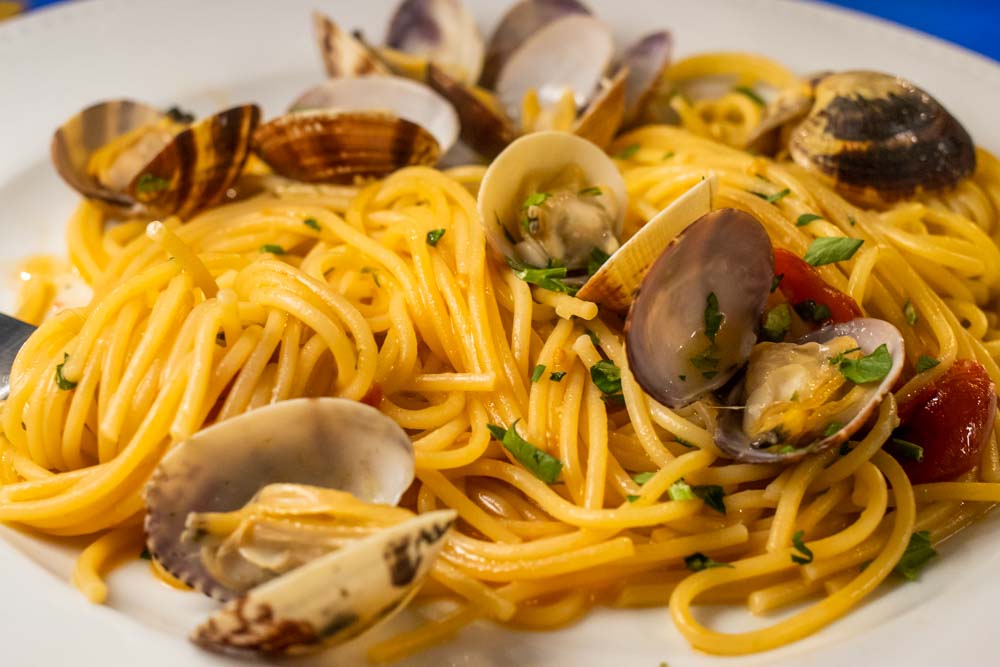
Although spaghetti alle vongole was invented in Naples, the simple dish that pairs spaghetti with clams is available throughout Italy. We’ve eaten the dish as far south as it Neapolitan home city and as far north as the canal-filled city of Venice.
Regardless of where you eat spaghetti alle vongole in Italy, you can expect spaghetti and clams as advertised in the dish’s name. Other typical ingredients include garlic, olive oil and white wine. Some pasta recipes add tomatoes as well, though this is more of a Southern Italian addition.
Pro Tip
Don’t add grated cheese if you want to eat this dish like a true Italian. Seafood and cheese makes Italians go “blech!”
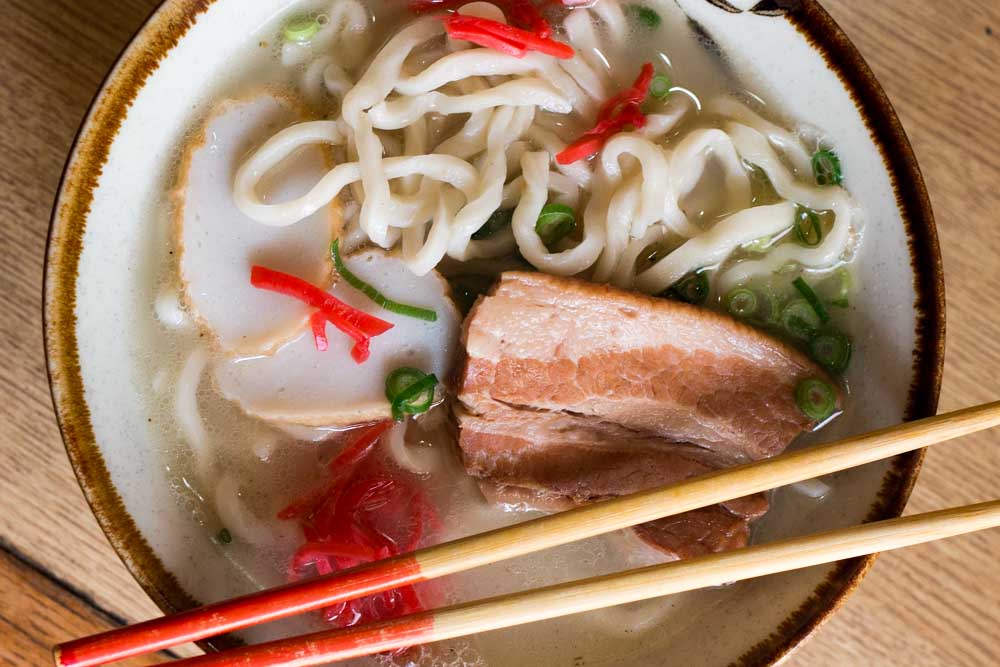
In Japan, the word soba refers to both buckwheat and noodles. With this in mind, it makes sense that soba (the dish) usually features noodles made with buckwheat. These noodles are typically longer and thinner compared to ramen and udon noodles featured in other Japanese dishes.
Interestingly, not all soba dishes and noodles are the same in Japan. The dishes can be both hot and cold with tsuyu (a flavorful mixture of dashi, sweet soy sauce and mirin) either inside the soup or on the side.
The Japanese dish Okinawa soba has wheat noodles instead of their buckwheat brethren. Go figure!
Pro Tip
Eat soba on New Year’s Eve. It’s a Japanese tradition!
Lasagna isn’t the only pasta worth eating in Emilia-Romagna. The region has an embarrassment of pasta riches that includes anolini, cappelletti, passatelli, tagliatelle, and tortellini.
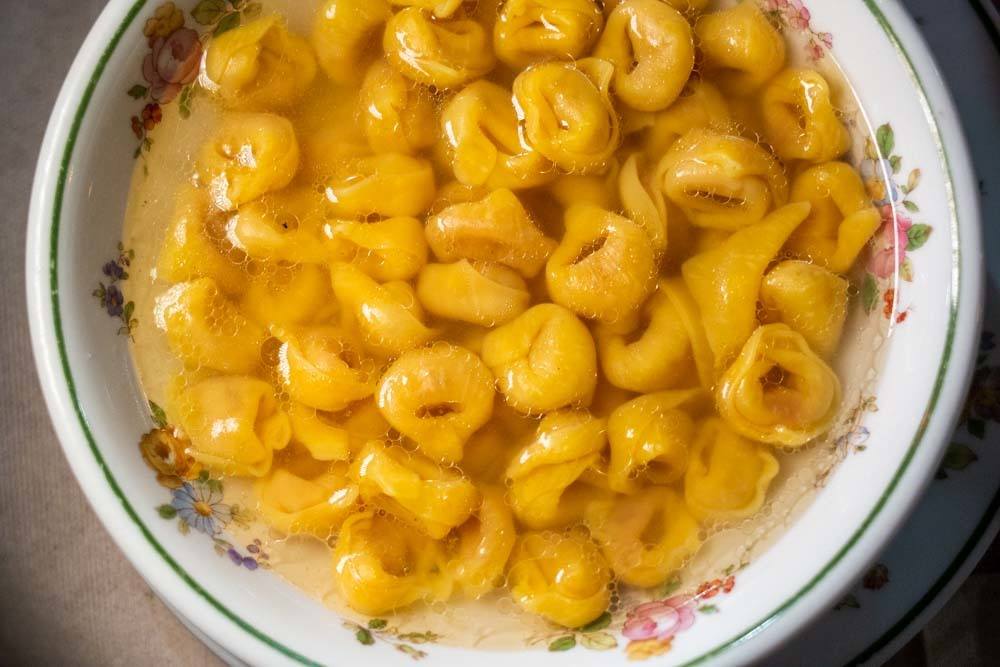
While we could easily wax poetically about each of these pastas, the noodle dish that stands out is tortellini. Not only have we taken classes to learn how to make this pasta (spoiler alert – it’s harder than it looks), but we’ve also eaten the meaty pasta morsels in various ways. In our opinion, the best way to eat tortellini in brodo at restaurants in Bologna and Modena.
Simply described as tortellini swimming in a bowl of capon broth, tortellini in brodo is that and so much more. It’s the dish we seek first whenever we return to Emilia-Romagna. It’s Italy’s version of comforting chicken noodle soup except that it has a sprinkling of Parmigiano-Reggiano cheese on top which makes it taste even better.
Pro Tip
As an option, you can eat tortellini topped with a creamy white sauce made with Parmigiano cheese.
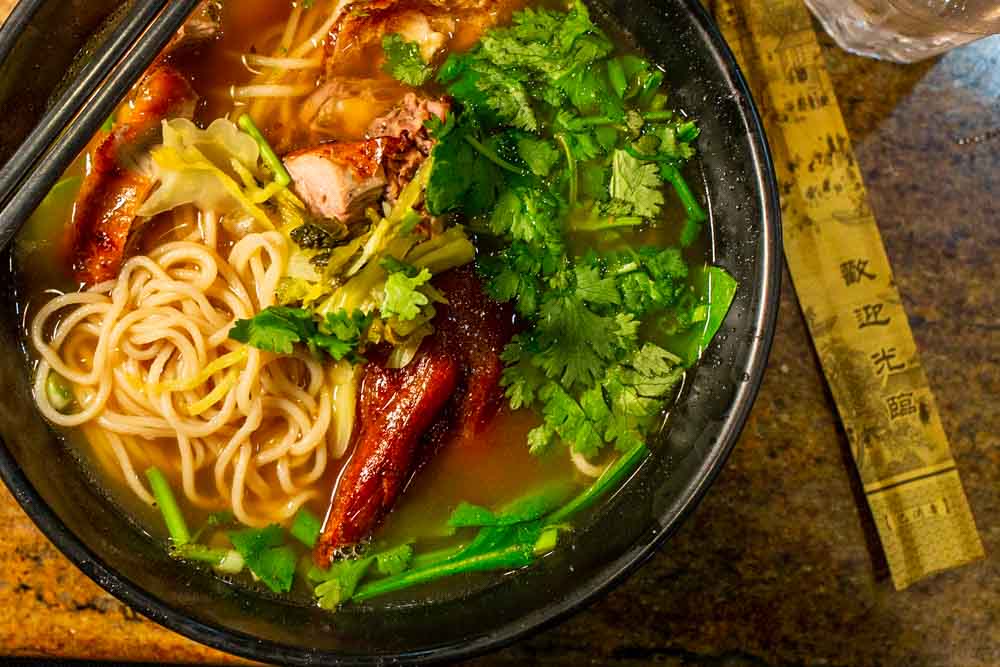
When it comes to Asian noodle dishes, the importance of lanzhou noodles can’t be overstated.
Industrious Chinese noodle makers invented these noodles in Lanzhou where they still pull and manipulate piles of dough into silky strands. Eating these noodles in a bowl of soup is our personal version of noodle heaven.
Fun Fact
Lanzhou translates to hand pulled noodle.
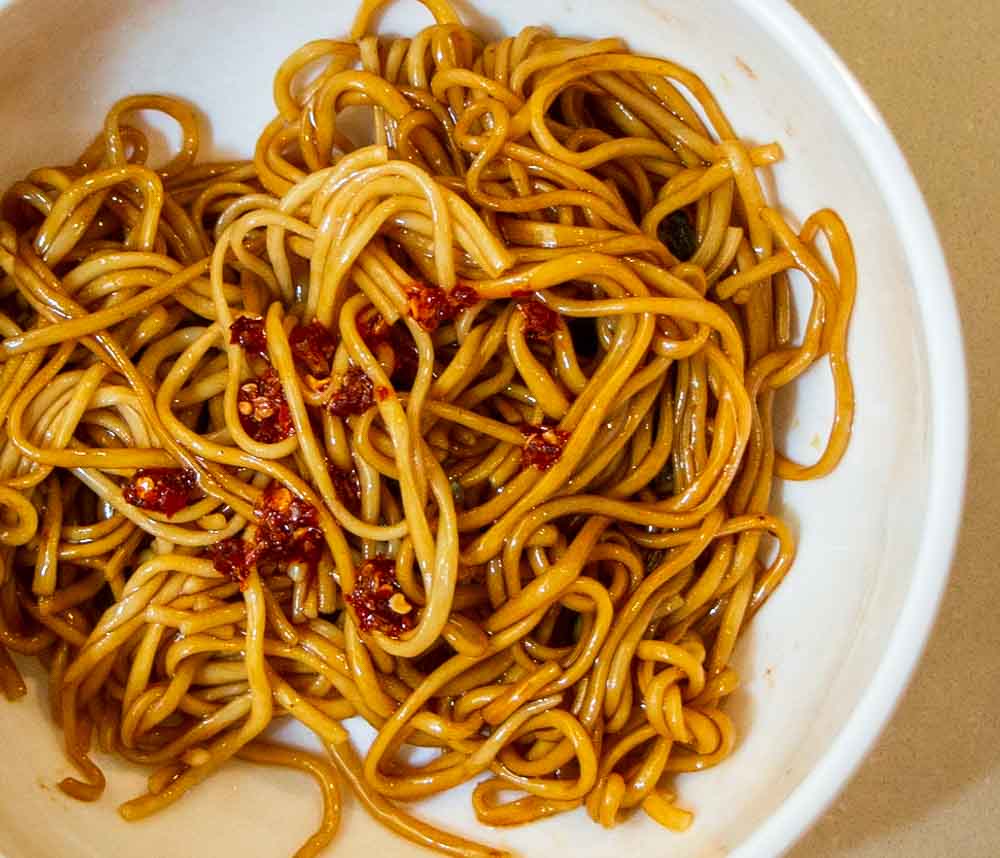
Eating noodles in cities like Shanghai is the equivalent of visiting Mecca for noodle lovers. While few food travelers make it to Lanzhou, most stop in Shanghai at some point in their journeys. We were no exception to this trend during our visits in both 2009 and 2018.
While we ate plenty of xiaolongbao (soup dumplings), eating plates of stir-fried noodles in Shanghai never disappointed us. We especially enjoyed eating heaping plates of lamian noodles made by hand and served with love.
Pro Tip
Look for lamian noodles in your corner of the world. They’re occasionally sold fresh in Asian markets.
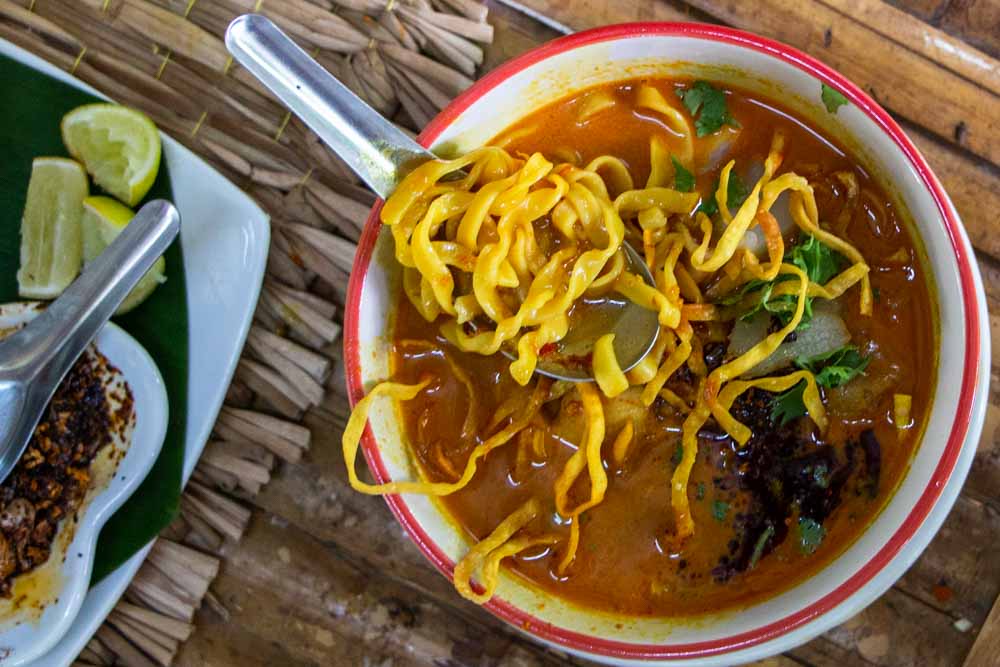
Dating back to the days of the Lanna Kingdom, khao soi can best be described as Thai comfort food in a bowl. The Northern Thai dish with Burmese roots is especially popular in the cities of Chiang Mai and Chiang Rai.
Thai cooks simmer khao soi low and slow for hours before serving the spicy Thai noodle soup. Ingredients include fresh and fried egg noodles as well as curry and coconut milk.
The is a dish developed by Islamic people so expect chicken or beef as the featured protein. Condiments like pickled mustard greens and ground chilies add a pleasing kick.
Check out our recipe for Thai panang curry noodles with meat sauce, another tasty Thai curry noodle dish.
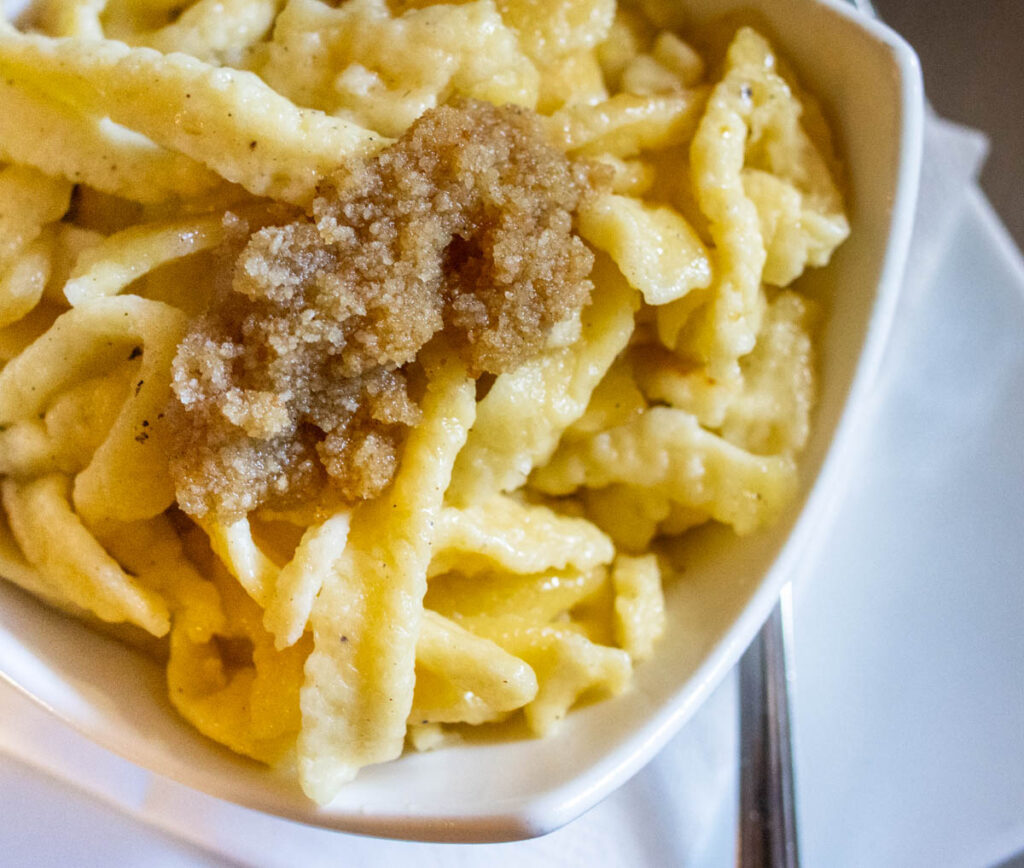
Spätzle, small noodles made with eggs, flour, salt and water, were originally made by hand three centuries ago in Southwest Germany. Or were they? Similar noodles are also popular in nearby countries including Austria, France, Hungary and Slovenia.
We’ve eaten spaetzle in all of these countries as well as in the United States. Regardless of their actual origin, these noodles qualify as Central European comfort food in our book. They make a great side dish and taste wonderful when smothered with cheese sauce or beef gravy.
Fun Fact
The word spätzle derives from spatz, which translates to little sparrow.
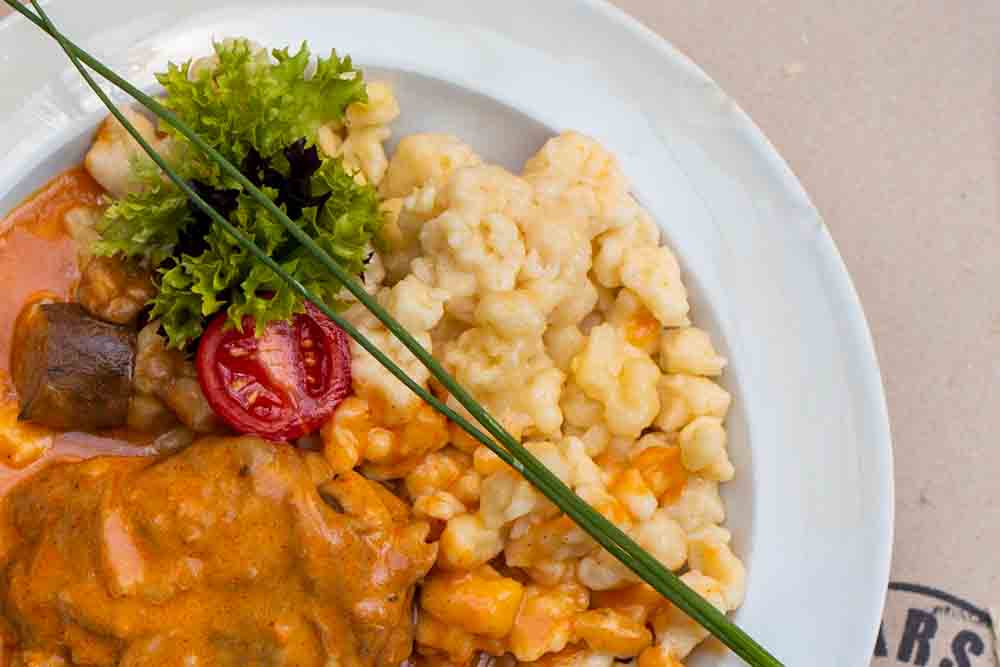
Also called Nokedli, stropachka are so similar to spaetzle that we did a double take the first time we ate them in Budapest. Since we spent over a month in Hungary’s capital, that first serving was far from our last. In case you haven’t noticed yet, we really like noodles.
The similarity between spätzle and stropachka isn’t surprising considering the close relationship between Germany and Hungary. However, eating the Hungarian noodle dish with goulash or chicken paprikash is better done in the Pearl of the Danube.
Pro Tip
Buy a spaetzle maker from Amazon if you want to make stropachka at home. The noodles are that similar.
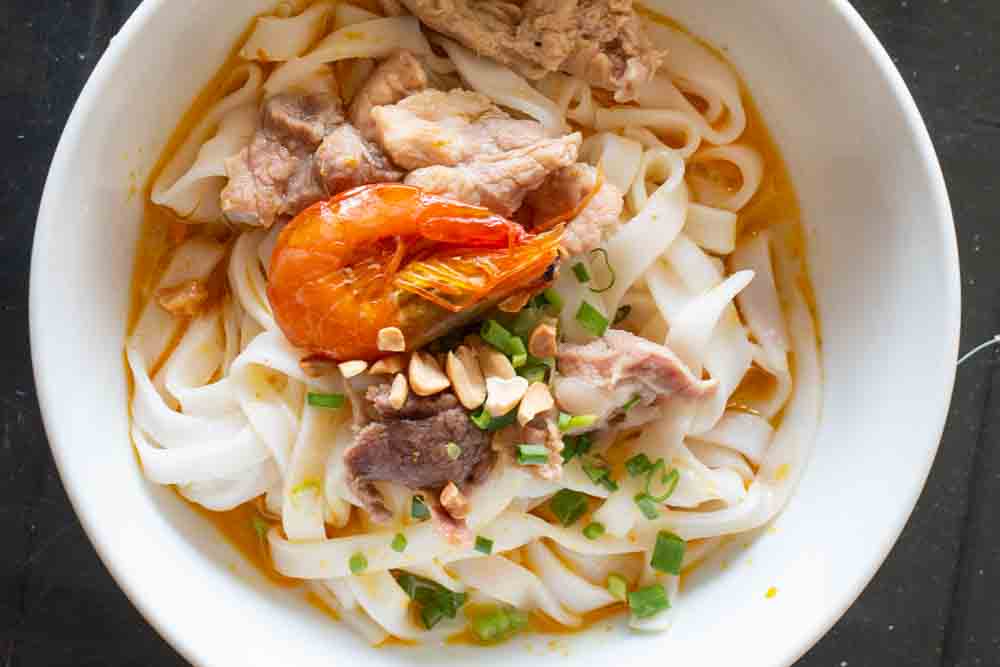
The Vietnamese rice noodle dish called mì quảng (pronounced mee wong) is a breakfast staple in Central Vietnam cities like Da Nang and Hoi An. In fact, missing the dish during a visit to either city would be ‘mì wrong’.
More than just wide rice noodles, mì quảng is a soupy dish with protein (typically chicken, eel, pork or shrimp) on top and herbs on the side. Optional condiments like chili and fish sauce add extra oomph.
Pro Tip
Mì quảng is a two-utensil dish. You’ll want to use chopsticks to eat the noodles and a spoon to lap up the beefy broth.
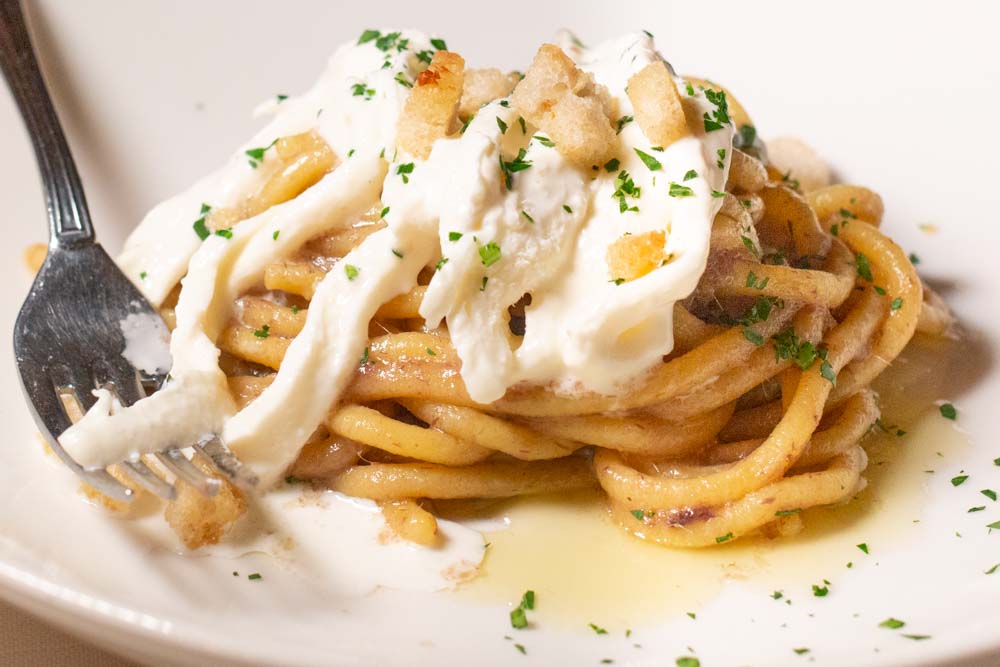
With 20 distinct regions, each with its own pasta specialties, Italy has a lot of different pastas in its noodle arsenal. In the Veneto, one of those pasta specialties is bigoli in salsa.
We ate this Italian noodle dish in Verona and then we ate it again in Venice. But what is it?
Venetians and their neighbors have been eating bigoli, thick spaghetti noodles, for centuries. The salsa, or sauce, is traditionally made with salty sardines or anchovies. In a nod to Venice’s position on the historic silk road, some chefs add cinnamon to this pasta dish.
Pro Tip
Don’t skip bigoli in salsa if you’re not a fan of anchovies or sardines. Other protein options include octopus and duck ragù.
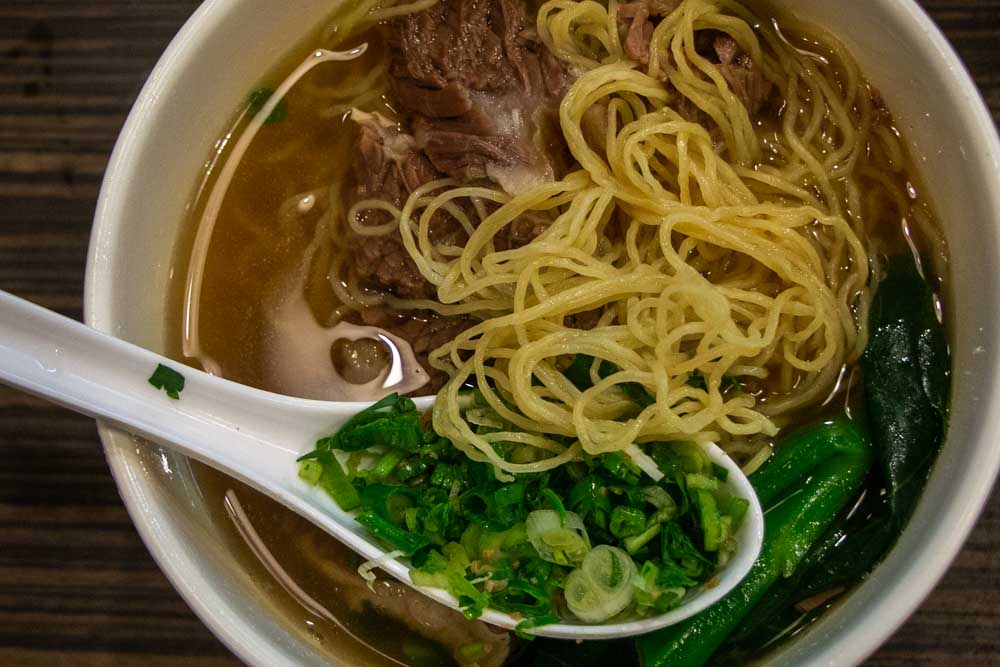
Jook-sing mein, descriptively known as bamboo pole noodles, is a relatively new Hong Kong noodle dish having ‘only’ been around for a century, give or take. However, due to its laborious preparation, this dish may not survive the test of time.
Considering that workers literally bounce on bamboo poles to make bamboo pole noodles, the dish’s name makes sense. Eating a hot bowl of these al dente noodles along with savory broth, braised beef and crunchy greens makes even more sense.
Pro Tip
Eat bamboo pole noodles as soon as you arrive in Hong Kong. You don’t want to chance missing this noodle during your trip and in your life.
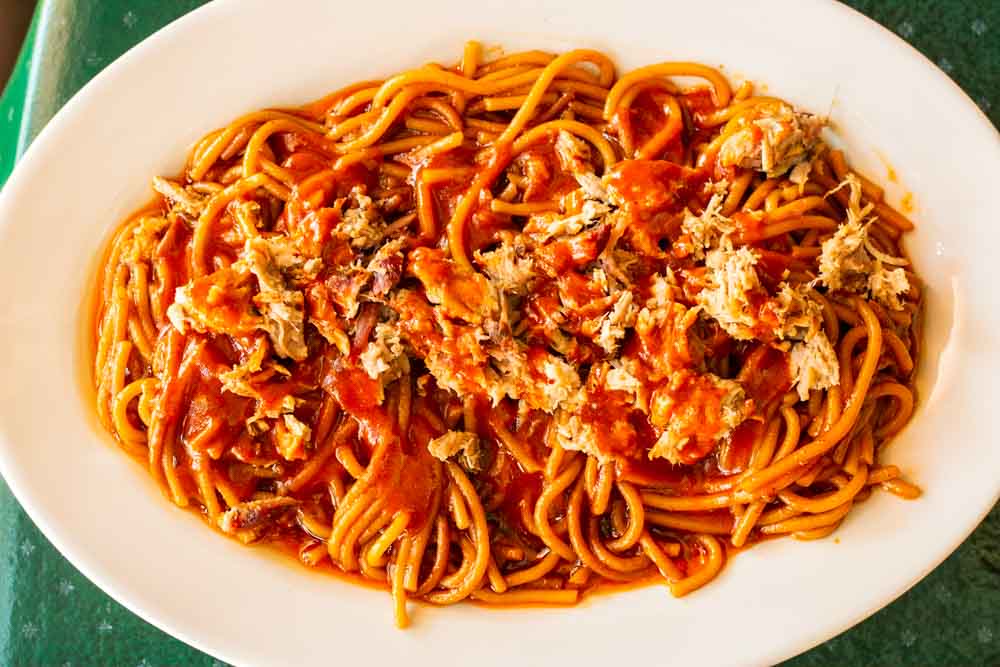
Memphis is famous around the world for smokey pulled pork and slow-cooked ribs served both wet and dry. Though less famous, the city’s barbecue spaghetti is a unique noodle dish not to miss in the Home of the Blues.
Invented in Memphis decades ago, barbecue spaghetti pairs spaghetti noodles with tangy red sauce and a prodigious amount of slow-cooked shredded pork. Though spaghetti has Italian heritage, this is a truly all-American noodle dish that’s also a Memphis food icon.
Pro Tip
Add a side of Texas toast for the full BBQ spaghetti experience.
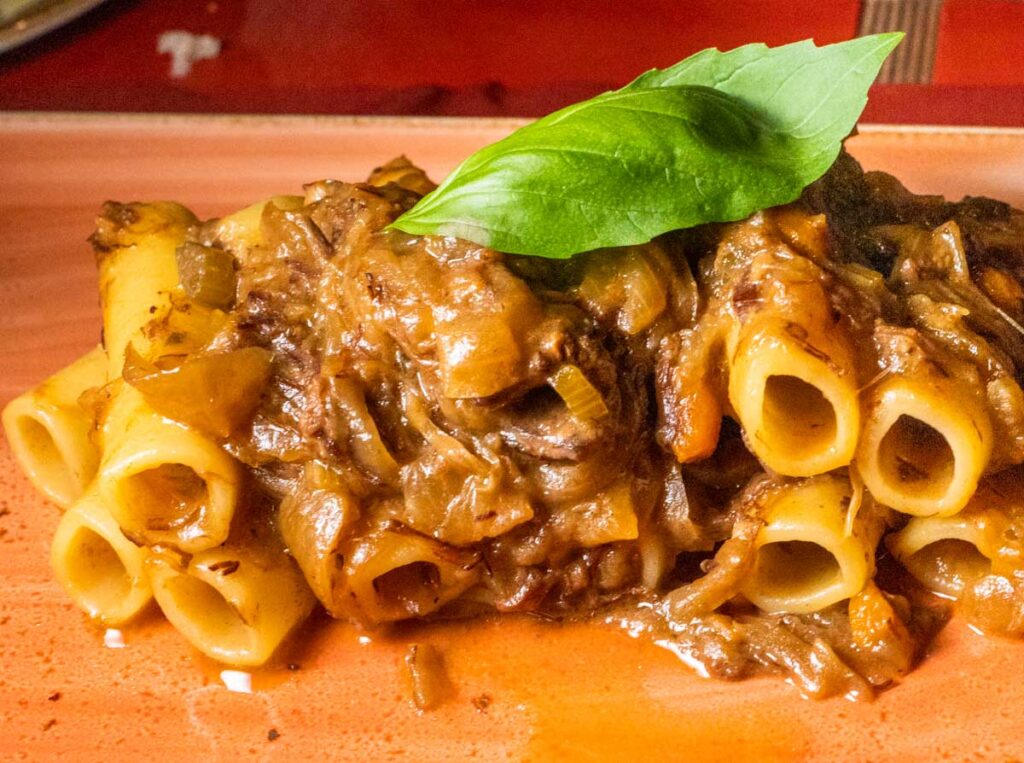
Pasta genovese is an Italian pasta dish with a twist. While the name implies a Genoa origin in the northwestern region of Liguria, the dish actually hails from Naples in Italy’s southern Campania region. Regardless of where it was invented centuries ago, pasta genovese is an Italian pasta worth eating.
Neapolitan chefs simmer meat with white wine and a sauce that includes A LOT of onions to make pasta genovese. Cooked low and slow, melted onions give the sauce a richness best paired with paccheri (smooth, tubular pasta) or similarly shaped noodles.
Pro Tip
Save some white wine to drink with your meal if you cook pasta genovese at home.
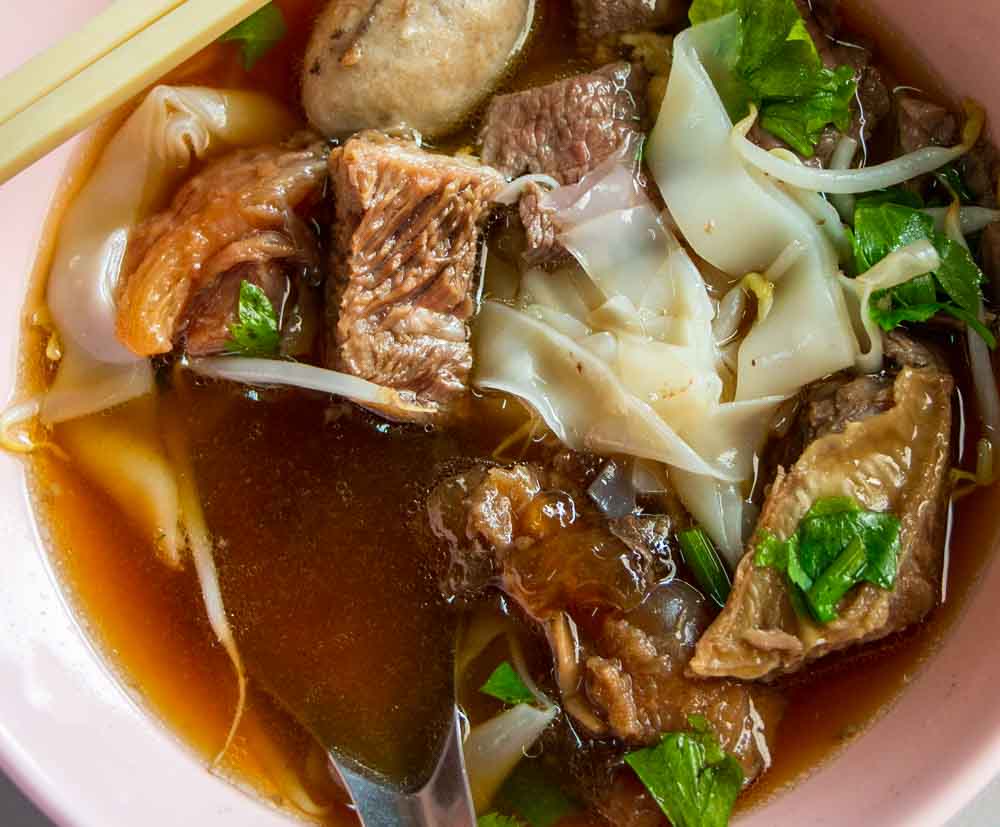
Kuay tiaw reua also known as boat noodle soup is a Thai noodle dish with a story. Although the dish is now served in Bangkok restaurants, kuay tiaw reua was originally sold by vendors who sailed small boats along the city’s canals. Hence the name boat noodle soup.
We first experienced the joy of eating boat noodle soup during a half-day Bangkok street food tour. Despite its nautical roots, the thick soup has meat instead of seafood in addition to noodles and traditional Thai ingredients like dark soy sauce, morning glory and chili flakes.
Pro Tip
Unlike many noodle dishes, kuay tiaw reua’s noodle options are not limited to one type of noodles.
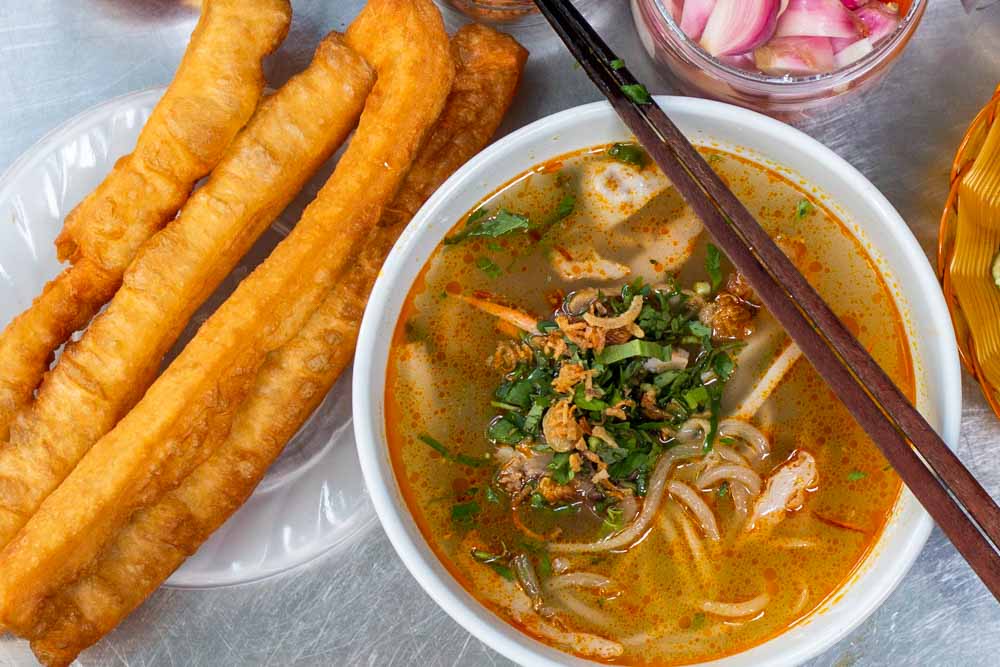
Bánh canh’s star ingredient is extruded medium-thick noodles made from either tapioca flour, rice flour or a combination of both. The other key ingredient is beefy broth. Although we frequently ate it in central Da Nang, the Vietnamese noodle dish is especially popular in southern cities like Saigon.
Different from both phở and bún noodles, tapioca noodles are chewy in texture and glassy in appearance. Despite its relatively small size, Vietnam is truly a giant country when it comes to its commitment to noodles.
Pro Tip
Dip fried bread called bánh quây into your bowl for the full bánh canh experience.
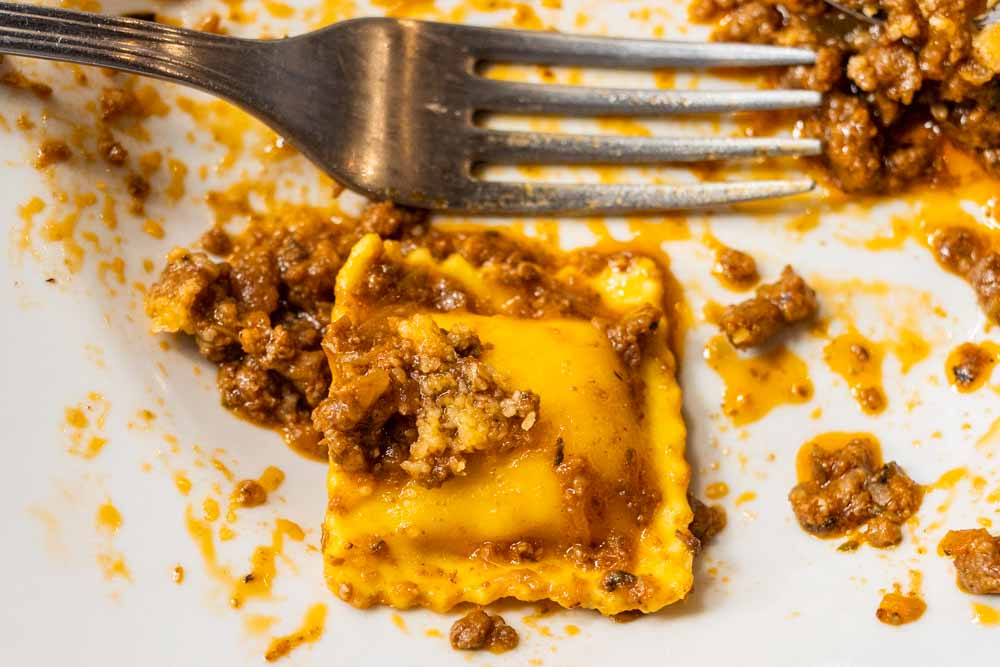
Not all noodle dishes look and taste alike and such is the case with ravioli. Typically square in shape, Italy’s filled pasta favorite comes with fillings that run the gamut from brown butter and sage to mortadella and even pumpkin depending on the season and region.
Italy isn’t the only country that puts ravioli on the menu. We’ve eaten versions in diverse destinations including Tokyo, Dublin, Buffalo and Paris. However, our favorite ravioli dishes have been in Italian cities like Bologna and Florence.
But make no mistake. Italy is the best location for eating ravioli. After all, Italian chefs have been making ravioli by hand for centuries.
Fun Fact
Ettore Boiardi, otherwise known as Chef Boyardee, introduced a generation of Americans to ravioli. The influential chef was born in Piacenza in Italy’s Emilia-Romagna region.
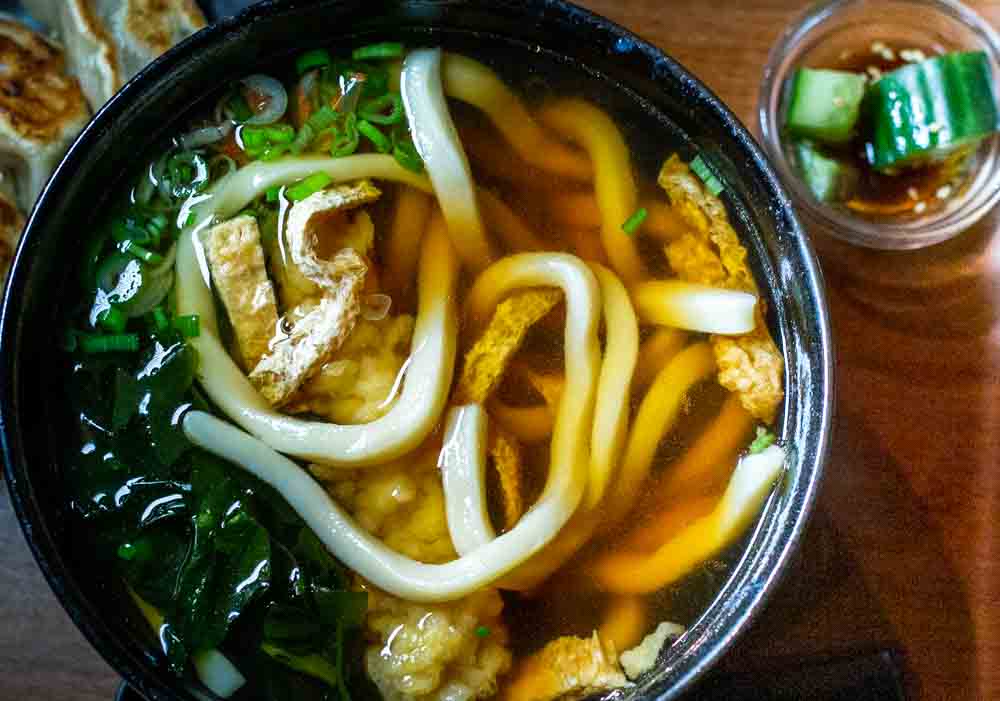
Wide, chewy udon is yet another Japanese noodle that has traveled the world. However, this noodle is more challenging to find outside of Japan compared to ramen, the country’s more prolific wheat noodle. Let’s face it, ramen is practically everywhere.
Finding udon in Japan is the opposite of a challenge. Introduced to Japan by China more than a millennium ago, udon can be hot or cold and its preparations range from soups to curries.
Pro Tip
Don’t underestimate udon despite its simple recipe with just water, salt and flour. These noodles are served in all kinds of dishes which can be quite exciting.
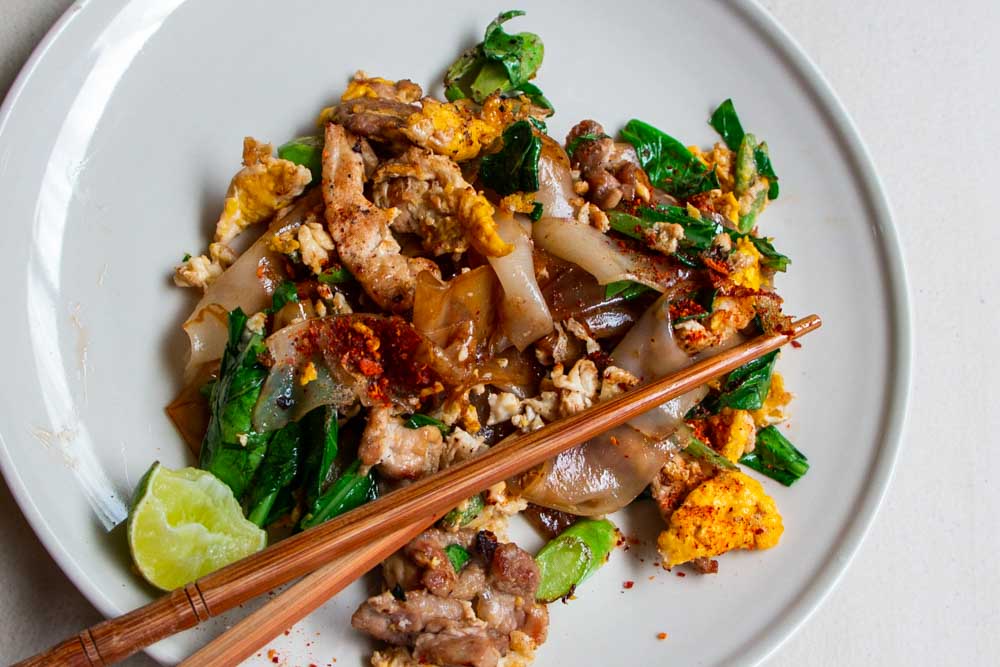
Pad see ew is the fourth and final noodle dish from Thailand on our list. Thai cooks quickly whip up pad see ew in woks all over the country at both at street stalls and in restaurants.
Don’t be confused by pad see ew’s name which translates to soy sauce stir fry. Beyond light and dark soy sauces, other typical ingredients include garlic, protein (chicken, beef or pork), Chinese broccoli and cabbage.
Pro Tip
You won’t have to look hard to find pad see ew in Thailand. It’s a Thai street food favorite.
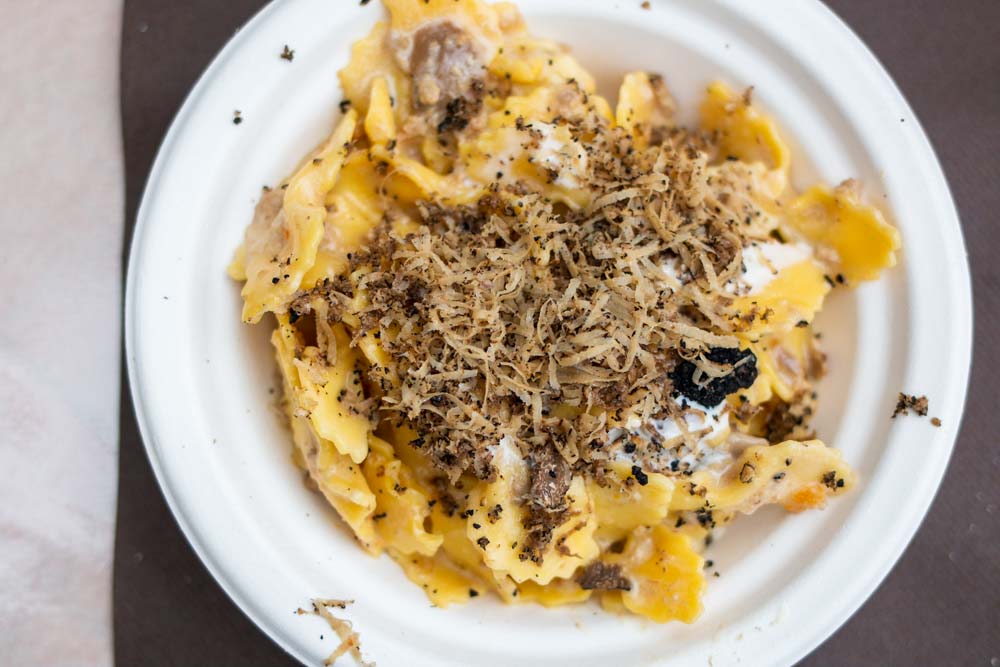
Some pasta dishes are all about the noodles while others are more about the toppings. Food travelers who venture to Italy during the autumn can enjoy the best of both on the same plate in two special dishes. The first of these dishes is pasta al tartufo, i.e. pasta with truffles.
🎥 Video Alert: Watch our Truffle Hunt video on YouTube.
Coveted around the world due to their limited availability and unique earthy taste, black and white truffles naturally grow in Italy’s forests. While you can eat the subterranean ascomycete fungi in various ways including truffle oil, truffle honey and truffle salt, the ultimate experience is to eat truffles generously shaved over handmade pasta in Italy.
Pro Tip
Plan your Italy trip in the autumn to coincide with Italy’s truffle season.
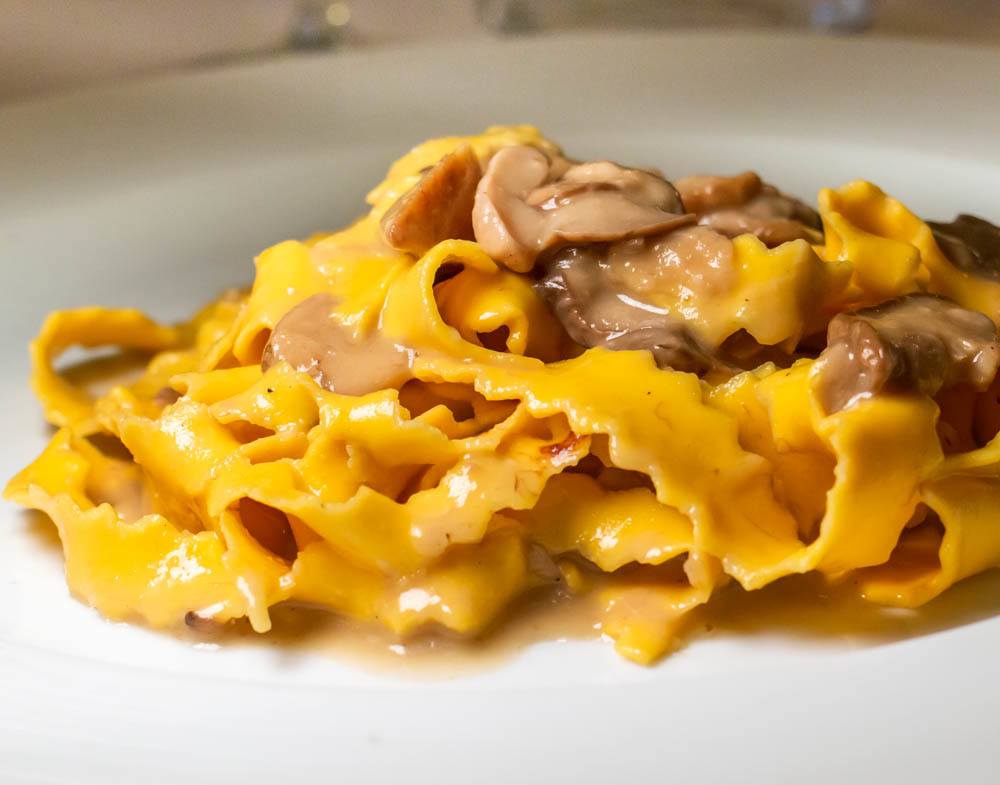
Pasta ai funghi porcini is the second dish that pairs pasta and an elusive yet desirable partner – fresh porcini mushrooms. The dish is so tasty that we have an unwritten rule to order it whenever we see it on a menu in cities like Modena and Parma.
While not everybody likes or can afford truffles, porcini is a more accessible member of the fungus family. Easy to find at markets and on restaurant menus in Italy during the late summer and into the autumn, porcini mushrooms are earthy, woodsy and downright delicious.
Pro Tip
Top your pasta with dried porcini when the mushroom is out of season.
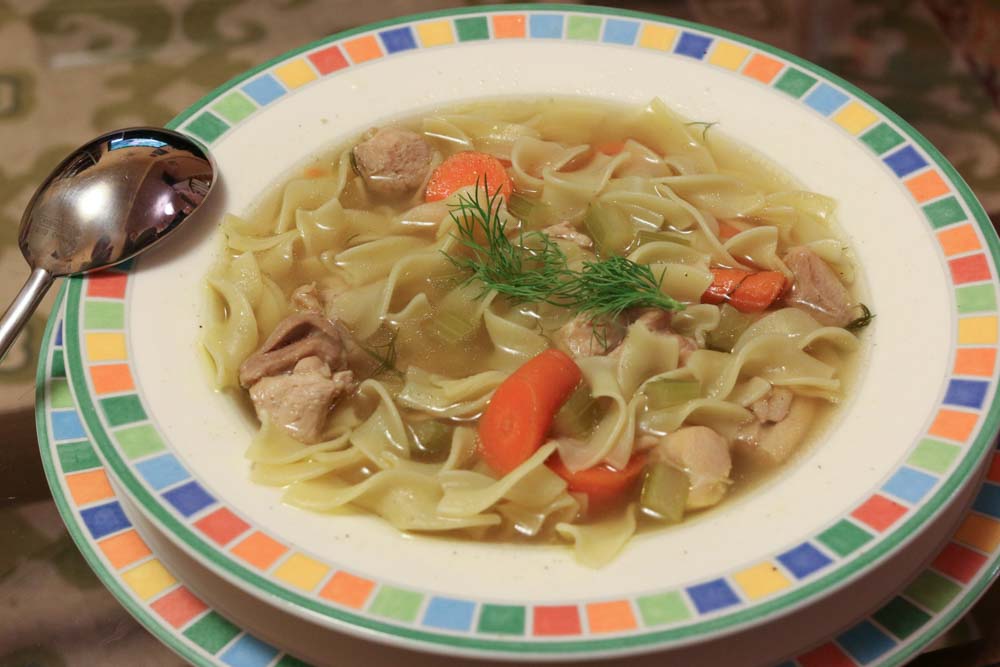
Name a country in the world and it probably has a version of chicken soup with noodles. While there are some differences, they all include the key ingredients of chicken broth and chicken pieces. Possible additions include items like carrots, celery, dumplings and rice.
Since we grew up in America as descendants of Eastern European immigrants, we ate a lot of chicken noodle soup while growing up. We ate it for holidays and when we were sick. Sometimes we ate it with matzo balls.
Pro Tip
You can buy canned chicken noodle soup but the best version is the one you cook from scratch.
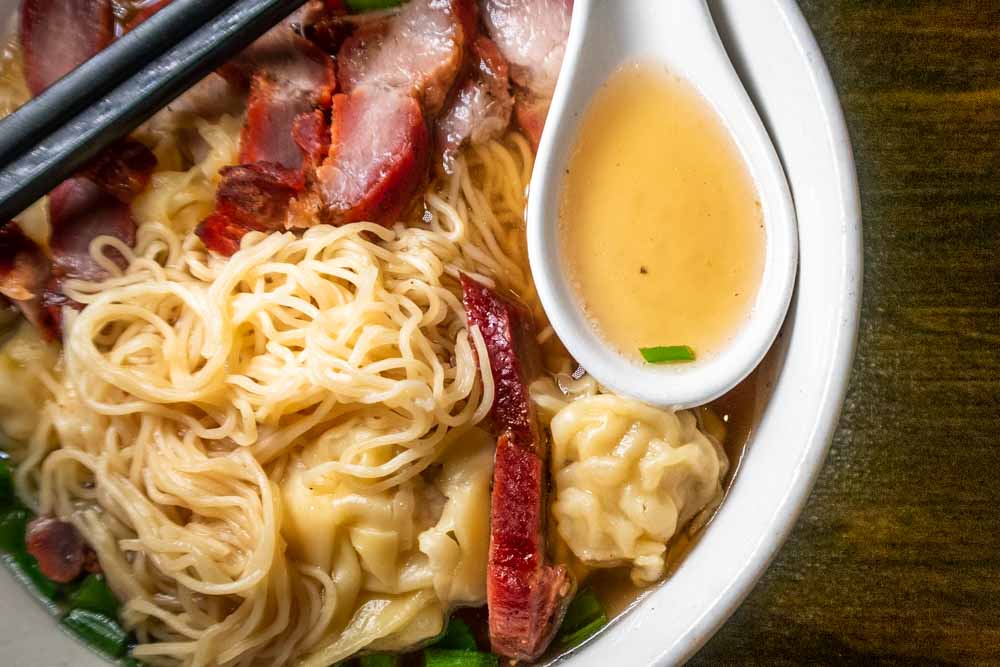
A staple in Cantonese cuisine, wonton noodle soup is available at Chinese restaurants around the world. It’s a dish that proves that ‘more is more’ with its starch duo of noodles and meat-filled wontons.
We love wonton noodle soup so much that we had our rehearsal dinner at a Philadelphia restaurant that specializes in this and other Hong Kong-style dishes. Yes, we truly put our money where our mouths are when it comes to noodles and Chinese food.
Fun Fact
Wonton noodle soup has achieved cult status at noodle shops like Michelin-starred Ho Hung Kee in Hong Kong.
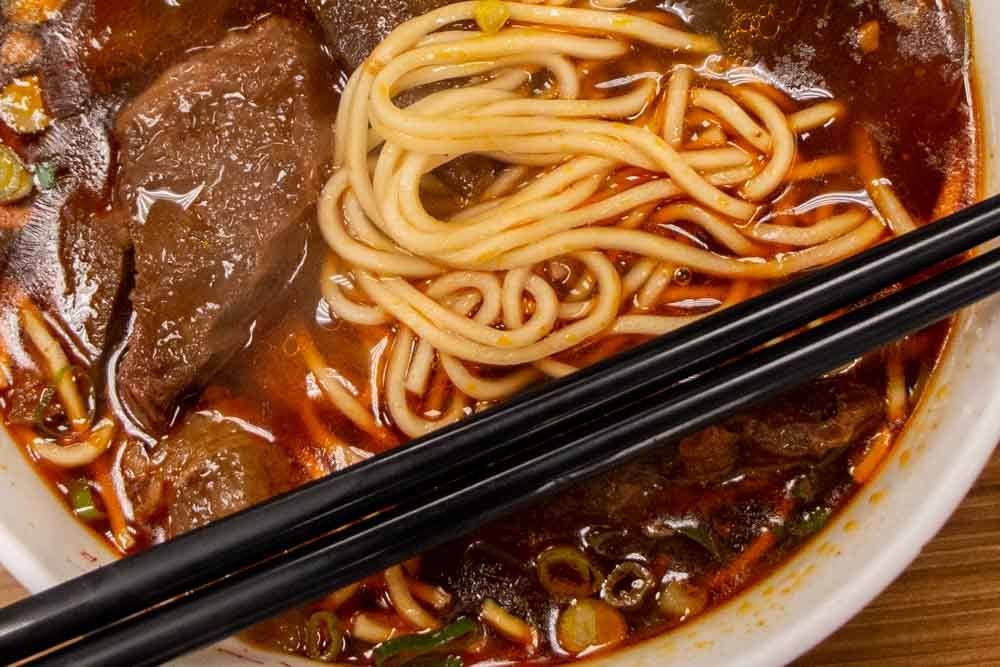
Travelers who journey to Taiwan might be happy to eat soup dumplings all day long and graze at street markets when the sun goes down. But that would be a shame since they’d be missing out on niú ròu miàn, Taiwan’s version of beef noodle soup. We relate since we’re huge fans of both soup dumplings and street food.
Discover five tasty Taipei food experiences.
Wanting to eat it all during our whirlwind stop in Taipei, we rolled up our sleeves and dug into a big bowl of niú ròu miàn at Yong Kang, a local noodle shop institution. Filled with braised Australian beef, hand-drawn wheat noodles, savory broth, fresh herbs and Sichuan spices, this memorable Taiwanese noodle soup made us forget about soup dumplings for at least a few minutes.
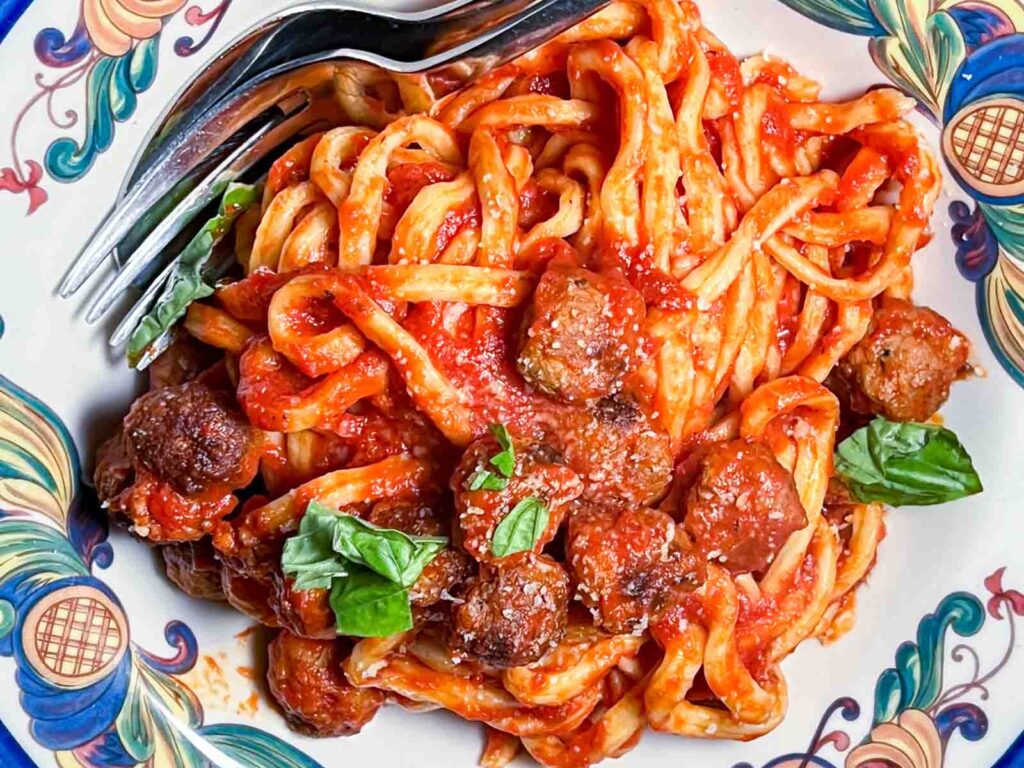
We couldn’t end this list without including spaghetti and meatballs. While Italians rarely, if ever, pair pasta and polpette (meatballs), spaghetti and meatballs is a childhood favorite for many Americans including these two big kids.
While Americans didn’t invent either spaghetti or meatballs, Italian-American immigrants were the first to pair them together and add marinara sauce called ‘gravy’ to the mix. The result is a comfort food that’s as popular today as it was a century ago.
Pro Tip
Don’t expect to eat spaghetti and meatballs when you eat in Italy. It could happen but it probably won’t.
🎥 Video Recap
🍴More Global Food

50 Delicious Burgers Around the World

The Best Cinnamon Buns in the World
31 Awesome Hot Dogs Around the World
33 Best Salads in the World
📍 Pin This Article
 Pin
Pin Pin
Pin