There has been a Monocle tour of South and Central America over the past 12 days that has seen two colleagues and I journey from Montevideo in Uruguay to Guatemala City, where we are this morning on our final stop. But let’s rewind to a few days ago in São Paulo because there are 10 things that I want to tell you about this city.
1.
When you ask a Paulista how far away something is, they will say, “About 15 minutes.” Do not believe them. It’s 30 minutes in good traffic, 60 minutes if you hit rush hour and the swarms of delivery scooters that fly around this city. It’s best to accept this, not fight it. You are in a city of some 12 million busy people.
2.
You need to find a place to people-watch. One night we end up at Spot, a kind of diner-cum-bistro that’s just off Avenida Paulista. It’s a joint that has been around for years with cool waiters and a similarly fun crowd. Throughout our meal, I keep scanning the room: gay lovers, end-of-day business cocktailers and friends just gossiping and laughing. I want to know who makes this city so vibrant and ambitious.
3.
Sunday night is pizza night in São Paulo and we book a table at a branch of Pizzaria Camelo to join in the tradition. But a long wait for our bags at the airport – and that traffic – means that it’s 23.30 by the time we get there. Yet while we might be sneaking in at almost closing time, the staff are welcoming, rolling with the day. A slice and a caipirinha later, we are ready for this metropolis.
4.
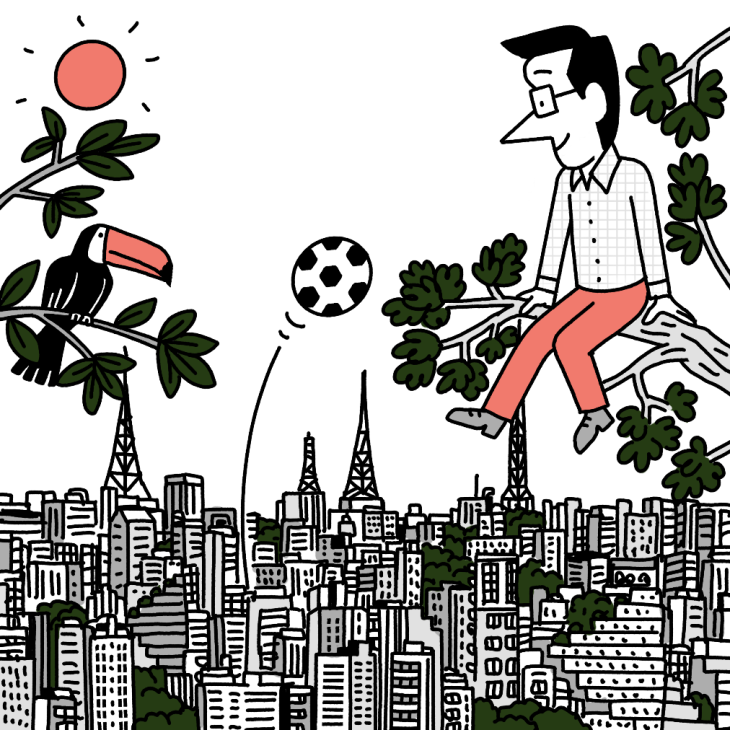
São Paulo is a city that’s proud of its scale. A leading entrepreneur tells us that he had returned to São Paulo from living in Paris after he struggled to make it through a grey French February. “Look, Paris is fine if you want to live somewhere provincial and eat cheese but São Paulo is a real city,” he says. Plus, in winter, you can savour 23C temperatures and big blue skies.
5.
We hear a similar story when we meet two developers with plans to transform a large tract of land near Avenida Brigadeiro Faria Lima, the city’s Wall Street. They went around Europe to look at other projects but found that these lacked the ambition needed to deliver in São Paulo. The one place they found inspiring? Asia. Tokyo and Bangkok have more in common with this city than London or Milan.
6.
Faced with the particular challenges of the city – it’s not built for cycling, most people drive, it can be very hot and wet, and there are still issues of security – São Paulo has invented its own unique urban model.
7.
Part of that model is the shopping mall. In a city where public space can be unevenly maintained and security remains an issue, malls have evolved into important and much-loved pieces of civic infrastructure. Centres run by companies such as Iguatemi go beyond being places to shop. In these safe, clean spaces, you can go to the theatre or cinema, see art, dine.
8.
Lissa Carmona’s family business, Etel, produces furniture by many of the country’s most celebrated design talents. And she is also behind a series of museum-houses that are preserving (and finding fresh uses for) the homes of key talents when they die. A highlight of our trip is when she takes us around Casa Zalszupin, where the celebrated designer Jorge Zalszupin lived until he died aged 98 in 2020. Thanks in large part to Carmona, it’s now protected, gently maintained and helping the city hold on to its unique identity.
9.
In São Paulo you need to roll with events. Never plan anything for February, for example, when Carnival takes hold of the nation. And don’t attempt any tricky deal over the next few weeks. The World Cup is all that matters. Indeed, it feels as though this entire continent is about to go into a football lockdown.
10.
Carmona, like many people we meet, is also clear that design and architecture are not nice-to-haves in Brazil. They are Brazil. Design is culture here. We stay at the Pulso Hotel and have breakfast with the owner of this beautiful new establishment. Otávio Suriani is a sharp business leader but beauty matters to him, as it does to São Paulo. “I could not have made a hotel that didn’t excite me,” he tells us looking around the dining room with its dark, wood furniture and the big-leafed tropical plants beyond the windows. He’s part of a place that’s confident in its urban skin, embraces being a megacity and continues to define its own rules, tastes and needs.
To read more from Andrew Tuck, click here.Further reading? Here’s why São Paulo should stay an ad-free metropolis.