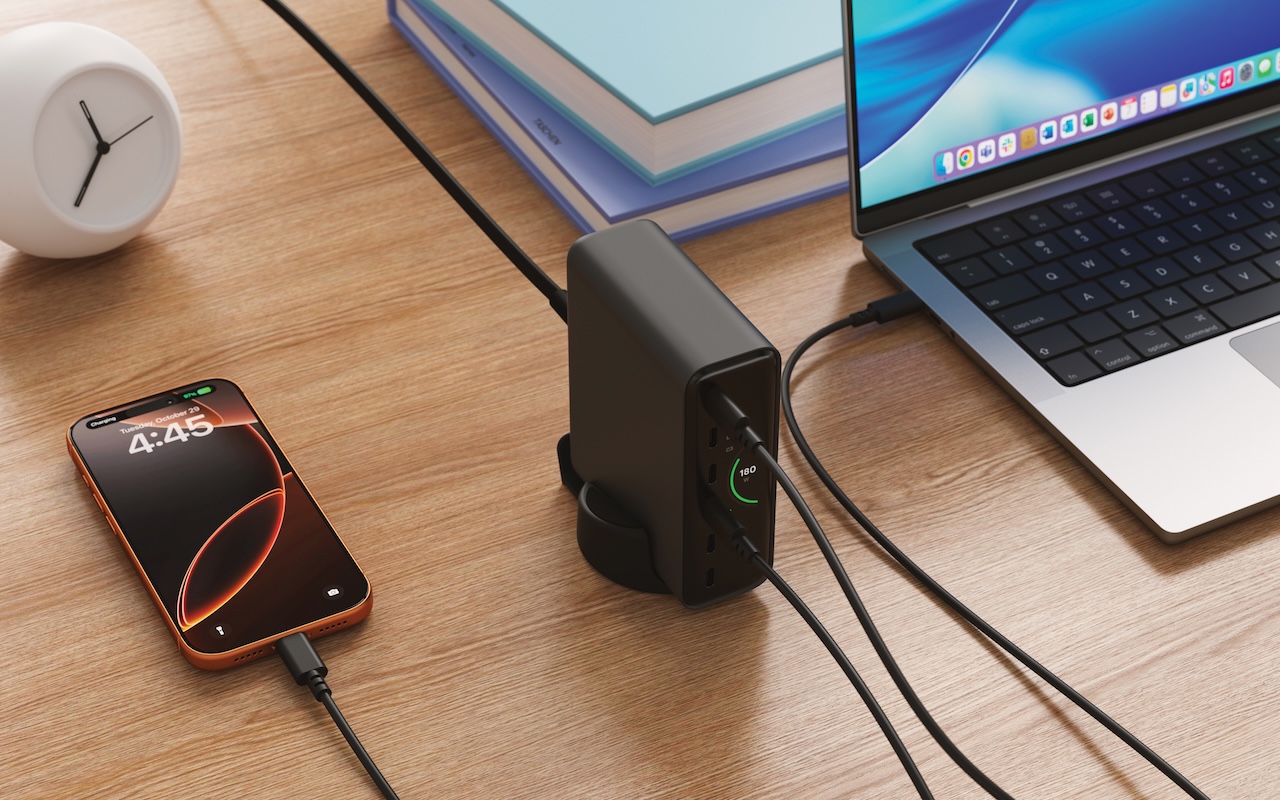
Satechi’s new ChargeView 240W Desktop Charger tackles one of the least transparent parts of a crowded desk: figuring out what each connected device is actually drawing. Its front LCD shows live wattage for all six USB-C ports at once, so you can check whether a laptop, tablet, phone, or accessory is getting the power you expected.
Price: $149.99
Where to Buy: Amazon
The display is the practical draw. A typical charging station leaves you guessing when a laptop starts charging slowly after you connect another device. The ChargeView puts the allocation on screen and updates it as devices are added or removed.
Six USB-C ports share a 240W power budget
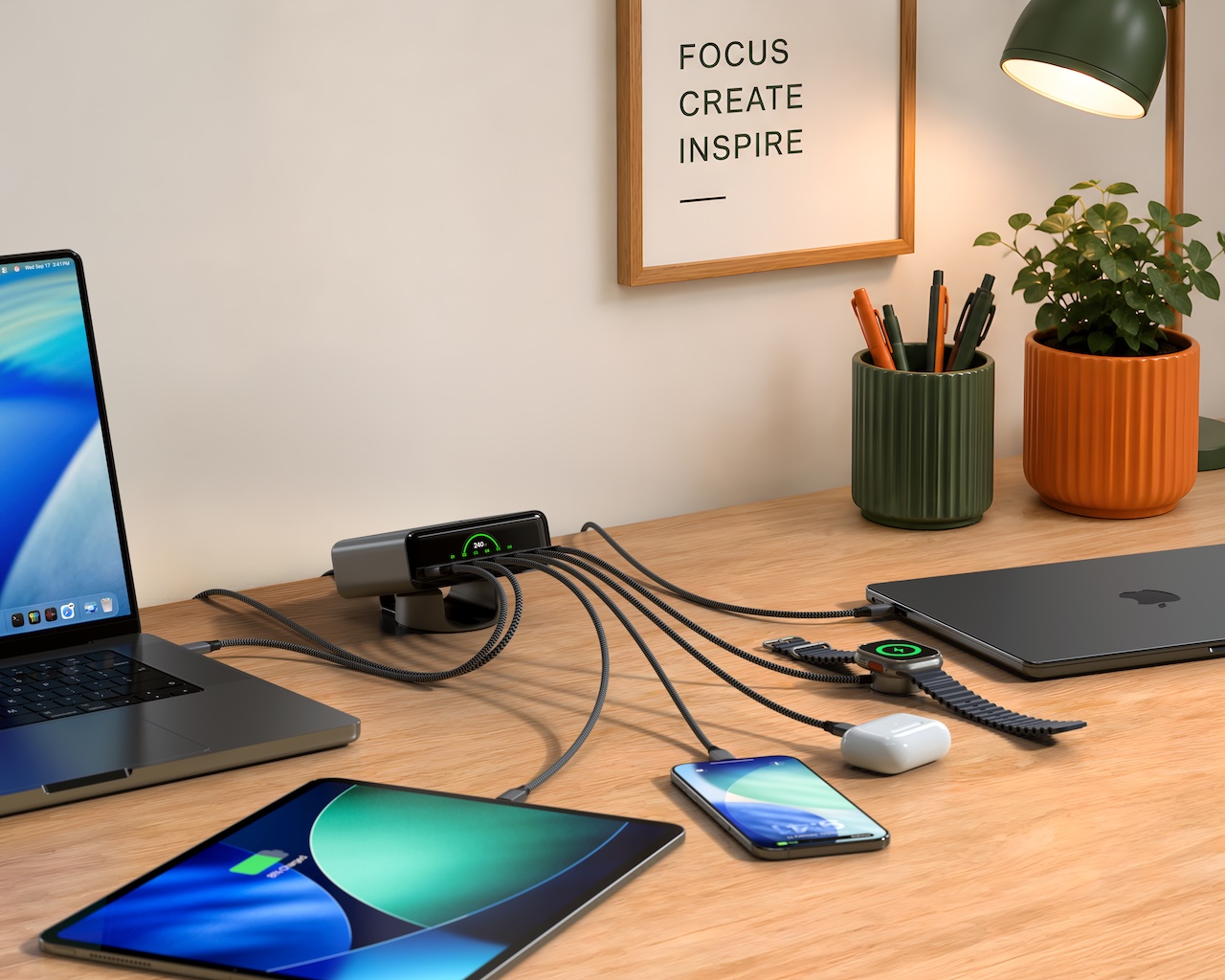
The 240W figure is the charger’s total output, not the maximum available from one port. The first two USB-C ports each support up to 140W through USB PD 3.2 EPR AVS. Ports C3 and C4 can provide up to 100W each, while C5 and C6 top out at 30W each. Every port draws from the same 240W total budget.
That arrangement gives the higher-output ports enough headroom for demanding laptops while reserving the lower-output pair for phones, earbuds, watches, and other accessories. Satechi says an intelligent power controller detects each connected device and balances the available output across active ports.
USB PD 3.0 PPS support is included across the port lineup. Satechi specifically calls out compatibility with recent Samsung Galaxy and Google Pixel phones, while the top two ports support the newer EPR AVS charging standard.
The screen makes shared charging easier to understand
A six-port charger is most useful when several devices stay connected, but that’s also when power sharing becomes harder to follow. The ChargeView’s borderless LCD presents a per-port reading instead of only showing the combined load.
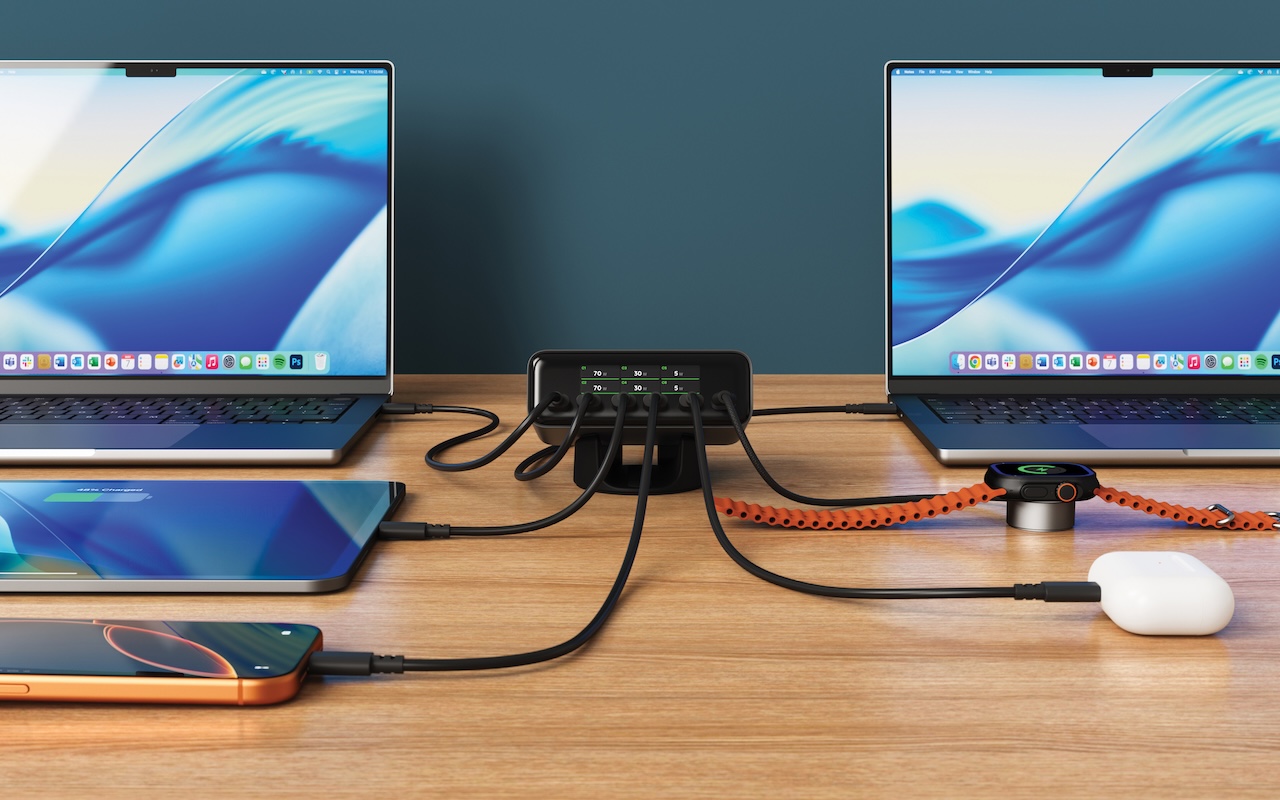
If you have used a conventional desktop brick such as Satechi’s 108W Pro USB-C PD Desktop Charger, the live readout is the biggest difference. You can see the charger renegotiate power instead of inferring it from a battery icon or an estimated charging time.
Satechi uses GaN components for the new model and says its controller is designed to maintain stable charging without excessive heat. We haven’t tested those thermal or power-allocation claims, so the display’s accuracy and behavior under a full six-device load remain open questions.
It can sit vertically or horizontally
The ChargeView 240W comes in Space Black with a metallic matte finish and a glossy cover over the display. Its included stand supports both vertical and horizontal placement. In the horizontal position, the charger tilts slightly forward to make the screen easier to read while seated. Vertical placement uses less desk space.
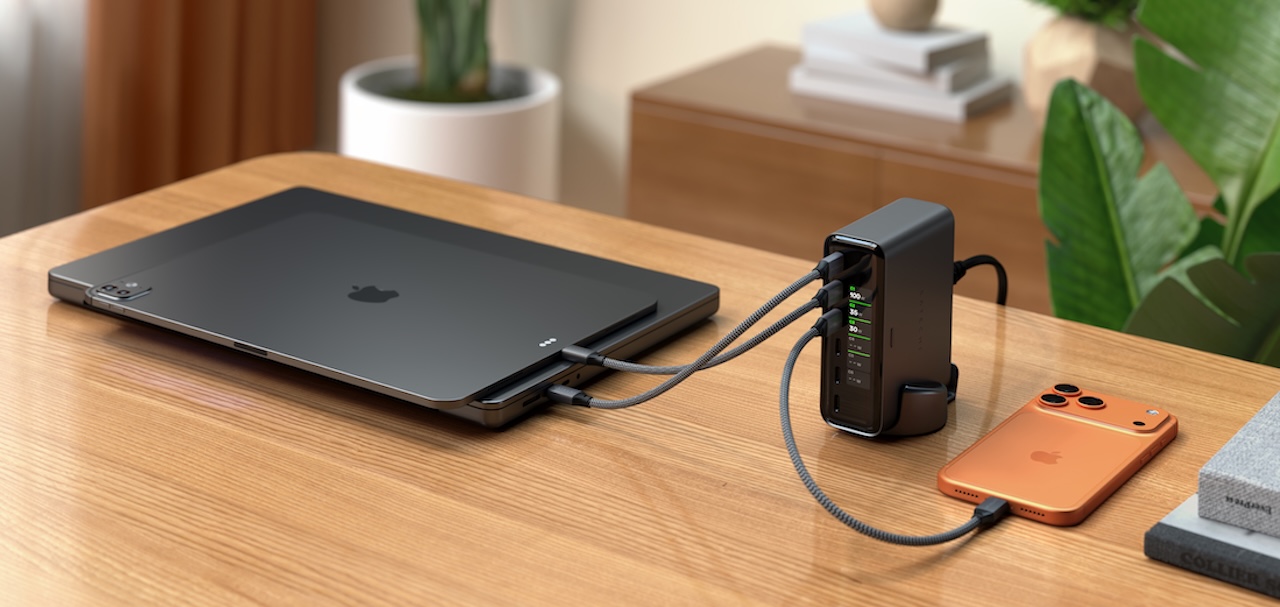
This is clearly aimed at a permanent workstation rather than a pocket or travel kit. For comparison, Satechi’s older 100W Compact GaN Charger concentrated its ports into a smaller wall-charger format. The ChargeView trades that portability for six outputs, a detachable power cord, and the always-visible display.
Price and availability
The Satechi ChargeView 240W Desktop Charger goes on sale July 21 for $149.99 through Satechi and Amazon. It’ll initially be available only in Space Black.
The spec sheet looks well suited to a desk with two laptops and several smaller devices, but the shared 240W ceiling is the detail to keep in mind. The LCD should make that limit much easier to see in real time.
Price: $149.99
Where to Buy: Amazon
If you only ever charge a single laptop, or you want something pocketable for travel, this is more charger than you need. It’s built for a permanent, multi-device workstation where seeing the power split actually matters.
Sign up for our newsletter today.
No ads, no spam, just links to our latest articles!

Now retrieving an image set.
2-Pack LED Video Light Kit, NiceVeedi Studio Light, 2800-6500K Dimmable Photography Lighting Kit with Tripod Stand&Phone Holder, 73″ Stream Light for Video Recording, Game Streaming, YouTube
(as of July 14, 2026 14:09 GMT -05:00 – More infoProduct prices and availability are accurate as of the date/time indicated and are subject to change. Any price and availability information displayed on [relevant Amazon Site(s), as applicable] at the time of purchase will apply to the purchase of this product.)

ALTSON 60 LED Portable Selfie Light Video Conference Lighting with Clip & Camera Tripod Adapter Rechargeable 2200mAh CRI 97+, 3 Light Modes for Phone iPhone Webcam Laptop Photo Makeup
(as of July 21, 2026 01:58 GMT -05:00 – More infoProduct prices and availability are accurate as of the date/time indicated and are subject to change. Any price and availability information displayed on [relevant Amazon Site(s), as applicable] at the time of purchase will apply to the purchase of this product.)