You’ll have to wait a while if you’re eager to buy Ford’s affordable electric pickup truck. Ford has revealed that Fathom EV production won’t start until sometime after March—in part because the automaker just finished the factory overhaul needed to make it.
Prototypes built with “production qualified parts” will roll off the line at the Louisville Assembly Plant in the first quarter of 2027, Ford says. Customer trucks will be made “later in the year.” The company previously promised that preorders would begin in early 2027, but hadn’t given a clearer timeframe until now.
The Fathom will have a starting price of $28,350 when using a standard-range lithium iron phosphate (LFP) battery. Ford hasn’t shared many technical details but promises a large touchscreen, digital key support, Android Auto, Apple CarPlay, and optional BlueCruise hands-free driving.
It’s expected to compete directly against the Slate Truck. Its modular design starts at $24,950, although that gets you a two-seat design without an infotainment system or some other comforts. It costs at least $29,950 to get a Slate vehicle with both back seats and a roof where the Fathom is billed as a complete “midsize” pickup.
The factory is part of the price
Ford needed a new production system
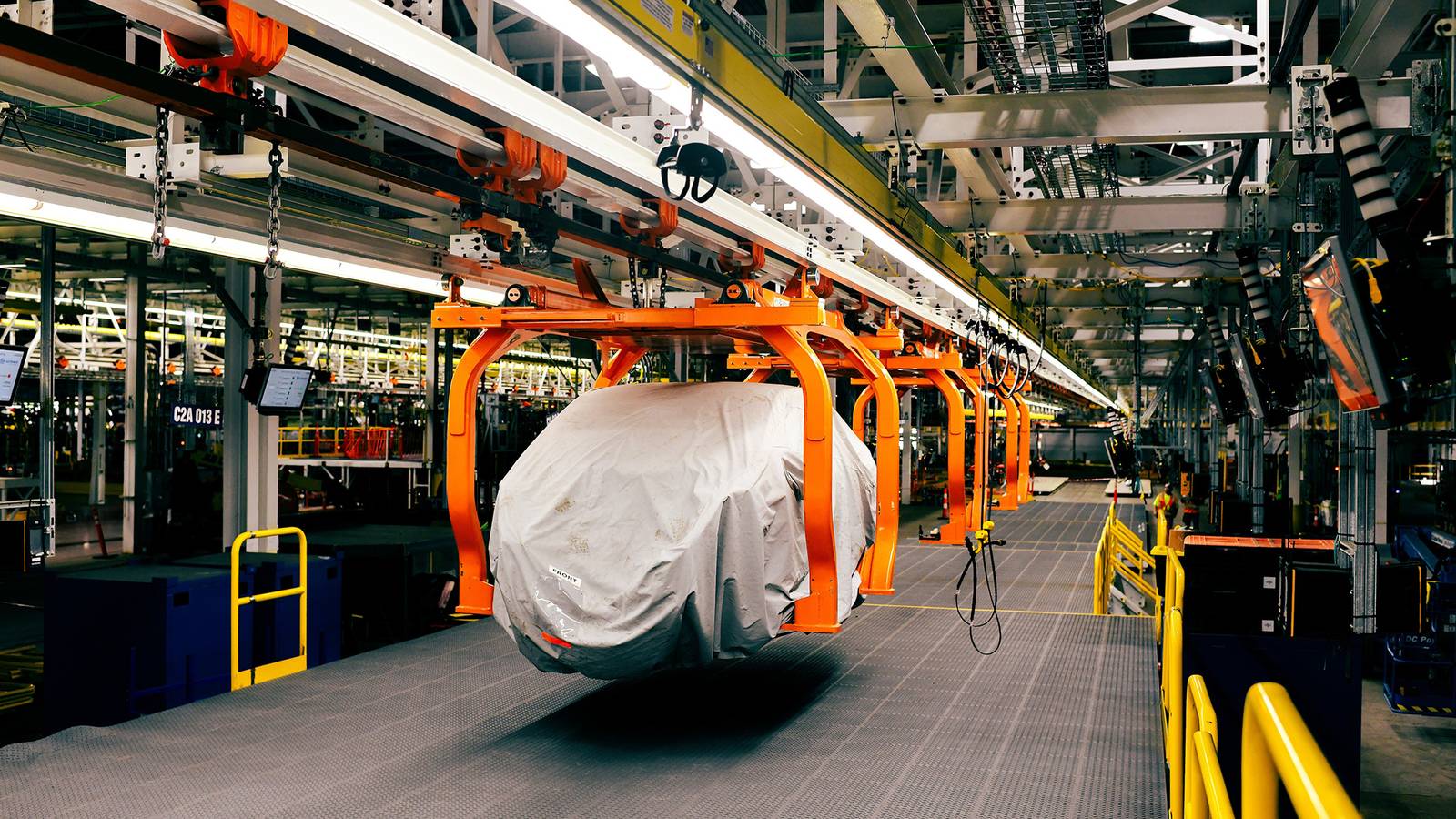
The Louisville plant revamp plays an important role in the Fathom’s low price. Ford says it spent $2 billion gutting and redesigning the factory to accommodate the truck’s Universal Electric Vehicle (UEV) platform and its matching Universal EV Production System.
Rather than have linear assembly with dozens of pieces, the new approach has the front, rear, and a group of key elements (battery, carpeting, consoles, and seats) built in parallel before they’re combined. An upgraded network will also provide more spot quality checks. Combined, they promise a net output 15% faster than Louisville managed before.
The simplified part count and processes should also improve quality, Ford says.
Affordable to make, affordable to sell
Include the low-priced LFP battery and the Fathom should be inexpensive to make. Ford discontinued the F-150 Lightning as it was so expensive to build that the brand lost money on each truck, even as the firm charged higher prices that deterred some buyers. Those shouldn’t be issues with the new pickup as it should be more sustainable, particularly in a more price-conscious market where inflation is driving people to more economical vehicles.
Source: Ford