There have been many verses written about the changing of the seasons – but try finding an ode to autumn that was composed under a palm tree. Tropical climates don’t have four distinct seasons, which can make transition months such as September and October a little odd for those of us sipping coconuts all year round (I know, bring out the violins).
I realised autumn has begun in Europe because the new quarterly issue of Konfekt, Monocle’s sister publication, has just arrived in Bangkok. Unpacking these care packages from HQ and flicking through the beautiful pages helps me stay connected. Sophie Grove’s editor’s letter is essential reading. I must say, though, her poetic musings on the season’s transient splendour feel even more otherworldly when the air-conditioner is on full blast and the sunny scene out of my window is one of jet planes cutting across blue skies.
This is not a sob story, as you can tell. Still, as an expat, losing autumn and all of the seasonal rituals that come with it can take some getting used to. Many of the signals I grew up with in the UK – both man-made and from Mother Nature – no longer function like they used to. Thai clocks don’t change and evenings get dark at roughly the same time every day, give or take an hour. Temperatures peak in April while flu jabs are administered in May, ahead of the rainy season. Our household is even more out of sync because we are home schooling our children. No uniforms to buy, new-term butterflies to deal with or huge parental sighs of relief that the long summer holidays are finally over.
A French friend of mine in Hong Kong, which has a similar wet-and-dry cycle to the Thai capital, missed the autumn hues and spring scents of his childhood so much that he moved to Japan. Do I miss the four seasons? Absolutely not. I grew up in the drizzle and grey of south Wales. Thirty years later I wake up every morning thinking that I’ve won the Welsh lottery. But we as humans all need milestones – birthdays, Mother’s Day, Children’s Day (a particularly big celebration in Bangkok) – to mark the passing of time.
It’s no different in Thailand and I would argue that people here are particularly connected with the actual comings and goings of the Earth, rather than the commercial requirements of a fixed calendar. Royal Ploughing Ceremony or Farmer’s Day is a public holiday that’s astrologically determined and announced each year. The Buddhist holidays are useful tools for new arrivals looking to find a new rhythm – but please don’t test me on them just yet. It took me years to figure out the ancestor worship festivals and Ghost Days in HK.
To fill in the gaps left by the four seasons, I have come to rely on some alternative seasonal tells. I call these tropical-flavoured rituals the five Fs.
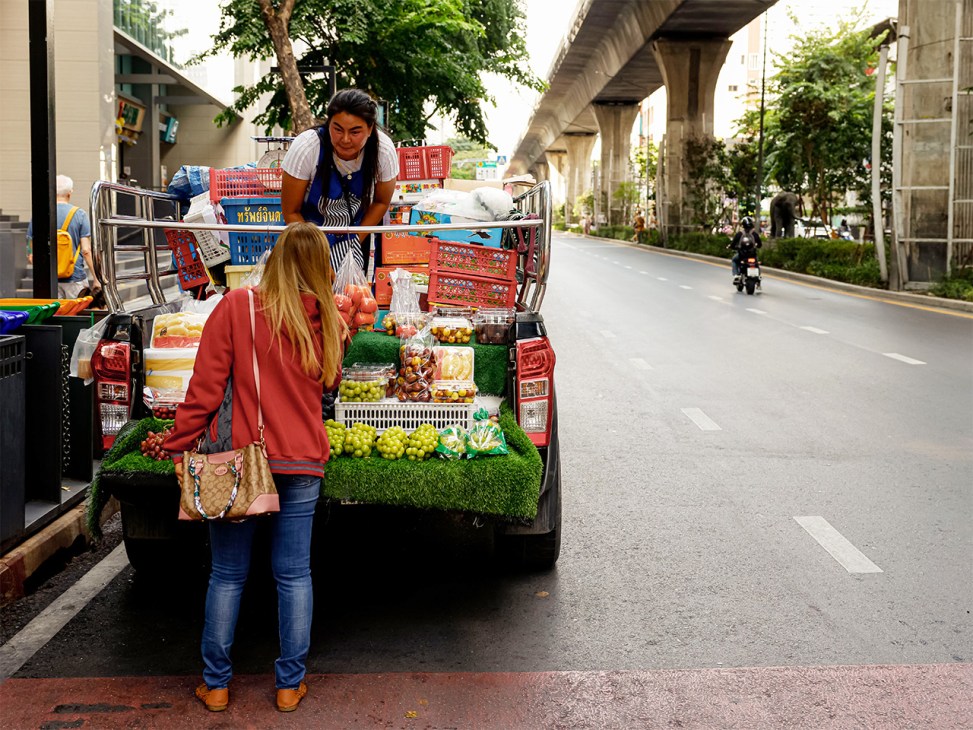
Fruit sellers drive around Bangkok neighbourhoods, parking next to the pavement to sell whatever produce is in season. While I can’t understand the Thai being shouted out of the loudhailer, I pay close attention to the goods piled up on the back of the pick-up truck, which is by far the best way to tell what season we are in: mango season (yay), durian season (yuck). Our bowl is currently transitioning from mangosteens to pomegranates. Marian plums, known locally as mayongchid, are the golden ticket. Harvest time in March lasts a matter of weeks and the arrival of these hard-to-get fruits – an egg-sized mango-meets-plum – signals the start of “Thai summer” and Songkran, the country’s traditional New Year.
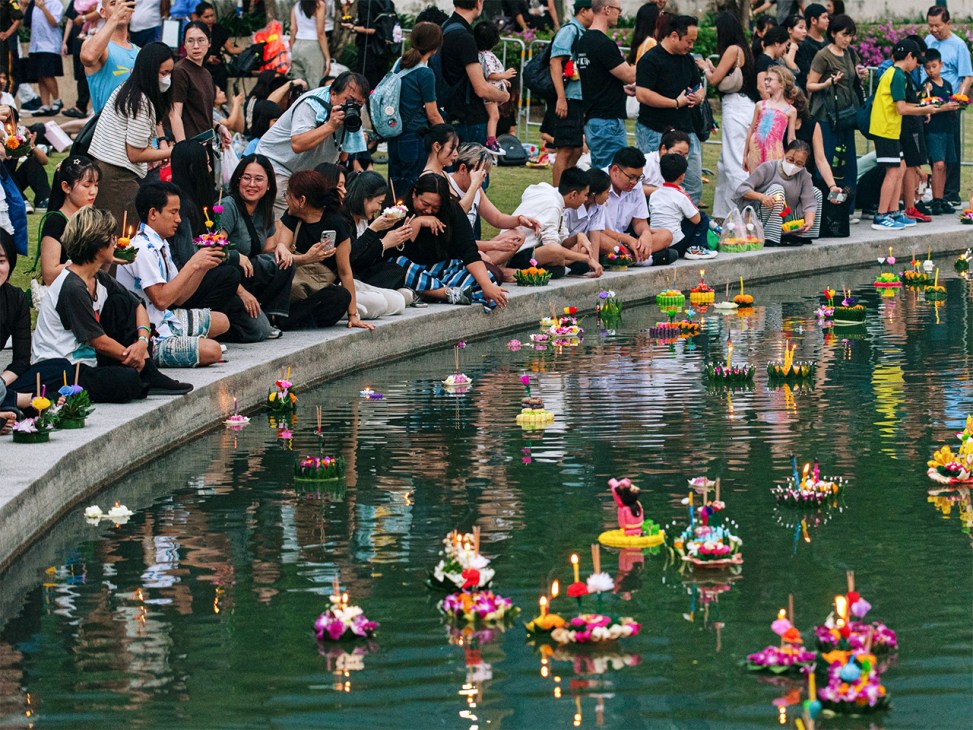
Water fights for Songkran in April beat Easter egg hunts every day of the week, but Loy Krathong in November is my favourite festival. It’s kind of like Guy Fawkes night in the UK but instead of the ritual burning of an effigy, we light candles and float banana-tree vessels on a lake. The comforting thing about Christmas in Thailand is that the holiday is celebrated as a big shopping event and the city is dressed up in decorations. The confusing bit is that many workplaces, government buildings and hospitals leave the tinsel and Santa Clauses up all year round.
Winter might be around the corner in many parts of the northern hemisphere but the only wardrobe change in Thailand involves footwear. Bangkok is now in the middle of the rainy season and that means a torrential downpour could suddenly appear, flooding the road and ruining a favourite pair of trainers. Smart Thais pack emergency flip-flops in the car while the hospitality industry prefers a local brand of rubber Converse-style shoes punched full of holes for efficient drainage. I have a nifty pair of jellies but fastening them can be a faff. The benefit of entering the dry season is the freedom to put the rubber away and wear leather and suede.
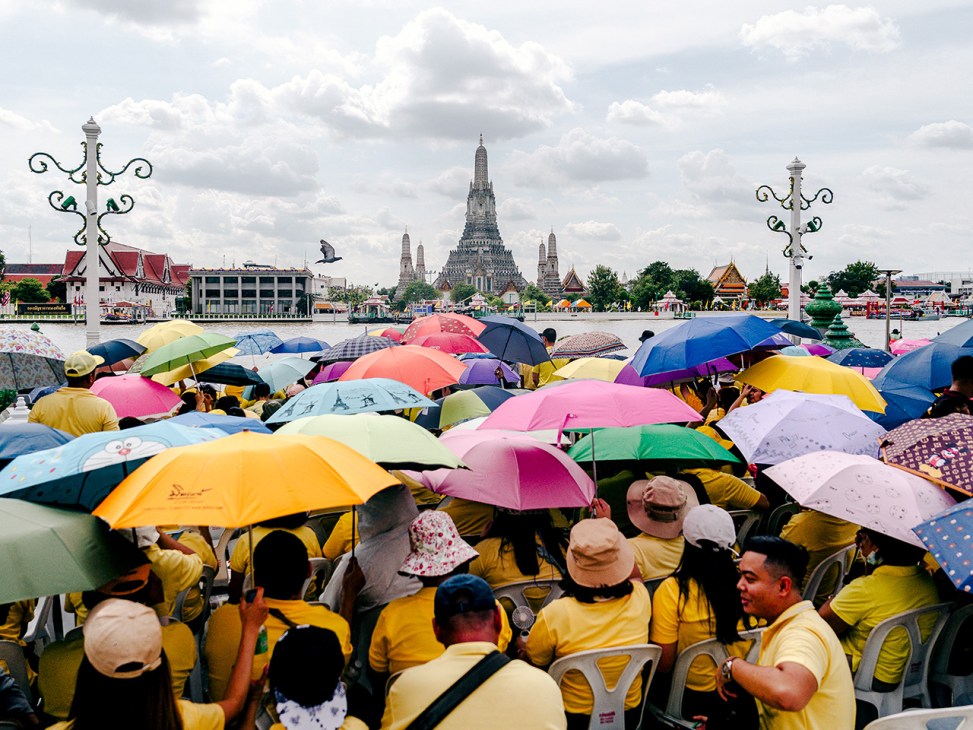
The benefit of living near two powerful neighbours – the revenue department and finance department – are the flags and bunting that hang outside government buildings. The colours are changed ahead of major royal birthdays and the bank headquarters down the road erects an elaborate structure. Each member of the family has a colour determined by the day of their birth. The king was born on a Monday so his colour is yellow, which is why civil servants often wear yellow polo shirts at the start of the working week.
Thailand is blessed with an abundance of wildlife. Its birds and reptiles are accustomed to living in built-up areas, don’t hibernate and are mostly harmless – and that includes the water monitor lizards often seen roaming around the parks looking for fish to eat. The real danger in the Thai capital is sound, or I should rather say, noise. Peak mating season for geckos is nearing an end. I am rather fond of this tropical nighttime symphony but yearend ushers in a new rabble rouser. Mornings belong to the Asian Koel, a particularly noisy member of the cuckoo family. The mating calls of these early birds, a cacophony of squawks that become increasingly louder, work better than any alarm clock and outscreech Bangkok traffic.