Desktop towers are disappearing from home offices. We get it. Most people don’t need a 20-pound chassis to answer email, edit a spreadsheet, or stream 4K video. The right mini PC disappears behind a monitor and still leaves room for a coffee mug.
Our goal: find the best mini PC 2026 buyers can get for home office work. We checked the spec sheets for five compact desktops that range from $260 to $570. None are Mac minis. None are gaming rigs. What they offer is quiet, competent computing for the space-starved desk, though we have a separate guide if you need to stay below $500.
The field splits cleanly into two tiers. Below $350, you’re buying an efficient daily driver. Above $430, you’re getting multitasking muscle with chips that used to live only in full-size laptops. Here’s what we’d buy, ranked by the job each one does best, with prices that reflect what we saw on Amazon as of early June 2026.
1. KAMRUI Hyper H2: Best raw performance under $600
An Intel Core i5-14450HX in a chassis with the footprint of a postcard is the main event here. That chip packs 10 cores and 16 threads with a 4.8 GHz boost clock. It’s the same processor family Intel ships in mid-tier gaming laptops, only without the discrete GPU. For spreadsheet jockeys and browser-tab hoarders, that means headroom you won’t exhaust in year one.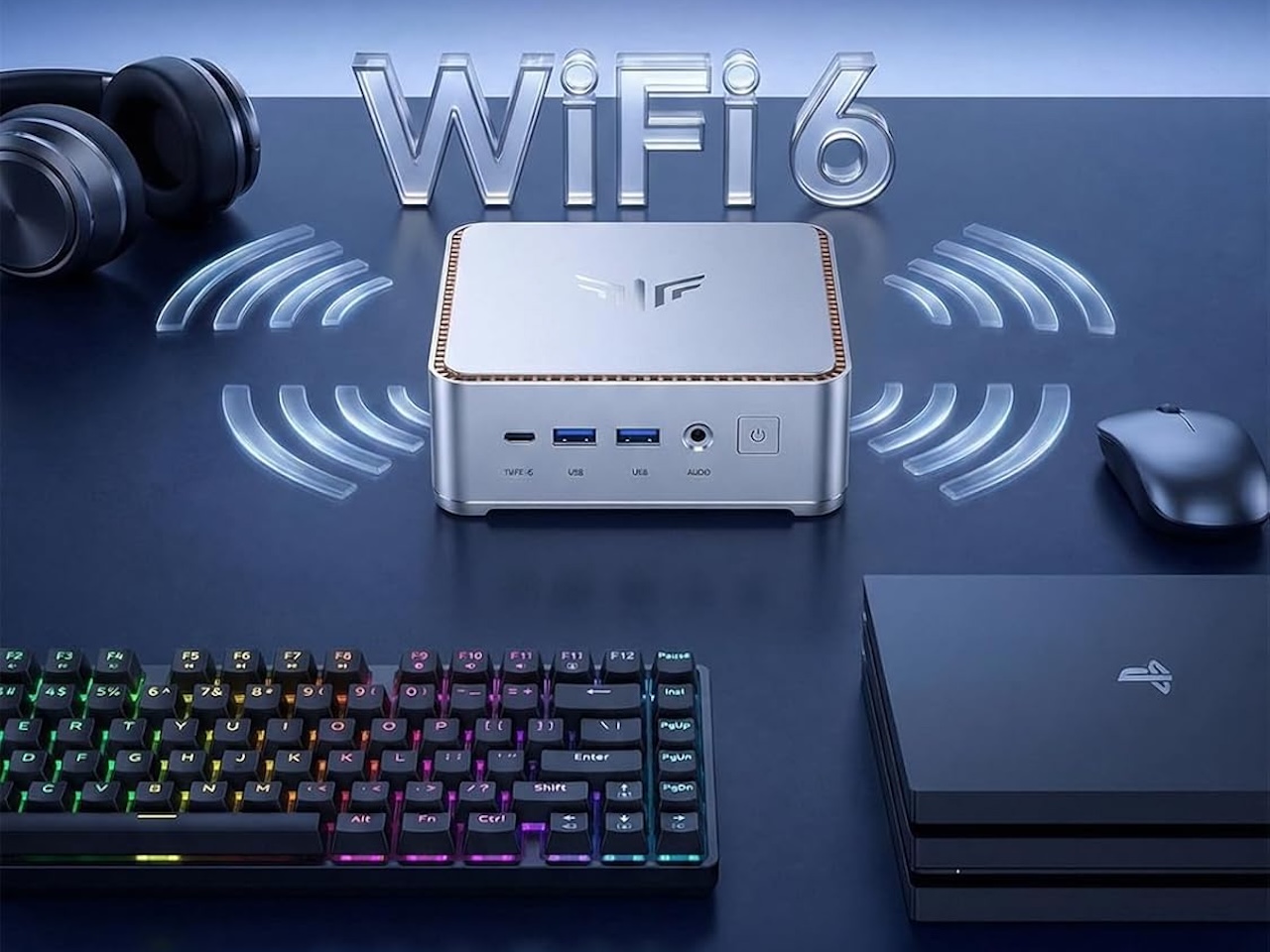
Price: $567.99 (On Sale from $699.99)
Where to Buy: Amazon
KAMRUI pairs the CPU with 32 GB of DDR4 memory and a 1 TB PCIe 4.0 SSD. That’s double the RAM we see in most sub-$600 minis. The storage is fast enough that Windows 11 Pro boots before the monitor finishes waking from sleep.
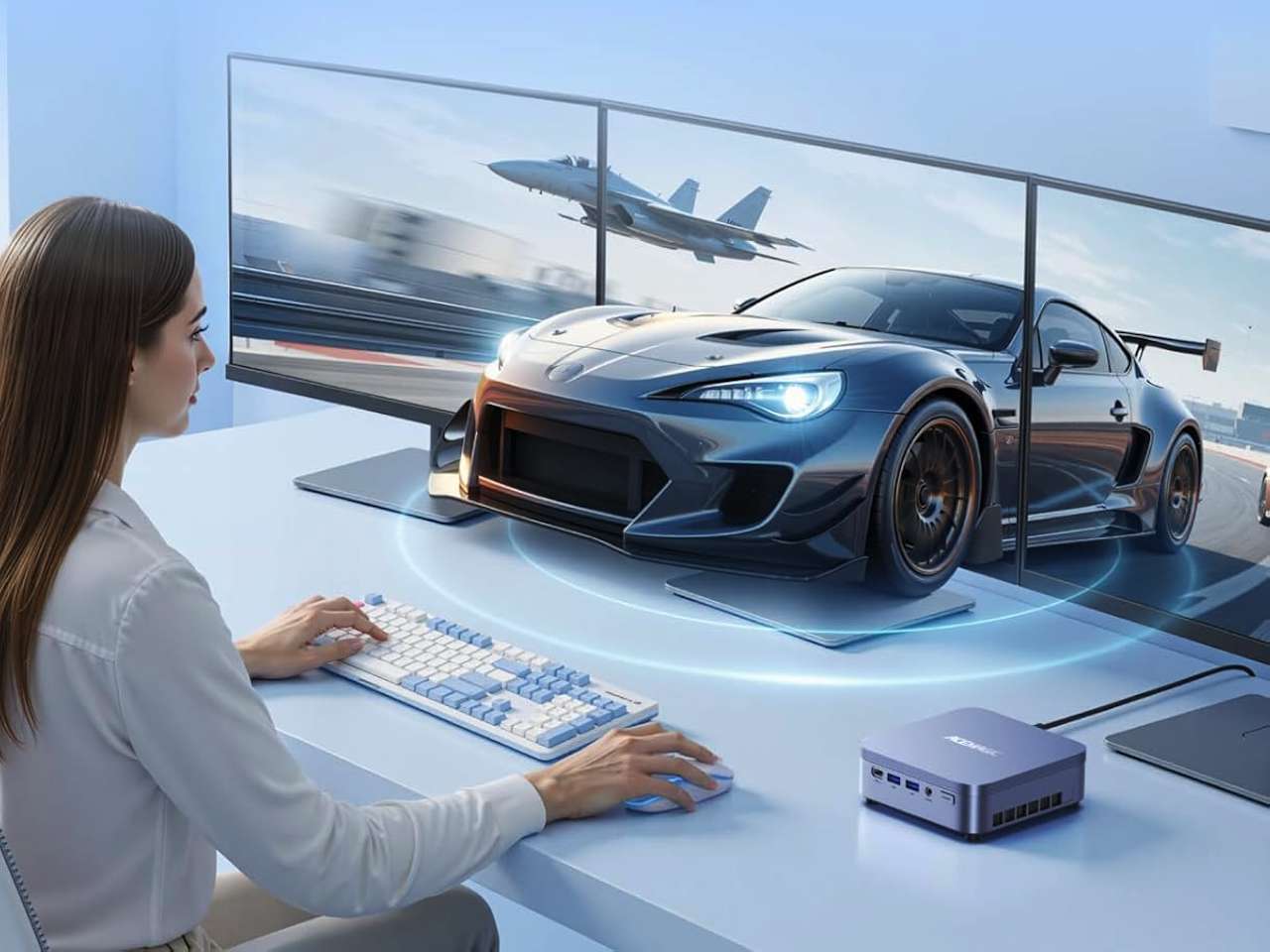
Port selection is generous without being overwhelming. You get USB-C and dual USB 3.2 Gen 2 ports on the front. Around back there are four USB 3.2 Gen 1 Type-A connectors, HDMI 2.0, DisplayPort 1.4, and a 3.5 mm audio jack. Triple 4K display support is baked in, which matters if you run a dual-monitor setup plus a TV.
The chassis measures 5.04 by 5.04 by 1.63 inches. It’s small enough to mount behind a VESA bracket or slide into an entertainment center. At $567.99, it’s not the cheapest box on this list, but it’s the one we’d hand to someone who needs maximum performance without sacrificing desk space. KAMRUI has been building mini PCs for several years.
2. ACEMAGIC M5: Same chip, different attitude
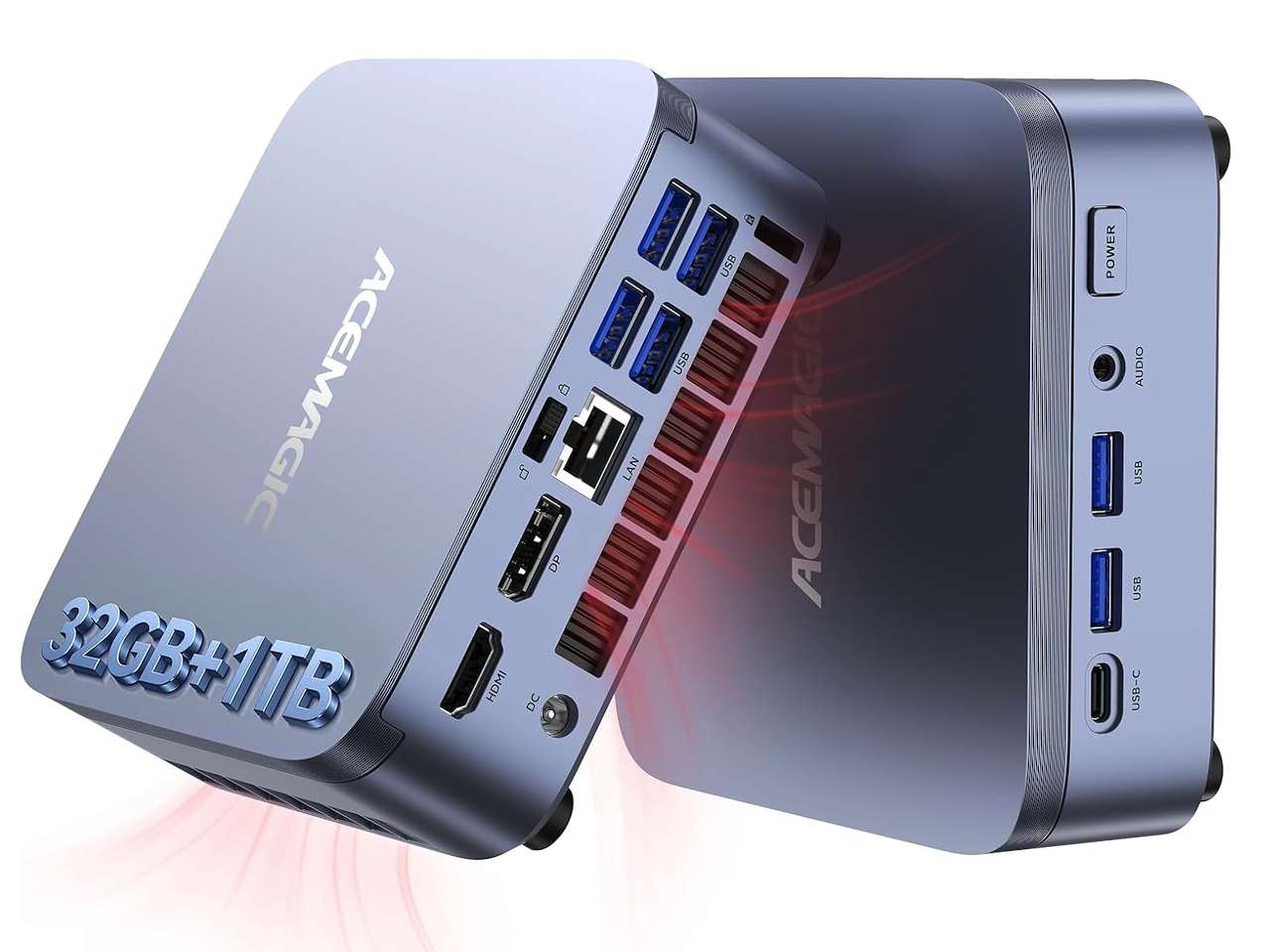
The ACEMAGIC M5 sits in the same HX-class neighborhood as the KAMRUI, but with a step up in cores. It runs the Intel Core i5-14500HX, a 14-core (6P+8E), 20-thread chip that boosts to 4.9 GHz. That’s four more E-cores and four more threads than the 14450HX next door, inside the same 55 W base TDP envelope. At $569, it costs roughly the same as the KAMRUI, but the multi-threaded headroom is the differentiator.
Price: $569
Where to Buy: Amazon
ACEMAGIC pairs that chip with 32 GB of DDR4 RAM and a 1 TB NVMe PCIe 4.0 SSD, matching the KAMRUI’s storage configuration exactly. The port array is similar but slightly leaner. You get four USB 3.2 Gen 2 Type-A connections, one USB-C, gigabit Ethernet, HDMI, DisplayPort, and a 3.5 mm audio jack.
So why consider it over the KAMRUI? The 14500HX’s extra E-cores show up in workloads that scale across threads, like background syncs, virtualization, and tab-heavy browser sessions. The chassis design also appears to prioritize airflow, which suggests a quieter acoustic signature under sustained load. If you want a measurable bump in multi-threaded performance with a potentially cooler footprint, this is the pick.
3. Beelink SER5 Pro: The sensible all-rounder
The Beelink SER5 Pro is built around an AMD Ryzen 5 5625U, a 6-core, 12-thread chip that tops out at 4.3 GHz. It’s not a flagship processor, but on paper it delivers enough throughput for video calls, browser multitasking, and light photo editing. We wouldn’t push it into 4K video rendering, but that’s not what this box is for.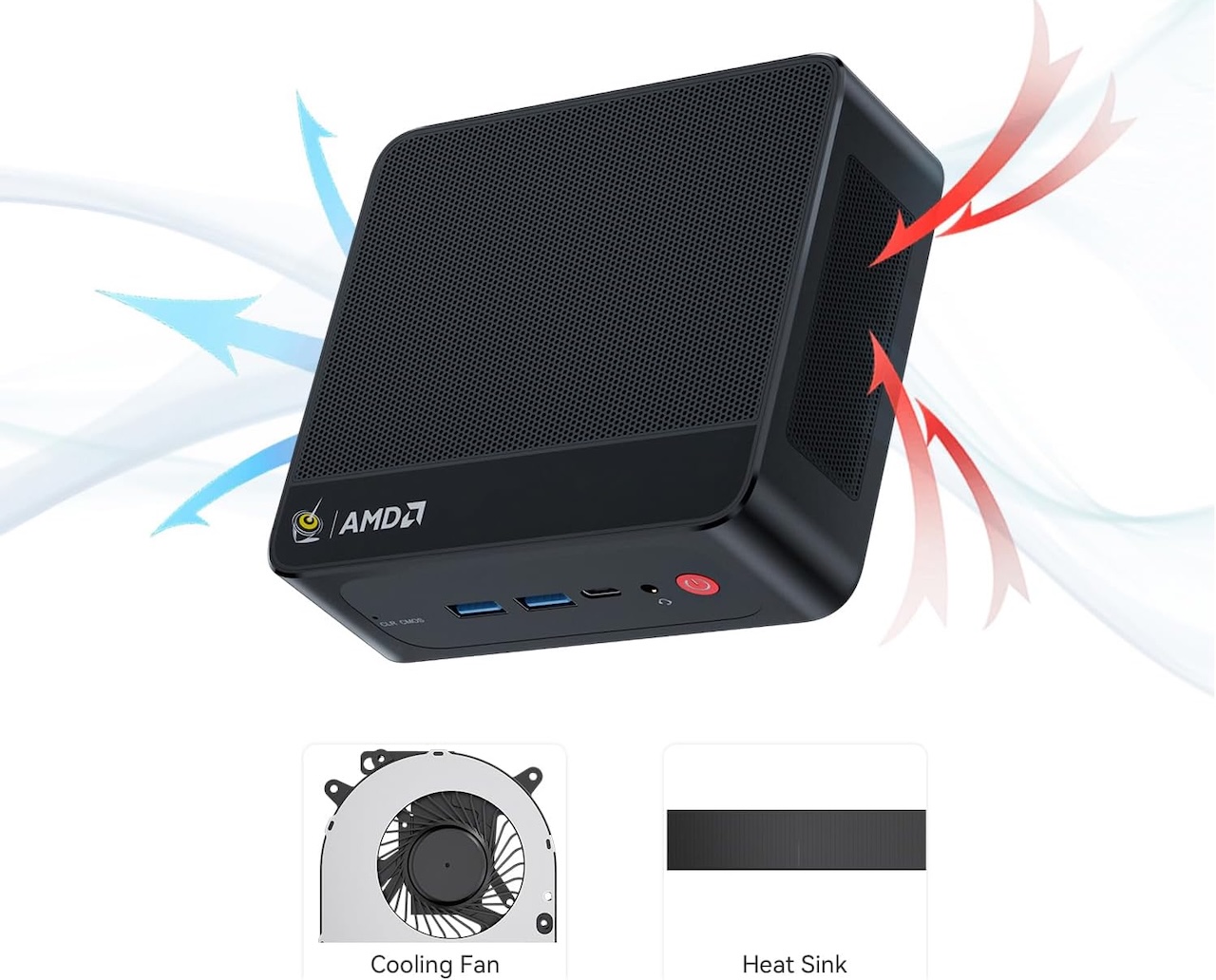
Price: $419
Where to Buy: Amazon
Beelink ships the SER5 Pro with 16 GB of DDR4 memory and a 500 GB NVMe SSD. Those are modest numbers compared to the 32 GB/1 TB pairings above, but they’re also the reason this box costs $419 instead of $569. You can always add an external drive or upgrade the internal SSD later.
Connectivity is the strong suit. You get HDMI, DisplayPort, and Type-C for triple-display setups, plus a 2.5 Gbps Ethernet port that future-proofs your wired network connection. Wi-Fi 6 and Bluetooth 5.4 round out the wireless side.
The SER5 Pro sits in the middle of this list for a reason. It’s the sensible choice for buyers who want a capable daily driver without paying for cores they’ll never tax. Beelink has been in the mini PC game longer than most of these brands, and the SER line has enough of a track record that we don’t hesitate to mention it.
4. GMKtec G10: The budget pick that doesn’t feel like one
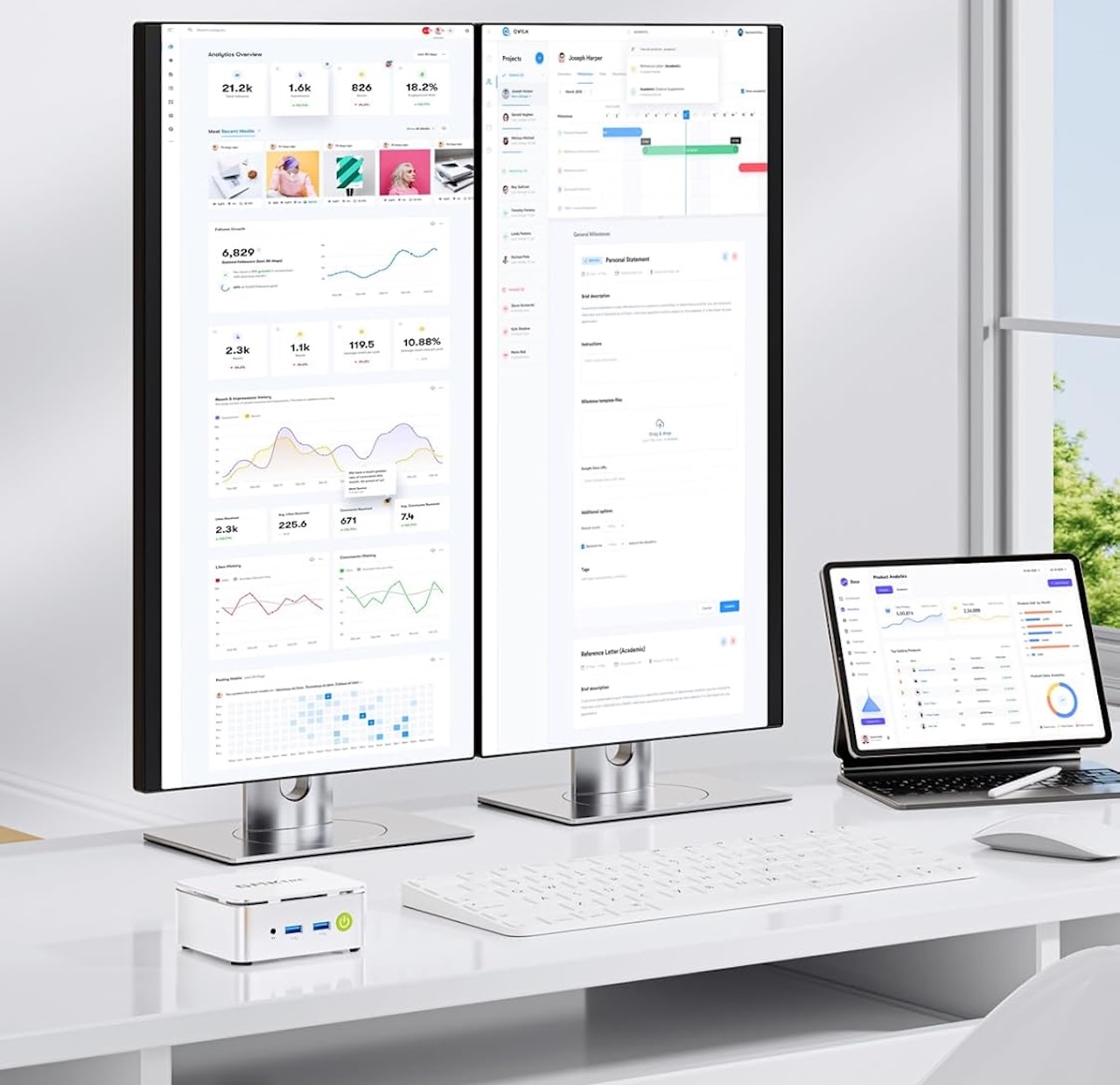
Most budget mini PCs under $350 wheeze when you open more than a dozen browser tabs. The GMKtec G10 breaks that pattern. It runs an AMD Ryzen 5 3500U, a 4-core, 8-thread processor that boosts to 3.7 GHz. That’s two generations behind the Beelink’s 5625U, but the gap is narrower than the $120 price difference suggests.
Price: $287.98 (On Sale from $319.99)
Where to Buy: Amazon
GMKtec outfits the G10 with 16 GB of dual-channel DDR4 memory and a 512 GB PCIe 3.0 SSD. Storage expansion is supported up to 16 TB, which is an almost comical ceiling for a box that measures 4.1 by 3.9 by 1.7 inches. At $319.99 (now on sale), it’s the cheapest mini PC on this list that we’d still call usable for real work.
5. Bmax B6 Plus: the entry-level ticket
$260 doesn’t buy much in desktop computing in 2026. The Bmax B6 Plus knows that and doesn’t pretend otherwise. It ships with an Intel Core i3-1000NG4, a low-power dual-core chip that Intel originally designed for thin laptops. It’s not fast, but it’s sufficient.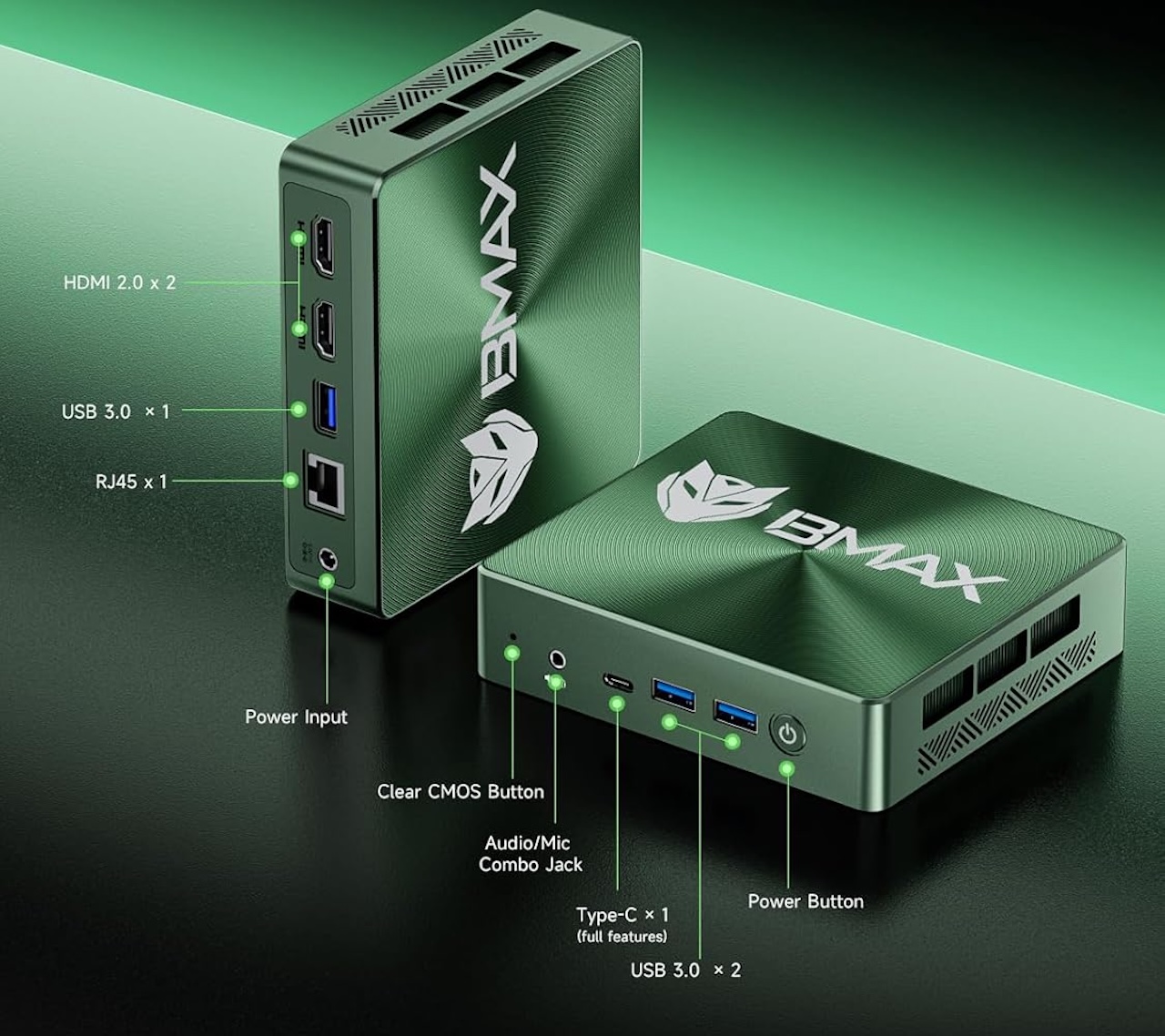
Price: $259.99
Where to Buy: Amazon
Bmax pairs that CPU with 12 GB of LPDDR4 memory and a 512 GB NVMe SSD. The port selection is sparser than the others. You get two HDMI outputs and one Type-C port, plus three USB 3.0 connections. You still get triple 4K display support and Wi-Fi, but the overall package is clearly built to a price.
The chassis measures 4.9 by 4.4 by 1.61 inches, making it the thinnest box in this roundup. At $259.99, it’s the entry fee for anyone who needs a basic Windows 11 Pro machine for email, web browsing, and video playback. We’d skip it for heavy multitasking, but we’d hand it to a relative who needs a computer that works.
Which one belongs on your desk
Mini PCs in 2026 have matured past the novelty phase. A $570 box now delivers laptop-grade performance in a form factor that hides behind your monitor. A $260 box covers the basics for users who need Windows, a browser, and an email client.
We’d buy the ACEMAGIC M5 if we needed maximum multi-thread headroom for heavy multitasking, or the KAMRUI Hyper H2 for HX-class power with double the RAM most sub-$600 boxes ship with. We’d buy the GMKtec G10 if we wanted to keep the budget under $350 without settling for sluggish performance. And we’d hand the Bmax B6 Plus to a relative who only checks email and watches YouTube. The right pick depends on how hard you plan to push it.
What to look for in a mini PC in 2026
Three specs separate the usable from the frustrating in this category. Here’s how we weighted them, plus the questions buyers ask us most often.
How much RAM do you need in a mini PC in 2026?
We’d call 16 GB the comfortable floor for Windows 11 Pro in 2026. You can get by on 12 GB for light browsing and email work, as the Bmax B6 Plus proves, but anything less and you’ll watch the task manager memory graph turn red during routine use.
Does storage speed matter more than capacity in a mini PC?
At these prices, yes. A PCIe 3.0 or 4.0 NVMe SSD transforms boot times and app launches compared to a SATA drive or eMMC storage. All five picks above use NVMe, which is why they made the cut.
Can a mini PC drive multiple monitors?
If you run dual monitors, confirm the box has two dedicated video ports, not one port and a USB-C adapter requirement. The KAMRUI, ACEMAGIC, and Beelink all offer triple-display support natively. The GMKtec and Bmax support three screens too, though their port mixes are slightly more limited.
Do these mini PCs have discrete graphics?
None of these boxes have discrete GPUs, and none will run modern AAA games well. For home office work, streaming, and light creative tasks, the built-in Intel UHD, Iris Plus, or AMD Radeon Graphics are enough. If you need gaming performance, you’re shopping in a different category entirely.
Sign up for our newsletter today.
No ads, no spam, just links to our latest articles!

2-Pack LED Video Light Kit, NiceVeedi Studio Light, 2800-6500K Dimmable Photography Lighting Kit with Tripod Stand&Phone Holder, 73″ Stream Light for Video Recording, Game Streaming, YouTube
(as of June 8, 2026 12:59 GMT -05:00 – More infoProduct prices and availability are accurate as of the date/time indicated and are subject to change. Any price and availability information displayed on [relevant Amazon Site(s), as applicable] at the time of purchase will apply to the purchase of this product.)

ALTSON 60 LED Portable Selfie Light Video Conference Lighting with Clip & Camera Tripod Adapter Rechargeable 2200mAh CRI 97+, 3 Light Modes for Phone iPhone Webcam Laptop Photo Makeup
(as of June 8, 2026 12:59 GMT -05:00 – More infoProduct prices and availability are accurate as of the date/time indicated and are subject to change. Any price and availability information displayed on [relevant Amazon Site(s), as applicable] at the time of purchase will apply to the purchase of this product.)