At the start of this year my brother-in-law, Phil, placed a bet with our dog Macy. I allowed this to proceed knowing that our dog had no cash of her own, so could lose little more than a chewed toy. The gambling moment had been prompted by the news that both hound and human now had incurable cancers that were at a stage when it was time to stop treatment and allow the disease to do its worst (don’t stop reading – there are life-changing moments ahead and some humour).
Macy lost badly – thank goodness she never discovered blackjack – and departed in March. Phil has now gone too; the funeral is this week. This column, however, isn’t really about either of them. It’s about the age-old question, “But what does it all mean?” Because when Phil placed that bet, he added a couple of powerful caveats. He was not going to die before 5 September, when he and my sister were planning to throw a party to celebrate her milestone birthday and a big wedding anniversary. And he would pop his clogs in the hospice that he had selected, not at home.
I headed to the big shindig straight from The Monocle Quality of Life Conference. My partner picked me up from Heathrow and I changed in the car as we tried not to be too late. It was an amazing night, even though I knew that this would be the final time all three of my sisters, their partners and mine would be together in one room.
In the days after holding court at the party, Phil’s health declined. He was taken to the hospice but on the first night, after his family had left, he died. I’ve talked about this with my sister: how that date in the calendar kept him going, how even his determination to make it to the hospice kept him alive for one final day. He had a purpose, a plan.
Last week, while I was with the Monocle crew at the Livex liveability summit in Abu Dhabi, I hosted a panel about how we create healthy cities. I quizzed three amazing people on the topic: Dan Buettner, the writer who has popularised the research around blue zones (places with high clusters of centenarians); Max Lugavere, a hugely successful writer and podcaster who focuses on nutrition; and Khaled Ghattass, an author and human-behaviour expert who brought an Arabic perspective. We talked about diet and exercise – but something that also surfaced was the importance of your life having meaning.
Ghattass gave some stark examples. If your partner dies, you are 60 per cent more likely to die too in the next year. I hope that my sister doesn’t get any ideas – there’s a limit to how many days I can take off work. He also talked about why, when people retire, they so often succumb to illness and cognitive decline. He told the story of how his father’s mental health diminished after he stopped work and how, by adding purpose back into his dad’s life, he reversed this. He put his father in charge of the family’s finances and he flourished.
Buettner’s research also supports this idea. He explained that long-lived people tend to have social circles that reinforce healthy behaviour, with strong family ties, faith and friends who they can call on when needed. Buettner also flagged that people who volunteer tend to have lower BMIs than those who don’t. And in Okinawa, they don’t even have a word for “retire”.
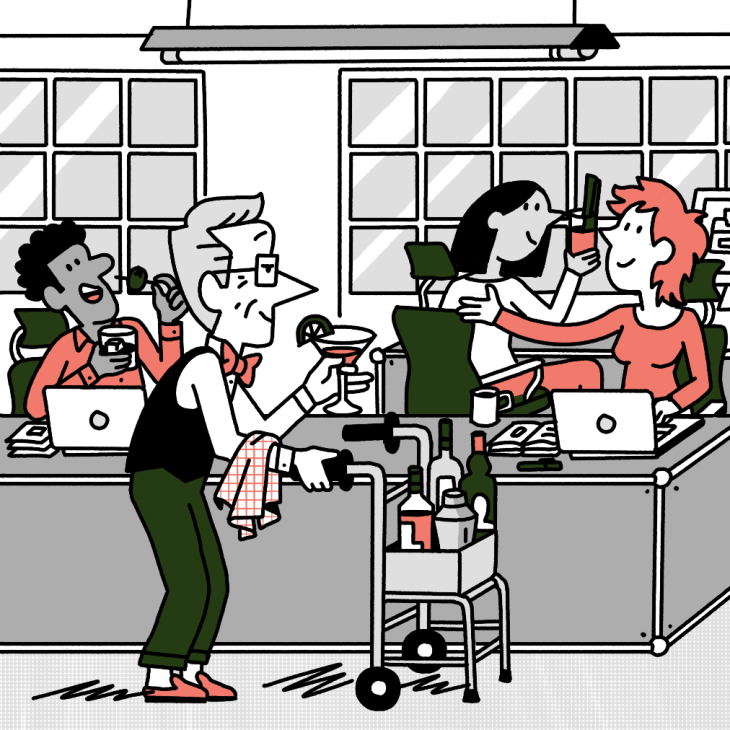
So if you want to keep going, to stay healthy and keep your brain alert, you need to be able to answer that simple question: what am I here for? And before you’ve had your wholegrain toast please. It also looks like I might end up shuffling around Midori House as a nonagenarian. Perhaps I can oversee the drinks trolley. I’d be good at that.
To read more of Andrew’s columns, click here.