By investing in its emerging film industry, Greenland is seeking to reclaim ‘narrative sovereignty’.
In January the new Film Institute of Greenland was launched, while this September the Nuuk International Film Festival will be celebrating its 10th anniversary. The autonomous Arctic nation, which is part of the Kingdom of Denmark, is bolstering its cinematic credentials for good reason. It sees film as a tool to reclaim the story that’s being told about it globally.
“We think of it as taking back narrative sovereignty,” Inunnguaq Petrussen, the Film Institute of Greenland’s CEO, tells Monocle when we visit his office in central Nuuk. “For about 100 years, other nations, especially Denmark, have been making films about Greenland, our culture, our nature and our environment, and it’s very important for us to tell our own stories.”
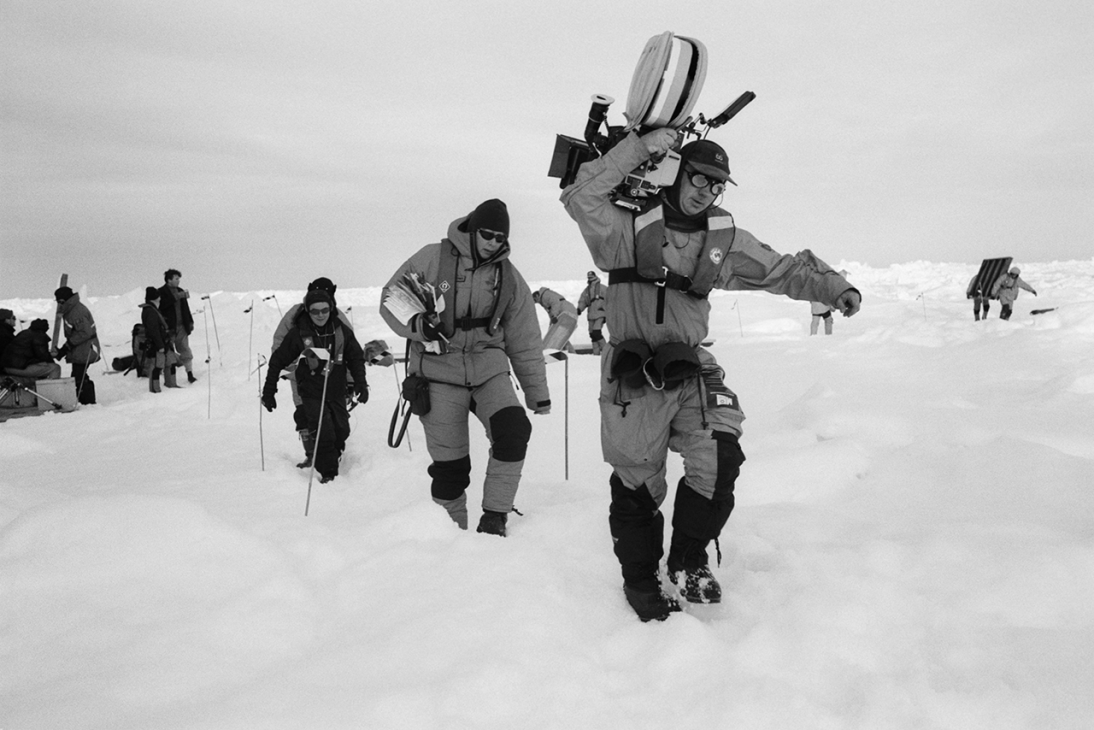
Of late, that narrative has revolved around a story not of Greenland’s making: Donald Trump’s takeover plans. “We have never had so much focus as we’ve had recently,” says Petrussen. “The timing is a coincidence because the institute has been in the pipeline for some years. But many film festivals have already been in contact to say that they want Greenlandic films and want me to come and talk.” That interest resulted earlier this year in a trip to Cannes, where short-film auteur Inuk Jørgensen, the country’s most awarded film-maker, was featured prominently.
The capital’s film festival originally emerged from the initiative of local film-makers and the new institute is considered a natural progression. It has three aims: to network with other similar organisations to help develop the domestic industry; to fund locally made films; and to promote Greenland as a destination for foreign film companies by offering a 25 per cent “refund” of money spent here. The organisation’s initial budget is DKK5.8m (€775,000); a significant portion of this will go towards administration costs, while the rest will be used to help fund films. The Danish government has also contributed a one-off sum of DKK10m (€1.3m) to fund productions that share stories about the territory.
“I have been talking a lot with the Canadian film-makers’ organisation and especially the International Sámi Film Institute, which has been a huge inspiration, and also the Danish Film Institute,” says Petrussen. The Indigenous Cinema Alliance is another ally. “We see being labelled as makers of Indigenous films as a big opportunity because it gets us to the festivals, which gets us seen by the industry, then the public.”
Petrussen has always had one foot in the institutional political world and another in the arts: he has worked both as a political adviser to several Greenlandic political parties and as a singer-songwriter in indie band Inuk. He explains that Greenland’s film scene is particularly strong when it comes to two genres: documentaries (often about climate change) and low-budget horror (most notably by director Malik Kleist). In 2023, Greenland received its first Oscar nomination in the Live Action Short category for Ivalu by Anders Walter and Pipaluk Kreutzmann Jørgensen. “Local people are really supportive of the industry,” says Petrussen. “Every time a Greenlandic film comes out, more people will go to see it than watch Spider-Man.”
Greenland might only have a couple of cinemas, with about 30 or 40 people working full-time in the industry. It typically makes just one full-length feature a year and budgets are small. But Petrussen’s ambitions go far beyond telling domestic stories for domestic audiences. “We want to co-produce films with international film-makers. Canada has been so successful in attracting film companies. We want to work with HBO, Netflix and Disney. That’s the kind of level.”
Michael Booth is Monocle’s Copenhagen correspondent. For more analysis and insights, subscribe to Monocle today.
Further reading:
– If Donald Trump’s threats have made anything clear, it’s that Danes don’t care about Greenland
– Meet the daredevil stunt performers helping Europe’s film-making industry to reach new extremes
– Hollywood is undergoing an economic revolution. Is cinema’s future on course for a plot twist?