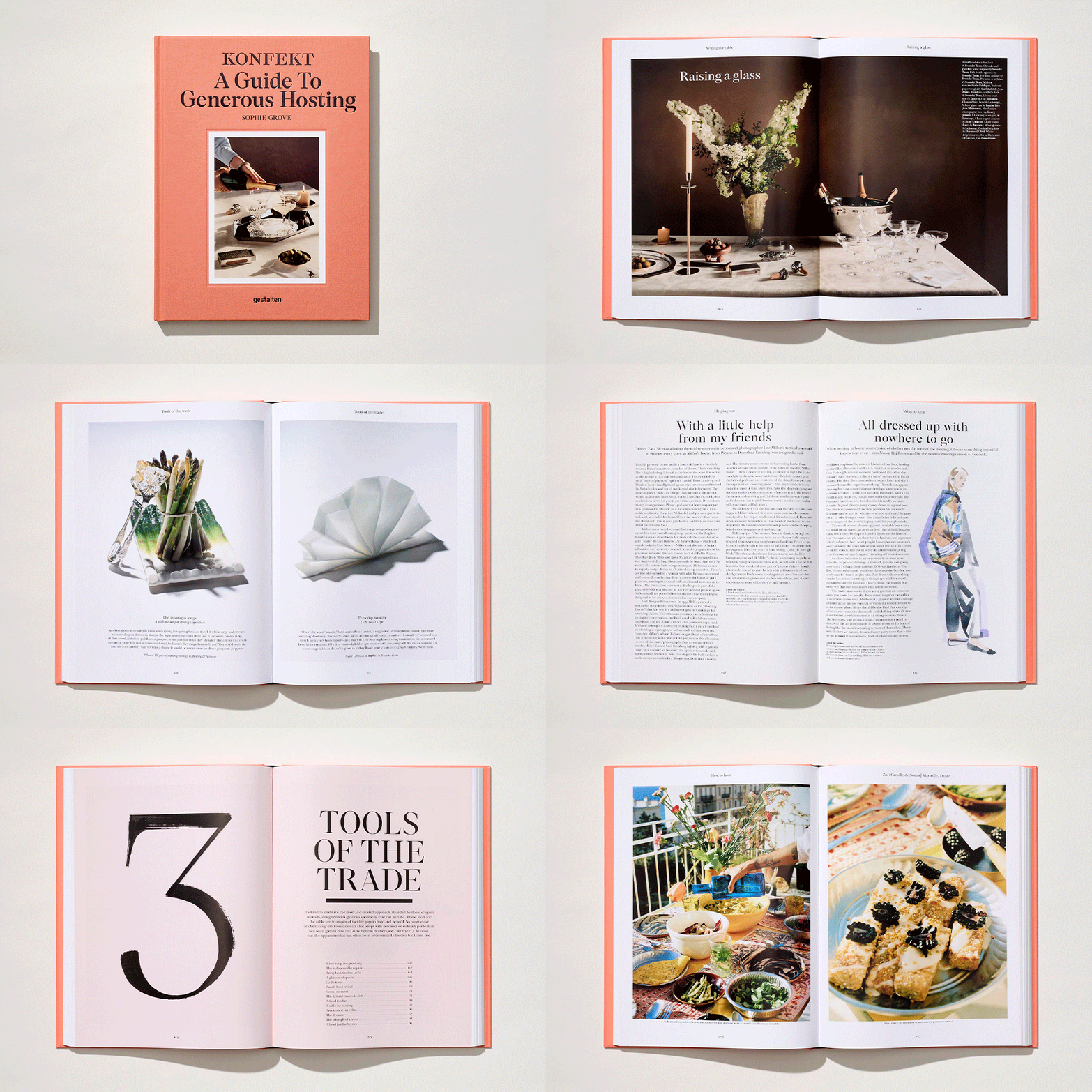
Inspired by hosts past and present, ‘Konfekt: A Guide to Generous Hosting’, celebrates warm hospitality and the human connection at the heart of bringing people together.
I have long been intrigued by the rituals of hospitality. When I look back on the years that I spent on the road as a foreign correspondent, I remember warm welcomes more than any other encounters. Whether it was a meal at the captain’s table as I sailed in the Gulf of Aden looking for Somali pirates or a bowl of soup offered by a family in Yerevan as they told me about the Armenian tradition of giving your last crust to guests, I always felt that the most revealing experiences happened in people’s homes over food. I remember the time when I sat down to a lunch of yogurt and sautéed courgettes at a Turkish tile factory in Iznik, where bottles of citrus cologne were passed around to start and end the meal. And then there was the time when I stumbled across a beaujolais nouveau celebration in Toulon with French navy recruits, wearing pom-poms and striped shirts, and ate plates of hot cassoulet as a storm blew in.
Konfekt’s very first book, Konfekt: A Guide to Generous Hosting, celebrates the value of human connection and warm welcomes. To host is to create a version of home and a sense of belonging. All my life, I have been trying to recreate the light touch of my parents’ more-is-more Sunday-lunch gatherings in Cambridge with an ensemble of astrophysicists, poets and professors. I remember serving peanuts and white wine as their friends danced to Dire Straits across the flokati rugs. I would fall asleep to the murmur of dinner parties or be found snoozing on piles of coats.
It’s why I feel so drawn to tales of hosts, whether it’s Joan Didion’s famous Easter and Thanksgiving parties (notes from her daybooks detail menus, inventories of silverware and recipes for risotto, borscht and Sichuan duck for guests who ranged from Nora Ephron to Jacqueline Kennedy Onassis) or photographer Lee Miller’s dinners in her Sussex farmhouse, where food was served to a coterie of surrealist artists. “We have recipes by her for golden meatloaf and goldfish, and she liked blue spaghetti,” her granddaughter, Ami Bouhassane, told me once. “She designed a whole meal where everything was white. That was in celebration of Man Ray’s exhibition at the New York Cultural Center in 1974: a specially devised dinner menu of salt cod, followed by veal with cauliflower, white rice and white chicory, with vanilla ice cream and lychees for pudding. It was a throwback to the white ball that she worked on with Man Ray in 1930 in Paris, where they projected images onto the guests as they danced.”
Hosting distils a moment: it creates a forum for ideas or quixotic escapism. And isn’t that why we go to the effort of inviting people over? It’s all about the feeling of trying to grasp the intangible. I live for the times when my most talented friend takes to the piano and plays a set of Nina Simone songs at the end of a night or when my children put together a scene from A Midsummer Night’s Dream for a garden stuffed full of guests on the summer solstice. These are brief episodes when spirits soar and reality evaporates.
When humans break bread, they are at their most honest and vulnerable. The dining table is where diplomacy happens and opponents strike deals. It’s where resolutions are made and ideas are hatched. And while some of the formalities and protocols feel obsolete today, this book argues that they are not entirely redundant. Indeed, these pages are a reflection on the meaning and relevance of modern manners in our fast-paced lives. We entertain essayists’ angles on what to wear and how to converse. We touch on the malign impact of phones at the table and what kind of etiquette has a role in contemporary lives. Most of all, this book celebrates the human urge to convene, converse and care for others. Inviting people into your home can be anxiety-inducing. There’s an unspoken sense that your guest might judge your record collection or even rifle through your bathroom cabinet. You are laid bare. There’s the perverse expectation that all of this must be done effortlessly, with a breezy nonchalance that doesn’t veer anywhere near the try-hard.
This self-imposed pressure often deters people from doing it at all. We know that to have people over is to ask for their time and trust – a leap of faith that extends in both directions. The best hosts I know combine an eye for detail with a light touch. There’s resilience too: sang-froid in the face of a blackened tart or curdled custard. But these true maestros lay a careful, often beautiful, scene and then dive in to enjoy it themselves. They let us know that however carefully laid their plans might be, it’s the people who matter.
We all know and cherish those hosts who envelop us as soon as we step into their homes. We feel soothed and inspired, not just by their company but also by how they preside over a hot pan as they ask about love, life, loss and what’s happening in the news. These snatched conversations, propped up on kitchen counters or around tables where candles drip, are when friendships feel at their most lovely. You are an unguarded, unvarnished version of yourself.
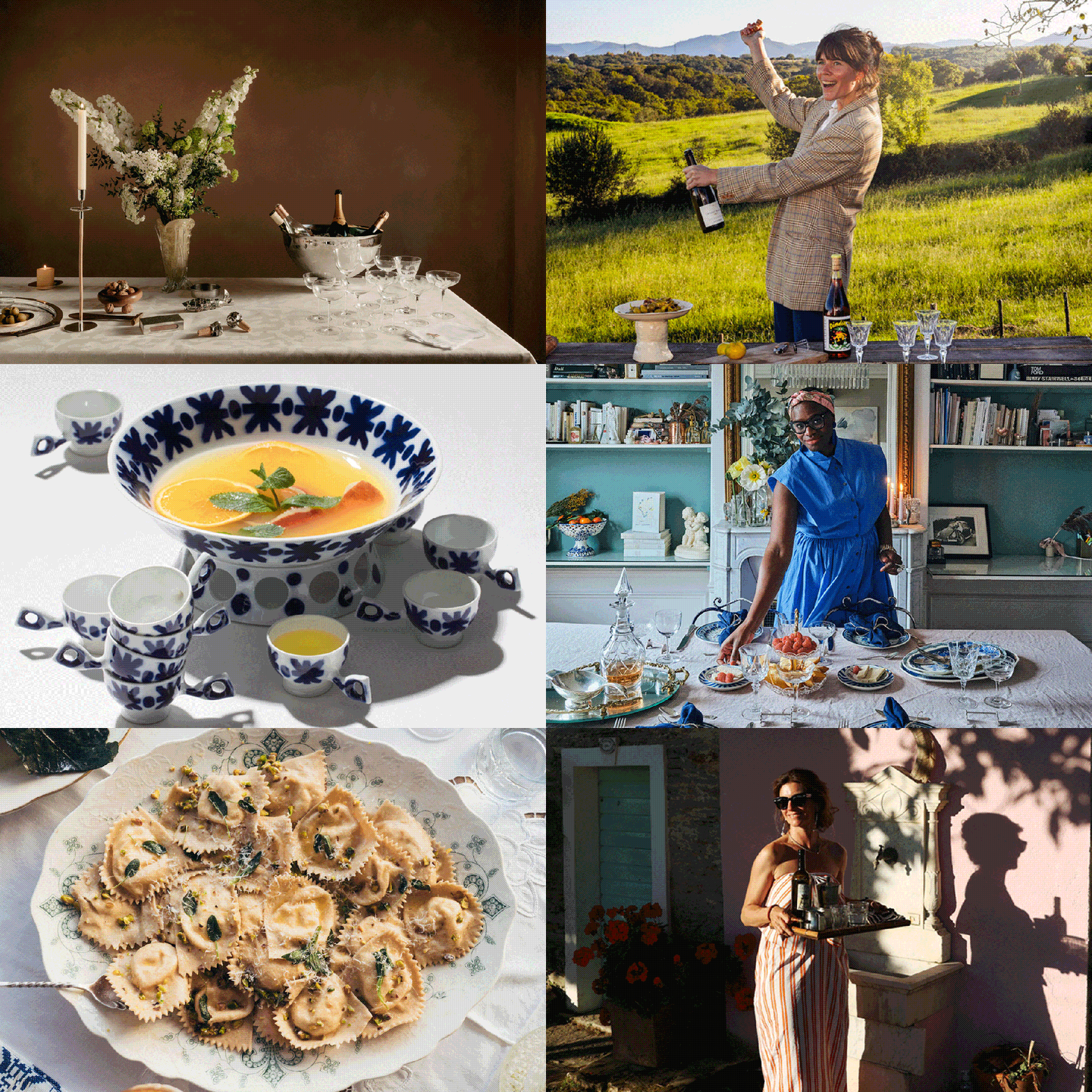
Our book transports you to languid lunches, soirées, dinner parties, picnics and tea ceremonies – and there’s a well-mixed Martini in there too. It’s about the poetry of an elegantly set table and the collective joy of a room alive with jostling energy (and even the pathos of tidying up). It is designed to urge the hesitant host to dive in: to rustle up an omelette for a neighbour or throw a wild party. It’s a tribute to the courage and generosity of good hosts and the inimitable art of making it all happen.
Sophie Grove is the editor of ‘Konfekt’. For more warm welcomes and nourishing guidance, order ‘Konfekt: A Guide to Generous Hosting’ today.