The road to the Karakoram is hard.
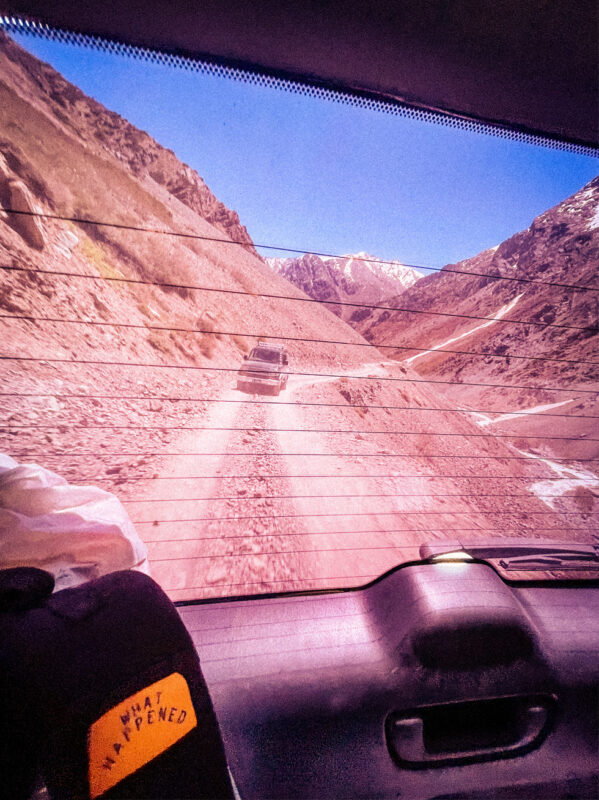
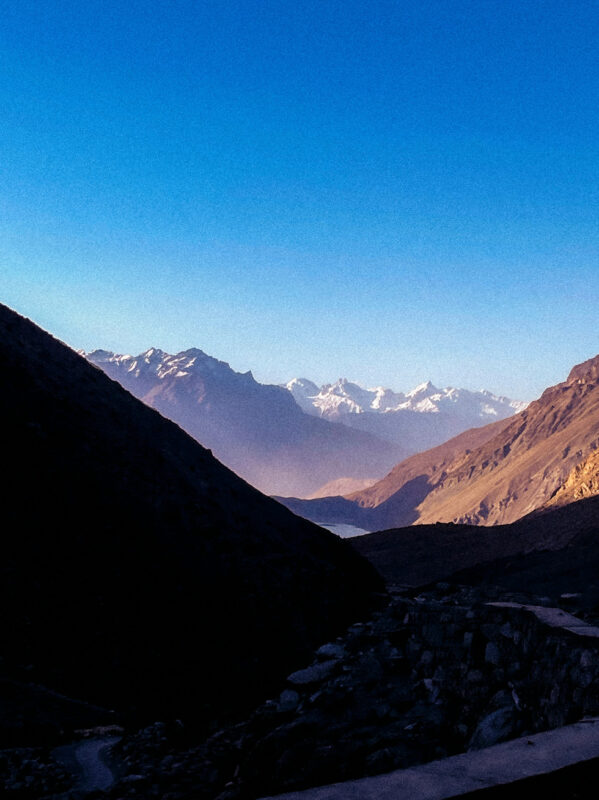
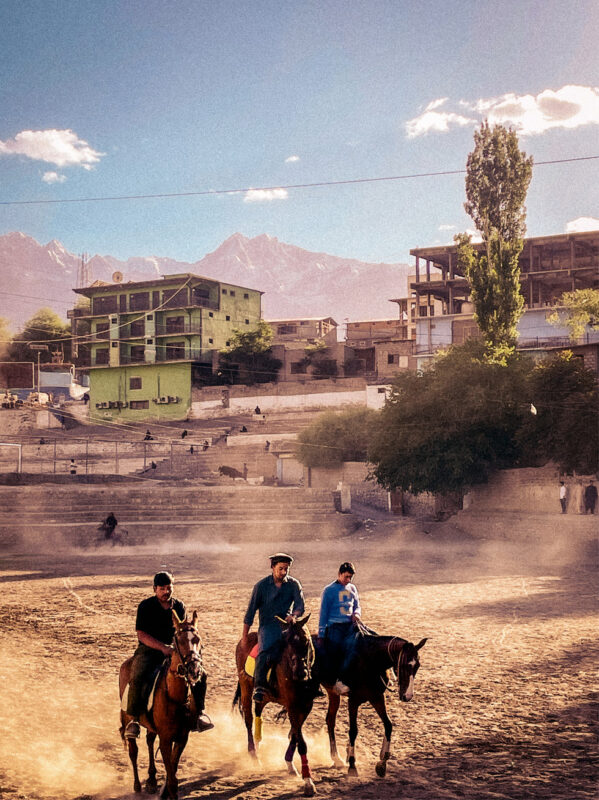
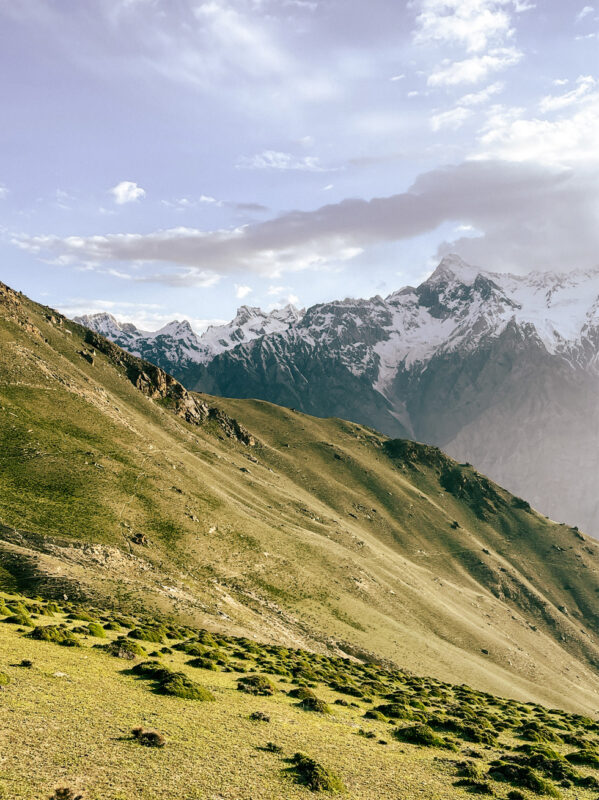
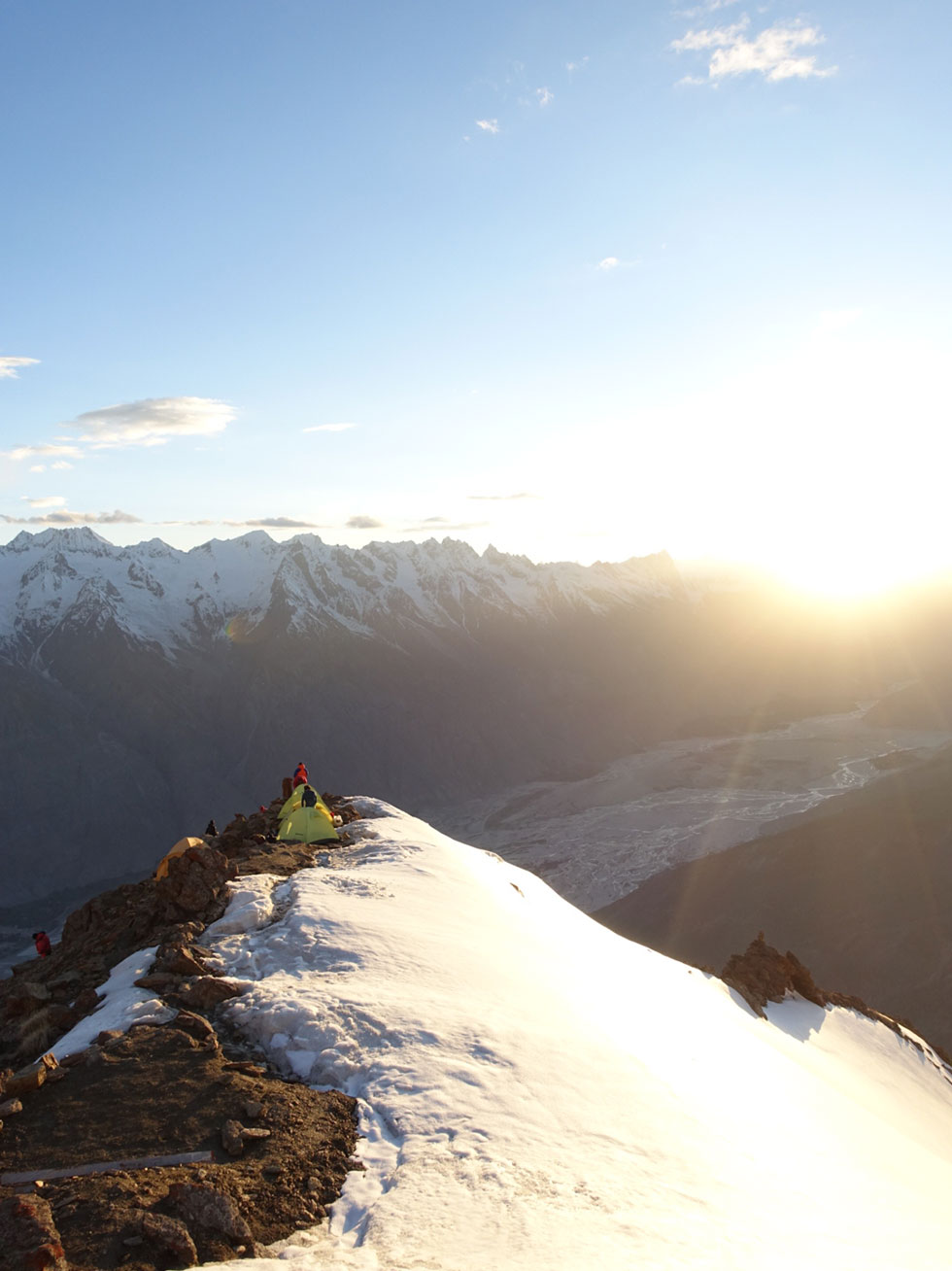
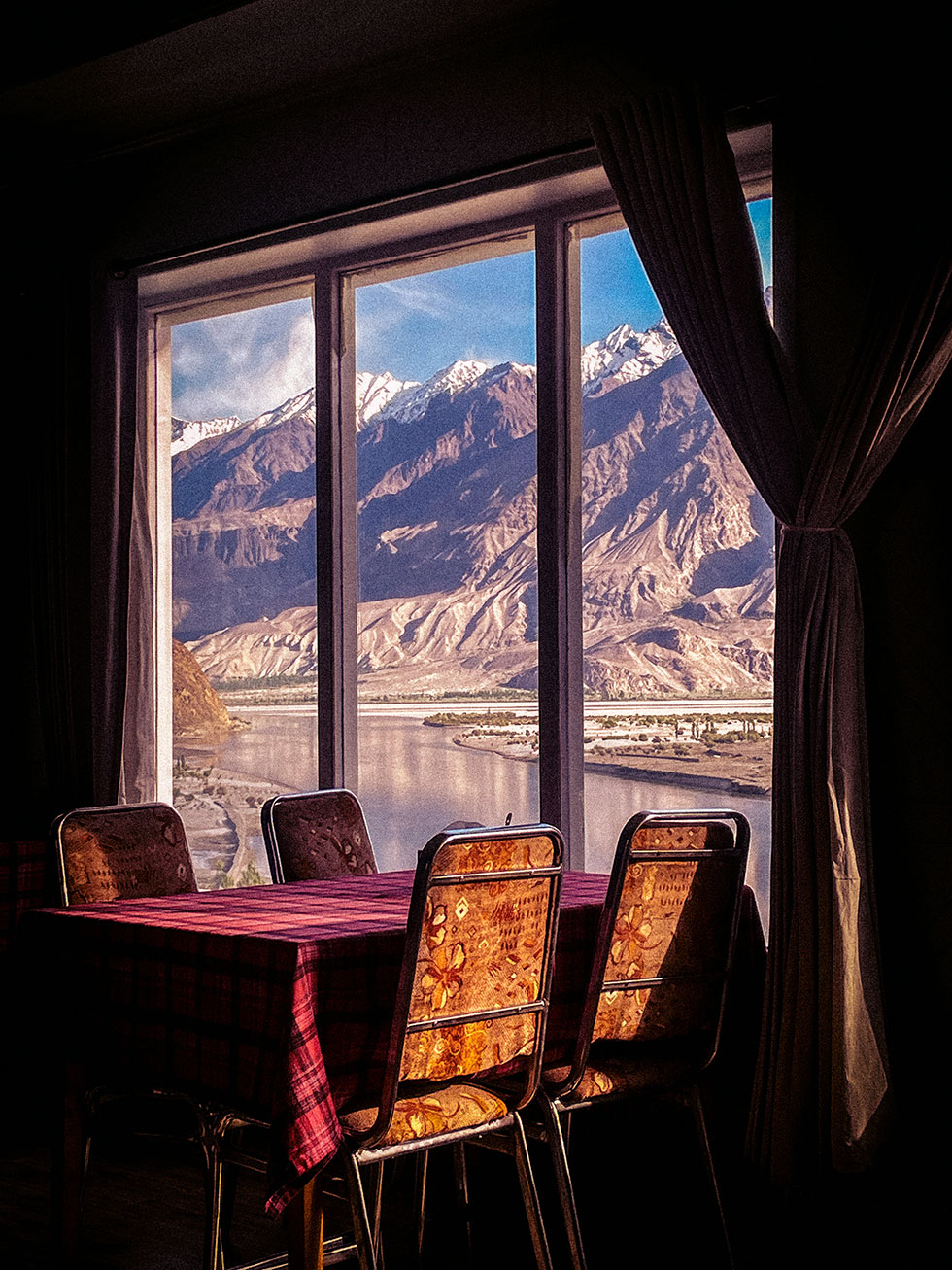
First, you fly to Islamabad. Then you fly again, in a smaller plane to Skardu — a town perched at the confluence of the Indus and Shigar rivers, the last city before the mountains swallow everything. Then you drive. Ten hours on roads that are dirt and crumbling at the edges, dust rising in curtains around the vehicle, the landscape becoming more severe with every kilometre. And then you walk. One hundred and twenty kilometres across the Baltoro Glacier — a whole week on foot — before you arrive at the base of the peaks that have been pulling you there for what seems like an age.
By the time Neža Peterca, founder of What Happened, reached base camp, she had crossed two continents, two time zones, and what felt like several centuries. The Karakoram, her final gateway, is home to K2, Gasherbrum, Broad Peak, and a dozen other giants.
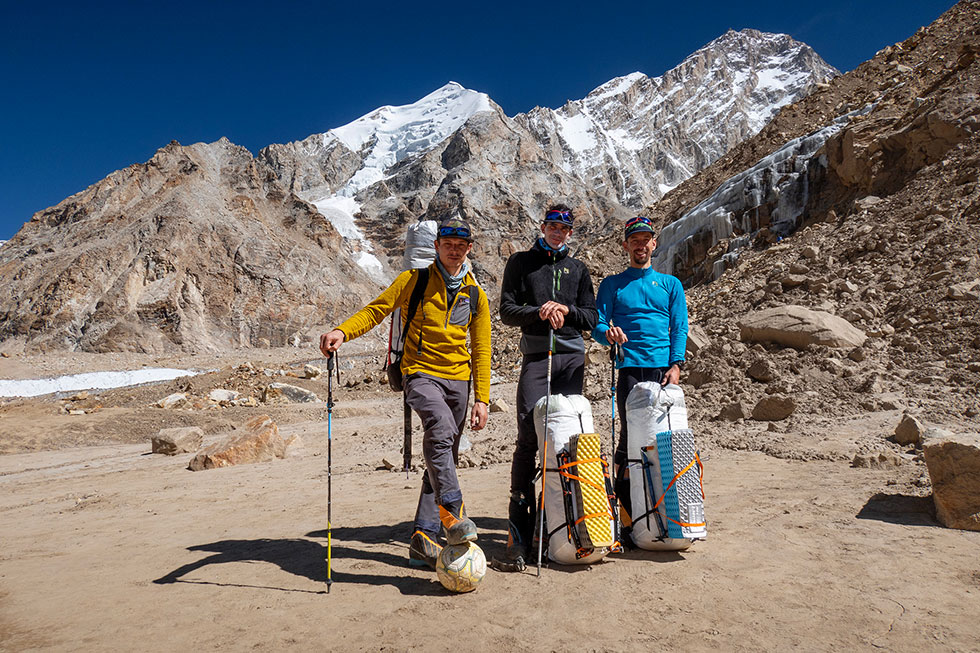
The team was nine people. Her boyfriend, Aleš Česen, a professional mountaineer on his ninth expedition to Pakistan, was the anchor. Around him: a film director, a sound engineer, two camera operators, a journalist from Der Spiegel, and a crew assembled to document two peaks for Servus TV — a memorial project for climbers who had died on these same mountains in the years before. The goal was to climb Leila Peak and Gasherbrum I, shooting footage that would share the stories of those lost to the same altitude, cold, and extremities.
And then there was Neža. Slovenian born. Designer. The only woman in a group of forty men, if you counted the thirty-seven porters who carried everything up from the last village — not on mules, but on their own backs, in plastic shoes without socks, eating snow when they were thirsty. The hardest and toughest people she’d ever witnessed.
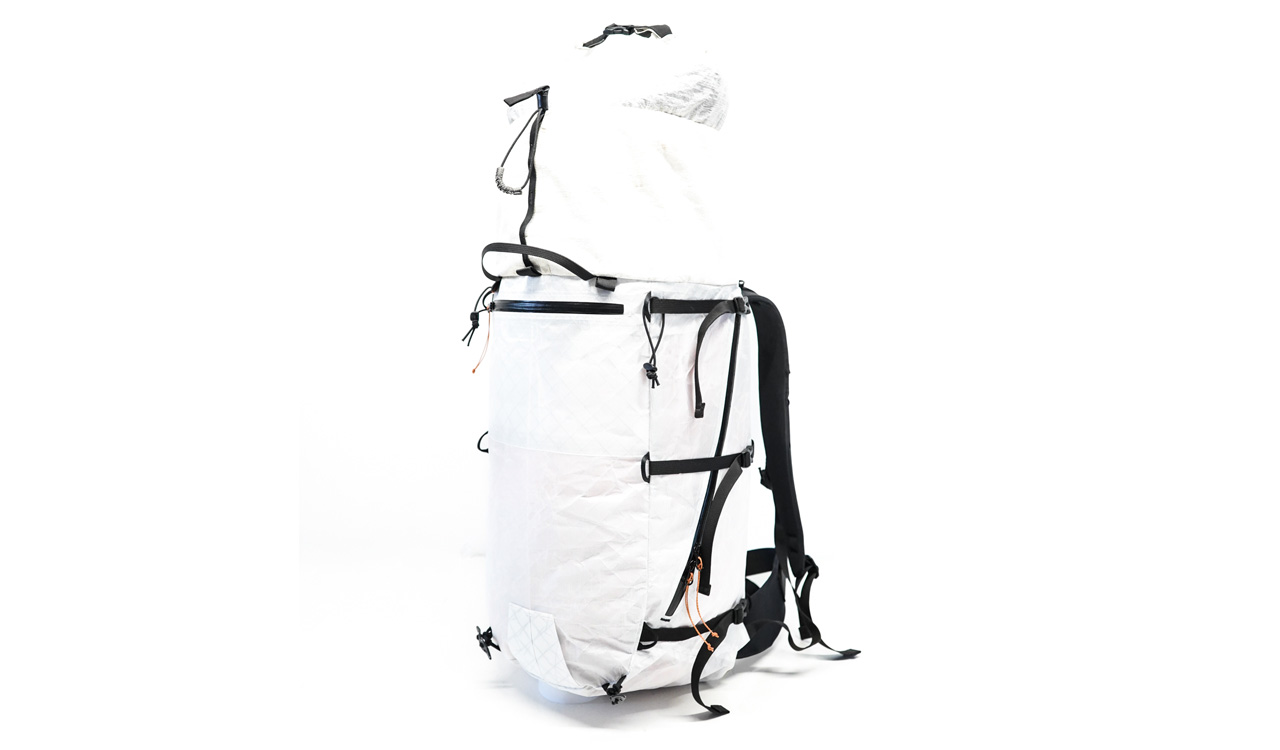
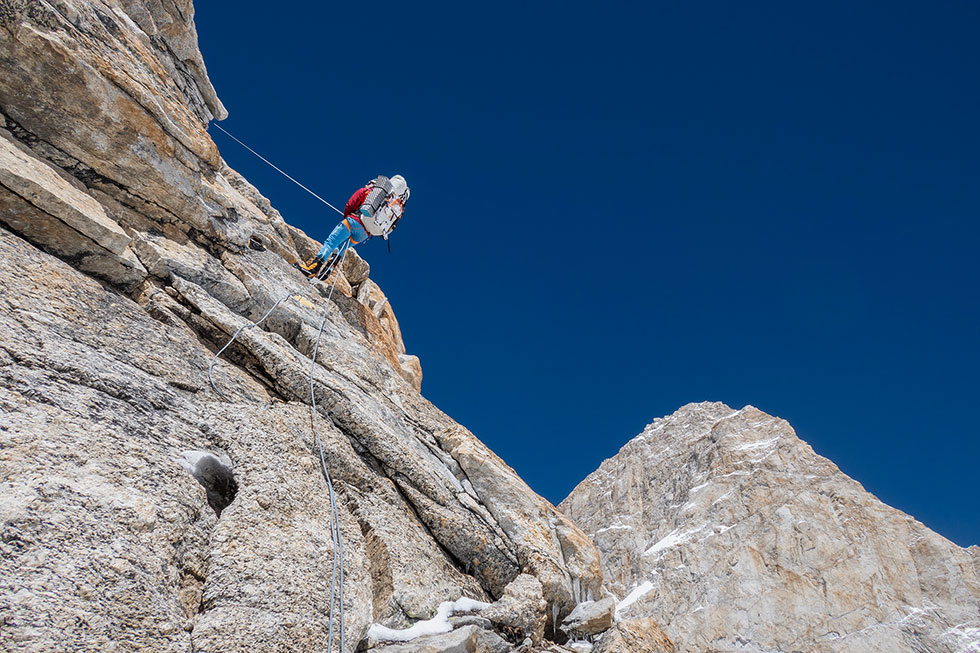
On her own back: a pack she had made herself. And on Aleš’s, another specialist pack of hers, especially designed for the summit push — a three-day ascent that would demand everything from whoever wore it.
It never got its test. But we’ll get to that.
Being the only woman in Pakistan’s Karakoram is not a neutral experience.
In the conservative Islamic culture of the region, the rules around women are unspoken but absolute. No eye contact. No handshake. No acknowledgement, really, beyond the bare minimum that politeness requires. Neža had been curious about the Middle East for years — drawn to what she describes as its “mysterious vibe” — and had always been advised to visit first with male company. She understood the advice. Living it was something else.
“It was a bit like I was invisible,” she says. Aleš, who had made this journey eight times before, saw his beloved Pakistan through new eyes for the first time. “He was like, ‘Oh wow, I didn’t realize it’s such a big difference if you’re a man or a woman.’”
She didn’t experience it as trauma. She experienced it as information — the kind of information that only comes from being somewhere, from being the person you are in a place that wasn’t built with you in mind. It was interesting. It was difficult. It was real.
What surprised her more was the expedition itself.
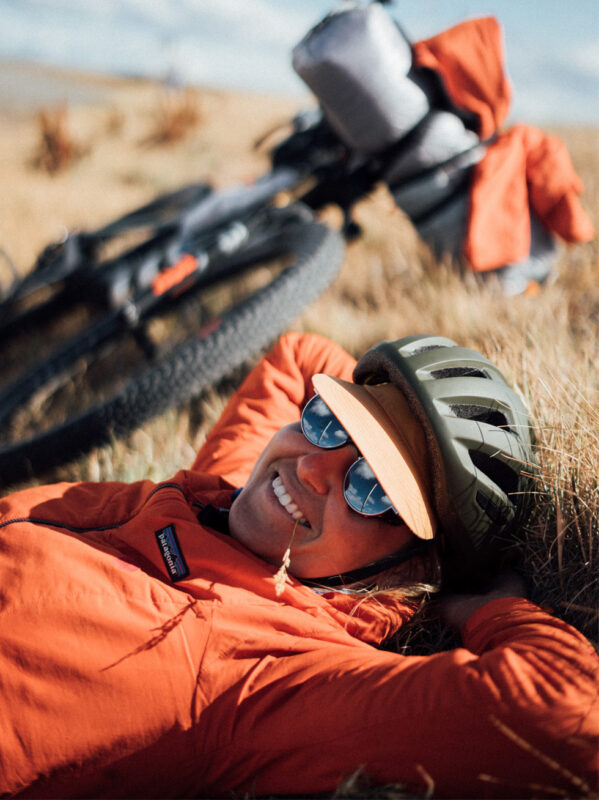
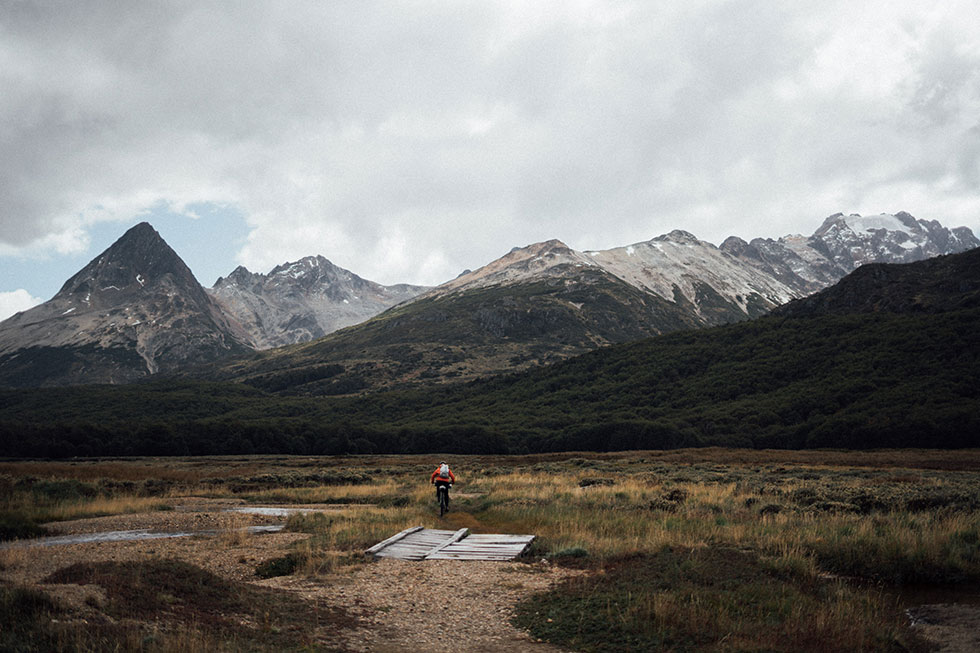
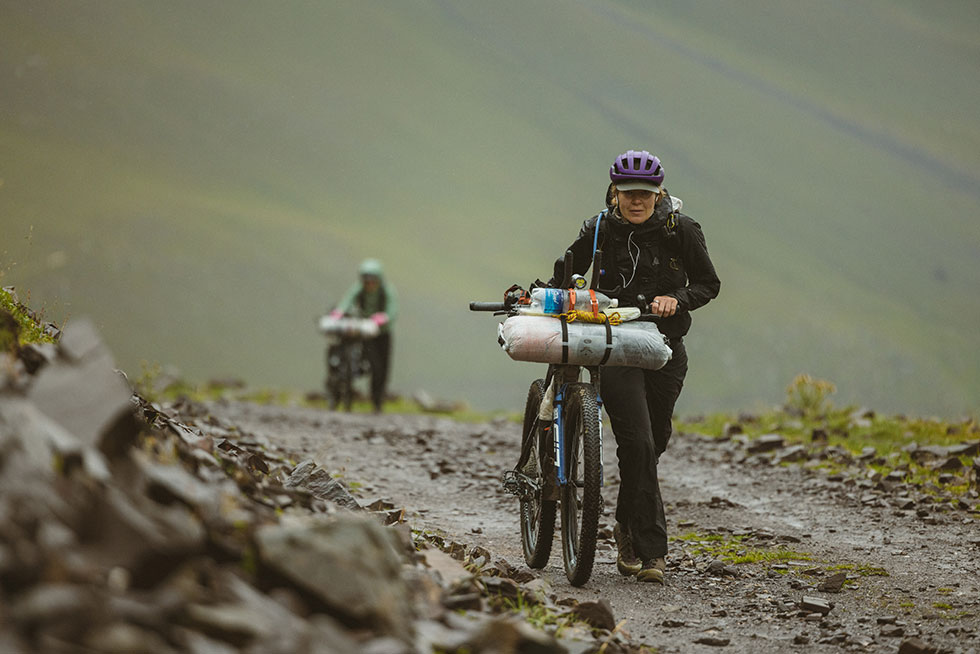
She had assumed that high-altitude mountaineering would be the most adventurous thing she had ever done. She had bikepacked solo through Patagonia. Through Kyrgyzstan. She knew what it meant to be genuinely alone in a remote place, to carry everything you needed, to make decisions with no safety net and no one coming to help. She expected the Karakoram to raise the stakes.
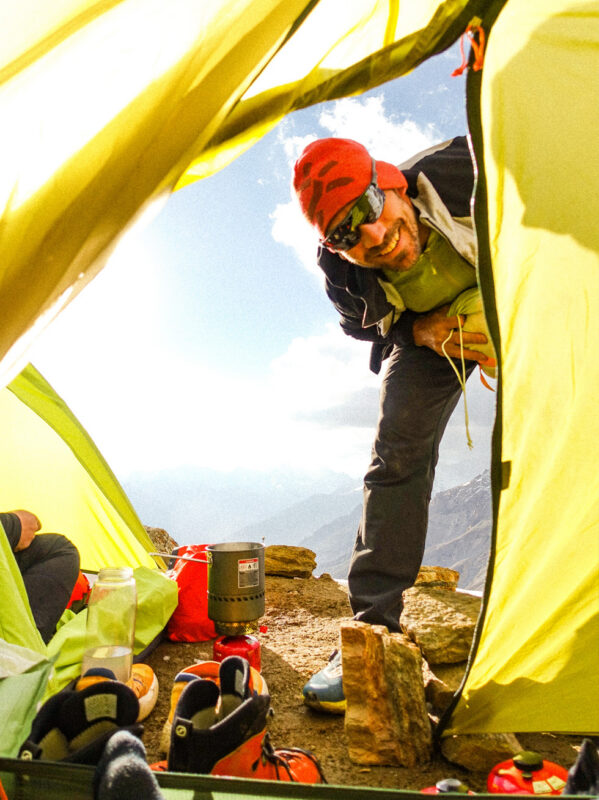
Instead, she found a dining tent. A table. Chairs. Tea service at 5,000 metres. Someone asking, with complete sincerity, whether there was ketchup.
“For me it felt kind of luxurious,” she says, and she means it without judgment. This is simply how high-altitude expeditions work — the logistics are so vast, the margins so thin, that comfort at base camp is not indulgence but strategy. A team that is warm, fed, and rested has a better chance of surviving what comes next.
But for someone who had always measured adventure by self-sufficiency, it was a recalibration. The mountain was harder to reach than anything she had done. The climb itself, when it came, would be less demanding. The real challenge, she discovered, was patience — sixty days of logistics, waiting, and praying for weather windows for what amounted to three days of actual ascent.
“It’s really like a game of patience,” she says. “I didn’t expect that.” But after all that waiting, everything went wrong.
The signs came early.
The filming permit — a separate, army-controlled document required because of the drones and the military bases scattered through the range — was delayed. The team waited in Skardu, watching sandstorms roll in each afternoon like clockwork, turning the air brown and making it impossible to breathe without covering your face. They did pre-acclimatisation climbs to pass the time, including an ascent of Khosar Gang, a 6,000-metre peak that Neža describes as “apparently one of the easiest ones there” — which is the Karakoram’s way of humbling you before it really gets started.
Then, one day before departure, the co-climber called from a hospital. Broken ankle. Was the expedition even happening? It turned out not to be broken. They continued on.
Then Neža’s grandmother sadly passed away. She flew home for the funeral.
Then the Der Spiegel journalist’s mother died. He followed.
Then a rock dropped on someone’s foot.
Then the film director became so ill he had to be carried by mule.
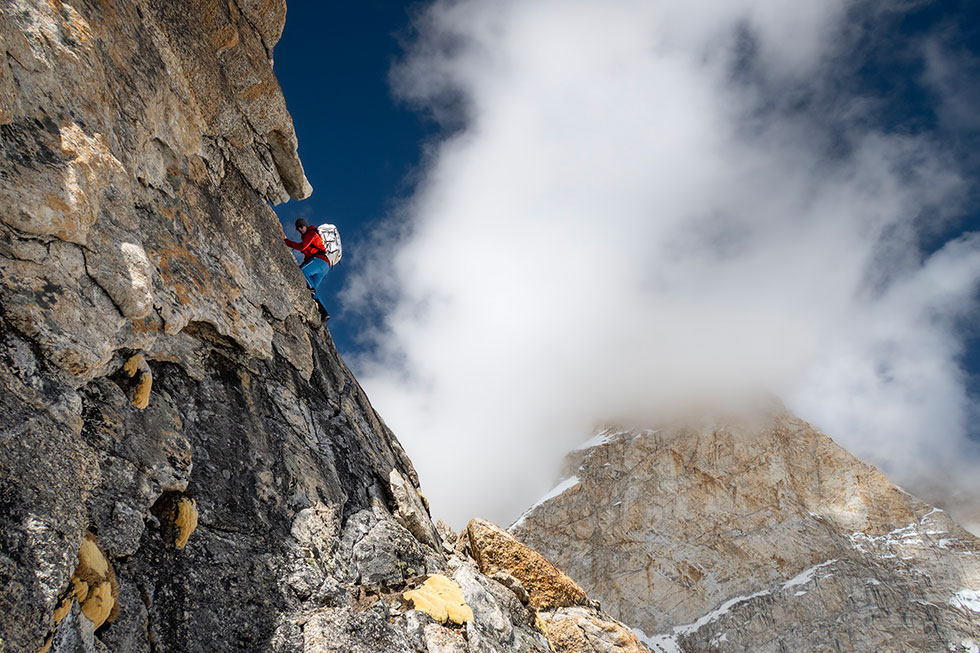
Then Aleš — nine expeditions deep — developed pneumonia above 5,000 metres, where the lack of oxygen makes recovery not just slow but impossible.
There is a rule in mountaineering: when three things go wrong, stop. Turn around. The mountain will be there next year. You might not be.
By the time they counted the signs on this expedition, they had long since passed three.
“There were so many things that went wrong that I think it was a good decision to cancel it,” Neža says. The documentary was never shot. The peaks were never climbed. The pack she had made for the summit was never pushed to its limits.
And then the steering wheel fell off the car on the way back down and the team inside narrowly avoided plummeting into a river.
So what she brought home was a different experience entirely: a clear-eyed understanding of what she is and isn’t built for, and a deepened respect for the people who are built for it.
“I don’t think I’m made for that,” she says of high-altitude mountaineering — the weeks of waiting, the bureaucracy, the patience required to compress two months of life into three days of purpose. “But you get this special view on mountaineers, how they persevere. They really have a strong fire in them.”
She also came home with a story she hadn’t planned to tell. The story of everything that can go wrong, and what you learn when it does.
The Long Way to a Backpack
To understand how Neža Peterca ends up designing packs for 8,000-metre expeditions in a workshop in Slovenia, you have to go back to Budapest in 2011, to a brand called Blind Chic, and to a moment when the outdoor repair industry didn’t exist yet.
She co-founded Blind Chic with another woman in Hungary — an urban cycling brand, roll-top bags for the fixed-gear and messenger scene, right at the moment when that aesthetic was cresting. Two collections a year. Five bags per collection. Distribution across Europe. The timing was right, the product was right, and the brand grew.
And then it became something she didn’t recognize anymore.
“The bigger the brand grew, less involved I was in the whole creative process,” she says. “It was only bureaucracy and papers and emails and I was like, this is not me.” But there was something else underneath the frustration — a discomfort with what the brand was actually doing. “You create the need for someone to have it,” she says. “It was not like someone really wanted it.” The feeling didn’t have a clean name, but it was real. She needed to find a different way to make things.
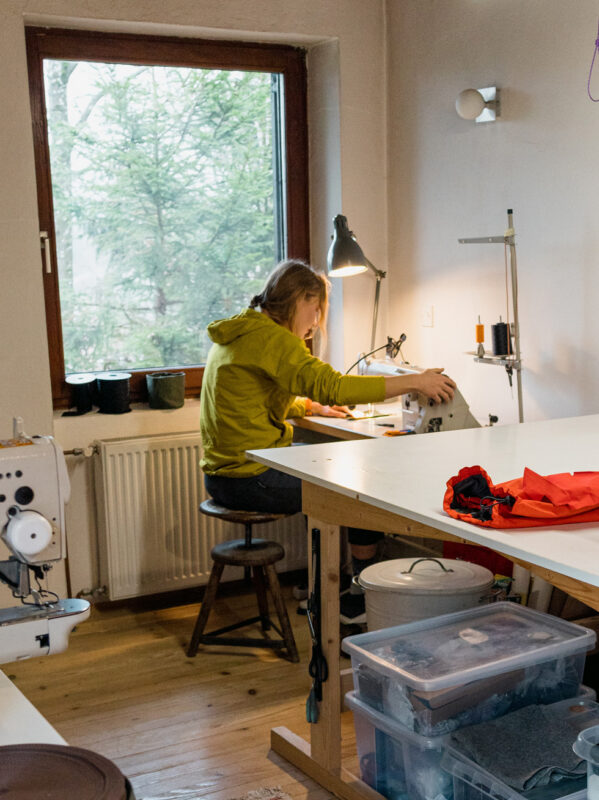
The idea that came to her was repair.
This was before repair became a marketing strategy for brands. Before most brands had a sustainability page. In the early 2010s, if you wanted to learn how to repair a Gore-Tex jacket, you were largely on your own. Neža sent approximately thirty emails to outdoor brands asking if she could intern in their repair departments. Almost all of them said no — too small, too niche, not worth the training time.
One said yes.
Her name was Barbara Heinze, based in Munich, and she had been instrumental in bringing Patagonia’s Worn Wear program to Europe. She took Neža on, taught her the specific and exacting craft of technical garment repair — Gore-Tex seam sealing, zipper replacement, working within panels and patterns. It was a different way of thinking about objects. Not: what do we make? But: what do we save?
Patagonia Called
Neža sold her share of Blind Chic. She had a plan: cycle across Australia, clear her head, then open a repair workshop back in Slovenia. But Patagonia called first, offering her the role of Worn Wear tour manager — a travelling repair operation, a trailer full of sewing machines and technical expertise, moving through Europe’s outdoor community and fixing what people brought in.
She cancelled the Australia trip and spent two years on the road.
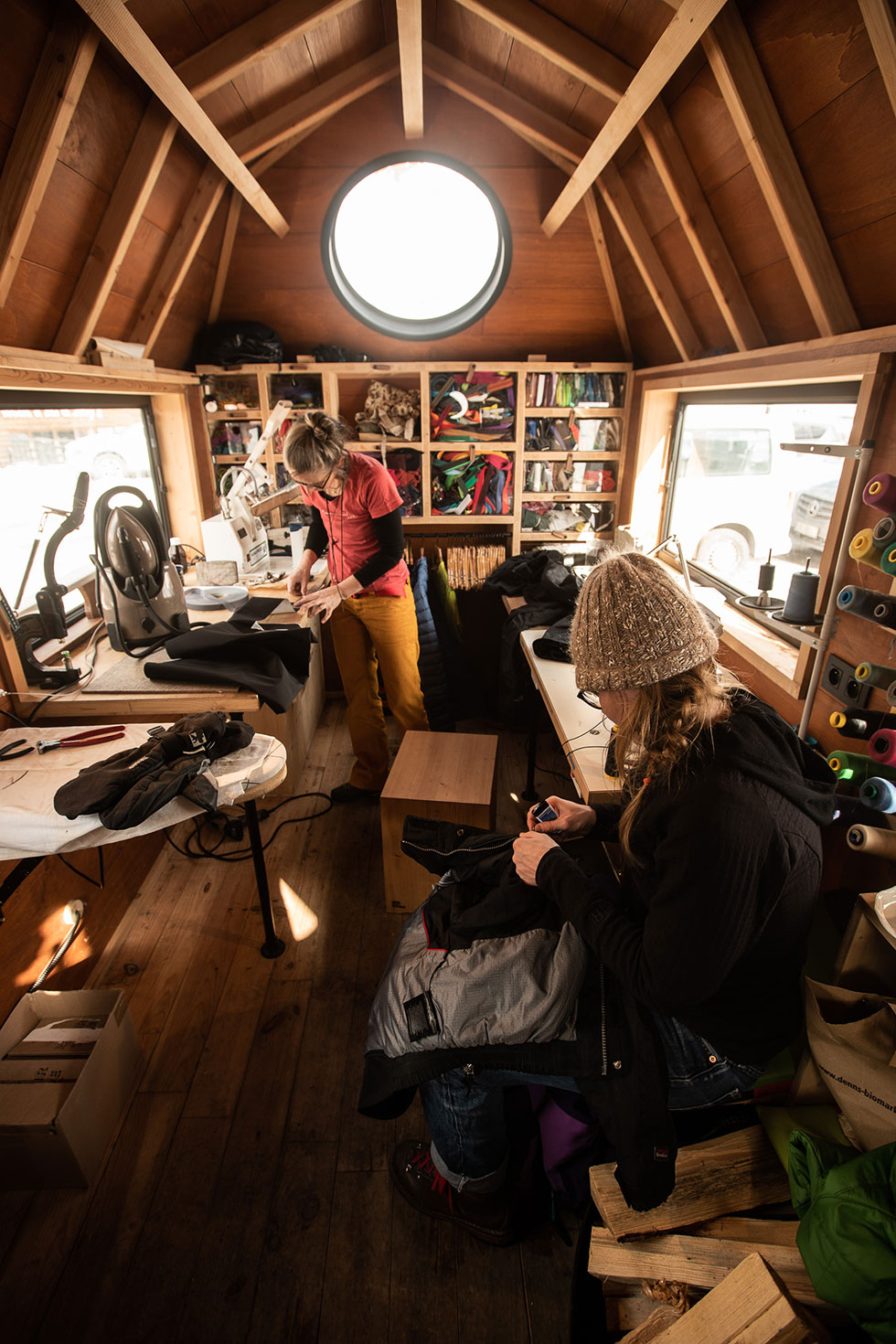
The Worn Wear tour didn’t just teach her about garments. It taught her about people. Patagonia attracts a particular kind of customer — one who has already decided that the object matters, that the brand’s values matter, that the relationship between maker and user is part of what they’re buying. Neža absorbed this. She watched how those customers behaved, what they cared about, what they asked for. She was building, without quite knowing it, a template for the kind of brand she would eventually want to run.
Then COVID arrived, the tour stopped, and she went home to Slovenia.
“Maybe now this is the time to start the repair service in Slovenia,” she thought.
But it became much more than that. The name came from the first question she asked every customer who walked in with something broken: What happened?
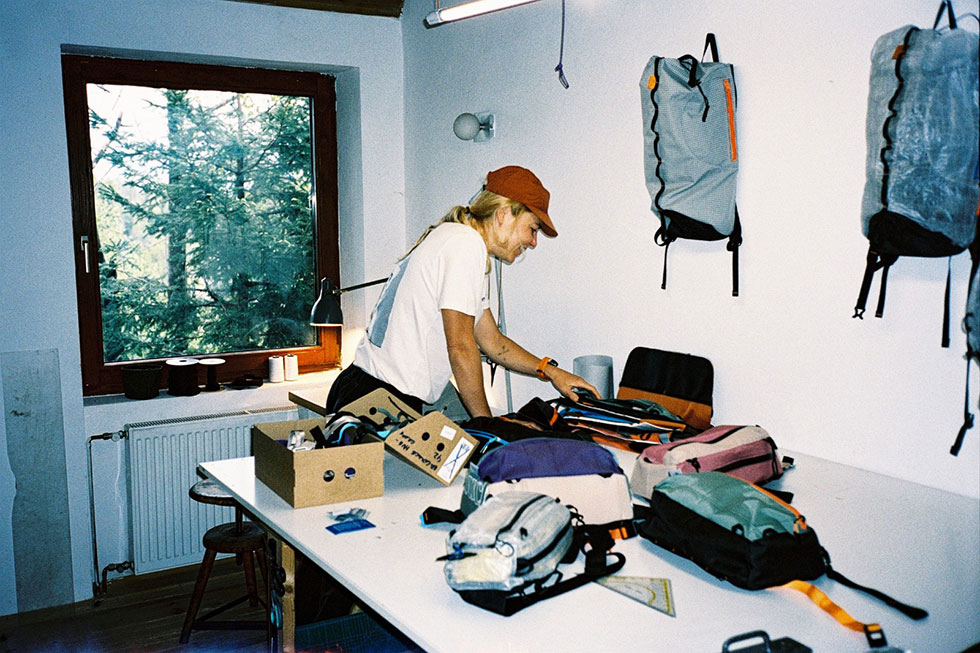
200 Days a Year
What Happened began as a repair workshop. Then grew into a carry brand through necessity.
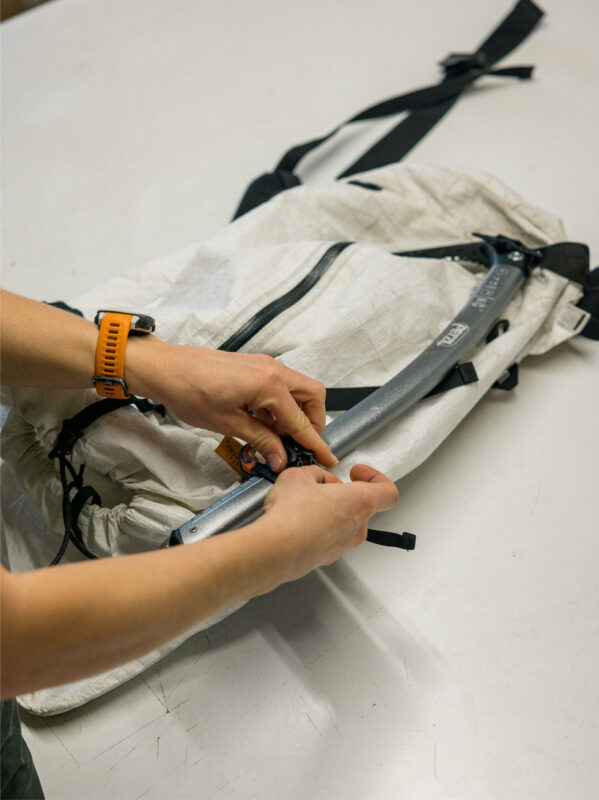
Back in Slovenia, Neža joined a mountaineering school. Four years. The full curriculum. She was learning to move in the mountains properly, and in doing so she was developing opinions about what she needed to carry. The packs available didn’t solve her problems. So she started making her own. She put them online. People liked them. Mountain guides started asking.
And mountain guides, it turns out, are the best possible clients for someone trying to make gear that actually works.
“They use the backpack for more than 200 days per year,” she says. “You can really see fast if there is a failure in the design — if something doesn’t work or if the material is not good.” With a guide wearing your pack every working day, you get feedback in weeks that a recreational user might take years to provide. You see where the stitching fails. You see which buckles are impossible with gloves on. You see, very clearly, what you got wrong.
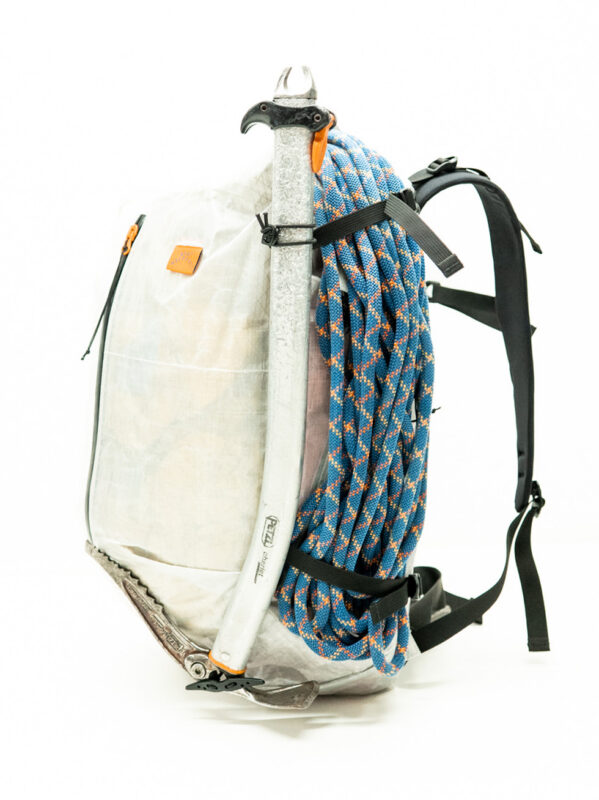
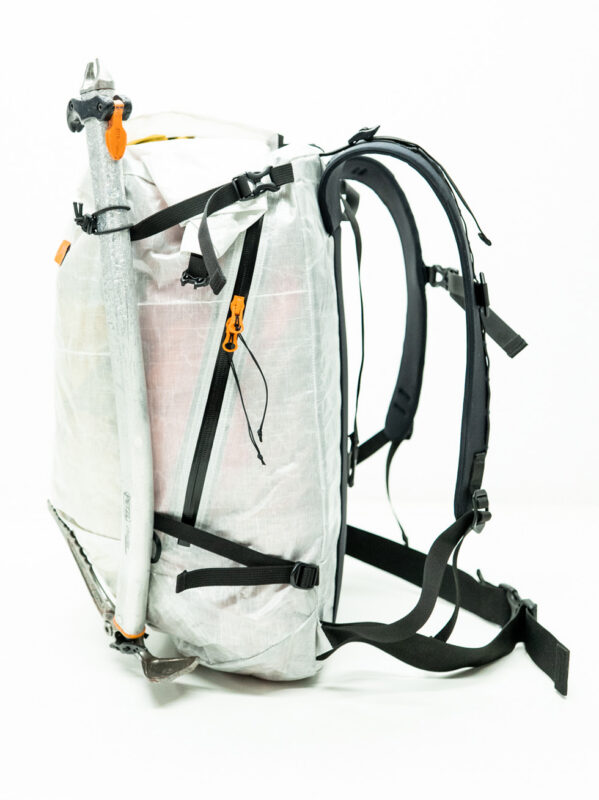
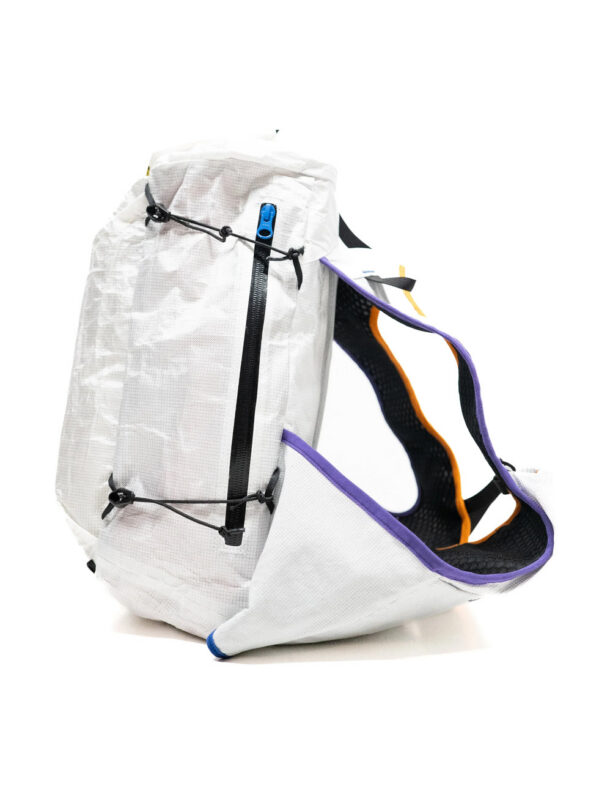
She switched almost entirely to woven Dyneema or Ultra — the material she describes with something close to reverence. “Even after three years of heavy usage it still looks very good.” She eliminated sharp corners from every design, because abrasion happens at angles and rounded edges simply last longer. She stopped using aluminium buckles on hip belts after watching guides struggle with them in ski gloves.
“I always say that my design is about solving problems,” she says. “They usually come and say, ‘I tried several different backpacks but it doesn’t work.’ So it’s like putting together different ideas from different backpacks that they used into one.”
The goal is invisibility. Not aesthetic invisibility — her packs are immediately recognizable, with a distinctive pocket architecture and a restrained use of colour and material. But invisibility as in a pack that disappears on your back, that never fights you, a pack you can use without thinking.
“The guides always say, ‘I don’t want to have a product which annoys me. It should be invisible. It should help me. It shouldn’t work against me.’”
One at a Time
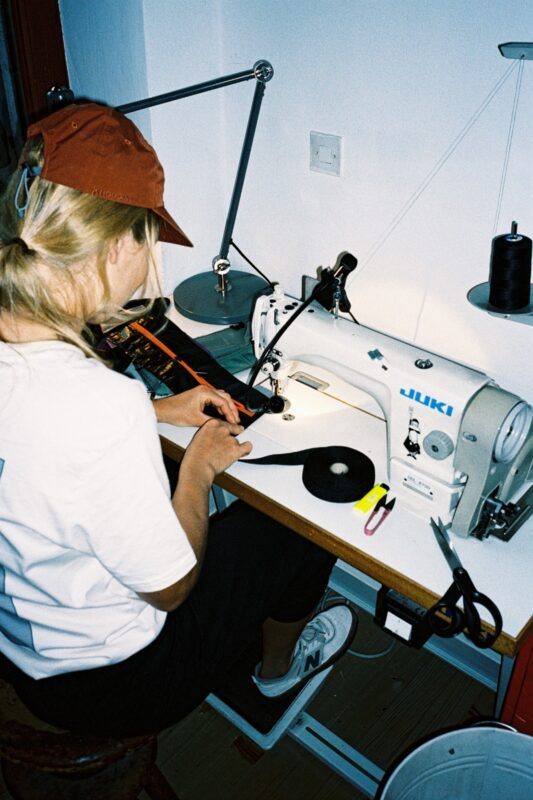
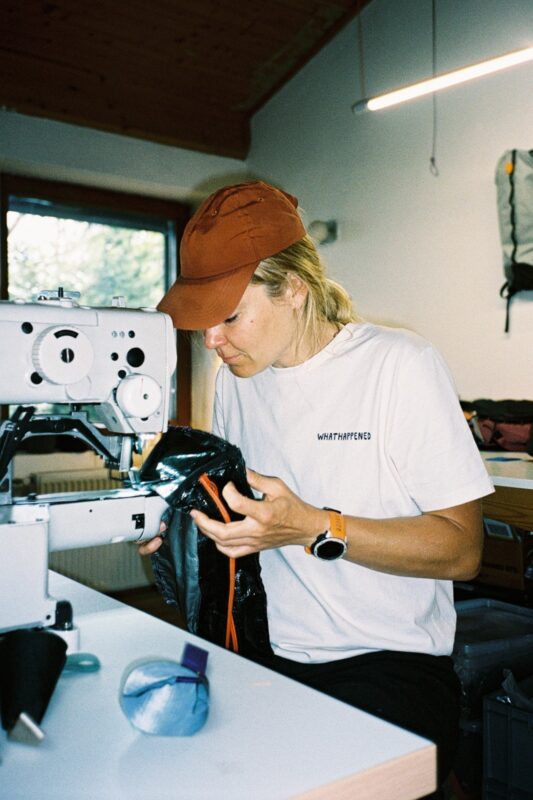
Every What Happened pack is made to order. There is no stock. There is no warehouse. There is Neža, her workshop, and a conversation.
“When customers come to me, they already have a very shaped idea of what they want,” she says. Her job is to listen carefully, to bring her own experience and the accumulated experience of every other client she has worked with, and to find the solution that sits at the intersection of what they think they need and what she knows will actually work. Sometimes that means talking someone out of a feature. Sometimes it means combining the best elements of three different packs they’ve used into something that has never existed before.
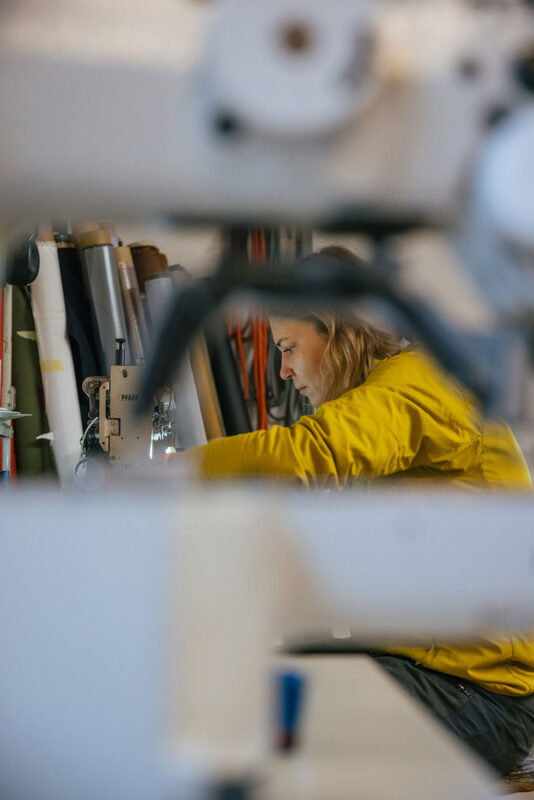
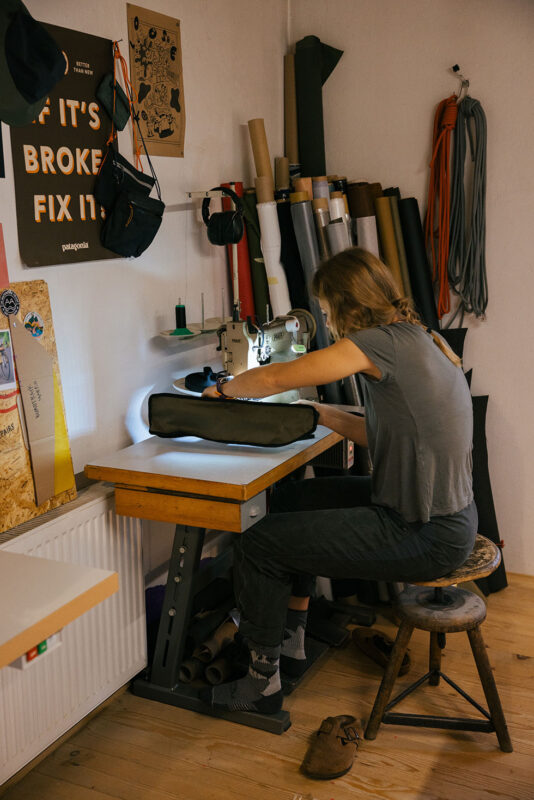
The custom-made model means that every piece is also an opportunity to improve. “With each product you can improve,” she says. “You don’t make one piece which is then produced like 10,000 pieces. Each one — you can improve. This didn’t work. And since you know how you made it, you can also fix it.”
It’s a philosophy that runs directly counter to how the outdoor industry operates at scale. No SKUs. No seasonal collections. No minimum order quantities. Just the slow, iterative accumulation of knowledge that comes from making things one at a time, for people who will actually use them.
The aesthetic that has emerged from this process is unmistakably hers. She is, by her own admission, opinionated. “I would never make something that I don’t like,” she says. Custom orders don’t override her judgment — if someone asks for a colour combination she doesn’t believe in, she says so. The limited material palette she works with has forced a kind of creative discipline: when you can’t differentiate through colour, you differentiate through form, through detail, through the particular logic of how a pocket sits or how a zipper runs.
My People
What Happened doesn’t advertise.
“Word of mouth is spreading,” Neža says. Someone hires a mountain guide. The guide is wearing a pack they’ve never seen before. They ask. The guide tells them. A few weeks later, an email arrives. “Oh, I don’t know, I was hiring a guide and he had your backpack, or like a friend of a friend of a friend.”
The customers who find her have already decided they want a backpack. They’ve done the research, followed the thread, and arrived at her inbox with a specific problem they believe she can solve. She responds personally and takes the time to understand who they are, what they do, where they’re going.
“For my customers it’s very important to know who is making the things for them,” she says. “They have a trust that when something goes wrong with the product, they know they can come back to me.”
Many of them become friends. They ask her where to climb in Slovenia. They share trip reports. They understand, without needing it explained, why a pack made this way costs what it costs and takes the time it takes. They are, in her words, “likeminded” — people who treasure similar things, who measure value differently than the mainstream does.
What Happens Next?
The next chapter for What Happened is a collaboration that feels in perfect balance.
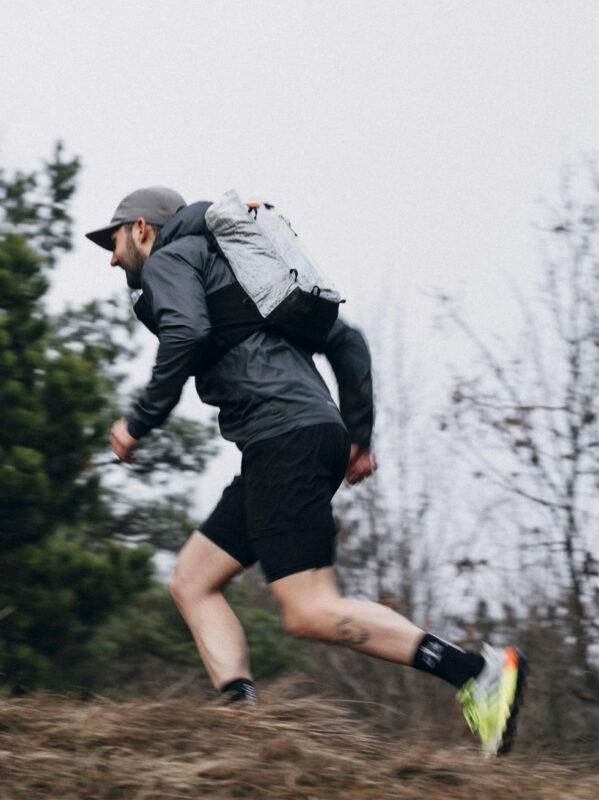
Valone — a small French brand from the north of the country, run by a couple — makes trail running shoes with uppers constructed from Kevlar. Built to be repaired. Designed to last. Made in Portugal. The same philosophy, expressed through a different object.
“It kind of has the same concept as the backpack,” Neža says. The collaboration will produce a small collection: a backpack, a duffel, and a hip bag for trail running, each carrying the DNA of both brands. Small numbers. Shared values. The kind of project that makes sense to both parties not because of market opportunity but because of genuine alignment.
“I’m really excited about that,” she says.
The Best Reason
There is a version of this story where Neža Peterca goes to Pakistan, Aleš summits Gasherbrum I, the documentary gets made, and the pack she designed for the ascent gets its field test at altitude. A clean narrative. A satisfying arc.
That’s not what happened.
What happened was messier, more human. A family tragedy. A near-fatal car accident. And pneumonia at 5,000 metres made the decision for everyone.
And Neža came home with something better than a summit story: a clear sense of what she is, what she isn’t, and why the work she does in her workshop in Slovenia matters more to her than any peak she could stand on.
“Once I lose this passion, I don’t think the brand has value anymore,” she says. “For me, it’s super important to be happy to do what I do.”
This is, in the end, the thing that What Happened is really about. It’s about the stubborn, real conviction that the best reason to make something is because you genuinely care about it — and that the people who need what you make will find you, eventually, through the quiet network of people who already have.
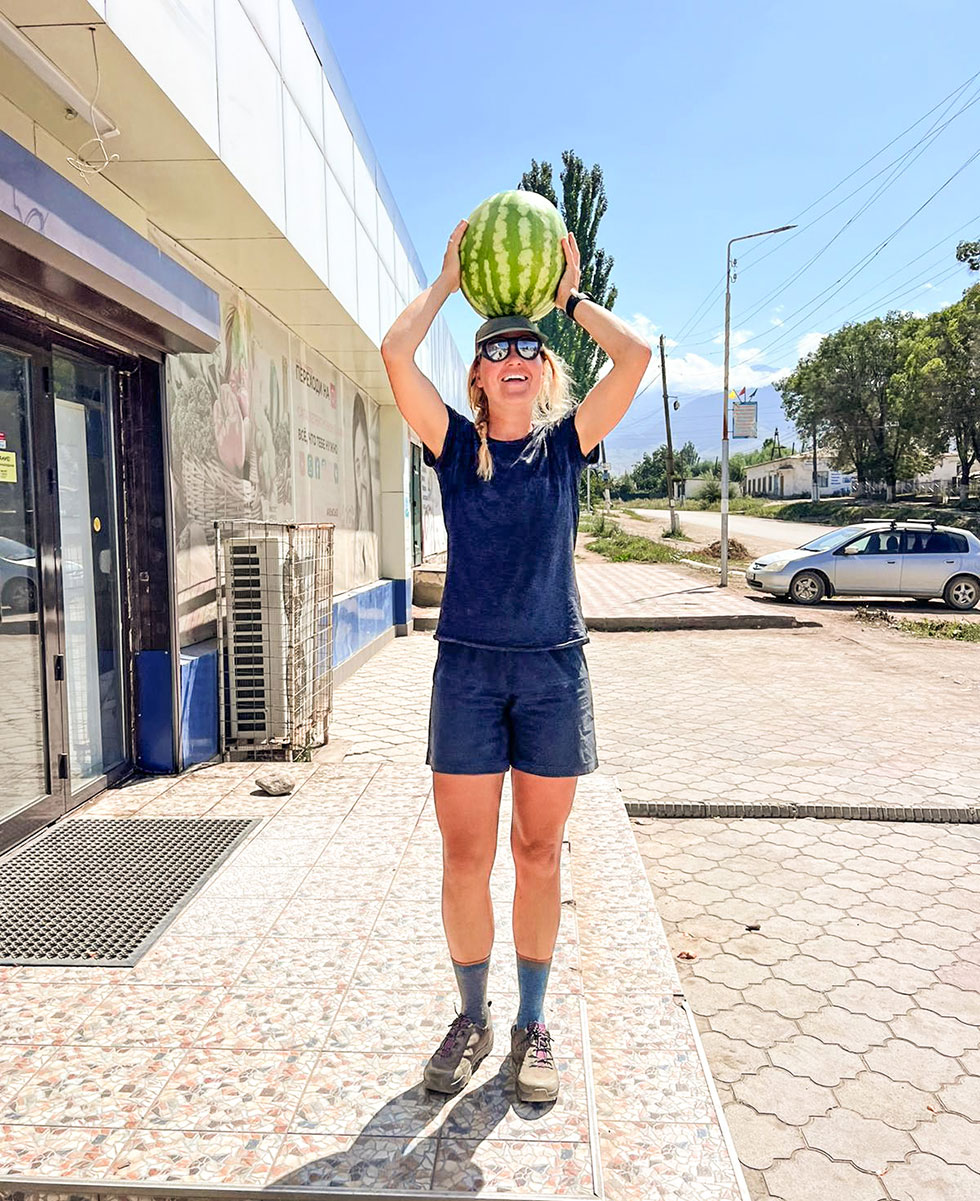
What Happened Outdoors is based in Slovenia. You can find Neža’s work at whathappenedoutdoors.com
The post Into the Karakoram: One Designer’s Unlikely Education at the Roof of the World appeared first on Carryology.