Last week, while catching up with a friend under the low lights of an east London restaurant, she suddenly announced that she had split up with her partner (writes Rory Jones). A four-year relationship, burned away with the quick intensity of flashpaper. I asked why. She played the hits: lack of communication, different life stages, et cetera. But then she added, “He also started consulting ChatGPT about everything, as though I had no answers or opinions.”
We managed to laugh but a lingering confusion plagued my journey home. Are people actually prioritising AI over their partners? Apparently, yes: it’s happening and the numbers are increasing. In Los Angeles, AI-related “virtual infidelity” is now cited as a contributing factor in three to five divorce cases a week.
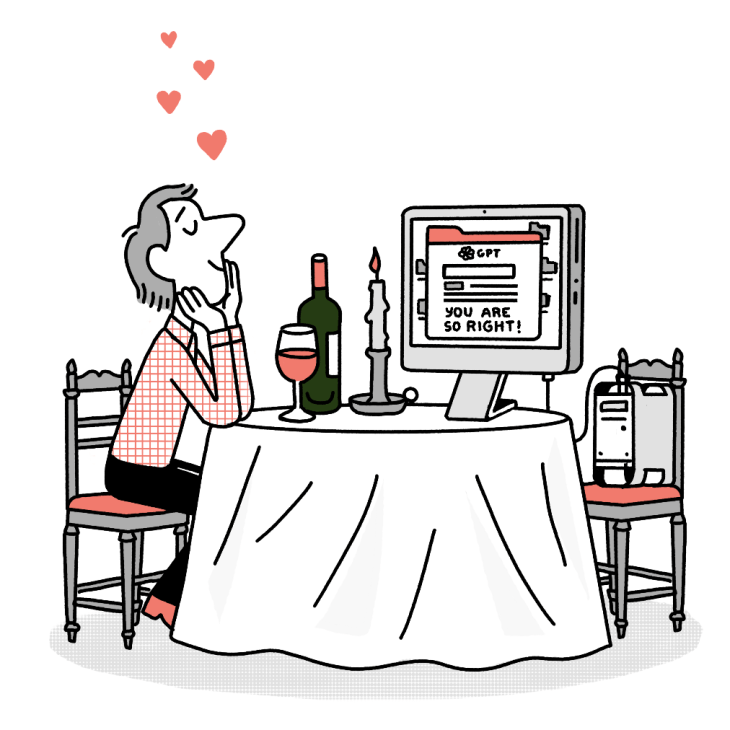
I’m not an AI user and lament the idea that it is being used to cut corners in the creative arts – particularly writing. But when did some people start turning to chatbots instead of those around them to answer their everyday questions? What makes matters worse is that ultimately unnecessary musings such as “Why is the sky blue?”, “What’s the difference between a mongoose and a meerkat?” and “Where actually is Amarillo?” are incredibly resource-draining. AI data centres are consuming water at unprecedented scales. A recent Morgan Stanley report forecasts that they will drive annual water consumption to more than a trillion litres by 2028, an 11-fold increase on 2024 figures. It’s worth wondering how many prompts are genuinely productive.
ChatGPT and others might have instant access to a breadth of knowledge that your partner doesn’t. But my advice? Take them to dinner. Look them in the eyes. Ask them your pointless questions instead. Let them make up an answer and believe whatever they say, right or wrong. You might just save the planet as a result. Or, at least, your relationship.