Finding the classic sights in Lisbon is not exactly difficult. Even a 30-second TikTok reel or quick AI answer will tell you to visit the Santa Justa Lift, get lost strolling through Alfama, or try the pasteis de nata at that one place everyone queues up for in Belém.
They’re all worthwhile stops, but there is much greater depth to Lisbon that most visitors miss. To help you find some more original items for your itinerary, I’ll share 39 of them here.
Since I’ve lived in Lisbon since 2016, I’ve gotten to know the city very closely. What I love about Lisbon is how it keeps revealing its quirks and hidden gems to anyone willing to discover them.
Whether you’re visiting and looking for some off-the-beaten-path spots, or you’re a (temporary) resident wanting to go beyond the usual tourist sights, here are some ideas on how to make your time in Lisbon a little more special.

If you’re planning to see many of Lisbon’s big sights, the Lisbon Card can work out cheaper than buying tickets one by one. It gives you free entry or discounts at a range of attractions, and you can pick a 24, 48 or 72-hour pass.
1. Take a pastel de nata baking class
If you know anything yet about Portugal, you surely know about the delicious egg custard tart pastry called the pastel de nata. You may have already tried a few — perhaps even the legendary Pastel de Belém, a version only available at that one bakery.
But your appreciation of this treat will go far deeper by baking some yourself!

With Homecooking Lisbon you can take a workshop that ends with enjoying your own fresh-out-of-the-oven pasteis de nata. The class is delivered with humor and a personal touch, making it a unique experience that I’d argue is much better than standing in line for ages at the famous bakery!
I’m honestly not much of a cook, let alone a pastry chef, but this super fun workshop will happily adjust to any level. Even though I messed up the shape of the dough a little, I got there in the end. It’s fun for the younger ones in the family too.
Join a Pastel de Nata Baking class
2. Learn of Lisbon’s secret societies
My whole perspective on Lisbon changed when a friend took me on a secret societies tour run by an actual member of the freemasons. It turned out the city is full of hidden symbolism that’s deeply embedded into the architecture and urban layout by the freemasons, who were highly influential during the time of Lisbon’s rebuilding after the 1755 earthquake.

The city’s hidden layers unfolded as I learned the meaning of a griffin in a church facade or the secret symbols on a manhole cover. Even the naming of the seven parallel streets in the central district of Baixa is no accident, mirroring the seven stages of alchemy leading to the Philosopher’s Stone.
If you want to feel like Tom Hanks in the Davinci Code and find yourself whispering “yes, of course!” as you spot an all-seeing pyramid eye, then this tour is for you.
Now, I should say my particular guide disappeared with the winds — while we wished to repeat the walk with some other friends a few years later, we weren’t able to contact him again, adding to the mystery. However, I noticed this tour guide on Guruwalk with a 4.94 rating doing a very similar itinerary that matches my experience. Slava’s stories involve the freemasons, Templar Knights, and the black arts — and will give you an unconventional perspective beyond the usual walking tour.
The tour is free to book (it’s pay-what-you-want at the end).
Join the Dark Arts of Lisbon Tour (Free)
3. Dolphin-watching in the Sado Estuary

Who knew there were dolphins near Lisbon?
For the longest time, I sure didn’t!
Although you can sometimes spot them hopping around the Tejo if you’re very lucky, if you head down to the Sado Estuary south of Lisbon you can get some near-guaranteed sightings. Since this is their permanent territory of some groups of playful bottlenose dolphins, you’ll almost certainly see them on a dolphin-watching tour.
The adventure begins at the port in Sesimbra, easily accessible from central Lisbon, or you can opt for return transportation from a meeting point in the city. From the semi-inflatable or catamaran boat (depending on your chosen tour) you will get great views of the dolphins as well as the Arrábida nature reserve.
When I did this trip, we were lucky enough to see the dolphins display hunting behaviour, throwing fish into the air and then catching them. It was a magical experience!
4. Visit Palácio Nacional da Ajuda
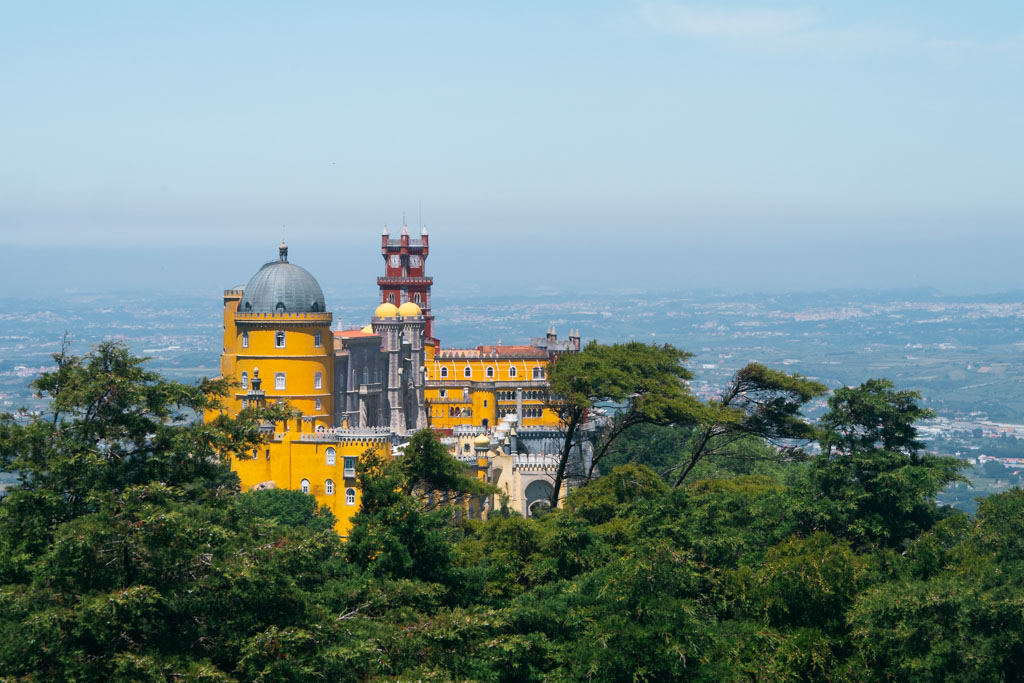
Portugal has so many castles and palaces that even one of its most impressive examples still manages to fly under the radar! I was amazed that this opulent palace is barely visited — and while it may be no match for the palaces of Sintra (one of the popular day trips from Lisbon), you will have zero queues or crowds to deal with here.
This impressive building served as the Royal Palace under King Luis I in the 19th century and features numerous ornate rooms each decorated in very different styles, including a ballroom, throne room, banquet hall, an exotic marble room, and even a Japanese-themed area dedicated to diplomatic gifts received from the East. To this day, the president of the Portuguese Republic still holds state dinners at this palace.


It’s located not that far from the Belém area so it can be a great side-excursion if you’re visiting the Jerónimos Monastery or the Botanical Gardens of Ajuda.
Entry is free if you’re local and have a Portuguese tax number, otherwise it’s €15 to go in. You can pre-book a ticket here. Next door is the Royal Treasure Museum which is also worth a look, tickets here.
5. Portuguese dinner at a local’s home
As a Dutch person living in Portugal, easily my biggest cultural adjustment was the importance of the meal time. Portugal actually ranks amongst the highest in Europe for most time spent eating and drinking — it’s “slow food” before it became a trend!
Lunch in the Netherlands may just be scarfing down a sandwich at your desk, but in Portugal it takes an hour minimum, preferably with a glass of wine and good company. It’s one of those cultural aspects I most appreciate about Portugal!
The only way to truly have a Portuguese meal is with some Portuguese, but if you don’t have local friends in Lisbon, fret not. Another great way is to join a Portuguese dinner experience.
When I first came to Lisbon as a budget backpacker I was lucky that the mother of the hostel owner cooked for us, but if you’re not staying in a family-run hostel, there’s another way.
Over at Airbnb Experiences check out this intimate dinner hosted by Sofia, a home cook who serves up traditional Portuguese flavours and homemade dishes in a family-style setting. Channel your inner Anthony Bourdain while being hosted in a truly local style.

Take a pastel de nata baking class
Pastry masterclass
Guided by a professional pastry chef, you’ll learn to craft these iconic Portuguese custard tarts from scratch

Discover Lisbon’s most original street art
street art
Hidden murals and graffiti tucked away in Lisbon’s alleys—art gems you’d likely miss on your own

Design your own souvenir tile
tile workshop
Design and paint your own azulejo tile inside a local artist’s home in Lisbon

Private Setúbal & Arrábida wine tour
food & wine
Discover the Setúbal Peninsula’s wineries and natural beauty on a private 9-hour tour
Lisbon’s coolest tours & experiences on GetYourGuide
6. Get on top of the Lisbon bridge

Lisbon’s red suspension bridge is absolutely central to Lisbon’s cityscape — and it’s even becoming increasingly iconic abroad. Recently I noticed it was the background image in an Apple keynote announcement instead of the usual Golden Gate Bridge.
The similarity is not entirely coincidental. Here’s a fun fact about Lisbon: Lisbon bridge was actually constructed by the same company as the San Francisco Bay Bridge, not the Golden Gate Bridge. It was initially named after the dictator Salazar, but changed to become the 25th of April Bridge, commemorating the revolution of 1974.
You’ll no doubt see the bridge from some of the viewpoints or rooftop bars in the center, but a much more immersive way to experience it is at the Pillar 7 Bridge Experience. First, there’s a small museum accessed from the base of one of the pillars which gives you the background on its construction. It also lets you enter the impressive concrete structure housing the enormous cables from which the bridge is suspended.
Finally, you can take an elevator up to the bridge, stand on a transparent platform, and catch some epic views of the bridge and the river.

7. Dine at a secret Chinese restaurant
The first time someone took me to one of these hidden speakeasy-style restaurants, I didn’t know what was happening.
My friend rang a seemingly random doorbell, then we went up several flights of stairs inside a residential apartment building. An old Asian lady wearing a kitchen apron stood in a doorway, putting a finger on her lips while gesturing to the downstairs neighbors’ apartment. It was late, but we could go in if we were quiet. Stepping through the doorway, we suddenly found ourselves in a tiny restaurant in what could easily have been someone’s living room.


Found mostly around Martim Moniz Square, these Chinês Clandestino are an interesting part of immigrant culture in Lisbon. Of course, you could question whether eating at an unlicensed restaurant is a good idea, but at least I can say that I’ve gone many times and lived to tell the tale! The food is usually pretty typical fare but it’s the overall experience that makes it interesting.
The staff at a Chinês Clandestino probably won’t speak English nor Portuguese, so you’ll have to point at pictures on the menu. You’ll get some affordable home-cooked Chinese food in a dining room-like setting. I know, you’re probably here in Lisbon to try the Portuguese cuisine, but I still consider this a unique experience you can have in this city.
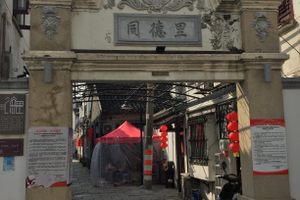
If you type “Chinês Clandestino” into Google, you’ll find one that is just the name of a regular restaurant, without the home dining type of vibe. Speakeasy-style ones can be found by asking locals or exploring the streets and alleys around Martim Moniz Square (especially to its northeast).
Look for Chinese lanterns or find a doorbell with Chinese characters or a note saying ‘restaurant’. Press the buzzer and go inside! Hint: There’s one near the top of the escalators on Martim Moniz.
8. Learn about Lisbon’s street art


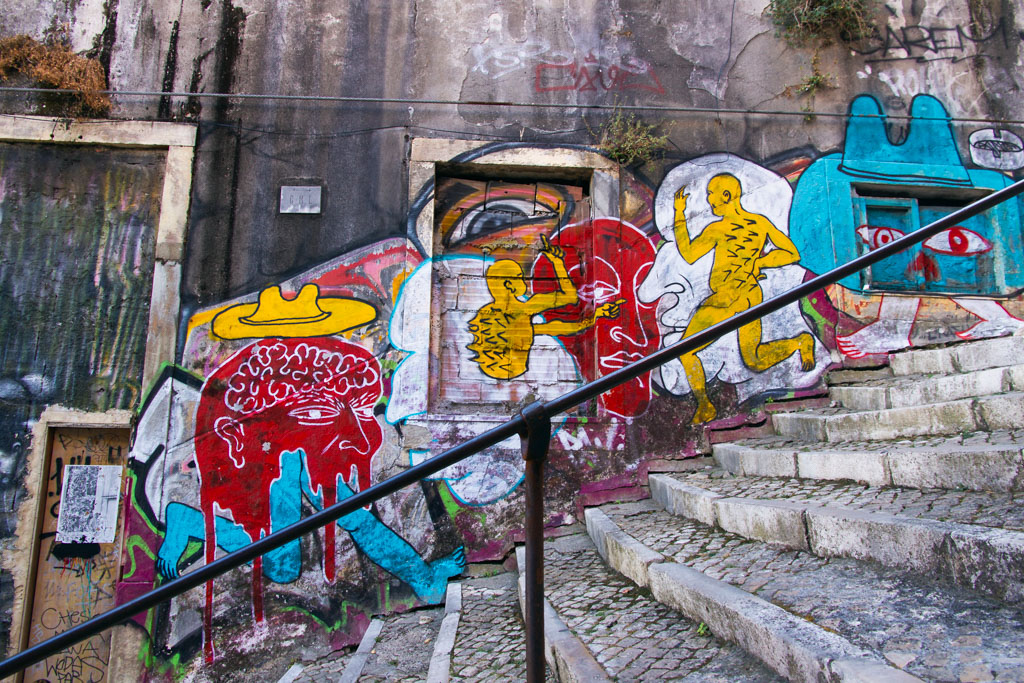
If you’ve spent any time in Lisbon you’ll know that it has some amazing street art. Since Lisbon long had many abandoned buildings, street art brought some of their crumbling facades to life. Later, the local authorities took steps to allow this art form to flourish.
You can find all kinds of inspiring murals, often in hidden places. While you may find some by chance, a better way to discover them and to learn about the specific local artists is with an expert guide. Check out this street art tour, led by a local street artist who takes you through the city’s coolest neighbourhoods and hidden gems.
9. Shop at the ‘Lojas Com Historia’

When walking around central Lisbon (especially the Baixa area) you may have noticed many traditional stores selling only one particular product, such as classic hats, buttons, gloves, or chocolates. You may also wonder just how these stores manage to survive in an age of H&Ms and Zaras.
In fact, these are historical shops that enjoy protected status, many of them featuring beautiful wooden interiors. Some have been around for over a hundred years, proudly remaining within families for generations. The website Lojas Com Historia lists them all.
10. Stroll the Estufa Fria greenhouse

The Estufa Fria is a large semi-open botanical greenhouse that is worth a stroll on a lazy afternoon. It’s actually easy to miss, as it’s tucked underneath a hilltop in the Eduardo VII park, but it’s one of the nicest green spaces in the city.
You’ll feel like you’re walking in a little Garden of Eden with beautiful flowers and plants surrounding ponds, a waterfall, a cactus garden, tunnels, and other features.
It’s open until 7 pm in summer and 5 pm in winter, and it costs €3 to enter.
11. Visit the Lisbon Earthquake Museum
This museum opened not that long ago in 2024, so you still won’t yet find it mentioned a lot in travel guides. But it’s a fantastic, highly interactive experience that will shed led on one of Lisbon’s most important and tragic days in history — and one that would completely transform the city and make it what it is today.
In 1755, Lisbon experienced one of the biggest earthquakes and tsunamis ever. It caused damage as far as Seville in Spain, but it was Lisbon that was closest to the epicenter, and it almost completely destroyed the city.

The interactive Lisbon Earthquake Museum transports you back in time to the streets of Lisbon before the quake. Through immersive installations, you can learn more about the disaster and its many historical aftershocks.
The interactive tour takes about 1,5 hours. It feels a bit like an escape room but without the puzzles, or if a theme park designer made a museum. It’s highly educational and fun for kids (but adults too!).
12. Relax at Jardim do Torel

Of all the incredible miradouros (vistas) in Lisbon, a few will always remain off the tourist map. The Jardim do Torel is one such place: it feels a bit like a secret island that’s hidden in plain sight.
The views at Jardim do Torel don’t point toward some of Lisbon’s most prominent historical buildings, which is probably why it’s not a tourist spot. But this beautiful miradouro is truly like an oasis, unknown even to some locals.
One cool way to reach the hill that it’s on is to take the Elevador do Lavra, the least-known of the three old funiculars in Lisbon.
13. Learn the history of Lisbon’s transportation


Despite all the attention given by tourists to Lisbon’s historic trams, it’s not well known that you can see numerous examples of them at the transportation museum located at the tram depot.
The museum gives an overview of transportation development in Lisbon, including its trams, buses, and funiculars. A visit includes a short tram ride across the depot and you can also go on board many of the vintage vehicles.
It’s a fun little museum if you’re interested in the subject or if you’re with kids, who are sure to enjoy getting on board a double decker bus or using the controls on the working tram (if the driver lets them).
It’s a hidden gem, located close to the popular restaurant and bar area of LxFactory. Go behind the barriers of the tram depot and you’ll find the entrance on the immediate right.
14. Stroll the Jardim Botânico d’Ajuda

Lisbon is so spoiled for botanical gardens that a gorgeous one as this one can still manage to fly under the radar. It was built by Marques de Pombal in 1768, who filled it with trees and plant species from Portugal’s former colonies.
It’s the oldest garden in Lisbon and is now managed by the agricultural university, but it’s publically accessible any day until about 5 pm (entrance 2€). You can find these botanic gardens just up the hill from Lisbon’s museum quarter of Belem.
Don’t confuse it with the Tropical Botanical Garden, which is closer to the riverfront (but also very nice!).
15. Ride around Lisbon in an amphibious vehicle
In Lisbon, you’ll sometimes see the most peculiar vehicle roaring down an avenue: a canary-yellow beast of a bus with open windows and a huge cartoon hippo livery.
Honestly, I always thought the Hippo Trip was a bit of a tacky attraction — and yes, there is an animator on board. But then I went on it for someone’s birthday and I must admit it was a real hoot!

This vehicle can drive on land but will also just happily drive right off a dock and into the Tagus River, continuing its tour as a sightseeing boat. It’s definitely the most unusual way to get an introduction in Lisbon.
16. Visit the MAC/CCB Museum of Contemporary Art
The successor to the Berardo Collection Museum, the new Museum of Contemporary Art opened in 2023 in Lisbon’s museum quarter of Belem.
Its phenomenal collection includes works by iconic artists including Warhol, Picasso, Dali, Pollock, Mondriaan, and many more. It’s one of the best cultural sights in Lisbon – perfect for a rainy day or just for something different from the usual wandering through cobbled streets.
Many of the prized artworks were acquired by the Portuguese businessman José Berardo, but he became a controversial figure accused of defrauding several banks. Nowadays his art is under state custody while his name was removed from his erstwhile museum.
The MAC/CCB now includes works from the State Contemporary Art Collection (CACE), the Teixeira de Freitas Collection, the Ellipse Collection, and the Berardo Collection.
17. See the works of Bordalo Pinheiro
At markets and souvenir shops in Lisbon, you can often see bowls, plates, and other ceramics in the shape of vegetables or animals. (You can see examples here.)

These are based on the works of the 19th-century artist Raphael Bordalo Pinheiro, who created a wide range of ceramic art, illustrations, and watercolor paintings.
In the small and local Bordalo Pinheiro Museum, you can see a great collection of his works. While his political cartoons also displayed here probably won’t be so meaningful unless you are Portuguese, his ceramics and paintings can be more easily enjoyed as a foreigner.
It’s not a typical tourist attraction, but it’s fun to check out if you live in Lisbon or you are looking for something different to do.
18. Discover the Tapada das Necessidades

Truly a little gem hiding in plain sight, this park is where King Don Joao V went for picnics in the 17th century. Today, the place is a bit neglected, with a few crumbling walls and some partially abandoned buildings. However, the gardens are fairly well-maintained and there is a large grassy field where people picnic and sunbathe on sunny days.
Located between the neighborhoods of Estrela and Alcântara, it has one of the oldest cacti gardens in Europe, a beautiful old circular greenhouse, and great views of the Lisbon bridge.
The park is set to be renovated in 2028, with some upgrades promising to make it even more beautiful.
19. Take the mini-train to Lisbon’s best beaches

The Transpraia train was one of my favourite unusual things to do near Lisbon. Sadly, its operations ceased during the pandemic, and the wait is (still) for its new owner to get it up and running again. Since there’s been talk of it resuming in 2027 (yay!) I’m including it here again.
Normally, it runs in the summer months from June 1 until September 30 between Costa da Caparica, a town just south of Lisbon, to a dozen or so beaches. The rickety old tourist train ends at Fonte da Telha, possibly the most beautiful beach near Lisbon.
If it’s not back in operation, don’t worry.
You can also take the bus to Costa da Caparica and use a Bolt or Lime scooter to drive south down the coastal road, giving you easy access to at least the first several of the beautiful beaches here.

Fonte da Telha is a bit further away, but you can take the ferry from Cais do Sodre station to Cacilhas on the other side of the river. From there, take the new 3012 bus to Fonte da Telha. You can view routes and timetables at the official Carris Metropolitana website.
While popular beaches like Carcavelos are closer to Lisbon, the southern beaches are far more spacious and worth the time they take to get there.
20. Check out the Thieves’ Market

Locals joke that if you get anything stolen, this is where you’ll find it for sale the next week. But these days the Feira da Ladra, or thieves’ market, is maybe not quite so criminal anymore — it’s really just a nice flea market with antiques, crafts, and second-hand items that are held every Tuesday and Saturday.
Pro tip: Don’t buy old Portuguese wall tiles (azulejos) here, as they may have been stolen from a historical building somewhere.
There has been a campaign against azulejo theft, so it’s getting rarer to see them, but it’s still best to avoid buying any tiles at this market in order to preserve the city’s heritage.
While you’re there, grab lunch at Focaccia in Giro, which has the best damn sandwiches in Lisbon.
21. Explore the Natural History Museum


The Natural History Museum has several nice exhibitions that can keep you busy for at least a couple of hours. It’s a great museum check out on a rainy day, though it should be mentioned most exhibits are in Portuguese only.
Half the fun is just seeing the historical building with its old science lab, lecture hall, and numerous cabinets stuffed with samples, taxidermy, fossils, and more.
Don’t miss the beautiful botanical gardens next door either (you can get a combined ticket for both).
22. Visit B-MAD, the Berardo Art Deco Museum
Located just across the street from LX Factory, the creative hub in the Alcantara district, this small museum is a bit of a hidden gem in Lisbon.
Opened in 2021, it displays a wonderful collection of Art Deco and Art Nouveau pieces. Located inside an 18th-century villa, its three floors show you various furniture, ironwork, lamps, glassware, ceramics, and more — all in the typical decorative style.
A guided tour is obligatory but reservations are not necessary; you can just show up and wait for the next tour to start. It’s very insightful and makes this museum a lot more worth it. At the end, you can sample several wines which are also available for purchase.
22. Discover the southern riverbank

Almada is just across the river from central Lisbon, but don’t worry, it’s very easy to get to. Ferries leave behind the Cais do Sodré train station all the time and they take just five minutes (just get the boat to ‘Cacilhas’).
The town of Almada has plenty of cute restaurants and shops, as well as a marina with an old frigate and submarine. Walk along the docks past abandoned warehouses for beautiful views of Lisbon as well as two superb restaurants: Ponto Final and Atira-te Ao Rio, both right on the waterfront with amazing bay bridge views (reservation recommended if you’re going for dinner).
23. Take a day trip to Sesimbra


Sesimbra is a small beach town 30km south of Lisbon. Although it has a few big hotels on its fringes, the old centre is super cosy and home to numerous marisqueiras (seafood restaurants). I think it’s one of the nicest day trips from Lisbon.
In summer, you can enjoy all sorts of water activities like kayaking, scuba diving, and stand-up paddle boarding. Castle ruins on top of one of the hills offer wonderful bay views.
But the best bit of Sesimbra is its hidden cove called Praia do Ribeiro do Cavalo. You’ll need either a car to reach it or walk about 45 minutes from the center of town. This sheltered cove is gorgeous and may remind you of the craggy coves of the Algarve. You can access even more of these coves when paddle-boarding or kayaking down the rugged coast.
How to get there: take bus 3721 from Sete Rios train station in Lisbon. Alternatively, take the ferry from Cais do Sodre station across the river to Cacilhas, and take the 3536 bus to Sesimbra. You can view routes and timetables at the official Carris Metropolitana website. Alternatively, you can take a day trip to Sesimbra and Arrabida Park with an organized tour with pick-up in Lisbon.
Explore Sesimbra & Arrábida Park
24. Dive into the craft beer scene
While most people in Portugal will swear by its two basic lagers, Super Bock and Sagres, there is a burgeoning appreciation for craft beer with several independent breweries making excellent brews.
One way to enjoy some speciality beer is to head over to Marvila, a formerly industrial area now known as a creative hub and (somewhat aspirationally) as a brewery district. Dois Corvos is Lisbon’s biggest craft beer brand with a tap room here, as well as the other major label MUSA.
For some crafty hidden gems in Lisbon, check out the Oitava Colina tap room in Graça or my favorite independent brewery, AMO, which is in a tiny place in a residential neighborhood.
25. Visit Queluz National Palace


Portugal has absolutely no shortage of ornate palaces. They’re all over the country, but the palace of Queluz happens to be just outside of central Lisbon.
This 18th-century palace was once the royal residence of Queen D. Maria I and her husband Dom Pedro III. It has a Versailles-esque design, featuring glimmering golden ballrooms and historical gardens. It takes an hour or two to visit. Since it’s a bit farther from other sights, it tends to have lower tourist density in Lisbon (compared to other areas).
How to get there: Take the train from Rossio Station to Sintra and get out after 20 minutes at Queluz. By car or taxi, it’s about 25 minutes from the Cais do Sodré central station or about 12 minutes from the museum quarter of Belem.
26. Visit the Gulbenkian museum & park
You’re probably visiting Lisbon with the vistas and cobblestone streets in mind, but don’t make the mistake of ignoring the excellent museums!
The Gulkenbian is easily one of the best, housing an outstanding collection ranging from Rembrandt to ancient Greco-Roman art — largely originating in the private collection of the business man and art collector Calouste Gulbenkian (1869-1955).

The museum expanded in 2024 with a stunning new wing designed by the Japanese architect Kengo Kuma, which houses the modern art exhibits as the Centro de Arte Moderna Gulbenkian (CAM).
In 2026, the main building also reopened after a major renovation, so now is the perfect time to see both parts of the museum (combination tickets are sold).
The surrounding gardens with various walking paths, streams, and a lake makes for a wonderful stroll as well. In summer, this is where many locals go for picnicking or sunbathing, with the amphitheater often hosting open-air concerts.
27. Take the cable car in Parque das Nações

The Parque das Nações (Nations’ Park) area of Lisbon is relatively modern, so it’s not always the first area that visitors to Lisbon seek out. It’s nevertheless an interesting area, having once hosted all the pavilions of the Expo ‘98. It’s filled with boulevards, and striking architecture, and is home to the impressive Oceanarium.
Another leftover from the Expo ’98 is the 18-meter-high cable car (Telecabine), which gives great views of the Tagus River and the Vasca de Gama Bridge, currently the longest in Europe. You can get tickets here.
Book this Lift Cable Car Round Trip
28. Take the Boca do Vento elevator

The historic center of Lisbon is best viewed from the other side of the river. Take the ferry from Cais do Sodré station to Cacilhas, which takes just five minutes. There are nice restaurants and cafes facing the river for great views of the city and the bridge.
If you walk a bit further west, you can take the Elevador Panoramico da Boca do Vento to get high up on the cliffs. Next to the elevator is the Casa da Cerca, a mansion turned into a contemporary art center. It also has a small but nice botanical garden and a lovely place to have a coffee with a view. Entry to Casa da Cerca is free.
The Boca do Vento is one of the stops on this 3-hour electric bicycle tour of the south bay of Lisbon.
Explore Lisbon by electric bike
29. Peek inside Casa do Alentejo

Back in the day, Lisbon had different meeting houses for people from all the provinces of Portugal — a bit like cultural embassies for the regions.
The Casa do Alentejo served this purpose for the Alentejo region and is worth seeing for its wonderful building. Its courtyard is publically accessible and feels like a Moorish mansion, but don’t miss the restaurant on the second floor with its amazing ballroom with intricate tile paintings.
30. Rent bicycles and ride down the waterfront

Close to the MAAT museum is the small bicycle rental service Biclas Belem. Grab a bike here and cycle along the Tejo, past the MAAT museum, and further west. The river views are lovely and the area is alive with activity, especially on the weekend.
Prefer to do this as a tour? Just book it with GetYourGuide. You’ll start in central Lisbon, make your way to the river, then end in the museum quarter of Belem.
31. Eat at the Campo de Ourique Market

The TimeOut Market may be Lisbon’s most famous, but I prefer this smaller market, which is in a residential neighborhood. Part of the market still sells fish and fruit, while the other part has many gourmet food stalls with bar stools where you can sample some great Portuguese and international dishes.
This market is one of the stops on this local neighborhood of Lisbon tour.
Try this Lisbon full-day privafte tour
32. Check out Lisbon’s other aquarium
The Lisbon Oceanarium is one of the world’s biggest and you can find it in Parque das Nações, which was once the exhibition grounds for the Expo ’98. But there is another much smaller aquarium in a charming old building in Alges.


The Vasco de Gama Aquarium is much more intimate and arguably more educational, featuring smaller aquaria with numerous fishes, amphibians, and reptiles. Exhibits include the rare Mexican Axolotl, as well as a pair of electric eels with flashing lights whenever they emit electricity. It’s perfect to go to with kids or if you’re simple a curious local.
The aquarium gives you an excuse to check out Algés, a neighborhood that’s technically just outside of Lisbon. Afterward, you can eat at the Mercado de Algés, which is like a mini version of the TimeOut Food Market in central Lisbon but without the tourists.
33. Take a swig of Ginjinha
Ginja is a sweet cherry liqueur that’s local to Lisbon and a few other Portuguese places (like Óbidos). It’s a strong and sweet drink, served from a shot glass but meant to be sipped. Sometimes it’s served from a little cup made of chocolate!
The tiny Ginjinha Espinheira bar near Rossio Square is a popular spot to grab a ginjinha as a nightcap. Another good place to try it is at Ginja de Óbidos, just outside of the TimeOut market.
34. Be fancy at Palácio Chiado

The Palácio Chiado might just be the most opulent place in Lisbon. Its palatial rooms and giant 18th-century murals are already impressive, though the interior decorators took things up another notch — for instance, by hanging a big golden lion with wings from the ceiling.
Despite its extravagant appearance, you don’t need to be wealthy to enjoy the Palácio. The gourmet food court and champagne bar are reasonably priced, making this a fun and fantastically over-the-top place to enjoy some good drinks and dinner.
35. Shop at Embaixada

This shopping gallery is located inside the Ribeiro da Cunha Palace, hosting all sorts of boutique and concept stores, restaurants, and a trendy gin bar. It’s easy to miss if you’re just walking past, so be sure to step inside to see the beautiful building and browse all the interesting independent stores.
The restaurant at the back, Atalho Real, has a wonderful patio adjacent to the Jardim Botânico de Lisboa.
36. Drink at the quirky Pavilhão Chines


This very quirky bar is not to be missed. Its five rooms are absolutely filled top to bottom with historical toys and unusual artefacts, making you feel like you’re in a crazy Willy Wonka-esque antique museum.
They don’t like it if you just come in to take pictures (as it’s not actually a museum) so be sure to sit down and get yourself a nice cocktail while you gawk at all the crazy decoration.
37. Sip cocktails at a rooftop bar

What better way to enjoy Lisbon than with a cocktail in hand and an amazing view of the Castelo de Sao Jorge? Well, you can do just that at Topo Bar, which has two locations in central Lisbon.
Topo Chiado is near the Convento do Carmo. Topo Martim Moniz is a bit more hidden; you have to go inside the Centro Comercial Martim Moniz, a mostly Chinese shopping mall, and take the lift to the top floor.
PARK bar is a bit of a hidden gem in Lisbon. You’ll need to go inside a parking garage, take a graffiti-covered lift to the top floor, and then you’ll find this cool bar up on the roof. If you time your visit to Lisbon right, you’ll be treated to breathtaking sunsets. The view is phenomenal and there are cocktails and DJs at night.
Final thoughts
Lisbon is a city that surprises you at every corner, blending old-world charm with youthful, high-energy experiences.
It’s the kind of place where you can wander through cobblestone streets, sip on a pastel de nata, and still stumble upon a secret garden or a hidden local restaurant tucked away in an alley. The city is full of hidden gems, best discovered with the company of a friendly local or the guidance of your boundless curiosity.
So, if you’re in Lisbon, don’t just stick to the usual spots—dare to explore the hidden side of the city.